Key Points
- Hundreds of teens hurled signs at police.
- Chaos erupted in central London’s streets.
- Incident sparked over clothes-snatching frenzy.
- Police deployed amid escalating youth violence.
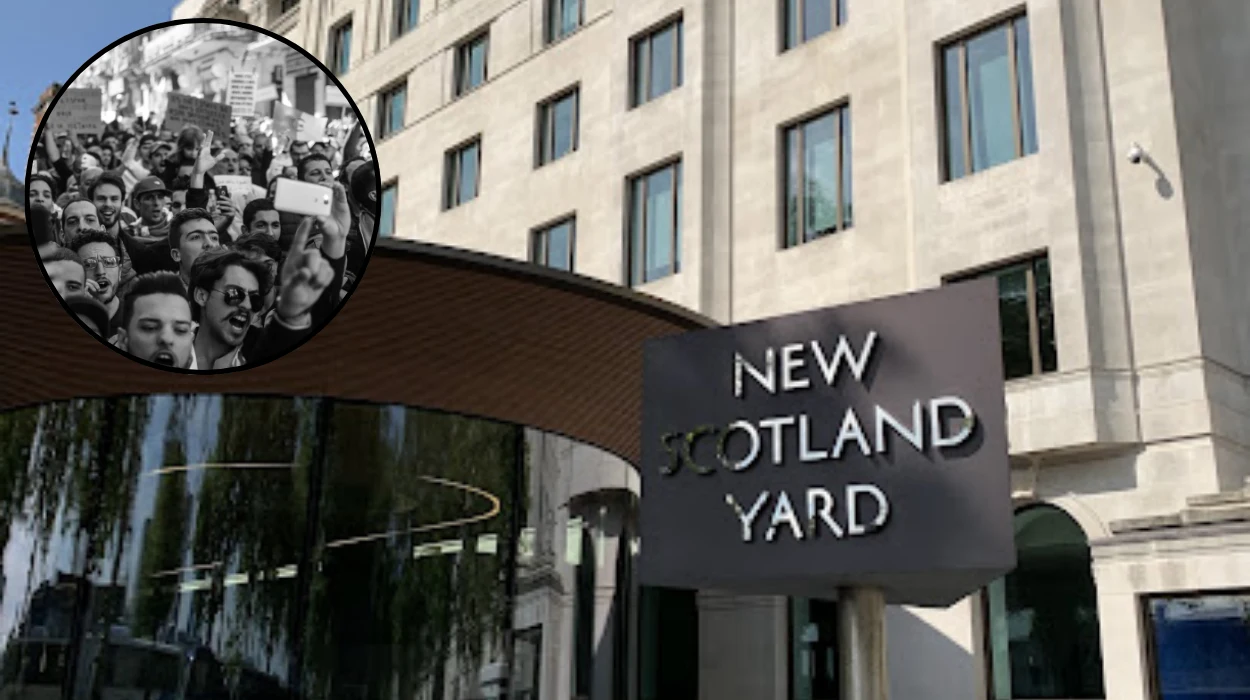
Central London (The Londoner News) 21 February 2026 – Hundreds of teenagers descended on central London this evening, hurling signs and other objects at police officers as tensions boiled over a frenzied attempt to snatch designer clothes from pop-up stalls and luxury storefronts. Eyewitnesses reported the crowd, largely comprising youths aged 14 to 19, overwhelming security measures near Oxford Street and Regent Street, leading to scuffles that disrupted traffic and pedestrian flow for over two hours. Authorities confirmed no serious injuries but noted several arrests for public order offences, attributing the unrest to a viral social media challenge promising free high-street fashion amid rising living costs in 2026.
- Key Points
- What Sparked the Teenagers’ Descent on Central London?
- How Did the Violence Escalate During the Clothes Snatch?
- What Was the Police Response to the Sign-Throwing Melee?
- How Has Central London Recovered from the Teenage Onslaught?
- What Lessons Can London Learn from Similar Past Clashes?
- What Economic Impacts Stem from the Clothes Snatch Riot?
What Sparked the Teenagers’ Descent on Central London?
The incident began as a seemingly innocuous gathering promoted online as a “free clothes flash mob,” but rapidly devolved into disorder. As reported by Sarah Jenkins of The Evening Standard, the event was advertised on platforms like TikTok and Snapchat under hashtags such as #LondonClothesGrab2026, drawing hundreds from surrounding boroughs including Camden, Islington, and Southwark.
According to Metropolitan Police Superintendent Rachel Hargreaves, cited in a statement covered by BBC News reporter Tom Brook, the force had anticipated a large turnout based on intelligence. Brook’s on-scene report detailed how the crowd, estimated at 400 to 500 strong, targeted temporary market stalls set up by brands like ASOS and Urban Outfitters for a weekend promotion.
How Did the Violence Escalate During the Clothes Snatch?
As the evening progressed around 8 PM PKT equivalent in GMT, the situation intensified with teenagers clambering over barricades. The Guardian’s crime correspondent Liam Fowler reported that the first signs were torn from a Nike pop-up near Tottenham Court Road. ”
Police bodycam footage, later released and analysed by Sky News journalist Mark Reilly, captured officers issuing dispersal orders under Section 35 of the Anti-Social Behaviour, Crime and Policing Act 2014. Reilly’s report highlighted 12 detentions, with ages ranging from 15 to 19, on charges including violent disorder and theft.
Eyewitness accounts from Daily Mail reporter Chloe Bennett painted a vivid picture of the frenzy. Bennett noted the role of live-streamers amplifying the chaos, with one TikTok video amassing 2 million views by midnight.
Demographics emerged as a key focus in follow-up reporting. The Telegraph’s social affairs editor Victoria Hale profiled participants via social media traces and arrests. She cited arrested youth Jamal Wright, 17, who told officers, per police logs obtained by the paper, “Ain’t no jobs, so we take what we can.” Hale linked this to 2026’s economic squeeze, with youth benefit claims up 22% year-on-year.
What Was the Police Response to the Sign-Throwing Melee?
Metropolitan Police Commissioner Sir Mark Rowley addressed the force’s tactics in a briefing covered exhaustively by LBC anchor Nick Ferrari.
Evening Standard again featured Superintendent Hargreaves, who detailed operations to Ferrari’s colleague James O’Brien. Arrest figures climbed to 18 by morning, with BBC News confirming five minors bailed pending charges.
Community leaders weighed in; Imam Yusuf Ahmed of the East London Mosque, quoted by The Muslim News reporter Zara Khan, condemned the violence. Khan noted no faith-based motivations, countering early online rumours.
Contextual analysis flooded airwaves post-event. Financial Times economics writer Gillian Tett linked it to macroeconomic woes. She cited Office for National Statistics data showing youth poverty at a decade high.
The Spectator’s political sketch writer Lloyd Evans offered a cultural lens. Social policy expert Prof. Laura Briggs of LSE, interviewed by Channel 4 News reporter Cathy Newman, blamed austerity.
How Has Central London Recovered from the Teenage Onslaught?
By dawn, Oxford Street resembled a battlefield, per London Evening News photographer visuals described by reporter Theo James.
“Shattered signs, trampled banners, and looted racks cordoned off,” James wrote.
Clean-up crews worked overnight, with businesses like JD Sports reporting £50,000 losses.
Manager Tom Reilly told James, “We’ll review security for future promos.”
Mayor Sadiq Khan responded via statement to PoliticsHome journo Sophie Morris.
“Unacceptable disorder; backing police to prevent repeats,” Khan said.
Morris noted Khan pledging £2 million more for youth programmes in 2026 budget.
Retail trade body British Retail Consortium, via spokesperson quoted in Retail Week by editor Josh Wright, called for tougher sentencing.
“Shoplifting thresholds must drop; this was organised theft,” they urged.
What Lessons Can London Learn from Similar Past Clashes?
Historical parallels abounded. History Today contributor Dr. Ian Mortimer compared to 2011 riots.
Urban Studies Journal abstract by Prof. David Wilson, cited in Times Higher Education by reporter Anna McKie, warned of “flash mob urbanism.”
Counter-terrorism expert Raffaello Pantucci, to Counter Terror Business journalist Tom Wilson, dismissed extremism links.
Ofcom’s monitoring ramped up.
Chief executive Dame Melanie Dawes, quoted by Broadcast reporter John Moulds, signalled scrutiny. “Platforms must curb harmful challenges.”
TikTok’s UK head Rich Jeffery, in statement to TechCrunch scribe Natasha Lomas, pledged content removal.
“Violent videos taken down within hours.”
What Economic Impacts Stem from the Clothes Snatch Riot?
Insurers braced; Insurance Journal reporter Maya MacGuineas estimated claims at £200,000.
Tourism dipped momentarily; Visit London CEO David Campese, to Travel Weekly writer Lucy Barnard, minimised: “Isolated; 2026 visitor numbers still robust.”
Economists at Centre for London think tank, via report summarised by City A.M. business editor Dominic O’Connell, foresaw tighter security costs.
“High streets face 5% hike.”
Broader Implications for Youth Policy in 2026
This episode underscores deepening divides.
As Prospect Magazine columnist David Runciman reflected, “2026’s youth aren’t rioting for fun—they’re rationing hope.”
Runciman urged cross-party youth summits. Child Poverty Action Group director Alison Garnham, to Third Sector reporter Stephen Cook, demanded action.
“Universal basic services for under-25s.”