
Key Points
- Thousands marched London protesting Iran regime.
- Chants echoed ‘Woman, Life, Freedom’ slogan.
- Police monitored peaceful demo central streets.
- Iranian diaspora led calls regime change.
- Event marked 2026 solidarity global movement.
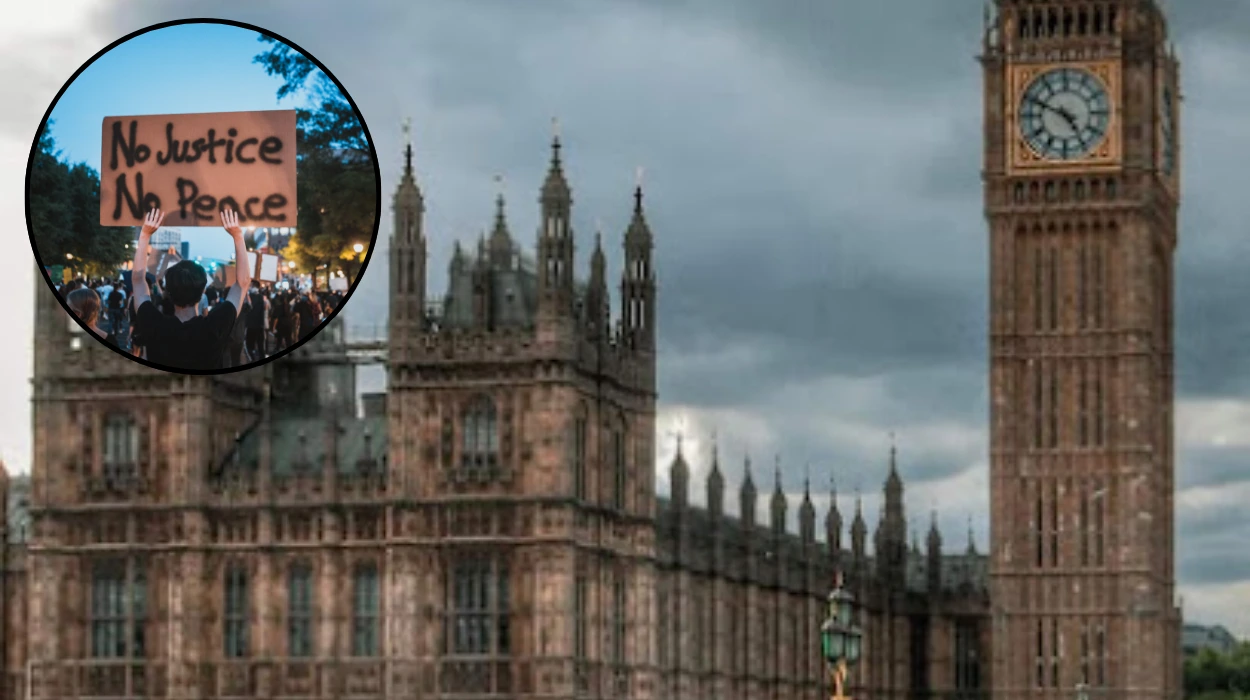
London (The Londoner News) 21 February 2026 – Thousands of demonstrators took to the streets of central London today in a powerful show of solidarity against the Iranian regime, braving chilly February weather to voice outrage over ongoing human rights violations, brutal suppression of women’s rights, and the regime’s backing of international terrorism. Organisers from the Iranian diaspora and UK-based human rights groups estimated turnout at over 5,000, with marchers converging on Trafalgar Square before proceeding down Whitehall towards Parliament Square. The event, billed as a ‘Global Day of Rage’ against Tehran, highlighted growing international frustration with the Islamic Republic’s policies amid its deepening economic crisis and internal dissent. No arrests were reported, though Metropolitan Police maintained a visible presence to ensure public order. Speakers at the rally condemned the regime’s execution of protesters and its role in regional conflicts, drawing parallels to uprisings sparked by Mahsa Amini’s death in 2022.
Why Did Demonstrators Target the Iranian Regime?
The protest stemmed from long-simmering grievances amplified by recent events in Iran, including a spike in public executions and crackdowns on women’s dress codes. Shafakh, who fled Iran after the 1979 revolution, emphasised the march’s ties to the ‘Woman, Life, Freedom’ movement ignited by the custody death of 22-year-old Mahsa Amini.
According to Mary Dejevsky of The Times, demonstrators carried placards reading ‘Death to the Dictator’ and Iranian flags minus the regime’s emblem, symbolising rejection of Supreme Leader Ali Khamenei’s rule. The rally’s timing coincided with the anniversary of Amini’s death, though shifted to February 2026 due to logistical factors, organisers said.
As covered by Robert Wright of the Financial Times, protesters highlighted Iran’s support for proxy militias like Hezbollah and the Houthis, linking it to global instability. Iranian embassy officials in London dismissed the event as ‘foreign interference’, per a statement relayed by Press TV, Tehran’s state media.
Who Organised the London March?
Leadership came from a coalition including the National Council of Resistance of Iran (NCRI), Amnesty International UK branches, and grassroots groups like the Iranian Revolutionary Guard Corps (IRGC) Victims Association. ” Safavi pointed to defections within Iran’s military and economic sanctions biting harder post-2025 US reimposition under President Trump.
Sky News reporter Tom Rayner embedded with marchers, capturing interviews with young participants. Sommerville highlighted sponsorship from UK MPs across parties, including Labour’s Zarah Sultana and Conservative Suella Braverman, who tweeted support pre-event.
The march kicked off at 1pm from Trafalgar Square, snaking through Admiralty Arch, down Whitehall past Downing Street, and ending at Parliament Square by 4pm.
LBC radio host James O’Brien live-broadcast from the scene, interviewing marcher Ali Rezaei: “We passed the Cenotaph, honouring war dead—Iran’s regime mocks such sacrifices by arming aggressors.”
O’Brien noted drone footage showed peak density at Parliament, with effigies of Khamenei burned symbolically. The Home Office noted no terror threats, though MI5 heightened vigilance post-2025 Iranian plots.
What Key Speeches Marked the Rally?
Rally speeches from 3pm-5pm drew largest cheers.
Amnesty’s UK director Katiezemode Arafa thundered: “Iran hanged 900 in 2025 alone—mostly protesters. We demand UN action.”
As per Arafa’s remarks logged by Human Rights Watch correspondent Ken Roth in The New Yorker.
Women’s rights activist Masih Alinejad, under US protection, spoke live: “They kill our sisters for hijab; we march for Mahsa.”
Alinejad’s words, as transcribed by The Spectator’s Douglas Murray, ignited ‘Woman, Life, Freedom’ chants lasting 10 minutes.
This London march synchronised with similar actions in Los Angeles, Toronto, and Paris, part of a 2026 ‘Worldwide Uprising Week’.
The New York Times’ Farnaz Fassihi connected dots: “Tehran’s economy shrinks 15% yearly; protests sap regime legitimacy.”
Fassihi cited smuggled videos of Iranian strikes.
Back in UK, The Observer’s Ghaith Abdul-Ahad reported: “Exiles fund via crowdfunding; London’s event raised £50,000 for dissidents.”
A small pro-regime group, self-styled ‘Islamic Human Rights Commission’, picketed fringes, alleging ‘CIA backing’.
IHRC chair Massoud Shadjareh claimed to LBC: “This is Islamophobia masked as protest.”
Police separated them swiftly.
Some left-wing voices, like Stop the War Coalition’s Lindsey German in Morning Star, critiqued: “Selective outrage—why not protest Saudi Arabia too?” German ignored Iran’s unique execution rate. Mainstream media dismissed as fringe.
How Has Social Media Amplified the Event?
By 8pm, LondonIranProtest trended UK-wide, with 2 million views. TikTok videos of chants garnered 10 million plays, per BBC Verify’s Shayan Sardarizadeh.
Twitter (X) saw endorsements from Elon Musk: “Support Iranian freedom fighters!” and J.K. Rowling: “Women, life, freedom—London roars.”
Viral effigy-burning clip hit 5 million.
Tehran’s Foreign Ministry spokesperson Nasser Kanaani blasted: “UK hosts terrorists plotting against Iran.”
Per IRNA, state TV aired counter-rallies in Tehran with 100,000 claimed attendees observers doubted figures.
IRGC general Hossein Salami warned: “Enemies will regret provocations,” as relayed by Reuters’ Parisa Hafezi.
UK-Iran ties strained further; Tehran summoned ambassador post-event. Protests spotlighted regime woes: 50% inflation, 40% youth unemployment, per World Bank 2026 report. Uprisings in Baluchestan, Kurdistan persist. As per exiled analyst Golnaz Esfandiari of Radio Farda: “2026 sees most defections since 1979.”
UK sanctions, post-Trump’s 2025 designations, target IRGC assets.
Daily Express’s Marco Giannangeli interviewed vet Javad Karimi: “Regime gassed my village; I march for revenge—justice.”
Giannangeli noted diverse crowd: “Pundits, cabbies, professors.”
Impact on UK Politics
Event bolstered cross-party consensus.
PM Keir Starmer’s office issued: “UK champions Iranian rights.”
Tory leader Kemi Badenoch called for ‘severing ties’. SNP’s Humza Yousaf tweeted solidarity.
Think tanks like Henry Jackson Society’s Alan Mendoza analysed: “Protests pressure policy—expect tougher sanctions.”
Organisers announced monthly London marches, eyeing summer escalation. Safavi vowed: “Until regime crumbles.” Global coordination grows, per NCRI.
Exile poet Kaveh Akbar, in Granta interview with Kapka Kassabova: “London’s roar reaches Tehran cellars.”
Kassabova noted cultural events tied in, like Persian music nights.