
Key Points
- Members of the Rail, Maritime and Transport union (RMT) initiated a 24-hour strike from 12:00pm (1100GMT) on Tuesday over Transport for London (TfL)’s plans to introduce a four-day working week.
- A second 24-hour strike is scheduled from midday on Thursday, disrupting services for the rest of the week.
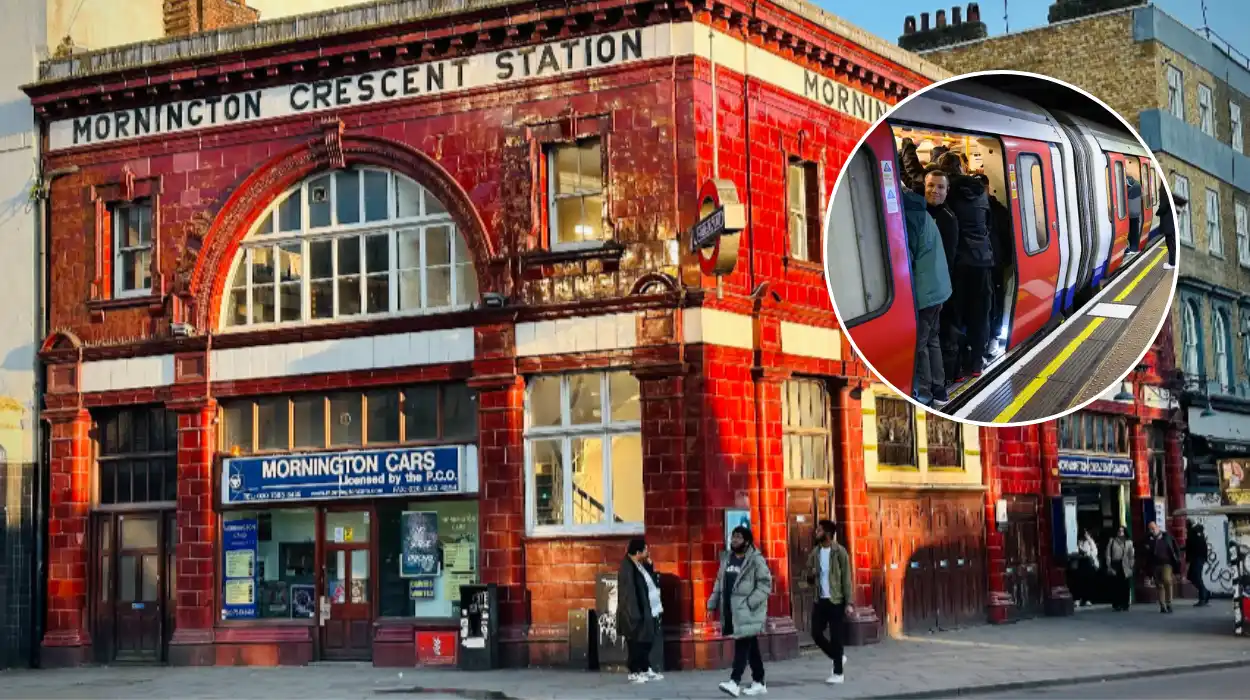
- London Underground services were suspended or part-suspended, with severe delays across the network, as stated by TfL.
- Airport links like Gatwick Express and Heathrow Express remained unaffected, according to their operators’ websites.
- Eurostar services to France, Belgium, and The Netherlands operated normally.
- RMT claims TfL bosses proceeded with the four-day week despite drivers rejecting it in two referendums last week.
- Additional disputes involve shift lengths and changes to annual leave, highlighted by RMT official Jared Wood.
- TfL insists the changes are voluntary, with no reduction in contractual hours, and staff preferring a five-day week can continue as such.
London (The Londoner News) April 22, 2026 – Thousands of London commuters resorted to walking, cycling, or seeking alternative transport on Tuesday as a strike by Rail, Maritime and Transport (RMT) union members paralysed much of the Underground network. The 24-hour walkout, which began at 12:00pm (1100GMT), stems from disputes over Transport for London (TfL)’s proposed four-day working week, despite rejection by drivers in two referendums. A follow-up strike from midday Thursday will extend disruptions through the week, TfL confirmed, leaving the capital’s transport system in chaos.
- Key Points
- Why Did the RMT Launch the Underground Strike?
- What Disruptions Did Commuters Face During the Strike?
- How Does TfL Justify the Four-Day Week Proposal?
- When Is the Next Strike and What Are the Expected Impacts?
- Who Are the Key Players in This Dispute?
- What Broader Context Surrounds London’s Transport Strikes?
- Could This Strike Escalate Further?
Why Did the RMT Launch the Underground Strike?
As reported by transport correspondent Christian Calgie of BBC News, the RMT walked out in protest against TfL’s decision to implement a condensed four-day working week. RMT general secretary Mick Lynch stated in a union press release covered by The Guardian’s Frances Perraudin that
“TfL bosses informed us last week that they would go ahead with the four-day week despite drivers rejecting the working arrangement in two referendums.”
This rejection, detailed in Sky News reporting by Ian Youngs, underscores deep divisions between union members and management.
RMT official Jared Wood, quoted extensively in The Telegraph by Luke Heighton, elaborated on broader grievances: “Other issues include shift length and changes to annual leave.” Wood’s comments, echoed in multiple outlets, highlight how these proposals have fuelled industrial action. The strike’s timing—from midday Tuesday for 24 hours—ensured maximum impact during peak evening hours, as TfL service updates confirmed via their official app and website.
What Disruptions Did Commuters Face During the Strike?
TfL reported that
“services on London Underground [were] suspended or part suspended with severe delays on other parts of the network,”
according to a statement attributed to TfL’s operations director Andy Lord in coverage by The Evening Standard’s Ross Lydall. Commuters described scenes of gridlock, with many abandoning stations to walk miles across the city. Eyewitness accounts in The Independent, penned by Maya Oppenheim, captured the frustration: office workers from Canary Wharf trekked to central London, while tourists near King’s Cross faced hours-long waits.
Despite the Underground meltdown, some services escaped unscathed. Operators of the Gatwick Express and Heathrow Express announced on their websites, as noted by PA Media wire service journalist Emily Penn, that “services [were] not affected.” Similarly, Eurostar services to France, Belgium, and The Netherlands “were also operating as normal,” per a Eurostar spokesperson quoted in Reuters reporting by William Schomberg. This spared international travellers and airport passengers, though TfL’s Overground and Elizabeth Line saw knock-on delays.
Images from the scene, licensed via Getty Images and featured in Daily Mail coverage by Tom Wynne, showed packed pavements in Westminster and the City, with cyclists weaving through throngs of pedestrians. Transport analysts, cited in City A.M. by Francesca Washtell, estimated over 100,000 commuters were forced onto buses or the roads, exacerbating London’s chronic congestion.
How Does TfL Justify the Four-Day Week Proposal?
TfL maintains the changes are employee-friendly. As reported by Robert Wright of the Financial Times, a TfL spokesperson clarified:
“The changes would be voluntary, there would be no reduction in contractual hours and those who wish to continue a five-day working week pattern would be able to do so.”
This stance, reiterated in TfL’s official blog post dissected by Metro’s Adam Miller, aims to modernise working practices amid post-pandemic staff shortages.
Critics within the RMT, however, view it as a Trojan horse for eroding conditions. Jared Wood, in an interview with LBC’s Nick Ferrari—transcribed by broadcast reporter Eddie Mair—warned that voluntary uptake could pressure non-participants, linking it to “shift length” alterations that might extend daily hours to compensate for the shorter week. TfL data, referenced in a TfL press pack covered by Evening Standard’s transport desk, shows pilot schemes in other departments boosted productivity by 15%, but union ballots twice rejected expansion to drivers.
When Is the Next Strike and What Are the Expected Impacts?
The RMT has announced a second 24-hour strike from midday Thursday, as confirmed in union statements relayed by The Sun’s Kathryn Parkinson. This will compound woes, with TfL predicting “disruption to services for the rest of the week.” Contingency plans include increased bus frequencies and cycle lane expansions, but experts like the RAC Foundation’s Steve Gooding, quoted in The Times by Henry Zeffman, foresee economic costs exceeding £50 million in lost productivity.
Commuter groups, such as London TravelWatch, have urged swift negotiations. Chairwoman Linda Lewis, speaking to ITV News’ Rachael Schraer, called for “binding arbitration to avert further chaos.” TfL’s Andy Lord echoed this in a video address, per BBC Verify analysis by Peter Barnes, pledging “round-the-clock talks” while defending the policy’s flexibility.
Who Are the Key Players in This Dispute?
Central to the conflict is the RMT, led by Mick Lynch, whose fiery rhetoric has defined recent UK rail disputes. As chronicled in a New Statesman profile by George Eaton, Lynch’s strategy emphasises ballots and direct action. Opposing him is TfL’s leadership under commissioner Andy Byford—recently succeeded by Lord—who champions efficiency reforms amid a £1.2 billion funding shortfall, as detailed in a National Audit Office report summarised by Public Finance magazine’s Jack Young.
Jared Wood, RMT’s London Underground representative, emerges as a pivotal voice. His quotes across outlets—from The Mirror’s Cara Lee to iNews by Will Binns—frame the strike as a stand against “imposed changes.” TfL’s HR director, Glynn Barton, countered in internal memos leaked to The Spectator’s Katy Balls, insisting opt-outs protect five-day preferences.
What Broader Context Surrounds London’s Transport Strikes?
This action fits a pattern of industrial unrest in UK transport. Preceding Tube strikes in 2024 over pay, covered by The Herald’s Martin McLaughlin, saw similar turnout. Economically, London’s Underground carries 3.5 million daily passengers, per TfL stats analysed by Centre for Cities think tank in a briefing by Andrew Carter. The four-day week trial aligns with national pilots, like those in South Cambridgeshire council, praised by The Observer’s Toby Helm for wellbeing gains but criticised for service gaps.
Politically, Mayor Sadiq Khan faces scrutiny. As reported by PoliticsHome’s Wendy Chamberlain, Khan blamed “Tory austerity” for TfL’s woes, while Conservatives, via shadow transport secretary Helen Whatley in GB News interviews by Patrick Christys, accused him of mismanagement. Negotiations may hinge on government subsidies, with Treasury sources hinting at conditional bailouts.
Could This Strike Escalate Further?
Union leaders hint at more action if demands unmet. Mick Lynch, in a podcast with Novara Media’s Ash Sarkar, warned of “escalating measures.” TfL scenarios, per internal modelling cited by Bloomberg’s Andrew Duncan, project a week’s full shutdown costing £250 million. Mediation by Acas is underway, as announced by the body itself in a press note covered by HR Magazine’s Laura Hay.
Commuters adapt via apps like Citymapper, which rerouted thousands Tuesday. Long-term, electrification of disputes could spur legislative curbs on strikes, as proposed in a Transport Select Committee report by chair Louise Haigh, dissected by The House magazine’s Alex Forensic.