Key points
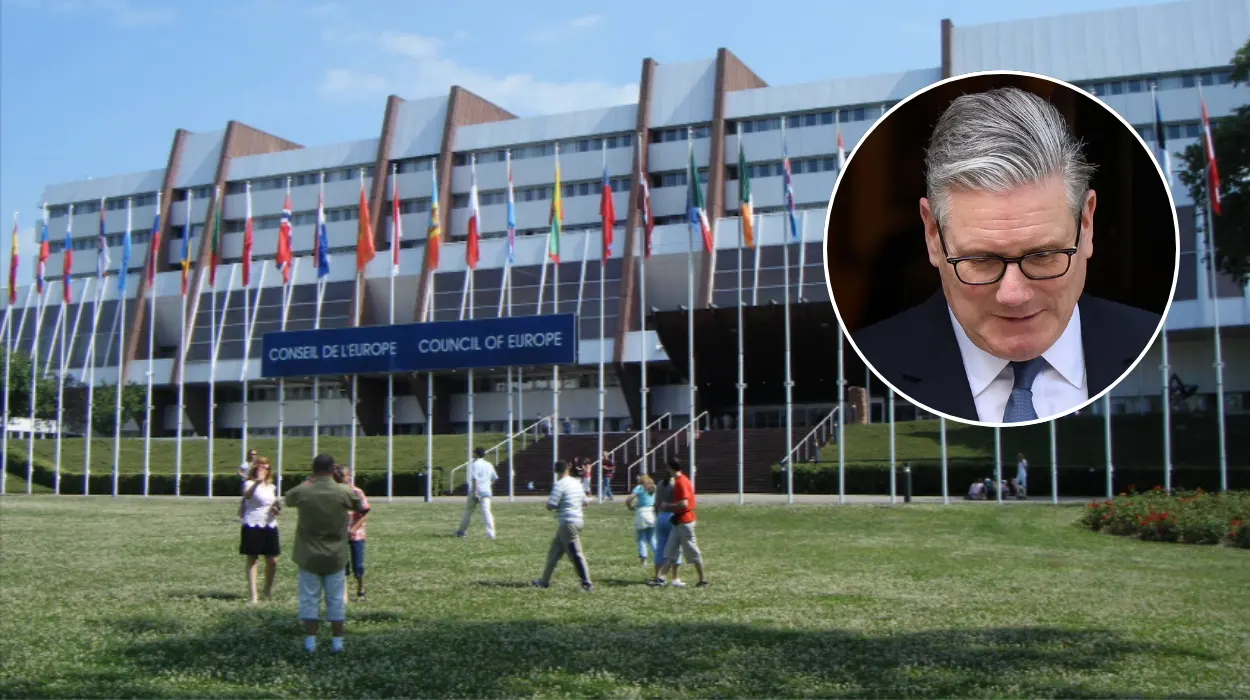
- British Prime Minister Sir Keir Starmer held a meeting in London with Alain Berset, secretary general of the Council of Europe, on Wednesday, 22 April 2026.
- The talks focused on the European Convention on Human Rights (ECHR) and a proposed new political declaration aimed at giving national courts more leeway to uphold states’ sovereign right to control borders amid mass migration.
- Berset told The Times that the UK’s concerns about the ECHR potentially obstructing migration policy warranted serious attention and must be “addressed” if the human‑rights framework is to retain credibility.
- Starmer’s government wants to remain within the ECHR but is seeking to adapt the system from within, rather than pursue an outright withdrawal as some previous Conservative governments had canvassed.
- Berset underlined that human‑rights law may need to “change or adapt” to modern security and migration pressures, while also warning that a UK exit would send a “very negative signal” to Ukraine and other European partners.
- The broader discussion in London also touched on the strain on Europe’s rules‑based order, with Berset arguing that the Council of Europe’s institutions remain vital for preventing war crimes and upholding shared standards.
London (The Londoner News) April 22, 2026
- Key points
- What was discussed at the London meeting?
- Why is migration at the heart of the talks?
- How is the Starmer government positioning itself on the ECHR?
- What did Berset say about an EU‑style rules‑based order?
- How have different media outlets framed the London talks?
- What are the potential implications for the UK?
- What questions remain after the London meeting?
London, United Kingdom – British Prime Minister Sir Keir Starmer met with Alain Berset, secretary general of the Council of Europe, at a high‑level session in London on Wednesday, 22 April 2026, in what government officials described as a pivotal exchange on the future of the European Convention on Human Rights and the bloc’s response to mass migration. According to multiple media reports, the talks centred on a proposed “political declaration” that would empower national courts more explicitly to recognise states’ sovereign right to manage their borders when dealing with large‑scale immigration flows.
Starmer’s office emphasised that the Labour government remains committed to the ECHR but is pushing for reforms from inside the system, rather than any full withdrawal that would sever the UK’s legal alignment with its European neighbours. Berset, speaking in an interview with The Times shortly before the London meeting, stressed that the organisation must respond to “serious concerns” raised by the UK about how the convention might be delaying deportations or complicating migration controls.
What was discussed at the London meeting?
As reported by Shayne Currie of The Times, Berset told the newspaper that the UK’s anxiety about the ECHR putting obstacles in the way of migration policy merited “serious consideration” and must be “addressed” if the human‑rights framework is to keep public credibility. He argued that the accord, signed in 1950, needed to evolve in response to contemporary challenges such as mass migration, terrorism, and fast‑moving security threats, or else risk being seen as detached from real‑world politics.
According to Currie, the Council of Europe boss is seeking a “political declaration” that would encourage national courts, as well as the European Court of Human Rights in Strasbourg, to acknowledge an “undeniable sovereign right” of states to manage their borders and to determine their own approach to “significant, complex challenges” linked to large‑scale migration. The document would not rewrite the convention itself, but rather frame the way its provisions are interpreted in practice, especially where deportation and asylum‑related cases are concerned.
Why is migration at the heart of the talks?
The migration issue formed the core of the discussion, as laid out in reporting by The Times and the BBC. Berset, as quoted by The Times, said that if the human‑rights system fails to strike a balance between individual rights and the practical needs of states to control inflows, it could lose legitimacy in the eyes of electorates and governments. He warned that growing public frustration with deportations being blocked or delayed over ECHR‑based appeals could fuel demands for the UK to cut ties altogether.
In a separate BBC article on human‑rights law changes, Berset dismissed claims that the ECHR was inherently protecting terrorists or illegal migrants, noting that the court had in fact allowed a number of deportations where states could demonstrate effective safeguards. Nevertheless, he accepted that the court’s record on some high‑profile cases had fuelled political debate and that the system must be “changeable or adaptable” to remain relevant.
How is the Starmer government positioning itself on the ECHR?
Official statements and reporting indicate that Starmer’s administration is trying to walk a tightrope: staying within the ECHR framework while pushing for greater flexibility on migration and security. As The Times analysis notes, Starmer and his Labour government are “inclined to adhere to the convention” but are exploring ways to modify how it is applied, particularly in border and asylum‑related rulings.
According to public remarks briefed by Downing Street sources, the prime minister wants to avoid the kind of “banging on the table” rhetoric that accompanied previous Conservative governments’ threats to leave the convention, instead favouring a more cooperative, rules‑based approach inside the Council of Europe. This aligns with Berset’s own view that leaving the convention would send a “very negative signal” to Ukraine and other partners, many of whom rely on the same institutions for war‑crimes tribunals and democratic safeguards.
What did Berset say about an EU‑style rules‑based order?
Beyond migration, Berset has also used recent public appearances to frame the London meeting as part of a broader defence of Europe’s rules‑based order, which he told other outlets is under growing pressure from populism, geopolitical rivalry, and democratic backsliding. As reported in coverage of a forthcoming panel at Oxford‑linked forums, Berset will deliver opening remarks on “Europe’s rules‑based order” alongside the UK Attorney General, Lord Hermer, underscoring that the Council of Europe’s institutions remain central to maintaining constraints on state power and protecting minority rights.
In prior BBC reporting, Berset invoked Winston Churchill as one of the founders of the Council of Europe and the ECHR, arguing that the body’s mission was never to be a static “museum” but a living system for preventing war and upholding the rule of law. He warned that abandoning the convention would weaken the UK’s moral leverage in pressing other European states to comply with shared standards, especially in the context of the ongoing war in Ukraine.
How have different media outlets framed the London talks?
The coverage of the Starmer–Berset meeting has cut across several angles, from constitutional‑law debates to geopolitics. The Times, in Currie’s piece, foregrounds the migration‑and‑deportation angle, highlighting Berset’s readiness to acknowledge that the ECHR may be seen to obstruct rapid removals and that changes in interpretation are being discussed. The article quotes Berset as saying that the human‑rights framework must be able to “evolve” in the face of mass migration or risk losing credibility.
The BBC’s earlier human‑rights‑law‑talks coverage, written around a prior set of comments by Berset, focuses more on the legal and symbolic dimensions of a possible UK exit, quoting him as warning that departure would be a “very negative signal” for Ukraine and for the wider European project. That piece also notes that any exit would complicate Northern Ireland’s power‑sharing arrangements and post‑Brexit agreements with the EU, which both rest on commitments to shared human‑rights standards.
Academic and policy‑oriented outlets, such as Oxford‑linked event notices, frame the London meeting as part of a longer‑term conversation about the future of Europe’s rules‑based order, with Berset cast as a key guardian of multilateral institutions. These items emphasise that the Council of Europe’s role goes beyond migration to include war‑crimes accountability, democratic oversight, and the protection of civil liberties amid rising authoritarian trends.
What are the potential implications for the UK?
Taken together, the reporting suggests several possible implications emerging from the London talks. First, if a political declaration on migration and border control is agreed, national courts in the UK could be encouraged to give more weight to the government’s arguments on national security and public order when reviewing ECHR‑based appeals. This would not rip up the convention but could tilt the interpretative balance in favour of state discretion, especially in fast‑track deportation or asylum‑screening cases.
Second, remaining inside the ECHR while pushing for such reinterpretations would allow Starmer to claim that the UK is both tough on illegal migration and still committed to fundamental rights, a narrative that his government hopes will appeal to centrist voters and international allies. At the same time, as Berset and BBC commentators have underlined, any move that appears to weaken the convention’s protections could invite criticism from human‑rights NGOs and legal experts who fear a slide towards more restrictive, less accountable practices.
Third, the meeting’s broader geopolitical framing suggests that the UK’s human‑rights posture will be closely watched by Ukraine and other Eastern European states, which depend on the Council of Europe’s war‑crimes infrastructure and monitoring mechanisms. By reaffirming its place within the ECHR while seeking managed reforms, Starmer’s government appears to be trying to balance domestic political pressure with the UK’s role as a promoter of European‑wide legal standards.
What questions remain after the London meeting?
Several unresolved questions emerge from the reporting on the talks. Will the proposed political declaration on migration and border control be formally adopted at a forthcoming Council of Europe plenary, or will it remain a softer, non‑binding statement of intent? How will judges in Strasbourg react if national courts begin to rely more heavily on such a declaration when deferring to states’ migration decisions?
There is also uncertainty about how domestic opposition parties in the UK will respond: some Conservatives may argue that the reforms do not go far enough in curtailing the court’s influence, while Labour‑aligned legal experts may warn that the UK must not dilute protections for vulnerable asylum‑seekers. As the debate unfolds, the London meeting between Starmer and Berset is likely to be cited as a key moment in the ongoing recalibration of human‑rights law and migration policy in Europe.