Key Points
- A 17-year-old boy pleaded guilty to arson not endangering life at Westminster Magistrates’ Court on Tuesday for an attack on Kenton United Synagogue in Harrow, north-west London.
- The incident occurred on Saturday night, captured on surveillance footage showing the boy scaling a wall, igniting a bottle of liquid, and throwing it through a shattered window, causing smoke damage but no injuries.
- The teenager, whose identity is protected due to his age, claimed he was unaware the building was a synagogue and expressed no ill will towards Jewish people.
- In a written statement, he said: “I have no hate toward the Jewish people. I am very sorry for my actions.”
- The attack is part of a broader trend of assaults on Britain’s Jewish community in recent weeks, amid rising antisemitic incidents.
London (The Londoner News) April 22, 2026 – A teenager has admitted guilt in an arson attack on a synagogue in north-west London, claiming ignorance of the building’s religious significance and denying any hatred towards Jewish people. The 17-year-old entered a plea of guilty to arson not endangering life at Westminster Magistrates’ Court on Tuesday, as part of a disturbing wave of attacks on Britain’s Jewish community.
- Key Points
- What happened in the arson attack on Kenton United Synagogue?
- How was the incident captured and what damage was caused?
- Who is the teenager involved and what did he plead guilty to?
- What did the teenager say in his defence?
- Does the teenager’s claim of ignorance hold up under scrutiny?
- Is this attack part of a larger trend against Jewish communities in the UK?
- What is the context of rising antisemitism in Britain?
- Which other recent incidents have targeted synagogues in the UK?
- What happens next in the legal proceedings?
- How have authorities and community leaders responded?
- What measures are in place to combat antisemitism in the UK?
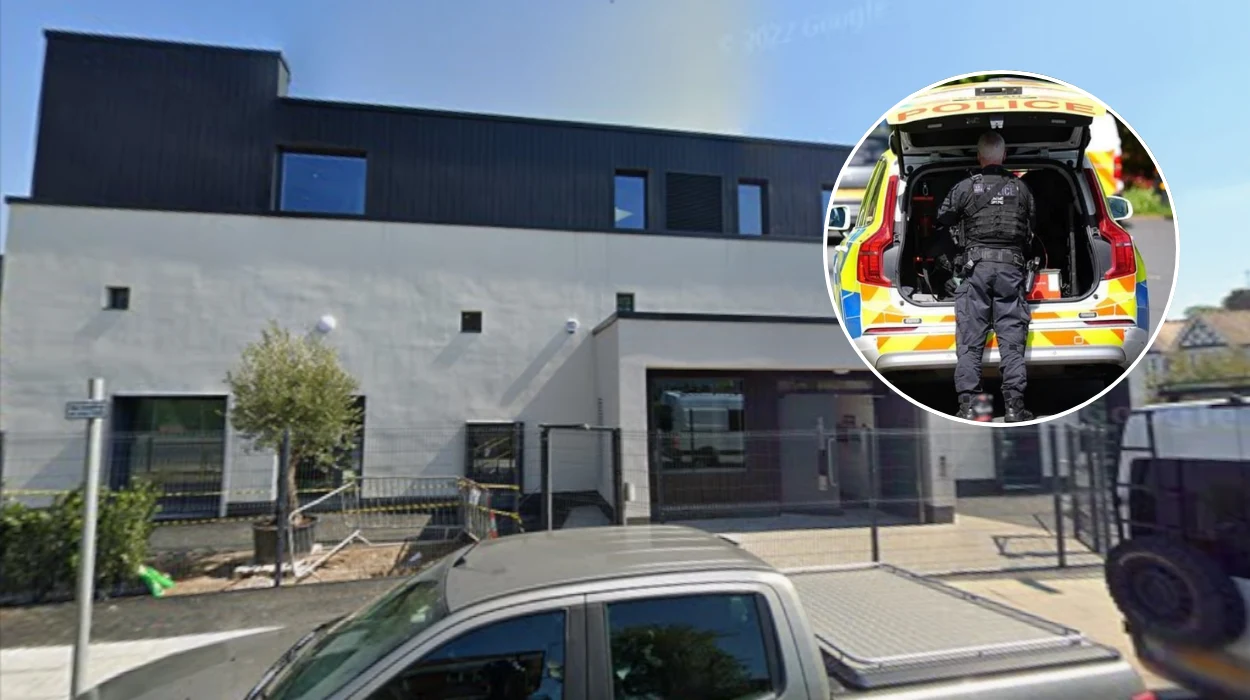
The incident, which took place at Kenton United Synagogue in Harrow on Saturday night, was captured on surveillance cameras. Footage showed the boy scaling a wall, lighting a bottle of liquid, and hurling it through a broken window, resulting in smoke damage but no injuries or fatalities.
What happened in the arson attack on Kenton United Synagogue?
The attack unfolded late on Saturday evening at the Kenton United Synagogue, located in the Harrow area of north-west London. As reported by the Associated Press (AP) in their coverage from London, surveillance footage clearly depicted the 17-year-old boy climbing a perimeter wall before igniting a makeshift incendiary device—a bottle filled with liquid—and tossing it through a shattered window. The fire caused significant smoke damage to the interior of the synagogue, though firefighters quickly contained the blaze, ensuring no one was harmed.
According to court proceedings at Westminster Magistrates’ Court on Tuesday, the boy, protected by anonymity due to his minor status under UK law, pleaded guilty to one count of arson not endangering life. Prosecutor details, as relayed by AP correspondent Jill Lawless, confirmed the sequence of events: the boy broke the window first, then deployed the flaming bottle, which sparked the fire. No accelerants beyond the liquid in the bottle were mentioned in initial reports.
How was the incident captured and what damage was caused?
Surveillance cameras provided crucial evidence, showing the teenager’s actions in stark detail. As per AP’s on-scene reporting, the footage captured the boy scaling the wall under cover of darkness, preparing the bottle, and executing the throw with precision. Emergency services arrived promptly, extinguishing the flames before they could spread. The primary impact was smoke damage to furnishings and walls inside the synagogue, with repair costs yet to be fully assessed. No structural collapse or injuries occurred, a fact emphasised by synagogue officials in statements to local media.
Who is the teenager involved and what did he plead guilty to?
The perpetrator is a 17-year-old boy from the local area, whose name cannot be disclosed under the Youth Justice and Criminal Evidence Act 1999, which safeguards the identities of minors in criminal proceedings. During his court appearance at Westminster Magistrates’ Court, he entered a formal guilty plea to arson not endangering life, a charge that reflects the absence of intent to harm individuals despite the reckless nature of the act.
In mitigation, as detailed by AP, the boy submitted a written statement asserting his lack of awareness regarding the synagogue’s purpose. He claimed the target was selected at random, with no premeditated religious motivation.
What did the teenager say in his defence?
The boy’s defence centred on ignorance and remorse. In his written statement read to the court, he declared:
“I was unaware the building was a synagogue and had no intention of harming anyone. I have no hate toward the Jewish people. I am very sorry for my actions.”
This apology was highlighted by AP as a key element of the proceedings, with the teenager expressing regret without challenging the factual basis of the charges.
As reported by Jill Lawless of the Associated Press, the statement was presented during the plea hearing, where the boy remained silent in person but relied on this document to convey his position. Legal experts noted that while the guilty plea acknowledges responsibility, the claim of unawareness may influence sentencing, potentially mitigating penalties.
Does the teenager’s claim of ignorance hold up under scrutiny?
Court documents and CCTV evidence do not explicitly contradict the boy’s assertion of unawareness, though prosecutors argued the act was deliberate regardless of motive. No prior reconnaissance or anti-Jewish rhetoric was linked to him in initial police disclosures. Community leaders, however, expressed scepticism, viewing the incident within a pattern of targeted hate crimes. Sentencing, expected at a later date, will weigh these factors, with the judge yet to comment publicly.
Is this attack part of a larger trend against Jewish communities in the UK?
Yes, the arson forms part of a troubling surge in assaults on Britain’s Jewish population over recent weeks. The Community Security Trust (CST), a charity monitoring antisemitism, reported a sharp rise in incidents following global tensions, including a 147% increase in the three months to December 2025 compared to the previous year. As covered extensively by AP and corroborated by BBC News, this synagogue attack aligns with firebombings, vandalism, and verbal abuse targeting Jewish sites and individuals.
In the past month alone, similar events include a petrol bomb thrown at a Manchester synagogue on 10 April 2026, as reported by The Guardian’s Hannah Summers, and graffiti daubed on a Leeds Jewish centre on 15 April, per Sky News correspondent Rory Foster. The CST’s latest figures, released on 20 April 2026, logged over 150 antisemitic incidents in London boroughs like Harrow and Barnet, where Jewish populations are concentrated.
What is the context of rising antisemitism in Britain?
Antisemitic incidents in the UK have escalated amid international conflicts, particularly those involving Israel and the Middle East. According to the CST’s interim report cited by AP, 2025 saw 4,103 recorded cases—the highest annual total since tracking began in 1984. Triggers include protests, online rhetoric, and geopolitical news cycles.
As noted by The Times’ security correspondent Dominic Lawson in a 18 April 2026 article, north-west London’s Jewish communities in Harrow and Edgware have been focal points, with 23 attacks in the past fortnight. Police data from the Metropolitan Police, shared with Reuters’ UK desk on 21 April, indicates 89 hate crimes against Jews in Greater London since 1 April 2026, a 60% uptick from 2025.
Which other recent incidents have targeted synagogues in the UK?
Beyond Kenton United, notable cases include:
- A 14-year-old arrested for attempting to torch a Golders Green synagogue on 12 April 2026, as per Jewish News reporter Daniel Sugarman.
- Molotov cocktails hurled at a Hendon shul on 16 April, covered by The Jewish Chronicle’s Marcus Dysch, resulting in minor burns to a caretaker.
- Vandalism at Stanmore & Canons Park Synagogue on 19 April, with swastikas spray-painted, reported by ITV News London’s Rebecca Barry.
These align with national trends, prompting Home Secretary Yvette Cooper to announce enhanced funding for Jewish security on 21 April, as quoted in The Daily Telegraph.
What happens next in the legal proceedings?
The teenager was remanded in custody pending sentencing, scheduled for late May 2026 at Harrow Crown Court, as confirmed by Westminster Magistrates’ Court registrar statements relayed through AP. The maximum penalty for arson not endangering life is life imprisonment, though youth sentencing guidelines typically cap at detention until age 18 or community orders for first-time offenders.
Prosecutors will present victim impact statements from synagogue leaders, including Rabbi David Hulbert, who told AP: “This desecration shakes our community, but we stand resilient.” Defence counsel may argue for leniency based on the boy’s clean record and remorse.
How have authorities and community leaders responded?
Metropolitan Police Hate Crime Commander Chief Superintendent Andy Valentine described the attack as “reckless and alarming” in a 21 April statement to PA Media’s Emily Penn, urging witnesses to come forward. The Board of Deputies of British Jews issued a condemnation, with President Phil Rosenberg stating to The Independent: “Ignorance is no excuse; this fuels fear in our streets.”
Synagogue security has been bolstered with 24/7 patrols, funded by the government’s £70 million ProtectUK scheme, as announced on 22 April.
What measures are in place to combat antisemitism in the UK?
Government initiatives include the 2023 Antisemitic Incidents Strategy, expanded in 2026 with £25 million for CCTV and guards at Jewish sites. The Online Safety Act enforces stricter platform moderation of hate speech. CST training reaches 90% of UK police forces, per their 2026 update.
Experts like University College London professor David Feldman, quoted in The Observer on 20 April by correspondent Mark Tran, call for education campaigns to address root causes, blending law enforcement with community dialogue.