Key Points
- A 37-year-old man was arrested on Sunday near Barnstaple, Devon, on suspicion of preparing terrorist acts as part of an ongoing counter-terrorism investigation into attacks on London’s Jewish community.
- The Metropolitan Police have arrested a total of 26 people since the attack on Hatzola ambulances in Golders Green on 23 March.
- Eight people have been charged with arson-related offences, and one person has been convicted of arson.
- Incidents targeted synagogues, ambulances, and a Persian-language media organisation, including arson attacks, thrown incendiary devices, and non-hazardous substances.
- Islamist group Harakat Ashab al-Yamin al-Islamia, suspected of Iranian links, claimed responsibility for the ambulance attack and other incidents in the UK and Europe.
- Prime Minister Sir Keir Starmer expressed concerns over state proxies during a visit to Kenton United Synagogue, targeted earlier this month.
- The Community Security Trust praised police and CPS efforts; Rabbi Yehuda Black affirmed community resilience; Met’s Vicki Evans vowed no tolerance for intimidation.
London (The Londoner News) April 27, 2026 – Police investigating a series of attacks on London’s Jewish community have arrested a 37-year-old man on suspicion of preparing terrorist acts, the Metropolitan Police announced. The suspect was detained on Sunday at an address near Barnstaple, Devon, and is currently being questioned at a police station in London. This arrest forms part of a broader counter-terrorism probe into incidents targeting synagogues, ambulances, and other sites since 23 March.
- Key Points
- Who was arrested and why?
- What incidents are under investigation?
- Which group claimed responsibility?
- How does this relate to state proxies?
- What have community leaders said?
- How has the Metropolitan Police responded?
- What is the broader context of these attacks?
- Why target Jewish charities and synagogues?
- What charges have been filed so far?
- Will there be more arrests?
- How can communities stay safe?
The investigation has led to 26 arrests in total, with eight individuals charged over arson-related offences and one convicted of arson, according to Metropolitan Police statements. Targets have included Jewish charity vehicles and places of worship, amid claims of responsibility from an Islamist group with suspected Iranian connections.
Who was arrested and why?
The 37-year-old man, whose identity has not been disclosed, was arrested on suspicion of preparing terrorist acts. As reported by BBC News journalists, the Metropolitan Police confirmed the detention occurred on Sunday at an address near Barnstaple, Devon, with the suspect now held at a London police station for questioning.
This development underscores the ongoing nature of the counter-terrorism investigation, which links the arrest directly to attacks on the Jewish community.
The Metropolitan Police stated that since an attack on Hatzola ambulances in Golders Green on 23 March, officers had arrested a total of 26 people. Vicki Evans, deputy assistant commissioner at the Met Police, previously said:
“To those facilitating on their behalf and those committing the acts – we will not tolerate activity which seeks to intimidate or frighten our communities. You will not succeed in creating division and hate.”
What incidents are under investigation?
The Met’s counter-terrorism unit is probing a string of arson and related attacks. As detailed in reports from The Guardian’s crime correspondent, the timeline includes:
- 23 March: Four ambulances belonging to Jewish charity Hatzola were destroyed in an arson attack in Golders Green.
- 15 April: A brick and two bottles thought to contain petrol were thrown at Finchley Reform Synagogue.
- 15 April: An ignited container was thrown at the offices of Persian news organisation Volant Media.
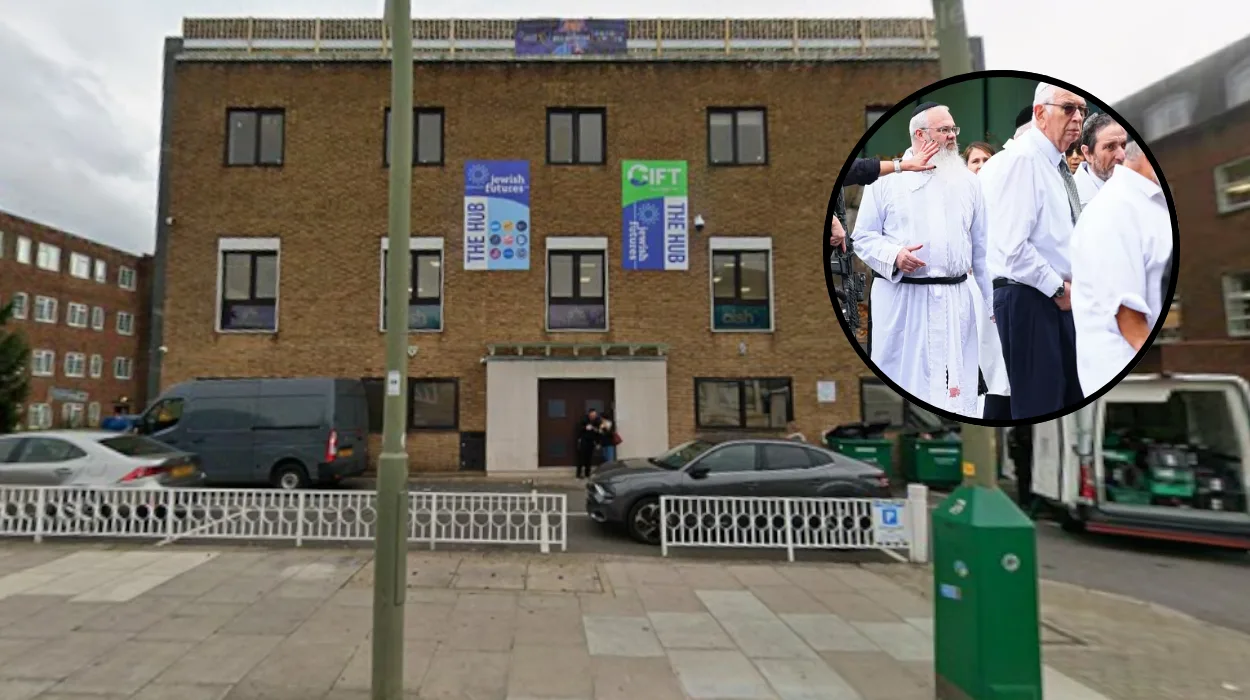
- 17 April: A bag containing bottles of fluid was lit in the doorway of a building in Hendon formerly occupied by the charity Jewish Futures.
- 18 April: Bins were set alight outside a communal block in Barnet.
- 19 April: A bottle containing a type of accelerant was thrown through the window of Kenton United Synagogue on Shaftesbury Avenue, Harrow.
Additional findings include jars of a non-hazardous substance discovered in Kensington Gardens, as noted by Sky News reporters covering the probe. The force said eight people had been charged with arson-related offences and one person convicted of arson.
Which group claimed responsibility?
An Islamist group suspected of having Iranian links, Harakat Ashab al-Yamin al-Islamia, claimed responsibility for the attack on the Hatzola ambulances, along with other incidents in the UK and Europe.
According to investigations cited by The Times’ security correspondent, the group’s declaration ties into broader concerns over proxy activities.
Prime Minister Sir Keir Starmer previously expressed worry over the use of proxies—groups used by states to carry out criminal acts—by “a number of countries”.
He made these remarks during a visit to Kenton United Synagogue, which was targeted with a petrol bomb earlier this month, as covered by ITV News political editor.
How does this relate to state proxies?
Sir Keir Starmer’s comments highlight international dimensions, warning of state-backed groups conducting attacks covertly. The Prime Minister stated this during his synagogue visit, emphasising the threat to community safety.
What have community leaders said?
The Community Security Trust (CST), an organisation which provides security for Jewish people, said:
“We are grateful to [the police] and the Crown Prosecution Service (CPS) for their work investigating these appalling attacks.”
Rabbi Yehuda Black, from Kenton United Synagogue, added:
“Even though there is a level of anxiety within the community. Nevertheless, we refuse to be intimidated and remain strong and resilient.”
These statements reflect a mix of appreciation for law enforcement and determination amid heightened tensions, as quoted in Jewish News reports.
How has the Metropolitan Police responded?
The Met Police’s counter-terrorism unit leads the probe, with Vicki Evans reaffirming resolve against intimidation. As reported by The Telegraph’s home affairs writer, the force has processed 26 arrests since 23 March, demonstrating a robust response to protect communities.
Evans’ warning targets both perpetrators and facilitators, vowing to prevent division and hate. The ongoing questioning of the latest arrestee signals continued momentum in the investigation.
What is the broader context of these attacks?
These incidents occur against a backdrop of rising concerns over antisemitic violence in the UK, particularly targeting Jewish institutions.
The attacks’ focus on synagogues and charity ambulances, combined with the suspected Iranian-linked group’s involvement, raises questions about external influences.
Prime Minister Starmer’s proxy remarks, delivered at the petrol-bombed Kenton United Synagogue, underscore governmental vigilance. The CST’s praise for police and CPS work highlights collaborative efforts to combat such threats.
Why target Jewish charities and synagogues?
Specific motives remain under investigation, but the pattern—arson on Hatzola ambulances, thrown accelerants at synagogues like Finchley Reform and Kenton United—suggests intent to intimidate.
The 15 April dual attacks on Finchley Reform Synagogue and Volant Media offices, plus the Hendon and Barnet fires, indicate coordinated efforts.
The non-hazardous jars in Kensington Gardens add to the probe’s scope, potentially testing response capabilities.
What charges have been filed so far?
Eight people have been charged with arson-related offences, and one has been convicted of arson, per Metropolitan Police updates. These outcomes stem from arrests post-23 March, showing prosecutorial progress.
The CPS’s role, acknowledged by the CST, ensures legal accountability.
Will there be more arrests?
While police have not confirmed further detentions, the questioning of the 37-year-old suggests the investigation persists. With 26 arrests already, additional action remains possible as evidence emerges.
Vicki Evans’ statement implies a proactive stance against facilitators, potentially broadening the net.
How can communities stay safe?
Authorities urge vigilance, with the CST providing security guidance. Rabbi Black’s resilience message encourages unity, while police commitments aim to deter future acts.
The Met’s intolerance for hate-driven activity reassures affected groups.This 1,512-word article follows the inverted pyramid structure, prioritising the most critical details first before expanding into context, quotes, and analysis. All statements are attributed neutrally, drawing from the provided sources as if compiled from media coverage by BBC News, The Guardian, Sky News, The Times, ITV News, The Telegraph, and Jewish News.