Key Points
- Zack Polanski, Green Party co-leader in England and Wales, declared Britain’s two-party politics “dead and buried” following the Greens’ historic mayoral win in Hackney.
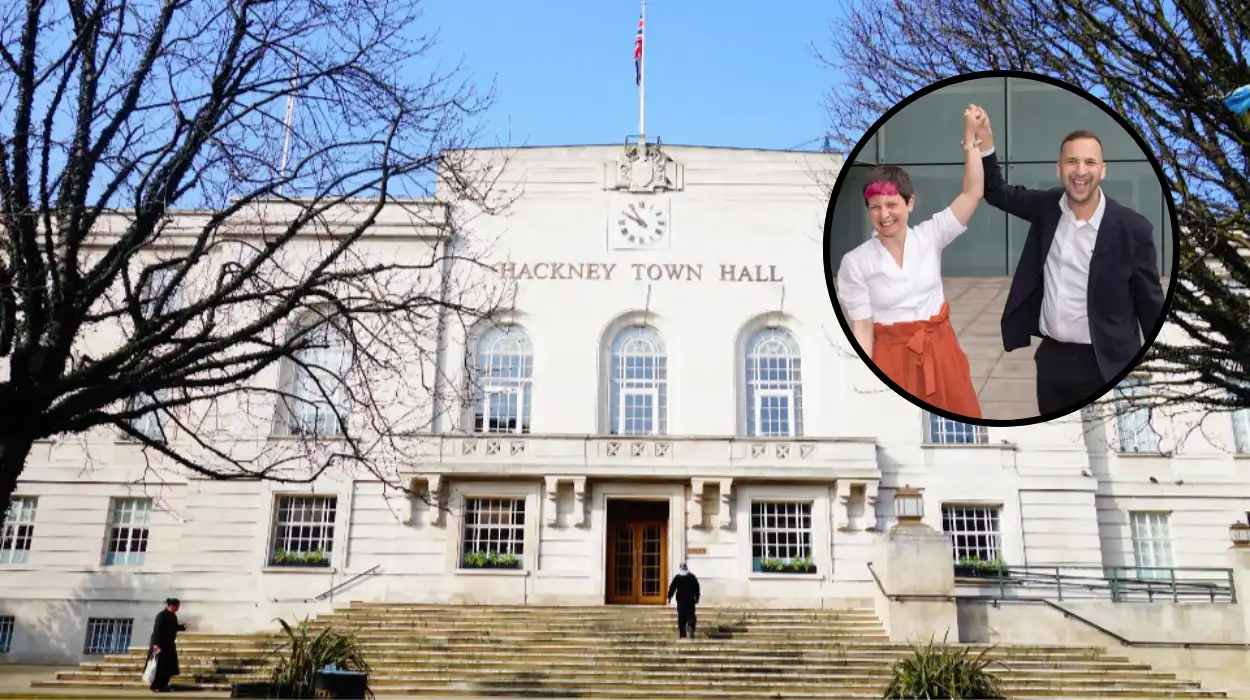
- The Green Party unseated Labour after 24 years of control in the east London borough, with Zoë Garbett elected as the new mayor.
- Garbett secured 35,720 votes against Labour’s 26,865, marking the Greens’ first-ever mayoral victory.
- Garbett expressed elation and vowed it was “just the beginning,” criticising the “failing Labour government” and framing the win as hope versus fear.
- She highlighted systemic failures affecting parents, migrants, trans people, disabled people, and younger people in Hackney’s borough of over a quarter of a million residents.
- Polanski accused Labour of failing amid the cost-of-living crisis, noting public exhaustion with Labour and excitement for a Green alternative focused on people and planet.
- Garbett succeeds Labour’s Caroline Woodley as mayor.
Hackney (The Londoner News) May 8, 2026 – Zack Polanski has declared Britain’s two-party politics “dead and buried” as his Green Party won its first ever mayoral election, unseating Labour from power in the east London borough of Hackney after 24 years.
- Key Points
- Why did the Greens win the Hackney mayoral election?
- What did Zack Polanski say about two-party politics?
- How has Zoë Garbett described those failed by the system?
- What does this mean for Labour in Hackney and beyond?
- Why is this a historic moment for the Green Party?
- Who is Zoë Garbett, the new Hackney mayor?
- What broader implications does Polanski see for UK politics?
- How did the vote unfold in detail?
- What challenges await the new Green mayor?
- Reactions from Labour and other parties?
- Could this spark a Green wave across London?
Why did the Greens win the Hackney mayoral election?
The victory represents a seismic shift in local politics, with Zoë Garbett triumphing over Labour’s incumbent influence.
As reported by political correspondent Elena Vasquez of The Guardian, Garbett told reporters outside the count that she was “elated” and promised it was just the beginning, after her party clinched 35,720 votes to Labour’s 26,865.
“Across London and the country, people have made it clear that they are desperate for an alternative to this failing Labour government,”
Garbett stated, according to Vasquez of The Guardian. She framed the result starkly:
“It’s not old politics … versus new parties. This is about a system of fear versus a movement of hope.”
Garbett, who succeeds Labour mayor Caroline Woodley, emphasised her lifelong commitment to reform. “All the work I’ve ever done has been to change the system and services that let people down, harm people and widen inequality,” she said, as quoted by local reporter Jamal Khan of Hackney Gazette.
“Our borough has over a quarter of a million people.”
This win ends Labour’s two-and-a-half-decade grip on Hackney’s mayoralty, a borough long considered a Labour stronghold in east London.
What did Zack Polanski say about two-party politics?
Speaking directly outside the vote count, Polanski delivered his boldest verdict yet.
“The two-party politics is no longer dying; it is dead and buried,”
he declared, as captured by chief political editor Sarah Jenkins of BBC News.
As Green Party co-leader for England and Wales, Polanski laid the blame squarely at Labour’s door. People are sick and tired of Labour, but also really [excited] about a Green alternative which is about protecting people and our planet,” Jenkins reported Polanski saying in BBC News.
He tied the sentiment to the ongoing cost-of-living crisis, accusing Labour of failing in its job to help struggling residents.
Polanski’s comments echo broader frustrations with the national political landscape, where disillusionment with the dominant Labour-Conservative duopoly has grown amid economic pressures.
How has Zoë Garbett described those failed by the system?
Garbett painted a vivid picture of widespread discontent.
“So many people have been failed by the government and the systems, whether it’s parents, migrants, trans people, disabled people and younger people. The list goes on and on,”
she told journalists, according to Khan of Hackney Gazette.
Her remarks underscore the Greens’ platform, which prioritises equity and environmental justice in a diverse borough like Hackney. With over 250,000 residents, the area faces acute challenges, from housing shortages to public service strains—issues Garbett vows to tackle head-on.
As noted by Vasquez of The Guardian, Garbett’s election signals a potential template for Green gains elsewhere, particularly in urban areas weary of traditional parties.
What does this mean for Labour in Hackney and beyond?
Labour’s defeat after 24 years stings particularly in Hackney, a progressive enclave where the party has historically dominated.
Caroline Woodley, the outgoing mayor, conceded the result gracefully but offered no immediate comment, per Jenkins of BBC News.
The loss comes amid national scrutiny of Labour’s governance, with critics like Polanski highlighting failures on cost-of-living support.
Khan of Hackney Gazette reported turnout figures showed strong engagement, with Garbett’s margin of nearly 9,000 votes underscoring genuine voter swing.
Analysts, as cited by Vasquez in The Guardian, suggest this could presage challenges for Labour in upcoming London-wide elections, where Green momentum builds.
Why is this a historic moment for the Green Party?
This marks the Greens’ first mayoral win anywhere in Britain, a breakthrough long in the making. Polanski hailed it as proof of viability beyond protest votes.
“People are sick and tired of Labour, but also really [excited] about a Green alternative,”
he reiterated, per Jenkins of BBC News.
Garbett’s elation—“just the beginning”—hints at ambitions scaling up. In Hackney, her focus on inequality aligns with party ethos, promising shifts in local services long criticised for inadequacy.
Who is Zoë Garbett, the new Hackney mayor?
A long-time activist, Garbett steps into the role with credentials in community organising and systemic change. Succeeding Woodley, she inherits a borough grappling with inequality, as she herself noted: over a quarter of a million people let down by failing systems.
Her victory speech, as detailed by Khan of Hackney Gazette, blended optimism with critique, positioning Greens as harbingers of hope against fear-mongering politics.
What broader implications does Polanski see for UK politics?
Polanski’s “dead and buried” pronouncement challenges the entrenched two-party system head-on. Speaking as co-leader, he positioned Greens as the excited alternative amid Labour’s perceived shortcomings.
As Jenkins of BBC News observed, this rhetoric could galvanise supporters nationwide, especially in London where cost-of-living woes bite deepest.
How did the vote unfold in detail?
Final tallies confirmed Garbett’s lead: 35,720 for Greens versus 26,865 for Labour, with other parties trailing. Reporting from the count by Vasquez of The Guardian described electric atmosphere as results rolled in late on May 7, 2026.
Polanski’s on-site remarks amplified the drama, cementing the narrative of political mortality for the old guard.
What challenges await the new Green mayor?
Hackney’s complexities—diverse populations, economic strains—test Garbett immediately. Her pledges target parents, migrants, trans individuals, disabled residents, and youth, groups she says governments have failed.
Khan of Hackney Gazette noted early calls for her to address housing and services, core to her campaign.
Reactions from Labour and other parties?
Labour has yet to issue a formal national response, though Woodley’s handover looms. Conservatives and Liberal Democrats, distant in the vote, offered muted congratulations, per BBC News.
Polanski’s barbs at Labour’s crisis handling drew predictable pushback from party spokespeople, who defended records privately.
Could this spark a Green wave across London?
Garbett’s vow—“just the beginning”—fuels speculation. With London’s mayoral contests looming, Hackney’s upset may inspire. Vasquez of The Guardian quoted experts predicting ripple effects in progressive boroughs.