Key Points
- Systemic Decline: High street bank branches across the United Kingdom have been in steady decline since the 1980s, a trend that accelerated drastically after 2015.
- London Hit Hardest: Between 2012 and 2022, the UK lost 39% of its physical bank branches, while London outpaced the national average with a 41% reduction.
- Vulnerable Groups Impacted: The loss of brick-and-mortar financial institutions disproportionately affects the elderly, disabled individuals, the digitally excluded, and rural areas, though urban pockets in London feel the strain acutely.
- The Shared Solution: Shared banking hubs—physical locations where major high street banks rotate a representative each day of the week—are emerging as a vital alternative to maintain local cash services.
- Competitive Allocation: Establishing a banking hub requires strict independent assessments of local needs, making the procurement process highly competitive for struggling neighborhoods.
- Grassroots Advocacy: Local champions, such as long-term postmaster Jignesh Patel in Anerley, are spearheading community efforts to fill the financial vacuum left by departing corporate banks.
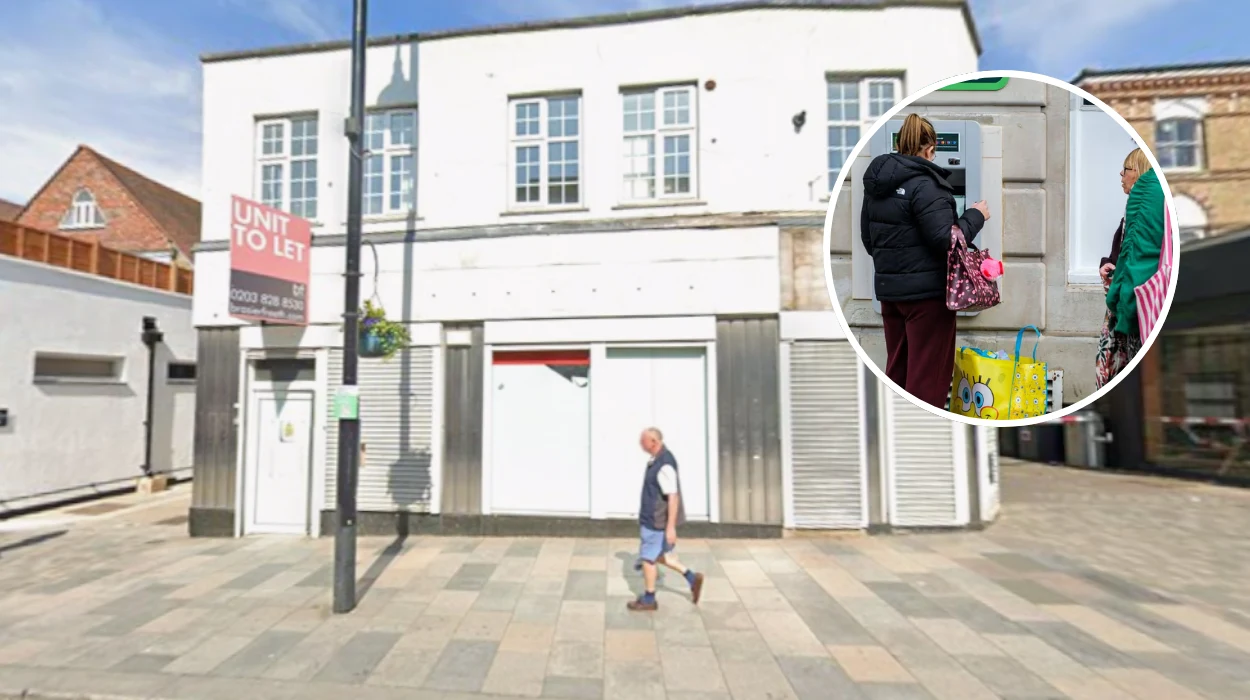
London (The Londoner News) May 21, 2026 – A sweeping transformation is reshaping the landscape of metropolitan finance as local communities across London rally to maintain physical connections to the financial world amid the relentless closure of traditional high street banks. Shared banking hubs have emerged as the leading institutional framework to combat this financial desertification, offering a consolidated space where competing major banks rotate services daily. However, securing these hubs has evolved into a highly competitive regulatory process, prompting local business owners, residents, and grassroots advocates to spearhead intense campaigns to validate their neighborhood’s complex cash demands.
- Why are high street bank branches disappearing across London?
- Who is most affected by the closure of traditional bank branches?
- What is a banking hub and how does it function?
- Why is it so difficult for a community to secure a banking hub?
- How are local shopkeepers driving the campaign for cash access in Anerley?
Why are high street bank branches disappearing across London?
The ongoing contraction of the UK’s physical banking network is not a recent phenomenon, but rather a long-term structural shift that has reached a critical tipping point. According to historical banking industry data compiled by financial analysts, the total number of retail bank branches across the United Kingdom has been on a downward trajectory since the peak of the 1980s. This wind-down process escalated dramatically from 2015 onwards, driven by corporate cost-cutting measures and the rapid consumer transition toward mobile application banking and contactless transactions.
The statistical reality of this retreat is stark. In comprehensive research published by economic correspondents tracking urban infrastructure, it was revealed that between 2012 and 2022, the total number of bank branches nationwide plummeted by 39%. London, despite its status as a premier global financial capital, actually outpaced the national average, suffering a staggering 41% reduction in its local branch network over the same ten-year window.
This aggressive contraction has left vast swaths of the capital without immediate access to traditional banking institutions. Retail banking giants have consistently defended the closures by pointing to declining footfall and the immense overhead costs associated with maintaining large, single-brand real estate footprints on high streets where the majority of transactions have successfully migrated online.
Who is most affected by the closure of traditional bank branches?
While commercial entities champion the efficiency of digital-first banking, the societal collateral damage of this transition remains extensive and deeply unequal. Independent social researchers and consumer advocacy groups have frequently pointed out that the loss of physical bank branches impacts specific demographic segments far more severely than others. The primary casualties of this digital migration include the elderly, individuals living with physical or cognitive disabilities, those facing severe digital exclusion due to poverty or a lack of technological literacy, and remote rural communities.
Although the vast majority of Greater London is geographically classified as urban or suburban rather than rural, community leaders emphasize that the socio-economic effects of banking deserts are felt with equal intensity within metropolitan boundaries. In dense London boroughs, vulnerable residents facing mobility impairments find it deeply challenging to travel several miles to an adjacent borough simply to speak to a human teller or deposit physical cash.
Furthermore, a significant portion of London’s lower-income population relies heavily on cash budgeting systems to manage household finances. When local branches vanish, these individuals are routinely exposed to predatory independent ATM fees or forced into digital systems they neither understand nor trust, widening the financial inequality gap across the city.
Explore More South London News
Ofsted Flags Attendance and Behaviour Issues at Welling School, Bexley 2026
Bunsik Opens First Korean Corndog Spot in Brixton, South London 2026
What is a banking hub and how does it function?
As high streets struggle to cope with vacant commercial storefronts and stranded consumers, the concept of a shared banking hub has been introduced as a viable structural compromise. A banking hub is officially defined as a shared, physical site designed specifically to protect and maintain local face-to-face cash services for both retail customers and small businesses.
The operational blueprint of a banking hub relies on a collaborative, cross-brand model that completely redefines traditional competitive retail banking:
- Daily Rotation: The hub operates out of a single, localized space that already exists within the community infrastructure, such as a former post office or a renovated retail unit.
- Major Bank Representation: Instead of belonging to a single brand, the site hosts a representative from a different major high street bank each day of the week.
- Locally Tailored: The specific schedule of which bank occupies the counter on any given day—whether it be Barclays, Lloyds, HSBC, NatWest, or Santander—is determined precisely by evaluating which financial brands hold the highest popularity and market share among the residents and businesses in that specific zip code.
- Universal Infrastructure: Everyday banking transactions, such as cash withdrawals, cheque deposits, and utility bill payments, can typically be executed at a unified counter every day, regardless of which specific bank representative is on duty in the private consultation spaces.
Why is it so difficult for a community to secure a banking hub?
Despite the clear benefits of these shared facilities, a banking hub cannot simply be ordered or built at will by concerned local councils. The allocation mechanism is governed by a highly formalized, strict, and competitive process managed by independent regulatory bodies such as LINK, the UK’s cash machine network operator, alongside the Banking Hub Company (Cash Access UK).
Before any hub can be approved, comprehensive technical and socio-economic assessments must be carried out to determine the absolute necessity of a hub in a given area. These evaluations look at a complex matrix of local variables, including:
- Local population density and demographic age profiles.
- The distance to the nearest remaining alternative free-to-use cash access point.
- The density of small commercial businesses that rely fundamentally on daily coin and note deposits to maintain cash flow.
- The reliability and accessibility of local public transport networks linking to nearby financial centers.
Because the financial backing for these hubs is drawn from a collective fund provided by the major banks themselves, the threshold for approval is incredibly high. Neighborhoods are effectively forced into a competitive arena, needing to prove that their local economy faces a state of existential crisis without physical cash infrastructure. This bureaucratic barrier means that without vocal local advocates pushing the case forward and compiling ground-level data, many deserving communities risk being overlooked by the centralized assessment algorithms.
How are local shopkeepers driving the campaign for cash access in Anerley?
The micro-effects of this systemic banking crisis and the immense effort required to fight back are perfectly illustrated in the south-east London district of Anerley. As reported by neighborhood desk journalists tracking community infrastructure, an exemplary case of grassroots resistance can be found in the ongoing efforts of Jignesh Patel, a dedicated local entrepreneur in Anerley. Patel has successfully operated a vital high street shop in the heart of the community since 2002, a business that he later strategically expanded into a counter-top post office to safeguard essential public services.
Over his twenty-four years of continuous operation on the Anerley high street, Patel developed a deep, frontline understanding of the shifting financial health of his neighborhood. He increasingly noticed that due to a complex range of overlapping factors, his entire community—comprising independent small businesses, market traders, and vulnerable local residents—was being systematically stripped of access to local services. This vacuum left them completely unable to safely bank their daily cash takings, obtain float change for their tills, or sit down with an experienced professional to discuss sensitive personal financial matters.
As detailed in community reports, small business owners in Anerley were increasingly forced to close their shops early or risk personal safety by traveling long distances with large quantities of cash to reach the closest surviving bank vaults. Observing the escalating distress of elderly customers who felt entirely alienated by digital-only options, Patel transformed his counter-top post office into an informal financial advisory point and began actively gathering evidence to build a robust case for a dedicated banking hub.
The proactive stance taken by community anchors like Patel underscores a growing realization across London: if local high streets are to survive the digital transition, the preservation of physical cash infrastructure cannot be left solely to the goodwill of major corporate boards; it must be fought for, structured, and maintained by the very people whose livelihoods depend on it.