Key Points
- Major Photographic Collaboration at Japan House London: Two highly influential photographers, Kawada Kikuji and Iwane Ai, are uniting for a landmark joint exhibition titled Kyotographie: Kawada Kikuji x Iwane Ai (originally announced as Invisible).
- Historic Milestone for Kensington Venue: Opening on June 3, 2026, and running through October 18, 2026, this event marks the first time that Japan House London has dedicated an entire exhibition gallery exclusively to the medium of photography.
- Exploration of Postwar Scars and Modern Folklore: The Japan House exhibition contrasts Kawada Kikuji’s seminal postwar examinations of national trauma and celestial occurrences with Iwane Ai’s intimate studies of Japanese-Hawaiian immigrant lineages and eerie, isolation-era Covid-19 nighttime landscapes.
- Institutional Partnership with KYOTOGRAPHIE: The exhibition is directed and organized in direct partnership with the curators of the KYOTOGRAPHIE International Photography Festival, marking the world-renowned Asian festival’s inaugural exhibition venture in the United Kingdom.
- A Feminist Rebalancing at the Photographers’ Gallery: Located in Soho, the Photographers’ Gallery will present Japanese Women Photographers: From 1950s to Now from June 24 to September 27, 2026, reframing the East Asian nation’s photographic history through the work of 27 female visual artists.
- Comprehensive Multi-Generational Visual Narrative: The Soho institutional showcase features over 200 photographs, video installations, and rare photobooks that spans identity politics, Japanese pop culture, high fashion, and everyday domestic life from the post-World War II reconstruction era to contemporary experimental movements.
London (The Londoner News) May 30, 2026 – A profound transformation of London’s cultural landscape is set to take place this June as two major central institutions bring the complex history, identity, and evolving visual landscape of Japanese photography to the forefront of the British capital. In an unprecedented institutional wave, Kensington’s Japan House London and Soho’s Photographers’ Gallery will launch distinct, large-scale summer exhibitions that challenge conventional historical perspectives. By pairing historic postwar masters with contemporary female voices, these exhibitions look beyond traditional representations of Japan to explore themes of cultural trauma, pandemic isolation, migrant narratives, and systemic gender imbalances.
- What Can Visitors Expect from the Japan House London Photography Exhibition?
- How Does Iwane Ai’s Imagery Explore Transnational Identity and Folk Traditions?
- Why Is the Photographers’ Gallery Shifting Its Focus to Women Photographers?
- Who Are the Groundbreaking Artists Featured in the Soho Exhibition?
- What Do the Curators and Program Directors Say About These Exhibitions?
- How Can the Public Access These Photography Exhibitions This Summer?
As documented in official curatorial announcements by the administration of Japan House London, the venue will premiere its first-ever dedicated photography exhibition, Kyotographie: Kawada Kikuji x Iwane Ai, on June 3, 2026. The exhibition brings together two prominent visual artists from differing generations whose works systematically unearth underlying layers of Japanese history and societal evolution. Meanwhile, a complementary visual narrative will unfold across the city on June 24, 2026, at the Photographers’ Gallery. According to the institution’s published summer programme, their upcoming exhibition, Japanese Women Photographers: From 1950s to Now, will gather 27 groundbreaking female artists to rebalance a national photographic legacy traditionally dominated by a single, patriarchal perspective.
What Can Visitors Expect from the Japan House London Photography Exhibition?
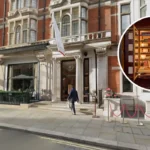
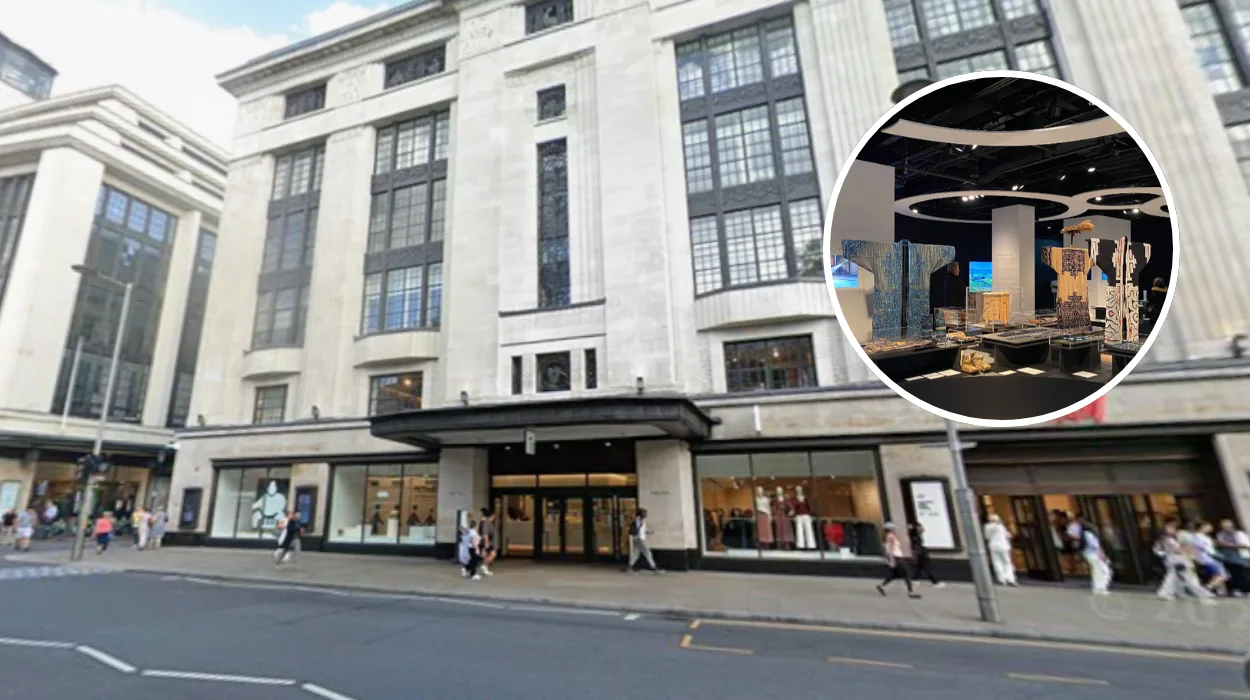
The exhibition at Japan House London, situated on Kensington High Street, serves as a significant critical exploration of memory and structural change. The project marks the first time Kawada Kikuji, aged 93, and Iwane Ai, aged 51, have ever exhibited alongside one another in a two-person format. The show brings the curatorial ethos of the prominent Kyoto-based international festival to the UK for the first time, establishing a direct bridge between Japanese archival imagery and contemporary European audiences.
As reported by the editorial staff of Mann About Town, the initial concept of the exhibition was developed under the working title Invisible, a term directly derived from Kawada’s personal philosophical musings on the nature of the camera lens. In an analytical profile published by Mann About Town, it was highlighted that Kawada explicitly believes that “capturing the ‘visible’ also highlights what is not visible, including the photographer.” This theoretical framework guides the layout of the gallery, wherein viewers are pushed to identify the unseen political and emotional currents within high-contrast, physical prints.
As outlined in the official press files released by Japan House London, the exhibition’s content is structurally divided to reflect the specific visual obsessions of both artists. Kawada’s contribution relies on an institutional review of his output since the 1950s, anchored by his masterwork, Chizu (The Map), published in 1965. The Map consists of abstract, high-contrast images documenting the physical architectural stains and burns left on the rubble of the Hiroshima Prefectural Industrial Promotion Hall following the atomic detonation of 1945.
Alongside these historical postwar remnants, the gallery will showcase Kawada’s more recent expansions into astronomical abstractions. In the official promotional materials printed by the Japan House curatorial board, his series The Last Cosmology is put forward as a key attraction. The series captures dramatic celestial phenomena, storm systems, and solar eclipses occurring throughout the late 20th century, which the artist explicitly links to the closing anxieties of the Shōwa era. Visitors will also encounter a physical display of contemporary digital photographs that the nonagenarian regularly uploads to his personal social media channels, demonstrating continuous artistic adaptation.
How Does Iwane Ai’s Imagery Explore Transnational Identity and Folk Traditions?
In contrast to Kawada’s focus on post-conflict landscapes, Iwane Ai’s work introduces a transnational perspective on displacement and communal memory. As detailed by the historical biographies maintained within the Japan House database, Iwane moved from Tokyo to attend secondary school in the United States during her youth, sparking an enduring artistic preoccupation with geographical boundaries and migration.
As reported in a detailed exhibition broadcast by PR Newswire, Iwane’s primary focus within the gallery rests upon her highly praised, award-winning documentary series titled Kipuka, which was published as a monograph in 2018. The series documents the evolving traditions and daily lives of Japanese immigrant families who settled in Hawaii, specifically tracing their genealogical roots back to the Fukushima Prefecture. Through this project, Iwane establishes a clear visual link between the agricultural labor movements of the early 20th century and the cultural retention seen in modern Hawaiian-Japanese communities.
In an event brief issued by the programming department of Japan House London ahead of a scheduled artist-led gallery tour, curators stated that Iwane’s practice “documents communities shaped by immigration and displacement, tracing how memory, environment and human experience shift over time.” This perspective is further realized in her secondary series on display, titled A New River (2020).
According to the curatorial notes provided by Sayaka Takahashi of Tokyo’s PGI Gallery, who curated Kawada’s section of the show, A New River was photographed entirely within the northeastern Tōhoku region during the height of the COVID-19 lockdown. The photographs present cherry blossoms blooming in eerie nighttime settings, devoid of human audiences due to quarantine restrictions. To elevate the sense of isolation, Iwane intentionally populated these long-exposure landscapes with masked figures and symbolic representations drawn from traditional Japanese folk mythology. The imagery serves as a dual commentary on environmental permanence, collective grief, and the invisible threat of a modern pandemic.
Explore More Photo Galleries
Selena Gomez Unveils Stylish Wardrobe For OMITB Filming: London 2026
Why Is the Photographers’ Gallery Shifting Its Focus to Women Photographers?
Further east, in Soho, the Photographers’ Gallery is launching an ambitious institutional re-evaluation of Japanese visual culture. The exhibition, titled Japanese Women Photographers: From 1950s to Now, opens on June 24, 2026, and acts as a direct challenge to the historical narratives that have overlooked female contributions to the medium.
As stated in the official exhibition manifesto published by the administration of The Photographers’ Gallery, the overarching goal of the project is to provide “a powerful rebalancing of a history too often told through a single, male-dominated lens.” The institution emphasizes that for decades, standard international textbooks and museum surveys focusing on Japanese avant-garde photography have heavily favored male collectives, such as the influential Provoke movement of the late 1960s. By placing female voices at the core of their summer schedule, the gallery aims to show how women have driven innovation in fashion, street photography, and performance art.
As reported by art critic Anzu Shida for The London Visual Arts Review, the London exhibition features more than 200 distinct objects, including vintage gelatin silver prints, contemporary video installations, mixed-media conceptual works, and rare photobooks. The exhibition is tied directly to the recent major publication I’m So Happy You Are Here: Japanese Women Photographers 1950s to Now, which was published by the Aperture Foundation in 2024. Shida notes that the exhibition tracks social shifts across generations:
“The layout moves from the domestic restrictions faced by female artists in the immediate post-World War II period to the explosive, subcultural defiance exhibited by the younger generations during the economic bubble of the 1990s and the digital era.”
Who Are the Groundbreaking Artists Featured in the Soho Exhibition?
The exhibition covers several generations of creative output, bringing together 27 distinct artists whose styles range from documentary realism to surrealist digital collage. By showcasing these artists together, the gallery explores how Japanese women have subverted the male gaze and reclaimed agency over their own representation.
As reported in a comprehensive cultural guide written by the editorial team at Time Out London, the artist roster includes internationally recognized figures alongside experimental practitioners whose works have rarely been seen outside of East Asia. The guide confirms that the exhibition includes pieces by Ishikawa Mao, Ishiuchi Miyako, Katayama Mari, Kawauchi Rinko, Ninagawa Mika, and Nishimura Tamiko. Each artist offers a distinct perspective on the realities of modern Japanese life and identity.
As noted by assistant curator José Neves during a preview address hosted by The Photographers’ Gallery, these artists do not represent a single style. Instead, they form a varied collective that has actively challenged societal norms surrounding the family unit, feminine behavior, and state authority over several decades.
What Do the Curators and Program Directors Say About These Exhibitions?
The organization of these two major exhibitions has required extensive international collaboration between British cultural institutions, independent global archives, and Japanese creative foundations.
As reported by the arts desk of PR Newswire, Simon Wright, the Director of Programming at Japan House London, expressed the institution’s pride regarding the historic nature of their new project. In a formal statement, Wright explained:
“This is the first time Japan House London is dedicating an exhibition to photography. It is a great privilege to present these two artists who are concerned with phenomena that resonate with us all. The show is filled with stories from the past and present that, on reflection, encourage us to contemplate our futures together, regardless of where we are from.”
As confirmed by institutional press releases, the London presentation of Japanese Women Photographers was shaped by a collaborative curatorial team consisting of international photography historians Lesley A. Martin, Takeuchi Mariko, and Pauline Vermare. For the specific installation at the Ramillies Street building in Soho, the team worked in conjunction with independent curator Taous Dahmani and assistant curator José Neves.
In a technical handout distributed to members of the press by The Photographers’ Gallery, the curatorial team noted that organizing the exhibition required financial and logistical backing from a wide network of international bodies. These include the Rencontres d’Arles photography festival in France, the Ishibashi Foundation, the Kering Women In Motion program, the Anne Levy Charitable Trust, the 1970 Japan World’s Exposition Memorial Fund, and the Great Britain Sasakawa Foundation. This extensive institutional backing highlights the global significance of bringing these photographic histories to light.
How Can the Public Access These Photography Exhibitions This Summer?
Both venues have finalized their ticketing structures, opening hours, and visitor guidelines to accommodate the high attendance expected throughout the summer season.
According to the visitor information desk at Japan House London, admission to Kyotographie: Kawada Kikuji x Iwane Ai remains entirely free to the public, though advanced online booking is recommended to guarantee entry. The gallery operates from 10:00 to 20:00 Monday through Saturday, and from 12:00 to 18:00 on Sundays. The venue notes that its reservation system allocates approximately 40 minutes per guest within the main exhibition room to avoid overcrowding. To provide additional value, the institution is offering a 20 per cent dining discount at its first-floor restaurant, Akira, for all pre-booked exhibition ticket holders until October 30, 2026.
As detailed on the ticketing portal of The Photographers’ Gallery, entry to Japanese Women Photographers: From 1950s to Now is priced at £12 for standard in-person walk-ins, with concession tickets available at £9, and National Art Fund passes set at £6. For visitors purchasing their passes online ahead of time, prices are discounted to £10 for general admission and £7.50 for concessions. Gallery members receive free admission at all times. In line with the institution’s long-standing community access policy, entry to all gallery floors is free to the general public on Fridays after 17:00.