
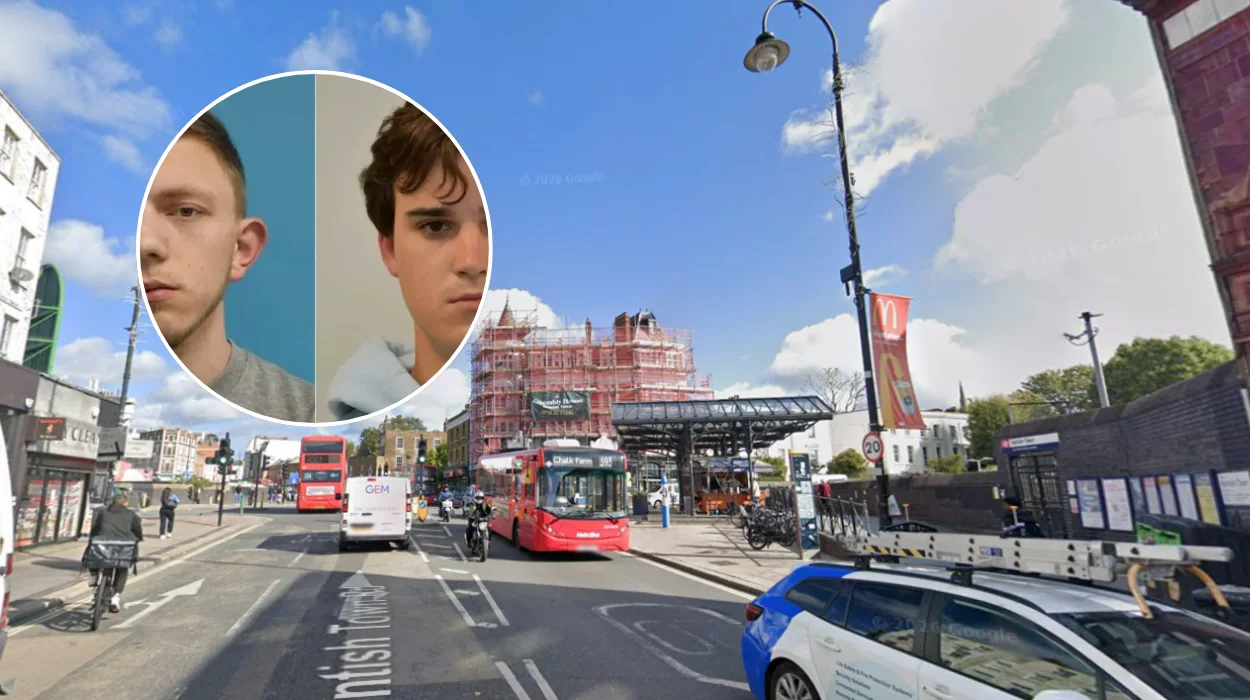
Key Points
- Guilty Verdicts: Roman Lavrynovych, 22, and Stanislas Carpiuc, 27, have been convicted at the Old Bailey of conspiracy to damage property by fire.
- Aggravated Charges: Lavrynovych was additionally convicted on two counts of damaging property by fire being reckless as to whether life is endangered.
- Target Profile: The criminal acts targetted two residential homes and a Toyota RAV4 motor vehicle, all directly linked to the Prime Minister, Sir Keir Starmer.
- Acquittal Delivered: A third co-defendant, Petro Pochynok, 35, was acquitted by the jury of the conspiracy charge.
- The Method Used: Accelerated blazes were set in the early hours of consecutive nights using petroleum distillates, such as white spirit, poured onto front doors.
- Coordinated Execution: Digital forensics showed Carpiuc acted as an organizer managing logistics and payments, while Lavrynovych physically ignited the blazes and photographed the destruction.
- Prosecutorial Stance: The Crown Prosecution Service (CPS) established that proving an explicit political or ideological motive was not legally required to secure convictions for these reckless acts.
- Sentencing Date: Both convicted individuals remain in custody and are scheduled to receive their sentences at the Old Bailey on Friday, 19 June 2026.
London (The Londoner News) June 15, 2026 – Two men face lengthy prison sentences after being convicted at the Central Criminal Court (the Old Bailey) for launching a series of deliberate, life-threatening arson attacks against residential properties and a vehicle in north London linked directly to the Prime Minister, Sir Keir Starmer. Following a comprehensive criminal trial, 22-year-old Roman Lavrynovych and 27-year-old Stanislas Carpiuc were found guilty of conspiracy to damage property by fire. Lavrynovych was further convicted on two distinct counts of arson being reckless as to whether life is endangered, following an intensive counter-terrorism and special crime investigation into three blazes lit over a five-day window in May 2025. A third individual, Petro Pochynok, 35, was formally cleared of the conspiracy charge by the jury.
- Key Points
- What Happened During the North London Arson Attacks?
- Who Were the Individuals Involved in the Old Bailey Trial?
- How Did the Prosecution Prove the Conspiracy Case?
- Did the Arson Attacks Have a Political Motivation?
- What Has the Crown Prosecution Service Said About the Verdicts?
- When Will Roman Lavrynovych and Stanislas Carpiuc Be Sentenced?
The targeted campaign unfolded across consecutive nights in the Kentish Town area, utilizing volatile chemical accelerants poured onto the wooden front doors of inhabited family homes while occupants slept inside. While the Crown Prosecution Service (CPS) made clear that their legal case did not rely on proving a definitive political, ideological, or personal grievance against the Prime Minister—nor proving that the defendants explicitly knew who owned the targeted assets—prosecutors successfully argued that orchestrating late-night fires in built-up urban residential zones carried an inherent, undeniable risk to human life.
Forensics, mobile phone tracking, and encrypted chat logs exposed a structured operational relationship where Carpiuc handled financial arrangements and strategic planning, while Lavrynovych executed the physical attacks, even returning to the smouldering scenes to photograph his handiwork. Both men have been remanded in custody ahead of their formal sentencing hearing at the Old Bailey, which is judicially scheduled for Friday, 19 June 2026.
Explore more North London Crime News:
London Man Jailed For Antisemitic Death Threats: North London 2026
Golders Green stabbings: Jewish men attacked in terrorist incident, 2026
What Happened During the North London Arson Attacks?
According to detailed evidentiary timelines released by the Crown Prosecution Service’s Special Crime and Counter Terrorism Division, the targeted campaign of destruction occurred over three distinct nights in a residential pocket of Kentish Town, north London, in May 2025.
The first incident occurred in the early hours of Thursday, 8 May 2025. Emergency services and local residents reported that a Toyota RAV4 motor vehicle had suddenly been engulfed in flames. While initial emergency responders did not immediately classify the roadside vehicle fire as a sinister act, meticulous forensic examinations of the charred chassis later revealed that the car had been intentionally set alight. Arson investigators confirmed that a direct flame source had been deliberately applied to the front end of the vehicle on the driver’s side.
Three nights later, during the quiet, early morning hours of Sunday, 11 May 2025, a secondary and substantially more dangerous fire was reported at a residential house within the same Kentish Town neighbourhood. Fire investigators and Metropolitan Police officers immediately recognized the hallmarks of a deliberate, malicious ignition.
Physical evidence collected at the doorstep indicated that a liquid petroleum distillate—specifically identified by chemical analysis as white spirit—had been poured generously onto the wooden front door of the family home and set ablaze. The fire caught rapidly, burning through the external barriers and spreading directly into the interior hallway of the premises. This rapid spread directly threatened the lives of the residents sleeping upstairs, who were forced to flee the smoke-logged property.
The final attack took place just twenty-four hours later, in the early hours of Monday, 12 May 2025. Emergency crews were dispatched to another residential house located a short distance from where the initial Toyota RAV4 had been destroyed. In an identical operational pattern, the perpetrators poured white spirit or a closely related ignitable liquid over the front door of the property before initiating the fire. The resulting inferno and toxic smoke plumes blocked primary exit paths, once again placing the building’s occupants in extreme physical peril.
Who Were the Individuals Involved in the Old Bailey Trial?
The criminal prosecution focused heavily on three men of eastern European descent residing in different sectors of London and Essex, each accused of playing distinct roles in the conspiracy.
Roman Lavrynovych
Born on 6 February 2004, the 22-year-old resident of Sydenham, southeast London, was identified by the Crown as the primary physical actor. The prosecution presented an overwhelming array of physical and electronic evidence showing that Lavrynovych was the individual who physically traveled to Kentish Town on all three nights, poured the chemical accelerants, and struck the matches that ignited the properties. He was convicted of one count of conspiracy and two aggravated counts of arson being reckless as to whether life is endangered.
Stanislas Carpiuc
Born on 15 July 1998, the 27-year-old resident of Romford, Essex, did not physically strike the matches but was positioned as the operational mastermind behind the scenes. The jury found Carpiuc guilty of one count of conspiracy to damage property by fire, agreeing with the state’s case that he maintained a vital, coordinating role in orchestrating the arson campaign.
Petro Pochynok
A third co-defendant, 35-year-old Petro Pochynok, was also placed on trial alongside Lavrynovych and Carpiuc on a charge of conspiracy to damage property by fire. However, after reviewing the evidence and deliberating on his specific level of involvement, the Old Bailey jury found Pochynok not guilty, resulting in his full acquittal.
How Did the Prosecution Prove the Conspiracy Case?
The conviction of the two men relied heavily on advanced digital forensics, cell site analysis, and mobile phone intelligence compiled by specialized cybercrime units working alongside counter-terrorism officers.
As detailed in the formal prosecution summary published by the Crown Prosecution Service, the state’s legal team constructed a watertight case around communication data recovered directly from mobile devices seized during the arrest phase. An analysis of encrypted messaging applications and standard cellular data proved continuous, highly coordinated contact between Carpiuc and Lavrynovych leading up to and during the exact windows when the blazes were set.
The digital footprints left behind by the defendants included:
- Pre-Attack Planning: Texts and data showing logistical arrangements, detailing how the targets would be approached and what materials were required.
- Financial Management: Recovered message data proving that Carpiuc was responsible for handling specific payment transfers and financial rewards linked to the successful execution of the property damage.
- Location Tracking: Cell site data and localized mobile pings that placed both defendants directly within the geographical vicinity of the Kentish Town target sites at the precise times the fires erupted.
- Reconnaissance Evidence: Digital files revealing that Lavrynovych conducted physical reconnaissance of the north London addresses prior to launching the attacks.
- Photographic Verification: Most damaging to the defense, data logs proved that Lavrynovych systematically returned to the targeted homes and the burnt Toyota RAV4 shortly after the emergency services extinguished the blazes. He took high-resolution photographs of the structural destruction, which were then transmitted back to Carpiuc as photographic proof of performance to trigger their financial payout.
Did the Arson Attacks Have a Political Motivation?
One of the most legally significant elements of the trial at the Old Bailey was how the Crown Prosecution Service framed the underlying intent of the crimes. In many high-profile cases involving high-ranking public officials, establishing a political or terroristic motive is central to the state’s argument. However, in this instance, the prosecution chose a different strategy.
The prosecution explicitly clarified to the judicial bench and the jury that the state’s case did not depend on proving a specific political, ideological, or anti-government motivation. Furthermore, the Crown maintained that it was not legally necessary to prove that either Roman Lavrynovych or Stanislas Carpiuc possessed definitive knowledge that the suburban properties and the Toyota vehicle were legally or personally linked to the Prime Minister, Sir Keir Starmer.
Instead, the legal threshold for conviction was met by proving that the men entered into an illegal agreement to intentionally unleash fire within densely populated, terraced residential streets. Prosecutors successfully argued that choosing to pour volatile chemical liquids onto the entry and exit doors of homes in the dead of night automatically demonstrated a total disregard for human life, making the acts inherently reckless and criminal regardless of who lived inside the properties.
What Has the Crown Prosecution Service Said About the Verdicts?
Following the delivery of the guilty verdicts by the Old Bailey jury, senior officials within the British justice system expressed their strong condemnation of the defendants’ actions, emphasizing that the severity of the sentences should reflect the profound danger posed to public safety.
As officially recorded and published by the Crown Prosecution Service, Frank Ferguson, the Head of the CPS Special Crime and Counter Terrorism Division, issued a comprehensive statement detailing the broader societal impact of the convictions:
“These were deliberate and dangerous acts of arson, carried out against properties and a vehicle linked to the Prime Minister, and they posed a serious risk to life. Such offences go beyond damage to property – they are intended to intimidate and undermine public confidence, and that will not be tolerated.”
In concluding his post-verdict address, Frank Ferguson of the CPS Special Crime and Counter Terrorism Division reinforced the government’s unwavering stance against targeted violence, stating:
“Today’s convictions demonstrate that those who commit criminal acts, including acts of arson, to pursue their, or others’ agendas, will be investigated thoroughly and prosecuted robustly. The CPS will continue to work closely with our partners in law enforcement to ensure that anyone responsible for this kind of criminal behaviour is held fully accountable.”
When Will Roman Lavrynovych and Stanislas Carpiuc Be Sentenced?
With the trial phase concluded and the guilty verdicts officially entered into the judicial record at the Central Criminal Court, the focus of the English legal system shifts entirely toward determination of penalty.
The presiding judge at the Old Bailey has officially remanded both Roman Lavrynovych and Stanislas Carpiuc in custody, revoking any existing bail privileges due to the severe nature of the convictions and the statutory prison terms associated with aggravated arson and conspiracy.
The two convicted men are scheduled to be brought back up from the holding cells to sit in the dock at the Old Bailey on Friday, 19 June 2026, where they will hear their formal sentences handed down. Under English criminal law, offences involving arson with recklessness as to whether life is endangered carry a maximum penalty of life imprisonment, ensuring both individuals face a substantial period of incarceration.