Key Points
- Urgent Safety Appeal: The London Fire Brigade (LFB) has issued an urgent plea to parents, guardians, and teachers across the capital to initiate vital water safety conversations with children as Drowning Prevention Week commences.
- Spike in National Incidents: The safety appeal follows a deeply concerning surge in accidental drownings across the United Kingdom during a recent heatwave, with a significant proportion of the casualties involving young children.
- Tragic Local Statistics: While London did not record any accidental drownings during the most recent heatwave, the tragic deaths of a mother and her son in the River Brent in April brought the capital’s accidental drowning toll to 112 individuals since 2020.
- Interactive Mapping Innovation: To actively assist families and educators in identifying regional hazards, the LFB has developed and launched an innovative, interactive water safety map illustrating every water-related incident attended by London firefighters.
- Comprehensive Historical Data: The newly released mapping tool visualises more than 1,500 water-related emergency incidents across the capital since 2020, allowing users to actively scan and filter data by location, year, and specific hazard.
- Joint Institutional Response: Senior London officials, including London Fire Commissioner Jonathan Smith and Deputy Mayor for the Fire Service Jules Pipe, have taken the proactive step of writing directly to every school headteacher and principal in the capital to enforce preventative measures.
- Hidden Underwater Hazards: Authorities warn that despite scorching atmospheric temperatures, inland bodies of water across London regularly remain below 16°C, presenting extreme risks of immediate cold water shock, hidden debris, strong currents, and sudden depth drops.
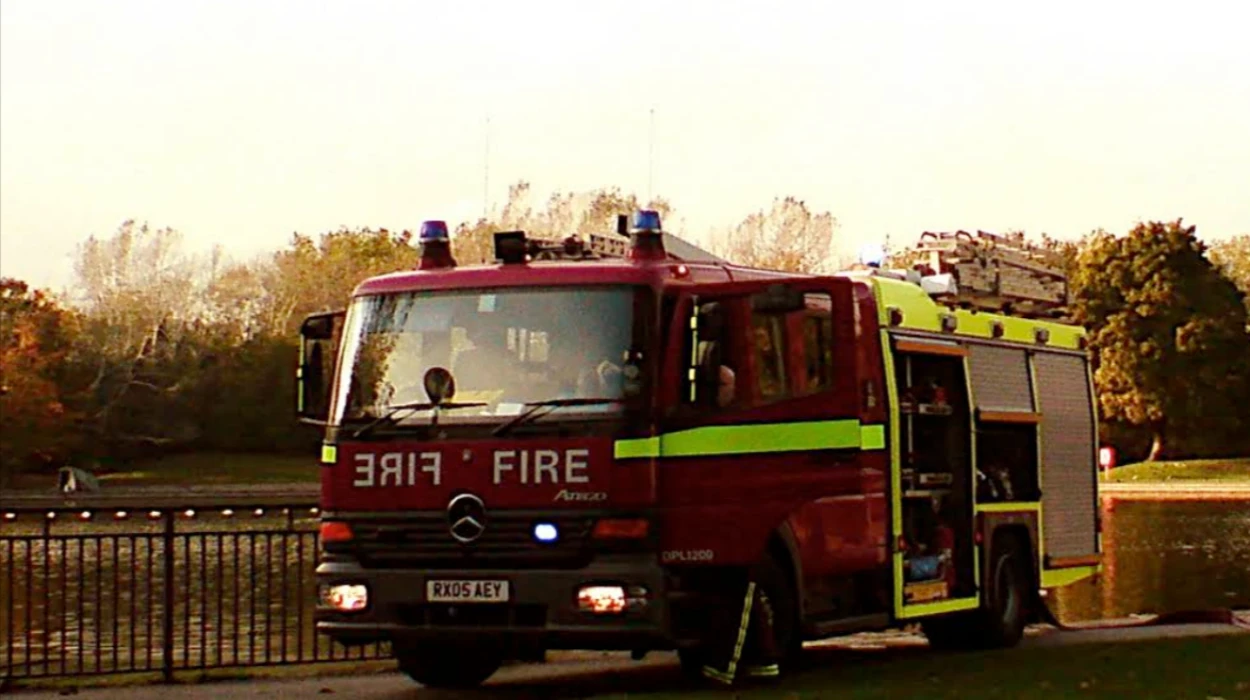
London (The Londoner News) June 16, 2026 – The London Fire Brigade has officially launched a major public safety campaign, calling upon parents, guardians, and educators across the capital to have urgent, frank conversations with children regarding the hidden dangers of open water. The emergency service’s widespread appeal coincides directly with the launch of Drowning Prevention Week and arrives amid a return of warmer summer weather across Greater London. Brigade officials confirmed that this public intervention was directly prompted by a distressing wave of accidental drownings recorded across the wider United Kingdom during a recent intense heatwave, an alarming number of which involved children and young teenagers.
- Why Is the London Fire Brigade Issuing This Urgent Appeal Now?
- How Does the New Interactive Water Safety Map Function?
- What Are the Hidden Dangers of London’s Open Waterways?
- How Are London Schools and Local Authorities Responding to the Crisis?
- What Definitive Water Safety Advice Should Parents Follow?
- What Crucial Survival Steps Must Individuals Take If Caught in Trouble?
Although emergency data indicates that London thankfully avoided any fatal water-related incidents during that specific heatwave period, local figures remain stubbornly high. The capital’s baseline statistics were profoundly impacted in April by the tragic, high-profile deaths of a mother and her son in the River Brent. According to official emergency logs, those two fatalities pushed the total number of accidental drownings attended by the London Fire Brigade across the capital to 112 individuals since the start of 2020. To proactively support safety discussions at home and within classrooms, the Brigade has engineered and deployed a new interactive water safety map, which serves as a visual record pinpointing exactly where firefighters have been forced to respond to water-related crises.
Why Is the London Fire Brigade Issuing This Urgent Appeal Now?
The timing of the campaign is dictated by a dangerous convergence of rising seasonal temperatures and a statistical spike in national water-related fatalities. As reported by journalist Tom Austin-Morgan of the International Fire and Safety Journal, the London Fire Brigade’s appeal has been explicitly targeted at parents, guardians, and teachers to ensure children are fully briefed on open water hazards as Drowning Prevention Week begins and warmer weather returns across the capital.
The emergency service stated that its current mobilisation follows a concerning number of accidental drownings across the UK during the recent heatwave, many of which involved children. While the capital escaped casualties during the latest hot spell, the threat remains acutely local. As documented in the official safety briefings published by the London Fire Brigade’s internal communications team, the devastating deaths of a mother and son in the River Brent in April brought the number of accidental drownings attended by London Fire Brigade in the capital to 112 since 2020.
Emergency services recognise that heatwaves naturally drive young people toward open water, but the stark contrast between air temperature and water temperature introduces lethal physical risks that the Brigade is desperate to mitigate through early education.
Explore more Local London News:
Man Arrested Over Infamous 2017 Bus Push Incident: Putney, 2017
Sea Lanes Floating Lido Opens at Canary Wharf, East London 2026
How Does the New Interactive Water Safety Map Function?
To bridge the gap between abstract warnings and geographical reality, emergency planners have turned to data visualisations to educate the public. As reported by Tom Austin-Morgan of the International Fire and Safety Journal, to support safety conversations at home and in schools, the London Fire Brigade has launched an interactive water safety map showing where firefighters have attended water-related incidents.
The technical parameters and scope of this new digital tool include:
- Extensive Incident Database: The map includes more than 1,500 water-related incidents attended by the Brigade since 2020.
- Granular Search Capabilities: Users can search for specific waterways, parks, and other localized landmarks to evaluate their immediate surroundings.
- Advanced Filtering Options: The public can filter incidents by specific calendar years and view precise hazards recorded at particular locations.
According to statements released by the London Fire Brigade, it hopes the tool will help Londoners identify higher-risk areas and discuss the dangers of swimming in rivers, reservoirs, lakes, and other open water. Rather than issuing blanket bans on swimming, the map allows parents and teachers to show young people the exact spots in their own neighbourhoods where emergency rescues have previously transpired.
What Are the Hidden Dangers of London’s Open Waterways?
The primary obstacle to water safety is the deceptive appearance of inland water sources, which often look calm, inviting, and entirely safe to an untrained child. In a joint public safety directive issued by London Fire Commissioner Jonathan Smith, Deputy Mayor for the Fire Service Jules Pipe, and Robin Mortimer, Chief Executive of the Port of London, the officials warned that summer weather creates a false sense of security.
As officially recorded by the London Fire Brigade’s media department, London Fire Commissioner Jonathan Smith stated:
“We know that the warmer weather can tempt children and young people to cool off in rivers, reservoirs and lakes, but even in hot weather most inland water in London remains below 16°C, which can cause cold water shock and lead to drowning.”
Adding further detail regarding the unseen physical environment beneath the surface, Commissioner Jonathan Smith added:
“Many Londoners, including parents, are not aware that despite its calm surface, open water can have strong currents, hidden debris, slippery edges, and sudden drops in depth – all of which could prove fatal.”
What Is Cold Water Shock?
Cold water shock is an involuntary bodily response that occurs when a person is suddenly immersed in water below 15°C. The sudden drop in skin temperature triggers an immediate gasp for air, followed by prolonged hyperventilation. If a individual’s head is underwater during that initial gasp, they can inhale water directly into their lungs, leading to instant drowning. Furthermore, the rapid cooling of the limbs causes blood vessels to constrict, spiking blood pressure and leading to rapid muscle fatigue, which incapacitates even the strongest of competitive swimmers within minutes.
What Lies Beneath the Surface?
Inland waterways such as the River Brent or the River Thames contain extensive industrial and natural debris. Sunken shopping trolleys, discarded bicycles, sharp metallic objects, and tangled tree roots sit invisibly beneath the surface. Swimmers jumping into these waters risk severe impact injuries, entrapment, or becoming entangled in underwater weeds, making it impossible to resurface.
How Are London Schools and Local Authorities Responding to the Crisis?
The prevention strategy relies heavily on a coordinated, institutional approach that directly targets educational environments before the summer holidays begin. As reported by Tom Austin-Morgan of the International Fire and Safety Journal, as part of its prevention work, London Fire Brigade has written to schools across the capital asking them to share water safety messages with parents and carers.
The escalation of this strategy involved direct, high-level political intervention. According to official regional logs published by the London Fire Brigade, following a number of accidental drownings across the UK during the most recent heatwave, London Fire Commissioner Jonathan Smith, Deputy Mayor for the Fire Service Jules Pipe, and Robin Mortimer, Chief Executive of the Port of London, wrote to every headteacher and principal in London, again asking for their support in disseminating these critical safety materials.
In his concurrent public address, Deputy Mayor Jules Pipe reinforced the gravity of the ongoing situation, stating:
“But as we have tragically seen over the years, waterways and open water come with dangerous and in many cases hidden risks for all ages, but particularly young people. That’s why I am calling on parents, guardians, and teachers to ensure they speak to children about water safety.”
Deputy Mayor Jules Pipe explicitly endorsed the technical intervention, adding:
“To help with this, the London Fire Brigade have launched an interactive water safety map, which shows the locations where firefighters have previously attended water-related incidents. By using this map, you can keep your children away from water hazards.”
What Definitive Water Safety Advice Should Parents Follow?
To assist parents and guardians in maintaining physical control and visibility over their children during outdoor excursions, the London Fire Brigade has published a set of practical, actionable guidelines.
As detailed within the London Fire Brigade’s official water safety advice documentation, parents are urged to execute the following preventative measures:
Child Visibility and Supervision
- Bright Attire: Dress your children in something bright or recognisable – it’s easier to keep an eye on them when areas become crowded.
- Unwavering Attention: Never assume that someone else is watching your child for you unless they have clearly agreed to do so, and always keep your child within reaching distance around water.
Managing Domestic and Inflatable Risks
- Strict Inflatable Limitations: Only use inflatables in the swimming pool – not at the beach or on open water where they can easily drift far away due to offshore winds and tidal currents.
- Immediate Drainage: Empty paddling pools and buckets as soon as they have been used and turn them upside down to prevent toddlers from falling in.
- Securing Garden Hazards: Prevent access to home swimming pools or garden ponds by ensuring they have self-closing gates, secure fences, grilles, and robust locks.
Additionally, as reported by Tom Austin-Morgan of the International Fire and Safety Journal, the Brigade is actively encouraging people to follow safety information displayed at waterways, including guidance on designated swimming areas, water quality, and local risks.
What Crucial Survival Steps Must Individuals Take If Caught in Trouble?
In scenarios where preventative measures fail and an individual unexpectedly finds themselves trapped in a body of water, emergency services emphasize a specific behavioral protocol designed by the Royal National Lifeboat Institution (RNLI) and heavily promoted by the LFB.
According to the official emergency response directives issued by the London Fire Brigade, if you find yourself in trouble in water, you must strictly adhere to the following chronological survival sequence:
The ‘Float to Live’ Protocol
- Resist the Urge to Swim: Rather than struggling or panicking, which expends critical energy and accelerates water inhalation, individuals must ‘float to live’.
- Position the Head: Tilt your head back with your ears completely submerged and gently move your hands to help you stay afloat on the surface.
- Extend the Limbs: Spread your arms and legs out wide – the Brigade explicitly notes that it is perfectly OK if your legs sink slightly during this process.
- Regulate Breathing: Once your physical breathing is under total control, call out loudly for help or calmly swim to safety if an exit route is accessible.
Emergency Action for Bystanders
The London Fire Brigade has also issued clear instructions for friends, families, or bystanders who witness someone else falling into a waterway. As stated by London Fire Commissioner Jonathan Smith, adults must reassure children that they should call 999 if a friend goes into the water, even if they are scared to get into trouble.
The Commissioner stressed that under no circumstances should untrained individuals enter the water to attempt a rescue themselves, as this frequently results in the bystander becoming a secondary casualty. Instead, the public must immediately alert emergency services, seek out localized life-saving equipment such as throwlines or lifebuoys, and shout clear instructions to the victim to tilt their head back and float.