Key Points
- Kingston Council has published the final draft of its new Local Plan, outlining the development framework for the South London borough from its expected adoption in 2028 until 2043.
- The extensive 15-year blueprint allocates designated sites across the borough to deliver nearly 20,000 new homes, impacting key areas such as Chessington, New Malden, Surbiton, and Kingston town centre.
- Controversially, the development strategy does not spare protected land, earmarking parcels of the green belt and Metropolitan Open Land (MOL) for hundreds of residential units.
- Major transport hubs, public car parks, and prominent retail spaces—including the John Lewis site, Eden Walk Shopping Centre, and multiple railway stations—have been designated for high-density redevelopment.
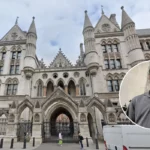
- The local administration has faced severe backlash from community members and political opponents, leading to public protests outside the Guildhall amid accusations of a betrayal of public trust and rushed processes.
- Because the borough currently relies on an outdated strategy from 2012, it faces a legal “presumption in favour of sustainable development,” severely limiting the council’s ability to refuse speculative planning applications.
- A pivotal vote by the Full Council on Monday, June 22, will determine whether the final draft will be released for a statutory public consultation period running from July 6 to September 4, ahead of submission to the Planning Inspectorate.
Kingston (The Londoner News) June 19, 2026 – A comprehensive and controversial spatial strategy that earmarks nearly 20,000 new homes across the Royal Borough of Kingston upon Thames over a 15-year period has been unveiled in its final draft form, signalling a massive urban and suburban transformation. Prepared by Kingston Council, the long-delayed Local Plan is designed to dictate the borough’s development framework from 2028 through 2043, identifying specific sites for thousands of residential units, commercial revamps, and infrastructure overhauls. However, the revelation that protected green belt areas and crucial municipal assets are slated for redevelopment has ignited intense local resistance, culminating in citizen protests and fierce political rows over transparency, environmental protections, and the sheer velocity of the approval process.
- What is the Kingston Local Plan and why has it been drafted?
- How many new homes will be built and where are they located?
- Why has green belt and Metropolitan Open Land been included in the plan?
- Why are residents accusing Kingston Council of betraying their trust?
- What are the political disagreements among Kingston councillors?
- What is the timeline for the adoption of the Kingston Local Plan?
The publication of this framework comes at a critical juncture for the South London authority, which has been operating under an increasingly obsolete core planning strategy dating back to 2012. Because of this prolonged regulatory vacuum, the borough is legally bound by a strict national planning mechanism known as the “presumption in favour of sustainable development.” This legal status shifts the balance of power heavily toward private property developers, making it exceptionally difficult for local planning committees to reject speculative or unwanted construction projects. To reclaim autonomous oversight of its borders, the council’s leadership argues that finalizing this comprehensive blueprint is an absolute necessity, even if it requires making difficult compromises regarding the borough’s natural landscape and architectural heritage.
What is the Kingston Local Plan and why has it been drafted?
The Local Plan acts as the statutory planning mechanism that defines the vision, policies, and site allocations for future development within the borough, directly governing decisions on whether to approve or refuse planning permissions. As reported by Charlotte Lillywhite, the Local Democracy Reporter for MyLondon, the council will vote on Monday, June 22, on whether to officially publish this final draft for a rigorous public consultation phase. If approved, the document will undergo examination by the independent Planning Inspectorate by December, aiming for complete adoption by 2028.
Operating without a modern plan has left Kingston vulnerable to ad-hoc development that may not align with community infrastructure needs. Local authorities are legally required to maintain an up-to-date strategy that satisfies housing targets handed down by higher tiers of government, including the Greater London Authority’s London Plan. By establishing this formal framework, the council intends to regain its proactive powers, ensuring that future housing delivery is systematically paired with necessary expansions in medical centres, schools, public transport capacity, and commercial workspaces.
Explore more South London News:
Sierra Leone First Lady Council Flat Reclaimed: Walworth 2026
Lambeth Council Launches Urgent Immigration Data Review: South London 2026
How many new homes will be built and where are they located?
The core mandate of the newly unveiled documents is the delivery of approximately 20,000 homes distributed across a multitude of character areas, ranging from dense urban centers to suburban neighbourhoods. While many of the allocated sites are under private ownership and would require independent commercial proposals to materialize, their inclusion in the Local Plan provides them with immediate policy backing for high-density residential use. The geographic distribution spans the entirety of the borough, with significant concentrations targeted at transport corridors, town centres, and underutilized public land.
What are the major housing developments planned for transport hubs and car parks?
A substantial portion of the housing target is set to be absorbed by redeveloping municipal parking facilities and transit hubs, shifting the urban landscape toward high-density, transit-oriented communities. As reported by Charlotte Lillywhite of MyLondon, specific site allocations within the final draft include:
- Kingston Station: Earmarked for 310 new homes integrated into the station infrastructure.
- Surbiton Station Car Park: The western section of this key commuter car park is allocated for 175 residential units.
- Tolworth Station: Designated to accommodate 105 new homes.
- Cattle Market Car Park and Fairfield Bus Station: Set for a major mixed-use redevelopment yielding 300 homes.
- Seven Kings Car Park: Allocated for 225 homes.
- The Bentall Centre Multi-Storey Car Park: Earmarked for 175 homes within the heart of the shopping district.
- Cromwell Road Bus Station: The plan suggests upgrading the transport facility while constructing 90 homes to establish a more welcoming gateway into Kingston town centre.
Which shopping centres and retail parks face redevelopment?
Traditional retail footprints are also heavily featured for spatial restructuring within the 15-year blueprint, reflecting broader economic shifts away from pure brick-and-mortar retail toward mixed-use residential quarters. According to official council documents detailed by MyLondon, the Eden Quarter has been allocated for a massive transformation comprising 645 new homes, leisure facilities, a hotel, and newly designed public spaces. Furthermore, the 1960s-era Eden Walk Shopping Centre is independently earmarked for 560 residential units.
The iconic John Lewis site on Wood Street has not been left out of the council’s long-term vision. The draft plan allocates the site for 285 new homes; however, the framework specifies that this development must be executed while successfully retaining the main John Lewis department store, the Waitrose supermarket, and the existing commercial workspaces. In New Malden, the Cocks Crescent site is put forward for a comprehensive regeneration scheme that would introduce 255 homes wrapped around a newly established public square, intended to improve pedestrian links to New Malden High Street. Additionally, Tolworth Tower, which stands as the borough’s tallest architectural feature at 22 storeys, is designated for a major revamp or wholesale redevelopment that could yield up to 360 residential units.
How will council offices and historical landmarks be affected?
The local authority’s own corporate estate is positioned to play a major role in achieving these housing numbers. A total of 320 homes have been proposed through the extensive redevelopment of the Guildhall complex, which serves as the active headquarters for Kingston Council. The planning guidelines stipulate that the historic, architecturally significant sections of the Guildhall must be meticulously preserved, while the more modern, mid-century extensions will be demolished and replaced with high-density housing blocks.
In terms of employment and commercial zones, the St John’s Industrial Estate has been designated for an intensification project. The plan proposes constructing 585 homes on the site alongside the delivery of significantly denser, modern industrial units and workspaces to ensure the borough does not experience a net loss of economic productivity.
Why has green belt and Metropolitan Open Land been included in the plan?
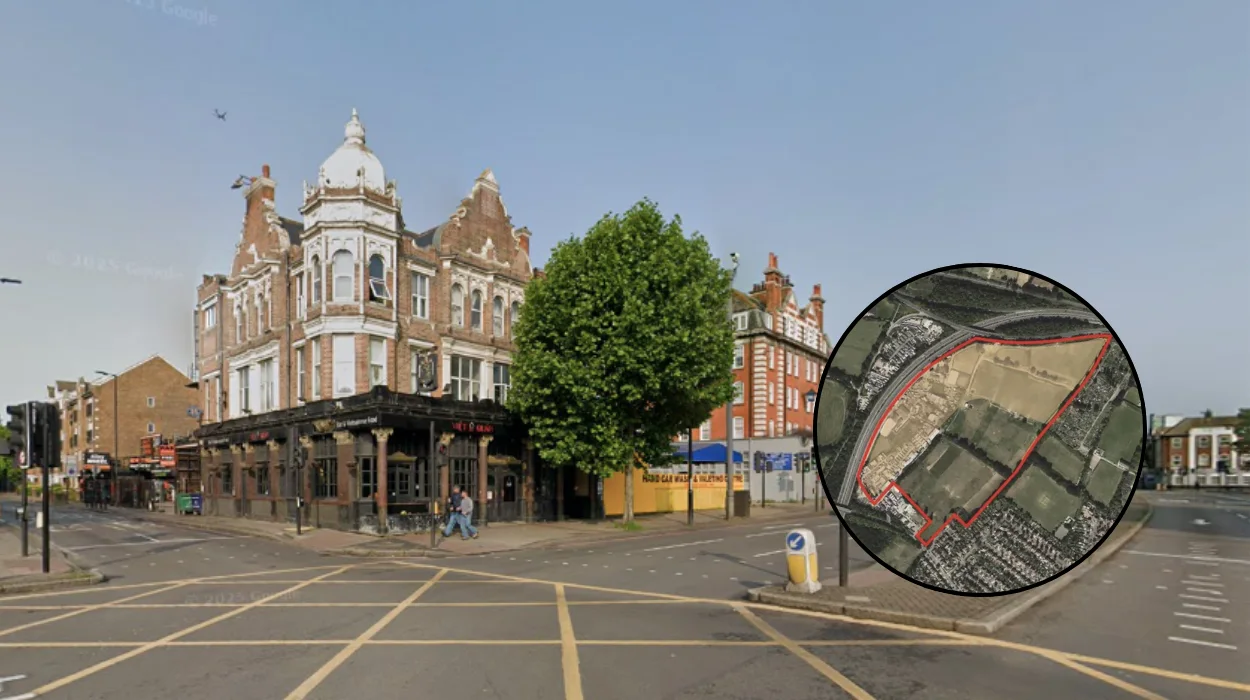
One of the most contentious aspects of the Local Plan is the decision to allocate sites situated on heavily protected green belt land and Metropolitan Open Land (MOL), breaking a long-standing political consensus regarding the preservation of the borough’s open green spaces. As reported by Charlotte Lillywhite of MyLondon, the draft plan allocates 405 homes on redundant sections of the Hogsmill Sewage Treatment Works and 440 homes at the Motspur Park gasholders site, both of which currently hold protective MOL designations.
The expansion into the green belt is most pronounced in the southern suburb of Chessington. The final draft allocates land on Clayton Road for 1,440 new homes, while an additional 265 homes are proposed on the derelict site of the former Chessington Golf Course. Defending these controversial inclusions, an official council report obtained by MyLondon stated that the administration was forced to thoroughly review its green belt boundaries because Kingston’s severe housing needs could simply not be fulfilled solely by building on existing urban brownfield sites. The report explicitly noted:
“Putting in place an up-to-date Local Plan will ensure that the council can proactively manage development across the borough, ensuring that we get the right mix of business and commercial space and housing to support thriving communities supported by the timely delivery of necessary infrastructure.”
Why are residents accusing Kingston Council of betraying their trust?
The inclusion of green belt allocations and the perceived lack of transparency surrounding the document’s release have caused widespread anger among community groups, leading to public demonstrations. As reported by Charlotte Lillywhite of MyLondon, a group of local residents staged a formal protest outside Kingston’s Guildhall on June 16, directly accusing the Liberal Democrat-led administration of betraying the public’s trust.
Gia Borg-Darcy, the chair of the Kingston and Surbiton Conservatives, expressed deep dissatisfaction regarding the timing of the document’s publication. As reported by MyLondon, Gia Borg-Darcy stated that the council had actively declined her formal requests to publish the draft plan prior to the local elections on May 7, asserting: “It was not, obviously, and it seems very clear we all know know why.”
Environmental and procedural criticisms were similarly raised by local campaigners who argue the plan is legally vulnerable. As reported by MyLondon, resident Caroline Shah raised concerns that the local authority had failed to provide sufficient scientific evidence to demonstrate it had rigorously assessed the potential impacts on local infrastructure and the natural environment, stating:
“This plan has been in preparation for years, yet the legal and evidential basics have still not been met. In the meantime, large-scale development continues to be approved without the safeguards a lawful up-to-date Local Plan should provide. Approving the plan in its current form risks continuing that situation and exposes the council to legal challenge.”
What are the political disagreements among Kingston councillors?
The internal political debate within the council chambers has mirrored the tension felt on the streets, with opposition members criticizing the administration’s governance. As reported by Charlotte Lillywhite of MyLondon, Independent councillor James Giles strongly condemned the exceptionally short notice given to elected members to read, analyze, and digest the massive cache of planning documents before being asked to vote, describing the timeline as “truly dire,” particularly when considering the immense scale of the urban development being proposed for their wards.
In contrast, the ruling Liberal Democrat group has vigorously defended both the process and the content of the draft. Representatives from the party pointed out that the vast majority of the information contained within the final version has been accessible in the public domain for a significant period, given that the core text has not fundamentally altered since the previous round of public consultations concluded in 2023. They warned that any further procrastination could result in a total loss of local autonomy, as the central Government retains the statutory power to intervene and take direct control of the borough’s planning framework if insufficient progress is made.
Providing further context on the legislative hurdles involved, Lib Dem councillor Andrew Wooldridge stated that the plan was the “result of many years of work, extensive evidence gathering and many rounds of public consultation,” during which the council was constantly forced to adapt to rapidly shifting national planning mandates. Following a heated debate, the council’s Place Committee voted to recommend the final draft to the Full Council, with 11 councillors voting in favour and two voting against.
What is the timeline for the adoption of the Kingston Local Plan?
The future of the borough’s built environment now hinges on a strict statutory timeline designed to advance the document toward full legal enforceability. Following the definitive vote scheduled for the Full Council meeting on Monday, June 22, the council plans to open the Regulation 19 public consultation, running from July 6 to September 4. This specific stage of consultation will differ from previous rounds; rather than gathering open-ended public opinions on town priorities, it will strictly focus on whether the draft plan meets the legal thresholds of being “sound” and compliant with national planning law.
Once the consultation window closes in September, municipal officers will compile the submissions and formally hand the Local Plan over to the Government’s Planning Inspectorate by December. An independent inspector will then conduct an Examination in Public (EiP) over the course of 2027 to stress-test the evidence base supporting the 20,000-home target and the green belt boundary revisions. If the inspector deems the document legally robust, Kingston Council will officially adopt the framework, giving it full legal weight to shape the borough’s communities, skyline, and open spaces for the next fifteen years.