
Key Points
- Service Relocation: Croydon Council is moving its housing and homelessness services from Bernard Weatherill House (Fisher’s Folly) to Cavendish House, located at 51-55 South End, South Croydon.
- Operational Timeline: The local authority plans to fully transition and implement the front-desk operations at the new South Croydon site by the end of August 2026, subject to formal cabinet approval.
- Strict Appointment-Only Policy: The council explicitly stressed that the move represents a “change of location only.” The mandatory appointment-only system introduced last year will strictly remain in force, with no resumption of walk-in services.
- Legal Confrontation: The administrative shift coincides directly with an active High Court challenge and application for Judicial Review over the council’s highly controversial decision to close its “Access Croydon” public walk-in facility.
- Community and Charity Backing: A coalition of 30 local voluntary organisations, including Croydon Nightwatch and the Croydon BME Forum, has backed the legal action, alleging that the closure of walk-in services unlawfully isolates the vulnerable and breaches statutory housing duties.
- Strategic Overhaul: Executive Mayor Jason Perry defended the move as a core component of the broader Town Hall Campus Programme, asserting it will upgrade facilities and provide quieter spaces, though critics claim it is an asset-disposal failure and an attempt to obscure vital services.
Croydon (The Londoner News) July 9, 2026 – Croydon Council’s housing and homelessness services are set to be permanently relocated from their current base at Bernard Weatherill House to a new facility in South Croydon by the end of August 2026. The major administrative shift comes as the local authority faces an imminent High Court challenge and an application for a Judicial Review brought forward by vulnerable residents and a coalition of community charities.
- Key Points
- Why is Croydon Council moving its housing and homelessness services?
- What are the operational rules for the new Cavendish House hub?
- How does the High Court legal challenge affect this relocation?
- Who is opposing the council’s appointment-only housing system?
- What are the political and financial criticisms surrounding Cavendish House?
- When will the service transition take effect?
The legal challenge disputes the council’s controversial decision to shut down its public walk-in front desk last year. While the physical location of the frontline service is moving to Cavendish House, situated at 51-55 South End, local authority officials have strongly emphasised that the relocation will not signal a return to open public access. Instead, the strictly enforced appointment-only protocol will remain fully operational for all residents seeking urgent housing support and homelessness assistance.
Why is Croydon Council moving its housing and homelessness services?
As reported by Steven Downes of Inside Croydon, Executive Mayor Jason Perry announced the operational shift just hours before the council was due to defend its public access policies in court. The local authority has framed the move as a strategic upgrade rather than a reactionary measure. According to official correspondence published by the council, the physical migration forms an essential part of the wider “Town Hall Campus Programme.” This borough-wide initiative is actively reviewing how civic assets are utilised while attempting to reform the mechanisms through which local citizens interact with face-to-face municipal operations.
In a formal explanatory email distributed to stakeholders, Mayor Jason Perry stated that “Relocating the service to Cavendish House will provide a better environment for residents, visitors and staff.” He further elaborated that the new South End facilities were specifically identified because they offer “improved facilities, including a larger reception area with quieter, family-friendly spaces, more appointment rooms and a layout that will improve how many residents and visitors can be assisted.”
What are the operational rules for the new Cavendish House hub?
Despite the promise of upgraded waiting areas and structural improvements, the council has left no room for ambiguity regarding how the service will be accessed by the public. Local authorities confirmed that the relocation to Cavendish House will function explicitly as an administrative change of address, meaning the existing, controversial digital-first and pre-booked appointment structure will be rigidly maintained.
As reported by MyLondon, the council explicitly stressed that the impending move to the South End office block would be “a change of location only”. This directive confirms that the mandatory appointment-only system—originally implemented immediately after the abrupt closure of the walk-in housing services at the central borough hub—will remain entirely unaltered. Members of the public who arrive at the new facility without a pre-arranged, formal appointment slot will not be granted access to face-to-face caseworkers, regardless of their immediate housing emergency or threat of rooflessness.
How does the High Court legal challenge affect this relocation?
The timing of the council’s relocation announcement has drawn intense scrutiny from legal observers and local political commentators alike. The decision to move frontline services was made public just as the Public Interest Law Centre (PILC) prepared to present an oral application before a High Court judge. The legal challenge seeks permission to launch a full Judicial Review against the London Borough of Croydon’s executive leadership.
The core of the legal argument rests on claims that the council’s cost-cutting measures violate statutory obligations. As reported by Steven Downes of Inside Croydon, the legal case is brought over claims that “the council’s cost-cutting move to shut itself off from the people it is supposed to serve breaks the law in respect of its statutory responsibilities for homeless people.”
The legal team representing the claimants argues that by removing spontaneous walk-in access, the local authority has effectively created an unlawful barrier for individuals in acute crisis, many of whom lack stable internet access, mobile phones, or the cognitive and physical capacity to navigate complex remote booking systems.
Who is opposing the council’s appointment-only housing system?
Opposition to the council’s front-desk closures and the continuation of the appointment-only model at Cavendish House has sparked a unified front across Croydon’s voluntary sector. A coalition comprising 30 distinct local charities, advocacy groups, and non-profit organisations has officially signed an escalating chain of formal complaints against the civic leadership.
Among the primary organizations leading the pushback is Croydon Nightwatch, a long-running charity dedicated to supporting the borough’s rough sleepers, alongside the Croydon BME Forum, which represents black and minority ethnic communities who are statistically over-represented in local homelessness figures.
The grassroots resistance began in earnest when Chief Executive Katherine Kerswell ordered the immediate, unannounced closure of the central “Access Croydon” public service desk. As documented by Inside Croydon, the initial shutdown occurred with “barely one weekday’s notice,” causing widespread disruption for residents arriving at the town hall headquarters in search of emergency support. When a joint letter of complaint signed by the 30 third-sector groups was reportedly ignored by Mayor Perry’s administration, the charities partnered with the Public Interest Law Centre to escalate the matter to the judiciary.
Explore more South London News:
Bexley Council Saves Crisis-Hit Tap Bar in Sidcup 2026
The Albany Arts Centre Secures Major Revamp: Deptford 2026
What are the political and financial criticisms surrounding Cavendish House?
The selection of Cavendish House as the new home for the homelessness unit has opened up a secondary front of political criticism regarding the financial management of Croydon’s public estate. Cavendish House, a 1980s-era office block, has a complicated history within the council’s asset portfolio. The building was previously earmarked for residential redevelopment under “Brick by Brick,” the council’s wholly-owned housing development company that famously collapsed, contributing heavily to the borough’s subsequent financial declarations of effective bankruptcy.
Local journalists have pointed out the irony of using the South End site for this purpose. As reported by Inside Croydon, the cash-strapped local authority had repeatedly failed to secure a private buyer for Cavendish House as part of Mayor Perry’s ongoing, aggressive asset-disposal strategy. With the building remaining vacant and unsellable on the open market, the administration opted to repurpose it as a localized “Turnaround Centre.”
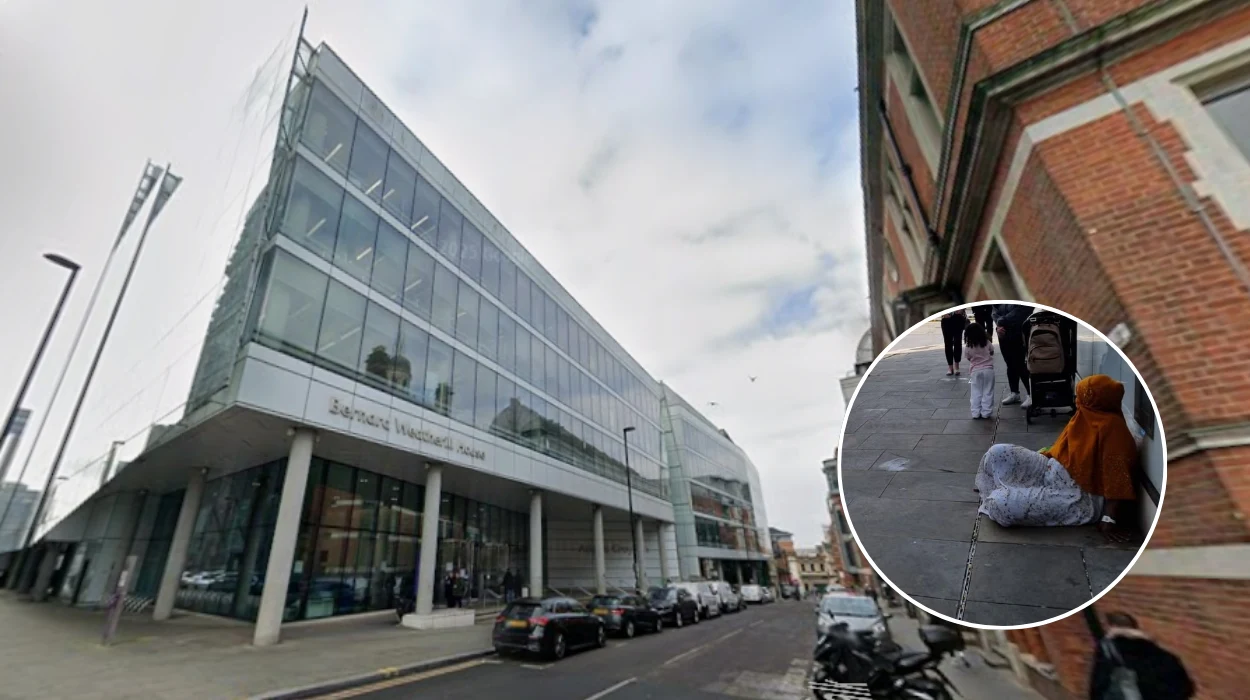
Furthermore, critics have contrasted the move to the older South End block with the massive historical expenditure on the council’s current headquarters. Bernard Weatherill House—locally dubbed “Fisher’s Folly”—was commissioned under a previous Conservative administration and completed in 2013 at a staggering cost of £144 million, finishing more than £20 million over its initial budget.
Opponents highlight that the purpose-built Bernard Weatherill House was explicitly designed by architects to feature expansive public reception areas, family-friendly consultation zones, and advanced layout configurations specifically engineered to process large numbers of frontline callers efficiently. The relocation of the borough’s most acute public-facing service away from a custom-built £144 million facility to a repurposed 1980s office block has been branded by critics as an organizational failure.
When will the service transition take effect?
The operational timeline for the relocation hinges on an upcoming political milestone. While administrative preparations are already underway behind the scenes, the entire operation remains conditional upon formal executive sign-off.
Mayor Jason Perry confirmed that the proposal is scheduled to be laid before the council’s cabinet members during a voting session. In his official communication, Mayor Perry specified, “It is our intention to move there from the end of August,” adding that this timeline is strictly dependent on the strategy being “given approval by cabinet at a meeting on July 29.”
Should the cabinet pass the resolution as anticipated, internal teams will begin migrating IT systems and caseworker files across the borough throughout August, ensuring the Cavendish House site is fully operational under the strict appointment-only guidelines by the close of the month. Meanwhile, the High Court’s decision on whether to grant a full Judicial Review into the legality of the underlying access policy continues to loom large over the council’s long-term operational framework.