
Key Points:
- Immediate Surge: Labour has witnessed a four-point jump in voting intentions within days, climbing to 28% following the transition of power.
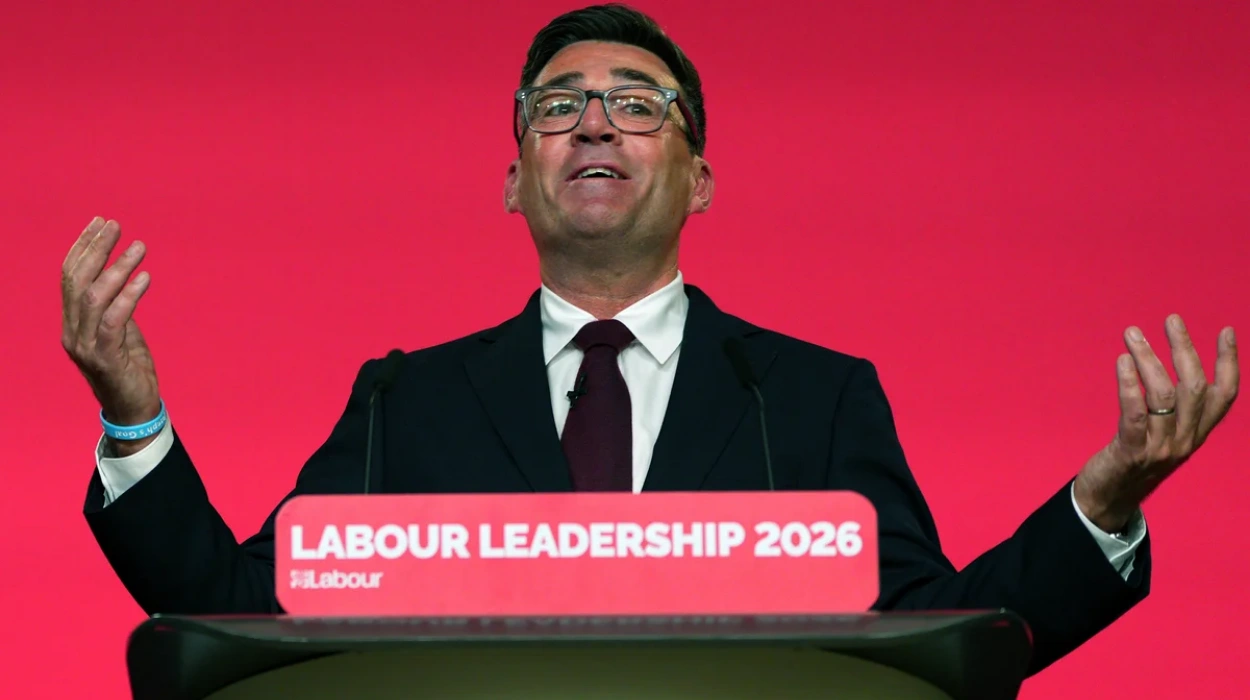
- New Leadership Impact: Andy Burnham officially took over as Prime Minister on July 20, replacing Sir Keir Starmer, triggering what pollsters term an instant “Burnham bounce”.
- Overtaking Reform UK: Nigel Farage’s Reform party slipped two points down to 24%, dropping behind Labour into second place.
- Position of Other Parties: The Conservative Party remains unchanged on 22%, the Liberal Democrats ticked up one point to 12%, the Green Party fell three points down to 8%, and the Scottish National Party (SNP) stayed level at 2%.
- Polling Methodology: The More in Common survey examined responses from over 2,000 individuals across Great Britain, with fieldwork conducted from July 24 to 27, measured against a prior baseline survey from July 20 to 22.
- Voter Appeal: Analysts indicate that the early focus on cost-of-living pressures and regional policy announcements has successfully attracted voters previously lost across both the political left and right.
London (The Londoner News) July 27, 2026 – Labour has successfully leapfrogged Nigel Farage’s Reform UK into first place in a major national survey, riding an immediate wave of political momentum following the ascension of Andy Burnham to the premiership. According to the latest findings from a More in Common survey reported by political journalist Martin Bentham of The Standard, the governing party has climbed four percentage points in a matter of days to reach 28%. The sharp turnaround comes directly in the wake of the former Mayor of Greater Manchester taking over the keys to Number 10 on July 20, succeeding Sir Keir Starmer. While the newly energized Labour outfit captures the top spot once more, Reform UK has slipped two points down to 24%, altering the landscape of British electoral projections as the country digests a dramatic shift in executive leadership.
How significant is the ‘Burnham bounce’ for British politics?
The political landscape across Great Britain has experienced a rapid realignment following a week defined by heavy administrative transitions and high-stakes media appearances.
As reported by Martin Bentham of The Standard, Luke Tryl, the UK director of More in Common, emphasized the speed with which the political tides have turned.
Luke Tryl of More in Common stated that:
“It’s only been a week since he entered office, but it’s clear that momentum is on the Prime Minister’s side.”
Tryl further elaborated on the broader implications of the survey data, noting the historic context of the numbers. As reported by Martin Bentham of The Standard, Tryl explained that:
“After a jam-packed week of high-profile policy announcements and media appearances, the Labour Party has surged in our weekly poll.”
The survey, which captured the sentiment of more than 2,000 respondents through extensive fieldwork executed between July 24 and 27, points to a revitalized base. When compared directly against tracking figures derived from an antecedent survey conducted between July 20 and 22, the psychological impact of a new face at the helm of government is starkly apparent.
Explore More London Politics News
Lord John Horam Dies After Fall in London 2026
Andy Burnham Appointed New UK Prime Minister: London 2026
What do the latest voting intention figures reveal about party standings?
While Labour celebrates its sudden resurgence up to 28%, the wider electoral matrix demonstrates a turbulent environment for all major Westminster factions. Under the methodology deployed by the More in Common poll, shifting allegiances have fractured the stability that characterized the earlier months of the year.
Detailing the comprehensive breakdown of the survey, Martin Bentham of The Standard noted that Nigel Farage’s Reform party has receded to 24%, while the Conservative Party remains entirely static at 22%. Concurrently, the Liberal Democrats managed a modest one-point increase to claim 12% of the projected vote share, whereas the Green Party suffered a sharper decline, dropping three points down to 8%. Meanwhile, the Scottish National Party held firm, remaining completely unchanged at 2%.
Reflecting on these shifting margins, Luke Tryl of More in Common offered important analytical guardrails regarding the longevity of these trends. As documented by Martin Bentham of The Standard, Tryl stated that:
“With all the caveats that it’s just one poll, Labour now leads for the first time since March of last year, and holds their highest vote share since the early months of this government in 2024.”
Which voters are driving Labour’s sudden recovery?
The mechanics behind Labour’s sudden leap back into the lead involve winning back crucial segments of the electorate that had previously drifted away toward populist alternatives or environmental platforms.
For months, the governing party had struggled with retention across both progressive urban centers and working-class constituencies. However, the introduction of Andy Burnham as Prime Minister appears to be reshaping these coalitions.
Highlighting the underlying demographic and thematic shifts observed in the research data, Martin Bentham of The Standard quoted Luke Tryl regarding the target audience of the new administration. Luke Tryl of More in Common stated that:
“And with both Reform and the Green Party dropping to their lowest vote share in months, it seems that this early focus on the cost of living has appealed to voters that Labour has lost across left and right.”
This cross-spectrum appeal addresses a core vulnerability that plagued Sir Keir Starmer’s tenure, where discontent over economic management drove progressive voters toward the Greens and working-class constituencies toward Nigel Farage’s Reform UK.
By pivoting sharply toward everyday economic concerns and cost-of-living relief right out of the gate, the new administration has begun drawing those fractured segments back under a unified umbrella.
Can the new administration sustain its newfound momentum?
As political analysts and rival party headquarters parse the data released by More in Common, questions naturally arise regarding whether this “Burnham bounce” represents a permanent realignment or merely a temporary honeymoon phase.
Historical precedent suggests that new prime ministers frequently enjoy an initial spike in public approval and polling numbers as the nation refocuses its attention on a fresh administration.
Nevertheless, the depth of the drop for competing parties like Reform UK and the Greens suggests that the challenge mounted by the new Prime Minister is cutting deep into rival voting blocs.
With Nigel Farage’s party retreating to 24% and the Greens sliding to 8%, the pressure is now squarely on opposition leaders to recalibrate their strategies in response to a government that has instantly altered the national conversation.
Political scientists emphasize that while a single poll cannot dictate the outcome of a future general election, the psychological barrier broken by returning Labour to first place for the first time since March of the previous year provides the governing party with crucial breathing room.
As Prime Minister Andy Burnham continues his early blitz of regional policy rollouts and media appearances, public evaluation of his legislative agenda will ultimately determine whether this bounce matures into a lasting electoral advantage.