Key Points
- Devolution Initiative: Prime Minister Andy Burnham has confirmed a massive devolution drive aiming to “take power out of Westminster and carry it into every postcode in the country”.
- Fiscal Autonomy for London: London Mayor Sir Sadiq Khan and other regional leaders across England are set to retain a portion of income tax revenue and business rates locally, instead of relying completely on Treasury distribution.
- Budget Announcement Expected: Full policy specifications and concrete financial mechanics are anticipated to be officially unveiled when Chancellor John Healey delivers his inaugural budget in the autumn.
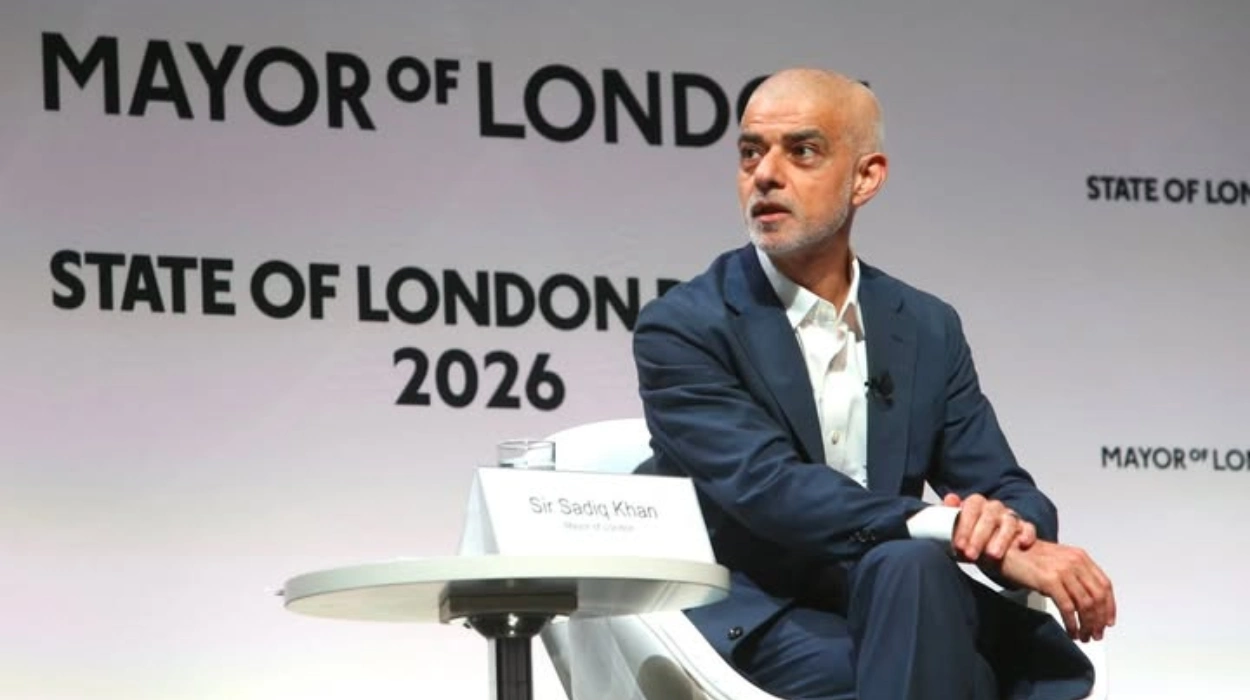
- Mayoral Acclaim: Sir Sadiq Khan praised the Prime Minister’s swift policy blitz, stating that Mr Burnham is “walking the talk” regarding empowering local authority leaders to boost regional housebuilding and growth.
- Equalisation Safeguards: Housing and policy frameworks intend to implement equalisation mechanisms so that less affluent regions are not disadvantaged while encouraging broader economic expansion.
London (The Londoner News) July 31, 2026 — Prime Minister Andy Burnham has confirmed a sweeping devolution overhaul that will grant the Mayor of London, Sir Sadiq Khan, and other regional leaders across England direct control over a portion of locally collected income tax and business rates. The landmark fiscal decentralisation forms the cornerstone of Mr Burnham’s overarching pledge to dismantle centralised structures in Whitehall and “take power out of Westminster and carry it into every postcode in the country”. Under the planned framework, local municipal leaders will no longer be entirely subjected to the Treasury’s rigid top-down distribution model, marking a significant structural transformation in British public administration. Detailed architectural designs of the policy are slated for formal presentation when Chancellor John Healey delivers his first official budget statement in the autumn.
- Key Points
- Why Is This Devolution Drive Considered a Historic Shift for Local Governance?
- How Has London Mayor Sir Sadiq Khan Responded to the Prime Minister’s Announcement?
- Will Regional Equalisation Measures Prevent Deepening Inequalities Across England?
- What Challenges Lie Ahead Before the Autumn Budget?
Why Is This Devolution Drive Considered a Historic Shift for Local Governance?
The decision to decentralise portions of national taxation represents one of the most radical transfers of fiscal authority away from central government in modern British political history.
For decades, critics have argued that the United Kingdom remains one of the most centralised states in the developed world, a factor frequently blamed for entrenched regional economic disparities.
As reported by Kiran Stacey of The Guardian, government discussions have closely evaluated allowing regional mayors to retain elements of business rates, which yielded roughly £26.4bn nationally in the previous fiscal cycle. While ministers have indicated that a wholesale transfer of total business rate collection is unlikely, even a fractional allocation represents a monumental financial windfall for municipal bodies.
Weighing in on the long-term impact of these structural adjustments, JP Spencer, the director of devolution policy at the think tank ThinkLabour, told The Guardian that “devolving the revenue from income tax or business rates to local areas would be a huge change in how our tax system and country works”. Furthermore, Mr Spencer noted that such changes would
“give places the longer-term certainty to invest, plan and deliver better services for their residents”.
How Has London Mayor Sir Sadiq Khan Responded to the Prime Minister’s Announcement?
Sir Sadiq Khan has expressed strong approval for the Prime Minister’s policy direction, declaring that Downing Street’s early legislative and administrative momentum proves the administration is actively fulfilling its promises.
As reported by the Local Democracy Reporting Service (LDRS) and covered by the Hackney Citizen, Sir Sadiq remarked during Mayor’s Question Time that Mr Burnham is successfully “walking the talk” when it comes to fostering sustainable economic growth across every corner of the United Kingdom. Elaborating further on his initial impressions, Sir Sadiq stated that he has been
“really impressed with Andy’s first few days as prime minister,” adding that
“he’s walking the talk when it comes to being a changed prime minister. I’ve been really impressed by the conversations I’ve had with him and his team shortly before he became leader”.
City Hall figures have historically pointed out that London operates under severe financial constraints compared to international megacities. Data compiled by City Hall previously revealed that the capital retains a fraction of the tax revenue generated within its boundaries—figures contrasting sharply with international counterparts like New York and Tokyo. Consequently, Sir Sadiq has maintained that granting London a more equitable fiscal stake will directly accelerate housing development and municipal construction targets.
Earlier this month, the London Mayor asserted that Mr Burnham’s push for devolution would help London to “boost housebuilding and deliver even more council homes” and “drive growth across our city and country”.
Explore More London Politics News
Labour Leaps Reform in New Poll Under Burnham, London, 2026
Lord John Horam Dies After Fall in London 2026
Will Regional Equalisation Measures Prevent Deepening Inequalities Across England?
A central concern regarding fiscal devolution has centered on whether wealthier regions like London and the Southeast would pull ahead while economically vulnerable areas fall further behind. Addressing these structural risks, officials and cabinet members have underscored that robust equalisation safeguards will be embedded into the final policy design.
As noted in reporting by The Guardian, Housing Secretary Steve Reed stressed that regional support mechanisms are vital to maintaining fairness. Mr Reed explained to The Guardian that local areas would not simply be permitted to keep whatever arbitrary amounts they raise without oversight, stating:
“There will always have to be an equalisation mechanism, because you cannot allow areas that are poorer to just sink because they can’t generate the additional revenue from their starting point”.
Nevertheless, Mr Reed emphasised that the framework must simultaneously incentivize regional productivity, noting that authorities want
“a system that would encourage and reward areas for growing their economy faster or supporting their businesses better, and that would need to be recognised within the system”.
What Challenges Lie Ahead Before the Autumn Budget?
While political enthusiasm among regional metro mayors remains high, critical administrative details must still be resolved before Chancellor John Healey formally introduces the policies in the autumn budget.
Questions remain regarding the exact percentage thresholds of income tax and business rates that will be handed over to local authorities, as well as the precise operational boundaries of the planned equalisation formulas.
As the autumn legislative window approaches, all eyes will remain fixed on Downing Street and HM Treasury to see how Prime Minister Andy Burnham translates his broad decentralisation rhetoric into concrete statutory law, permanently altering the fiscal landscape of England.