
Key Points
- The 35th annual London Open House festival will be held between 12th and 20th September 2026, with over 100 buildings, houses, and architecture landmarks being opened to the general public throughout all 33 London boroughs, free of charge.
- North and east London dominate the selection of venues, offering unique tours and events, from historical literary houses to the modernists’ gems.
- In Hampstead, one can explore the garden where John Keats was composing his famous Ode to a Nightingale at Fenton House, learn about the psychoanalyst’s life at Sigmund Freud Museum, and tour historic Burgh House.
- Modernist and contemporary architecture jewels include a tour with architect Mike Russum of “the ark” – an award-winning four-storey house located at 6 Wood Lane in Highgate, as well as visits to Berthold Lubetkin’s 1935 Highpoint flats on North Hill.
- A little further north-west in Harrow, one can see Grade II* listed former Grosvenor Cinema – an Art Deco building with restored proscenium arch now belonging to Zoroastrian faith community.
- Among other community-centred sites, there is The Canal Club at Waterloo Gardens (Belmond Wharf) – a 1978 modernist community centre by Julian Sofaer with children’s art and pizza making classes, as well as a community
London (The Londoner News) September 6, 2026 — Architecture enthusiasts, local history buffs, and curious Londoners are gearing up for the return of the capital’s most immersive urban exploration event, as the Open House Festival rolls out its comprehensive 2026 programme. Spanning all 33 boroughs over nine days from September 12 to September 20, the milestone 35th edition of the festival grants free public entry to an array of secret spaces, private residential marvels, infrastructure hubs, and culturally significant landmarks that remain strictly closed during the rest of the year. While the festival encompasses the entire capital, a rich selection of events, historic tours, and architectural showcases across north London has captured public imagination following recent programme announcements by local publications.
- Key Points
- What is the Open House Festival London 2026 and when does it take place?
- Which historic literary and cultural homes can visitors explore in Hampstead?
- What modernist and contemporary architectural highlights are featured in Highgate?
- How has an Art Deco cinema in Harrow been restored by the Zoroastrian community?
- What community spaces and family activities are available at the Canal Club?
- How can the public access the complete Open House Festival 2026 schedule?
What is the Open House Festival London 2026 and when does it take place?
The Open House Festival is an annual, London-wide celebration of the city’s built environment, infrastructure, and architectural heritage. Organised by the charity Open City, the festival reaches its 35th milestone edition this year, running from September 12 through September 20, 2026.
As reported by architectural and community networks, the initiative invites members of the public to wander through historically rich buildings, contemporary cutting-edge housing projects, and hidden civic spaces entirely free of charge, fostering a deeper connection between residents and their urban surroundings. While many venues operate on a drop-in basis, ticketed events require pre-booking through the official festival platform.
Which historic literary and cultural homes can visitors explore in Hampstead?
North London’s leafy enclave of Hampstead stands out as a prime destination during the nine-day festival, offering visitors a chance to step back in time through a cluster of preserved historic residences.
According to regional reporting by Ham & High journalist Bridget Galton, literary and historical enthusiasts can take a combined tour of historic Hampstead to “sit in a quiet seat in the garden where John Keats was inspired to write Ode to a Nightingale” at Fenton House, which also features an orchard, expansive lawns, and a notable collection of 18th-century musical instruments.
Continuing through the neighborhood, visitors can access the former home of psychoanalyst Sigmund Freud—now operated as a museum—where he spent his final months after fleeing Nazi-occupied Austria. Galton noted that visitors have the rare opportunity to “sit in the garden or see his famous couch which was shipped from Vienna before the Nazis could get hold of it”. The nearby historic art gallery and museum, Burgh House, adds further depth to the area’s cultural offerings.
What modernist and contemporary architectural highlights are featured in Highgate?
For fans of bold design and structural innovation, Highgate offers striking contrasts between pre-war modernist ideals and contemporary residential architecture.
As detailed in the Ham & High coverage by Bridget Galton, architecture enthusiasts can visit an award-winning “floating ark” house located at 6 Wood Lane. Designed by Birds Portchmouth Russum Architects in 2016, the four-storey structure ingeniously maximises a slim site on a traditional period villa street by floating above a masonry base. Galton pointed out that visitors can take a specialized tour led by architect Mike Russum to
“discover the entrance footbridge and elevated living area with a smokers’ balcony overlooking the garden with a semi circular terrace looking out on to woods”.
For those drawn to mid-century urban planning, the festival programme includes guided tours of the iconic Highpoint flats on North Hill. Built in 1935, these pioneering residential blocks were designed by Berthold Lubetkin—celebrated also for his work on the penguin pool at London Zoo—to put radical early-modernist urban living concepts into practice.
Explore more North London News:
Gogglebox Down’s Syndrome Star London 2026
North London Minimum Wage Fines 2026
How has an Art Deco cinema in Harrow been restored by the Zoroastrian community?
Venturing further northwest within the broader north London scope, the festival highlights the remarkable multi-faith adaptive reuse of a former entertainment landmark.
As reported by Bridget Galton of Ham & High, Harrow plays host to the former Grosvenor Cinema, a Grade II* listed Art Deco masterpiece. The building boasts a well-preserved proscenium arch flanked by striking fluted columns.
According to the Ham & High report, the building endured a varied history—having functioned variously as a bar, a nightclub, and a warehouse—before being fully restored to its architectural glory by its new owners, the Zoroastrian faith community. Festival-goers can take dedicated interior tours of this meticulously rescued cultural asset.
What community spaces and family activities are available at the Canal Club?
Balancing monumental architecture with grassroots community hubs, the north London programme incorporates inclusive neighbourhood spaces designed to engage families and local residents.
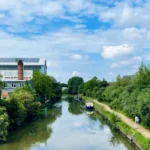
As outlined by Ham & High journalist Bridget Galton, the Canal Club located in Waterloo Gardens at Belmond Wharf presents a welcoming drop-in itinerary. Designed in 1978 by architect Julian Sofaer, the building serves as a modest, open-plan modernist community centre.
The venue sits alongside a flourishing community garden developed collectively by the area’s mooring boating community. During its festival open day, the Canal Club hosts dedicated children’s art activities and interactive pizza-making sessions, providing a family-friendly anchor point for the neighborhood exploration.
How can the public access the complete Open House Festival 2026 schedule?
With hundreds of independent buildings, private architectural offices, industrial sites, and historical estates participating across London’s 33 boroughs, organisers at Open City advise attendees to review the full digital schedule ahead of time.
As specified by festival coordinators, full booking details, accessibility statements, and complete venue listings for north London and beyond are hosted directly on the official platform at programme.openhouse.org.uk. With general reservations seeing high demand across the capital, visitors are encouraged to check specific venue guidelines regarding drop-in access versus mandatory advance registration.