Key Points
- Police recorded 2,561 race hate incidents in Northern Ireland between 1 July 2025 and 30 June 2026, an increase of 503 on the previous 12 months.
- Police recorded 1,615 race hate crimes, 268 more than during the preceding 12-month period.
- Both figures are the highest 12-month levels recorded since the current data series began in 2004/05.
- June 2026 recorded 512 race hate incidents, the highest monthly figure in the data series.
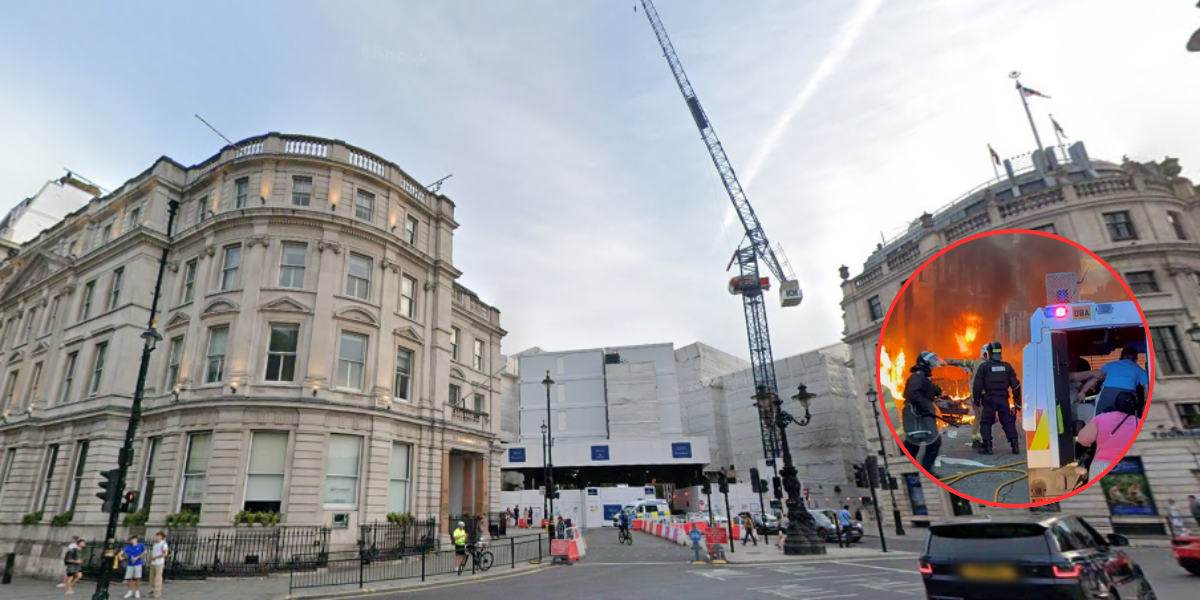
- The figures followed significant disorder after the June stabbing of Stephen Ogilvie in north Belfast, with homes, vehicles and a bus set on fire and people targeted because of their race.
- Chief Constable Jon Boutcher told the Northern Ireland Policing Board that race hate crime was “escalating out of all proportion” and described it as one of policing’s biggest challenges.
- Policing Board member Peter Osborne said the increase in race hate incidents was considerably larger than the combined net increase for other recorded hate motivations.
- Official statistics warn that police-recorded figures do not capture the full extent of hate-motivated incidents and crimes because not every incident is reported or recorded.
- The family of Stephen Ogilvie publicly opposed the disorder that followed his stabbing and urged people not to use the attack to fuel hostility or division.
The Londoner News (TLN) October 2, 2026 – Northern Ireland’s chief constable has warned that race hate crime is escalating at a rate that should cause significant concern, after official police statistics showed record levels of race-related incidents and crimes during the 12 months to the end of June. Jon Boutcher told the Northern Ireland Policing Board that race-related offending had become one of the biggest challenges facing policing, while stressing the need for education, reporting, enforcement and wider action across society. The figures show 2,561 race hate incidents and 1,615 race hate crimes were recorded during the period, with June producing the highest monthly number of race hate incidents since records began.
- Key Points
- What did the latest Northern Ireland race hate crime figures show?
- Why did June 2026 produce a record number of race hate incidents?
- What did Chief Constable Jon Boutcher tell the Policing Board?
- What did Peter Osborne say about the increase?
- What happened after the Stephen Ogilvie stabbing?
- What action has police taken over the disorder?
- What concerns have been raised about racism in Northern Ireland?
- How do the latest figures compare with other forms of hate crime?
- What is the background to Northern Ireland’s race hate crime statistics?
- What could the rise in race hate crime mean for Northern Ireland communities?
- What is the outlook for race hate crime in Northern Ireland?
What did the latest Northern Ireland race hate crime figures show?
According to the Northern Ireland Statistics and Research Agency (NISRA), which published the official figures on 27 August 2026, police recorded 2,561 race hate incidents between 1 July 2025 and 30 June 2026. That represented an increase of 503 incidents compared with the previous 12-month period. Police also recorded 1,615 race hate crimes, an increase of 268.
The figures are significant because both the number of race hate incidents and the number of race hate crimes were at their highest 12-month levels since the hate motivation data series began in 2004/05.
The distinction between an incident and a crime is important. The official statistics separately record incidents reported to police where a hate motivation is identified and offences that meet the threshold for being recorded as crimes. The figures therefore provide two related measures of the scale of race-related offending reported to the Police Service of Northern Ireland.
NISRA also cautioned that the statistics represent incidents and crimes reported to and recorded by police. They therefore may not represent the full extent of hate-motivated activity in Northern Ireland.
Why did June 2026 produce a record number of race hate incidents?
The figures showed a particularly sharp concentration of incidents during June.
As reported by UTV/ITV News in its August 27 report, 512 race hate incidents were recorded in June 2026, making it the highest monthly level in the data series. Eight of the ten highest monthly levels of race hate incidents were recorded during the 12 months covered by the latest statistics.
The June increase came after the stabbing of Stephen Ogilvie in north Belfast. The incident was followed by significant disorder in several parts of Northern Ireland.
The Police Service of Northern Ireland said at the time that the attack on Kinnaird Avenue was being treated as a racially motivated hate crime. Police said a group subsequently confronted residents at a property, attacked them and caused damage. A woman and several children were inside the property during the incident.
The subsequent disorder included attacks on homes, vehicles and a bus, while people were targeted because of their race. UTV/ITV News reported that foreign-national healthcare workers were also subjected to threats and intimidation.
The June events therefore form an important part of the context surrounding the record monthly statistics, although the annual figures cover the entire 12-month period and should not be understood as representing only the disorder connected with the stabbing.
What did Chief Constable Jon Boutcher tell the Policing Board?
In the report published by ITV News on October 2, Jon Boutcher said race crime figures were “escalating out of all proportion”. ITV News reported that he was urging the issue to be highlighted after the latest figures showed the highest 12-month level of race-motivated crime since records began in 2004/05.
Boutcher said the levels of race hate crime should cause significant concern.
Discussing the wider social context, he referred to international developments, debates about migration and immigration, and political discussions that he said could have a legitimate basis. He nevertheless distinguished those debates from the treatment of individuals because of their race.
He specifically referred to the June attack involving Stephen Ogilvie and said he believed that month had produced the highest level of racial incidents recorded in a single month.
Boutcher also said people who come to Northern Ireland to establish businesses, create employment and work in public services were living in fear as a result of racism and associated behaviour.
He argued that the response needed to involve the criminal justice system, including aggravated elements in offending and deterrence through the courts. He also called for education and greater societal recognition of behaviour he described as unacceptable.
The chief constable said there had been improvements in trends for some other forms of hate crime, but race-related offending was becoming one of the biggest challenges.
What did Peter Osborne say about the increase?
Northern Ireland Policing Board member Peter Osborne raised the figures with Chief Constable Boutcher during a board meeting on Thursday.
As reported by ITV News, Osborne described the statistics as getting “worse and worse and worse”. He drew attention to the difference between the increase in race-related incidents and changes in other categories of hate motivation.
The official NISRA statistics provide the underlying figures for that comparison. Sectarian incidents increased by 61, while sectarian crimes increased by 19. Sexual-orientation incidents fell from 358 to 356, while related crimes fell from 214 to 212. Disability incidents rose from 71 to 82, although disability crimes declined from 45 to 39. Faith or religion incidents increased from 93 to 99, while crimes declined from 71 to 69. Transgender-identity incidents fell from 61 to 54, while crimes declined from 35 to 28.
Osborne said the net increase of race hate incidents was 503, compared with 69 for all the other categories combined. He also said the increase in race hate crimes was 268, compared with two for the other categories combined.
He described those differences as stark.
What happened after the Stephen Ogilvie stabbing?
The stabbing of Stephen Ogilvie in north Belfast on June 8 became the immediate backdrop to several nights of disorder.
According to PSNI information released after the attack, Ogilvie’s family said he was in a stable condition and appealed for privacy. They also criticised false information circulating on social media. The family explicitly said the disorder that followed was not supported by them.
The family also said migrants make a valuable contribution to Northern Ireland, including through healthcare and hospitality, and urged people not to use the attack to divide communities or fuel hostility.
Further reporting by RTÉ on June 18 said Ogilvie had come out of an induced coma but had suffered severe injuries, including the loss of his left eye, and faced the possibility of losing sight in his other eye. RTÉ reported that Hadi Alodid, 30, had appeared at Belfast Magistrates’ Court charged with attempted murder.
The Independent, in reporting by Sam Kiley and Holly Evans from Belfast on June 10, also reported that Ogilvie’s relatives condemned the violence that followed the stabbing and called for peaceful protest.
The events also demonstrated the role of social media in the immediate aftermath. The Ogilvie family said false information had circulated online, while a separate fact-check published by Lead Stories by Alexis Tereszcuk reported that an image falsely presented online as showing Ogilvie in hospital did not depict him. The PSNI said at the time that inaccurate images were being used in ways that could arouse fear and hatred.
What action has police taken over the disorder?
Police mounted a significant operation after disorder broke out across Northern Ireland in June.
UTV/ITV News reported on August 27 that PSNI Superintendent Joanne Gibson said 42 people had been arrested in connection with the disorder, with 33 charged, eight bailed and one reported to the Public Prosecution Service at that stage. She said prosecutions were continuing.
Gibson said police would continue to deal robustly with hate crime and encouraged victims to report incidents. She also acknowledged that hate crime is often not reported to police, an issue that is relevant when interpreting recorded statistics.
The official NISRA publication similarly states that recorded figures only cover incidents and crimes reported to and recorded by police and may therefore not represent the full extent of hate-motivated incidents and crimes.
What concerns have been raised about racism in Northern Ireland?
The latest figures have prompted concern from policing and civil society organisations.
UTV/ITV News reported that Amnesty International said racist hate crime had “broken all the wrong records” and called on the Stormont Executive to treat tackling racism as an urgent political priority. Amnesty Northern Ireland director Patrick Corrigan said the figures showed that racist hate crime had risen to record levels.
Corrigan also called for a comprehensive anti-racism strategy, changes to hate crime legislation and political leadership challenging anti-migrant narratives. These are the stated positions of Amnesty International and should be distinguished from the official statistical findings.
The police response has focused on enforcement as well as encouraging victims to report incidents. Boutcher told the Policing Board that criminal justice measures, education and wider social action were all relevant to addressing the problem.
How do the latest figures compare with other forms of hate crime?
Race-related incidents stand out in the latest statistics because of the size of their increase.
NISRA recorded 2,561 race hate incidents and 1,615 race hate crimes during the year to 30 June 2026. The increase was 503 incidents and 268 crimes compared with the previous 12-month period.
Other categories produced more varied movements. Sectarian incidents and crimes increased, while sexual-orientation crimes, disability crimes, faith or religion crimes and transgender-identity crimes declined.
That does not mean the other categories are insignificant. Rather, the figures show that the year-to-year movement in race-related incidents was considerably larger than the changes recorded in several other hate-motivation categories.
What is the background to Northern Ireland’s race hate crime statistics?
Northern Ireland’s hate motivation statistics are published by NISRA using information supplied by the Police Service of Northern Ireland. The data series includes race, sexual orientation, sectarianism, faith or religion, disability and transgender identity.
The current series dates back to 2004/05, allowing police-recorded incidents and crimes to be compared across a long period.
The latest annual figures show that race hate incidents and crimes have reached their highest 12-month levels in that series. The June 2026 figure of 512 race hate incidents was also the highest monthly figure recorded.
However, the statistics should not be interpreted as a complete measure of racism in Northern Ireland. Reporting behaviour, police recording practices and whether victims choose to contact authorities can all affect the number of incidents appearing in the official data. NISRA explicitly warns that the published figures may not represent the full extent of hate-motivated incidents and crimes.
The June disorder also provides an important contextual development. The stabbing of Stephen Ogilvie was followed by violence and attacks affecting members of minority ethnic communities, while Ogilvie’s own family publicly rejected the use of the incident to promote hostility.
What could the rise in race hate crime mean for Northern Ireland communities?
The immediate implication of the figures is that police and other public bodies are likely to continue facing pressure to address race-related offending and encourage victims to report incidents.
For residents and minority ethnic communities, the official figures provide evidence of a substantial rise in police-recorded race hate incidents and crimes during the latest reporting period. The chief constable has said that people who come to Northern Ireland to work, establish businesses and provide public services are experiencing fear linked to racism.
For policing, the increase creates an operational requirement to investigate reported offences, protect potential victims during periods of heightened tension and maintain public confidence in reporting mechanisms.
For the wider community, the figures also highlight the importance of distinguishing verified information from unconfirmed material, particularly following violent incidents. The family of Stephen Ogilvie specifically raised concerns about false information circulating online after his attack.
The statistics do not by themselves establish the causes behind every recorded incident. Boutcher referred to a wider environment involving geopolitical developments, debates surrounding migration and immigration, and social attitudes, but the official data do not assign a single cause to the overall increase.
What is the outlook for race hate crime in Northern Ireland?
The available evidence indicates that race-related incidents and crimes had reached record 12-month levels by June 2026, while the chief constable has identified race hate crime as a major policing challenge. The immediate outlook will therefore depend on how reporting, policing, prosecutions, community initiatives and wider public responses develop after the record figures.
The figures alone cannot establish whether race hate crime will continue increasing, stabilise or decline in subsequent reporting periods. Future official statistics will be required to establish the direction of the trend.
Boutcher has said there is no single answer to the problem but has called for the issue to be highlighted, people to be educated and unacceptable behaviour to be challenged. Police have also encouraged victims to report hate incidents, while community organisations have called for wider measures addressing racism.
For Northern Ireland residents and communities, the measurable development at present is the record level of police-recorded race hate incidents and crimes during the year to 30 June 2026. How that translates into future crime levels, reporting patterns and community relations will become clearer as subsequent official statistics are published.