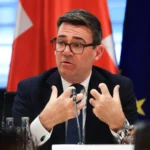
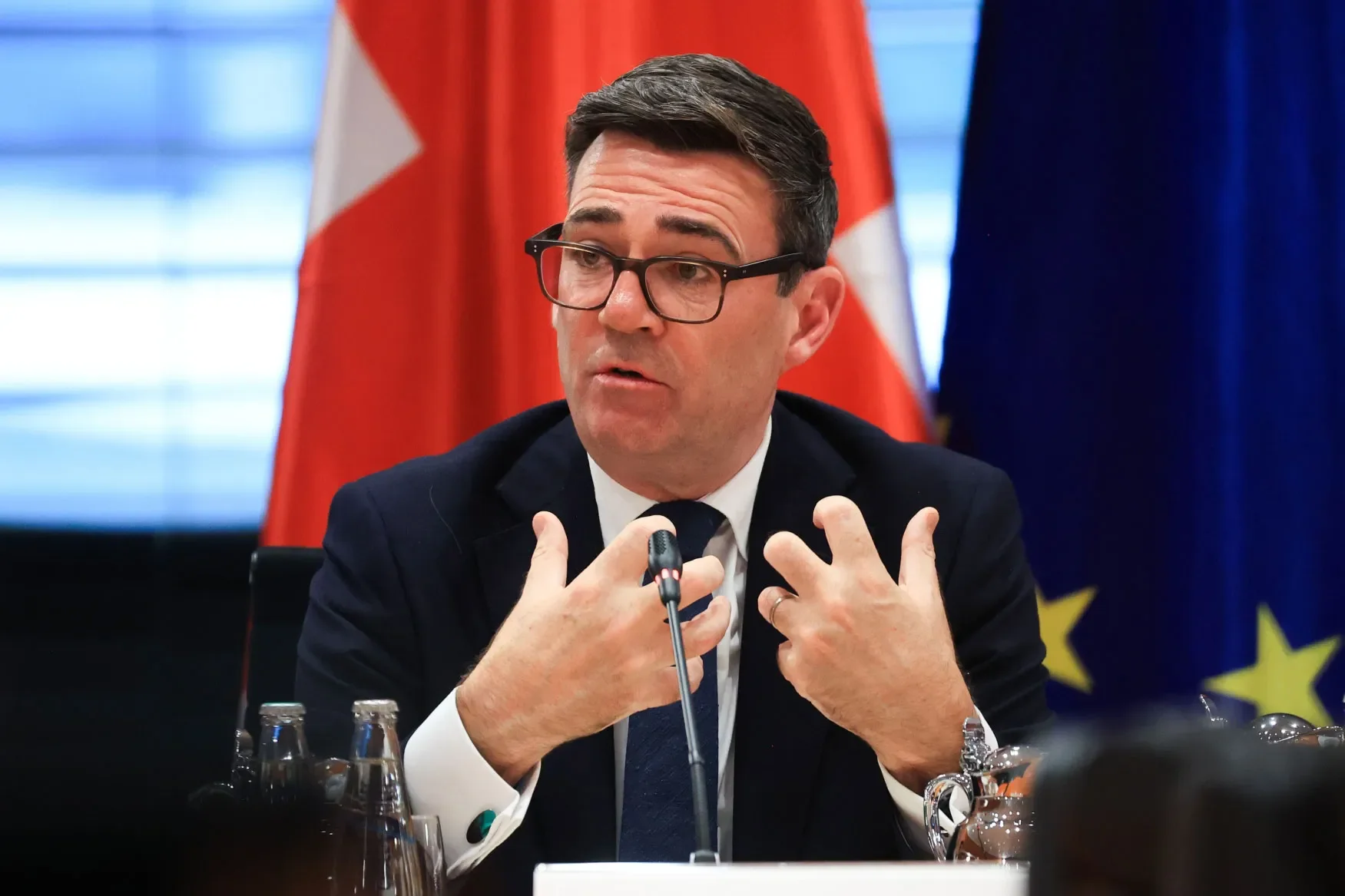
- British Prime Minister Andy Burnham is set to address an audience of financial leaders at the annual Lord Mayor’s Banquet in the City of London on Monday evening, November 16, 2026.
- Following the traditional foreign policy remit of the speech, Andy Burnham will argue that the post-Brexit settlement has failed to deliver on its promises, created unnecessary trade barriers, and damaged Britain’s economic potential.
- The speech comes four days before a crucial UK–EU summit in Brussels on November 20, 2026, where the Prime Minister aims to sign agreements on food and agricultural trade, emissions trading, and a youth mobility scheme—a package Downing Street estimates could raise UK GDP by 0.4%, or roughly £17 billion.
- Andy Burnham will stipulate that any new agreements with Brussels must remain consistent with Labour’s manifesto red lines, improve upon the existing Brexit settlement, and pass his “Makerfield test” by delivering tangible improvements to daily life.
- Political reaction has been sharply divided: Foreign Secretary Ed Miliband backed the reset and the British Chambers of Commerce urged lower trade costs, while Conservative leader Kemi Badenoch, anti-rejoin campaigner Oliver Lewis, and Liberal Democrat spokesperson Al Pinkerton criticised the Prime Minister’s approach from opposing angles.
London (The Londoner News) November 16, 2026 – British Prime Minister Andy Burnham will tell an audience in London’s financial district on Monday evening, November 16, 2026, that the existing Brexit settlement has not worked and that Britain must pursue a closer relationship with the European Union. Delivering the traditional foreign policy address at the Lord Mayor’s Banquet in the City of London, Andy Burnham will contend that global realities have shifted substantially since the 2016 referendum. His remarks come just days ahead of a pivotal UK–EU summit in Brussels on Friday, November 20, where ministers hope to finalise agreements on agri-food trade, emissions trading, and youth mobility projected to boost UK GDP by 0.4%, or approximately £17 billion.
As reported by The Guardian, Sky News, and Alliance News ahead of Monday night’s white-tie gathering, Prime Minister Andy Burnham will use his keynote foreign policy speech at the Lord Mayor’s Banquet in the City of London to declare bluntly that the form of Brexit negotiated after the 2016 referendum has failed to deliver for Britain.
According to advance extracts of the speech briefed by Downing Street and reported by The Guardian, Andy Burnham will argue that former Prime Minister Boris Johnson’s promise to “take back control” was not realised, leaving the United Kingdom with a needlessly hard exit that erected costly barriers for businesses and restricted economic growth. Comparing the current settlement to a fairy-tale illusion, Andy Burnham is expected to tell City financiers and diplomats: “It’s like the Emperor’s New Clothes – where no one is prepared to say the obvious truth. Well, I say it as I see it. And to be frank, the emperor has nothing on”. He will add: “The Brexit we were given has not worked. We have lost more than we gained”.
While acknowledging that certain industries—such as parts of the City’s financial services sector—have adapted to life outside the bloc, Andy Burnham will argue that British businesses and consumers overall are worse off in a changed geopolitical landscape since 2016. Speaking to broadcasters on Monday morning ahead of the address, Foreign Secretary Ed Miliband defended the government’s push to reset relations with European neighbours. As reported by Sky News, Ed Miliband stated that people voted for Brexit “primarily because they wanted positive economic change,” adding: “Unfortunately we have had the opposite”.
The timing of the Mansion House address is designed to frame Friday’s UK–EU summit in Brussels on November 20, 2026. Downing Street expects the summit to yield new bilateral agreements covering sanitary and phytosanitary (SPS) food and agricultural standards, linkage of emissions trading systems, and a youth mobility scheme—measures officials estimate could lift UK gross domestic product by 0.4%, equivalent to around £17 billion.
However, Andy Burnham will emphasise that he is not seeking to reverse the 2016 referendum result outright, setting out three strict criteria for signing any new accord in Brussels. As reported by The Guardian, the Prime Minister will state that any agreement must remain consistent with the Labour manifesto and the government’s red lines, improve the Brexit deal to bring it closer to what voters expected in 2016, and pass his “Makerfield test”—named after his parliamentary constituency—by delivering tangible improvements to working people’s everyday lives.
Business groups welcomed the focus on reducing border friction, even as opposition politicians attacked the strategy from both sides of the constitutional divide. In a statement issued on Sunday night and reported by The Edge Malaysia and Reuters syndication, the British Chambers of Commerce (BCC) urged Andy Burnham to return from Brussels with an agreement that cuts trading costs, noting that the current arrangements are “still failing to deliver, almost six years after Brexit”. The BCC added that “businesses face customs, VAT (value-added tax), regulatory and mobility barriers, alongside rising protectionism, global subsidies and the EU’s emerging ‘Made in Europe’ agenda,” citing survey data showing more than half of UK exporters want EU customs paperwork and border delays eliminated.
Conversely, Conservative Party leader Kemi Badenoch dismissed the government’s European focus during a Monday press conference. As reported by Alliance News, Kemi Badenoch stated: “We need to stop obsessing about Europe and whether to be in or out, and actually get on with doing the things that we are elected to do. Sort out the economy, fund our defence, cut welfare, get jobs for people, make sure that businesses can create those jobs. We don’t need to be in the EU to do any of that”.
Anti-rejoin campaigner Oliver Lewis, who served as Boris Johnson’s deputy chief Brexit negotiator and now chairs the Stay Out campaign group, accused the Prime Minister of using incremental deals to pave the way for full EU re-entry. As reported by Alliance News and London Loves Business, Oliver Lewis stated: “The prime minister keeps reaching for his Makerfield test, but he won that seat by promising not to undo Brexit and has since told the country that his ultimate goal is to take Britain back in, at a cost of GBP750 million a week. On Friday he will sign a deal that sends more money to Brussels, hands back control of our own laws and opens the door to more immigration, and nobody in Makerfield voted for any of that“.
From a pro-European perspective, Liberal Democrat Europe spokesperson Al Pinkerton MP criticised Andy Burnham for retaining Labour’s red lines against rejoining the single market or customs union. In a party press release on November 16, Al Pinkerton stated: “The Prime Minister is right that the Brexit Emperor had no clothes. But Labour spent years participating in the sham while Liberal Democrats exposed the economic damage. Andy Burnham finally admits Brexit has failed, but lacks the courage to abandon Theresa May’s outdated red lines for fear of splitting his own party”.
What Agreements Are on the Table at the November 20, 2026, UK–EU Summit?
Reporting by Libby Brooks and Jessica Elgot of The Guardian, alongside MPA Magazine, outlines the core elements under negotiation ahead of Friday’s summit in Brussels:
- Agri-Food and Veterinary Standards (SPS) Deal: Largely agreed in principle to remove post-Brexit border checks on food, drink, and animal products, reducing administrative burdens for exporters and easing supply-side pressures on consumer prices.
- Emissions Trading Linkage: Linking the UK and EU carbon markets to prevent cross-border carbon taxes and streamline clean energy cooperation.
- Youth Mobility and Student Tuition Fees: A contentious pillar where the Home Office seeks caps on participant numbers to control net migration, while EU member states push for European students to pay domestic UK university tuition rates rather than higher international fees.
- “Made in Europe” Industrial Access: UK negotiators have explored offering tuition concessions in exchange for participation in the EU’s emerging “Made in Europe” industrial protection scheme, though European Commission officials have noted the legislation remains in draft form.
- Energy and Migration Security Cooperation: Broader discussions covering Britain’s potential return to the EU internal electricity market and access to EU policing and crime databases to combat irregular Channel crossings.
How Do Political Leaders and Business Groups View Andy Burnham’s EU Reset?
A structured summary contrasts the positions of key figures responding to the Lord Mayor’s Banquet speech on November 16, 2026:
| Stakeholder / Figure | Affiliation / Role | Core Position on EU Reset | Key Argument / Statement |
| Andy Burnham | Prime Minister (Labour) | Pragmatic reset within manifesto red lines | Declares existing Brexit “has not worked”; seeks targeted deals worth £17bn (0.4% GDP) that pass the “Makerfield test”. |
| Ed Miliband | Foreign Secretary (Labour) | Supportive of closer economic alignment | Stated voters backed Brexit for positive economic change in 2016, “unfortunately we have had the opposite”. |
| British Chambers of Commerce | UK Business Lobby Group | Strongly supportive of cutting trade friction | Urged lower customs, VAT, and regulatory costs, noting current arrangements are “still failing to deliver, almost six years after Brexit”. |
| Kemi Badenoch | Leader of the Opposition (Conservative) | Opposed to reopening European debates | Argued ministers should “stop obsessing about Europe” and focus on domestic growth, welfare reform, and defence. |
| Oliver Lewis | Chair, Stay Out Campaign | Strongly opposed to Brussels agreements | Alleged Friday’s summit deals will send money to Brussels, cede legal autonomy, and increase immigration without a voter mandate. |
| Al Pinkerton MP | Europe Spokesperson (Liberal Democrats) | Calls for deeper integration | Welcomed the admission that Brexit failed but called keeping red lines against the customs union and single market “political evasion”. |
Background of the Particular Development After the News
The Lord Mayor’s Banquet, hosted annually at the Guildhall in the City of London, has traditionally served as the platform for the British Prime Minister to deliver a major set-piece address on foreign policy and Britain’s global standing. Following the United Kingdom’s departure from the European Union on January 31, 2020, and the implementation of the Trade and Cooperation Agreement (TCA) in 2021, UK–EU relations were marked by prolonged disputes over border checks, regulatory divergence, and Northern Ireland trading arrangements.
After returning to Parliament as MP for Makerfield and subsequently becoming Prime Minister, Andy Burnham initiated a structured diplomatic reset with European Commission President Ursula von der Leyen—including preparatory discussions on the margins of the UN General Assembly in September 2026. While senior cabinet members such as Chancellor Rachel Reeves have publicly argued that Britain’s long-term economic future lies closer to Europe, Downing Street has sought to balance business demands for frictionless trade with strict political commitments ruling out a return to freedom of movement, the single market, or the customs union during the current Parliament.
How This Development Can Affect UK Exporters, Universities, and Domestic Political Dynamics
The Prime Minister’s explicit critique of the post-2016 settlement and the outcome of Friday’s November 20 Brussels summit are projected to influence three key areas:
1. Reduced Border Costs and Regulatory Relief for British Agri-Food and Industrial Exporters
For UK farmers, food producers, and manufacturing exporters surveyed by the British Chambers of Commerce, concluding a veterinary and agri-food standards agreement in Brussels will eliminate costly border inspections and paperwork, directly lowering supply-chain overheads and easing upward pressure on supermarket food prices.
2. High-Stakes Negotiations Over University Funding and Migration Caps
For UK higher education institutions and the Home Office, the final hours of negotiations before November 20 will determine whether a youth mobility pact includes capped quotas and domestic tuition fee status for EU students—a trade-off closely tied to Britain’s bid to gain access to the EU’s “Made in Europe” industrial scheme.
3. Renewed Constitutional Polarisation Ahead of Future Elections
For Westminster’s main political parties, Andy Burnham’s declaration that Brexit “has not worked” reopens Britain’s defining constitutional fault line—exposing the government to simultaneous attacks from Conservatives and Reform UK over sovereignty and migration, and from Liberal Democrats demanding a full return to the customs union and single market.