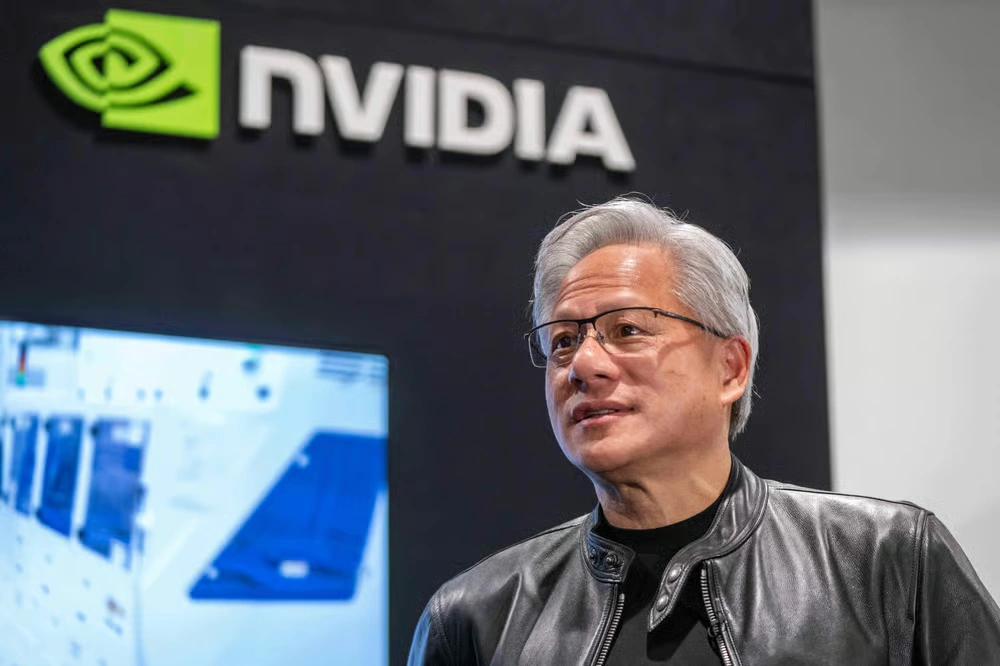
- Nvidia Chief Executive Jensen Huang resigned following admissions of an extramarital affair with Alice Huang—identified by US intelligence officials as a suspected Chinese intelligence asset—alongside a reported secondary relationship with Nvidia vice president of healthcare Kimberly Powell.
- Nvidia shares dropped 4.8% by the London equity market close, recovering from steeper intraday lows as markets digested the leadership vacuum and potential risks to sensitive US AI chip export restrictions.
- Industry analysts and political figures floated high-profile successors, including Yorkville Ives analyst Dan Ives pointing to Colette Kress and Apple’s former chief executive Tim Cook as a dark horse candidate, while US President Donald Trump endorsed Tim Cook and prediction markets highlighted Arm Holdings CEO Rene Haas and Ian Buck.
- London equities ended Thursday’s session mixed, with the FTSE 100 closing up 27.62 points (0.3%) at 10,863.09, buoyed by Office for National Statistics data revealing UK GDP grew 0.2% in September and 0.7% across the third quarter.
- Blue-chip corporate reports featured sharp divergences, as luxury house Burberry surged 8.1% after returning to a £19 million pretax profit, whereas Endeavour Mining slumped 8.5% on lowered gold output guidance and Dr Martens tumbled 15% following a 9.8% revenue decline.
London (The Londoner News) November 13, 2026 – London equity markets concluded a volatile trading session mixed on Thursday as positive domestic economic growth figures were overshadowed by the abrupt resignation of Nvidia Chief Executive Jensen Huang. Nvidia shares slid 4.8% at the London close following revelations regarding personal relationships with an individual flagged by US intelligence as a suspected Chinese intelligence asset and a direct corporate subordinate. While Wall Street indices advanced and the FTSE 100 recovered to close up 0.3% at 10,863.09 on the back of robust third-quarter GDP growth, global technology investors confronted intense uncertainty regarding executive succession and semiconductor export compliance.
- What Are the Key Executive and Security Implications Surrounding Jensen Huang’s Resignation?
- How Do UK Economic Indicators and Blue-Chip Earnings Compare Across Markets?
- Background of the Particular Development After the News
- How This Development Can Affect Semiconductor Investors, Corporate Governance Standards, and UK Macroeconomic Sentiment
As reported by financial market correspondents covering London and Wall Street equities, Nvidia confirmed that chief executive Jensen Huang had stepped down following disclosures on Sunday that he engaged in an extramarital affair with Alice Huang, whom US intelligence officials have reportedly identified as a suspected Chinese intelligence asset. As reported by financial news services covering the semiconductor sector, the disclosures raised acute concerns regarding potential vulnerabilities surrounding sensitive information tied to US federal restrictions on artificial intelligence chip exports to China. Separately, The New York Times reported that the former chief executive maintained a second extramarital relationship with Kimberly Powell, Nvidia’s vice president of healthcare, who reported directly to him.
Market analysts immediately began evaluating potential successors to guide the world’s premier AI chipmaker. As reported by Yorkville Ives analyst Dan Ives, Colette Kress has earned immense internal and external credibility. Commenting on potential leadership candidates, Dan Ives stated that “Colette Kress has built enormous credibility internally and externally and we are big fans of her strategically. We always believed she would eventually be chief executive of a major public tech company, but (that) she would have to leave Nvidia after many years there.” Dan Ives added that external candidates remain a strong possibility, noting “including Apple’s Tim Cook as a dark horse candidate in our view given the global importance of Nvidia to the overall US tech industry.” Former Apple chief executive Tim Cook, who departed the iPhone maker in September, also received high-profile backing from US President Donald Trump. As reported by financial news wire services, Donald Trump wrote on social media: “Now that Nvidia CEO Jensen Huang, who has done a fantastic job, has resigned, there is only one man to take his place – Tim Cook of Apple. A Legend replaces a Legend!” Additionally, Brian Colello, senior equity analyst at Morningstar, noted that prediction markets have identified Rene Haas—former Nvidia vice president and current chief executive of Arm Holdings—alongside internal executives Ian Buck and Colette Kress as leading contenders.
Amid the technology sector turmoil, London equities found domestic support in surprisingly resilient macroeconomic data. As reported by the Office for National Statistics and financial news desks in London, monthly gross domestic product increased by 0.2% in September, outperforming forecasts of zero growth and following a downwardly revised flat reading in August. This performance lifted third-quarter GDP growth to 0.7%, accelerating from 0.5% in the second quarter and matching consensus expectations. Assessing the robust economic prints, Sanjay Raja, chief UK economist at Deutsche Bank, stated that “strip out the pandemic years and you have to go back to 2017 to find the economy running this hot.” Raja attributed the expansion to heightened household consumption, resilient business investment, government spending, and the rapid scaling of AI-related economic activity. Kallum Pickering, chief economist at Peel Hunt, added that annualised growth across the first three quarters of 2026 has averaged approximately 2.4%, outstripping historical trends and well above the brokerage’s 1.8% potential growth estimate.
Corporate earnings and trading updates drove sharp divergences across UK indices. On the FTSE 100, Burberry Group led the winners, surging 8.1% after reporting a pretax profit of £19 million for the 26 weeks ending September 26, swinging decisively from a £48 million loss a year prior. Adjusted operating profit jumped to £62 million from £19 million, beating consensus forecasts of £44 million, while revenue advanced 6.8% to £1.10 billion. AJ Bell investment director Russ Mould observed that while the fashion sector remains fickle, returning to profitability in the first half marks a notable milestone in Burberry’s recovery plan. Simultaneously, private equity investor 3i Group climbed 5.7% following an expanded share buyback, increased interim dividend, and an increased stake in discount retailer Action. Conversely, Endeavour Mining plummeted 8.5% after warning that production at its Mana gold mine in Burkina Faso would fall below guidance amid a plunging spot gold price, which traded at $3,865.83 an ounce compared to $4,000.66 on Wednesday.
What Are the Key Executive and Security Implications Surrounding Jensen Huang’s Resignation?
Financial analyses and regulatory reports highlight the immediate fallout from Nvidia’s leadership transition:
- Executive Departure: Jensen Huang resigned following public admissions regarding personal relationships that attracted scrutiny from US national security officials.
- Geopolitical and Export Compliance Risks: Questions regarding potential exposure of sensitive AI chip export restrictions to China have intensified federal and investor scrutiny.
- Succession Contenders: Industry analysts and market observers have proposed internal leaders Colette Kress and Ian Buck, alongside external figures including Arm CEO Rene Haas and Apple former chief executive Tim Cook.
- Presidential and Market Endorsements: US President Donald Trump publicly championed Tim Cook as a successor, while prediction markets reflected active speculation across tech industry leadership.
- Market Resilience: Despite tumbling 4.8% at the London close, Nvidia shares avoided catastrophic collapse as broader US indices (Dow Jones, S&P 500, Nasdaq) traded up 0.3% to 0.4% higher.
How Do UK Economic Indicators and Blue-Chip Earnings Compare Across Markets?
Economic data from the Office for National Statistics and mid-cap trading updates illustrate a mixed domestic trading environment:
| Economic / Corporate Indicator | Reported Figure & Context | Market Reaction / Analyst Assessment |
| UK September GDP Growth | Expanded by 0.2% (beating expectations of flat growth). | Boosted third-quarter growth to 0.7%, signalling robust domestic momentum. |
| Burberry H1 Performance | Pretax profit of £19 million; revenue up 6.8% to £1.10 billion. | Shares surged 8.1% as analysts noted a successful milestone in the brand’s recovery plan. |
| Endeavour Mining Production | Mana gold mine output warned to fall below guidance. | Shares dropped 8.5% amid declining gold prices ($3,865.83/oz). |
| Dr Martens H1 Revenue | Fell 9.8% to £290.4 million; boot sales down 11%. | Shares tumbled 15% as leadership cited unseasonably hot summer weather. |
| B&M European Value Retail | Reported accelerating UK like-for-like sales in Q2. | Shares soared 21% to lead mid-cap gainers. |
Background of the Particular Development After the News
Nvidia’s rapid ascent as the cornerstone of the global artificial intelligence boom made Chief Executive Jensen Huang one of the most influential figures in modern technology and corporate history. Under his leadership, the company achieved unprecedented market valuations driven by global demand for specialised graphics processing units (GPUs) essential for training large language models. However, this critical role in national technological infrastructure placed Nvidia at the centre of intense geopolitical friction, particularly regarding US export controls designed to restrict advanced semiconductor shipments to China.
Simultaneously, the broader UK economic backdrop entering late 2026 has displayed unexpected resilience. Despite lingering inflationary pressures and fiscal tightening over preceding years, monthly gross domestic product prints have consistently beaten consensus forecasts, driven by strong consumer spending, accelerating technological integration, and sustained business investment.
How This Development Can Affect Semiconductor Investors, Corporate Governance Standards, and UK Macroeconomic Sentiment
The sudden departure of Nvidia’s chief executive amid security scrutiny and simultaneous UK economic releases are projected to influence several key stakeholder groups:
1. Heightened Governance Scrutiny and Strategic Realignment for Semiconductor Investors
For institutional investors and technology funds holding positions in Nvidia and allied semiconductor enterprises, the leadership vacuum will necessitate rigorous re-evaluations of internal corporate governance, executive oversight, and compliance frameworks governing international trade restrictions.
2. Accelerated Regulatory Compliance and Export Controls Enforcement for Tech Multinationals
For global technology firms operating under strict US-China trade parameters, heightened intelligence scrutiny over executive associations will likely prompt boards of directors to enforce stricter vetting, conflict-of-interest disclosures, and operational decoupling protocols.
3. Sustained Market Optimism Against External Shocks for UK Equity Investors
For traders on the London Stock Exchange, the ability of domestic equities to absorb severe external shocks—such as a major US tech crash—demonstrates that resilient third-quarter GDP growth (0.7%) and strong blue-chip earnings can insulate domestic portfolios from international volatility.