Key Points
- Removal Deadline Overdue: The official deadline set by Westminster City Council concerning the 25-year-old street garden at St John’s Wood has long since expired but the flowers and bench still stand.
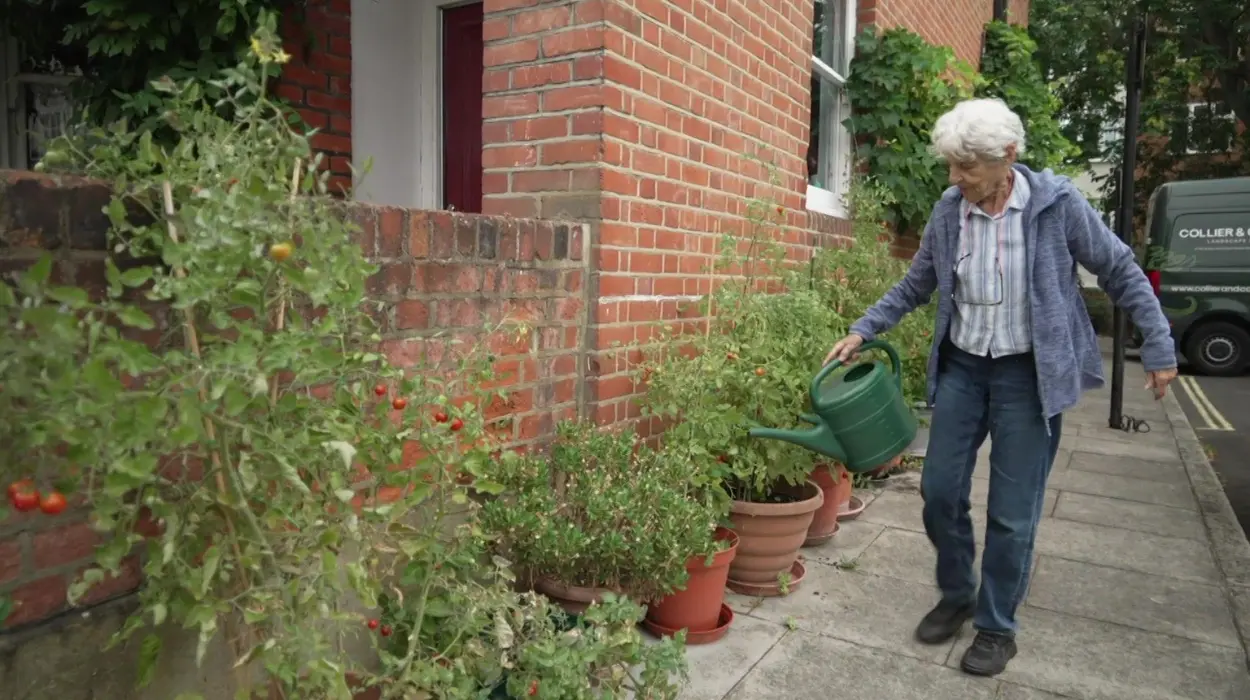
- The Designer: The garden has been beautifully designed and maintained by 89-year-old retired schoolteacher and grandmother Katharine Hoskyns.
- The Council’s Point of View: It is stated by Westminster City Council that the council “reluctantly” pursued legal action against the garden in response to several residents’ claims concerning anti-social behaviour like drug abuse and littering, as well as concerns about structural safety of the bench and pots.
- Supporters: Supporters of the garden and Ms Hoskyns have gathered over 190 signatures in defence of what is considered their “treasured oasis.”
- Possible Future Actions: Although no demolition occurred immediately, there are prospects for further negotiation between Ms Hoskyns and the local council.
London (The Londoner News) September 3, 2026 — A beloved 25-year-old street garden in north-west London remains firmly rooted on the pavement after the official removal deadline issued by the local authority elapsed without enforcement action. The disputed green space, curated outside the home of 89-year-old retired teacher Katharine Hoskyns in St John’s Wood, has sparked a widespread neighbourhood debate regarding public space, community amenity, and municipal regulation. Despite a formal notice served by Westminster City Council demanding the clearance of the verdant display and wooden bench, the pots filled with tomatoes, geraniums, and herbs are still standing, leaving the immediate future of the micro-gardening project hanging in the balance.
- Key Points
- Why Did Westminster City Council Order the Removal of the St John’s Wood Garden?
- How Has Katharine Hoskyns Responded to the Council’s Enforcement Notice?
- What Do Neighbouring Residents Say About the Disputed Community Garden?
- What Lies Ahead for the Pavement Oasis Now That the Deadline Has Passed?
Why Did Westminster City Council Order the Removal of the St John’s Wood Garden?
The controversy surrounding the pavement sanctuary intensified after Westminster City Council issued a formal notice in July requesting the removal of the flora and seating structure. As reported by various media titles, the local authority defended its actions by citing a series of complaints lodged by local residents over several years.
As reported by SWNS and featured across multiple news outlets, a spokesperson for Westminster City Council stated that
“following a series of resident complaints and attempts to resolve this dispute informally over several years, the council was, reluctantly, obliged to begin a formal process.”
The council further emphasized the human impact of the situation, adding, as noted in coverage by London-Now and the BBC, that
“residents should be able to live without anti-social behaviour impacting on their lives. Moving this bench will help reduce the recent disturbance in the area.”
Local authority representatives detailed that examples of anti-social behaviour linked to the spot included incidents of drug-taking and dumped rubbish. Furthermore, officials raised safety concerns, suggesting that the unsecured bench lacked formal structural safety verification and that heavy plant pots could potentially pose a risk of falling and causing injury.
Explore more Central London News:
Starmer Resigns, Triggering By-Election in Holborn and St Pancras 2026
New Bayswater Italian Restaurant Sparks 2AM License Backlash in
How Has Katharine Hoskyns Responded to the Council’s Enforcement Notice?
Katharine Hoskyns, the 89-year-old grandmother who spent a quarter of a century transforming the grey corner into a blooming haven, has strongly disputed the justifications provided for the garden’s destruction. Speaking to journalists and broadcasters, Ms Hoskyns maintained that the accusations do not reflect the reality of the street space she looks after.
As reported by the BBC and echoed by local news channels, Ms Hoskyns disputed the case for removal, stating that she has not witnessed any anti-social behaviour taking place at the site. She also rejected claims that her flower pots obstruct pedestrian flow, noting that she uses a walking frame herself and is easily able to navigate past them.
Appearing alongside her sister-in-law, Catherine, in an interview with GB News journalist Will Godley, Ms Hoskyns highlighted the positive social impact of her horticultural efforts. She stated:
“I think community enjoy it. Everybody who comes up to me says they really appreciate it.”
What Do Neighbouring Residents Say About the Disputed Community Garden?
The enforcement action has deeply divided opinion on the street, though a strong faction of local residents has rallied aggressively to protect the site—which is situated near the famous Abbey Road studios and affectionately nicknamed “The Pots” by local orchestral musicians.
As reported by the BBC, neighbour Holly Bell-Stevens voiced strong opposition to the council’s removal plan, warning that the corner would lose its unique identity. Ms Bell-Stevens stated:
“We have this quiet oasis within the City of Westminster, and removing the pots means it would just become another concrete corner. My children learned how to ride their bikes in this corner. We walk our dogs here. It cultivates a community and it touches everyone.”
To demonstrate local solidarity, Ms Hoskyns’ family organised a petition in defence of the green space. According to updates covered by regional journalists, the physical petition has successfully garnered more than 190 signatures from community members backing the retention of the garden display.
What Lies Ahead for the Pavement Oasis Now That the Deadline Has Passed?
With the formal deadline specified in the council notice now elapsed without any physical clearance of the plants or bench, the immediate status of the street garden remains preserved, though uncertainty lingers.
As reported by the BBC, Ms Hoskyns indicated that she fully expects to hear back from Westminster City Council regarding their next steps. However, local supporters have signaled a willingness to engage in constructive dialogue with municipal leaders rather than confrontation. Residents backing the octogenarian gardener have noted they would warmly welcome a joint cooperative effort with the local authority to determine a practical compromise for the future of the space.
This sentiment of conciliation has been reciprocated by the local government. Concluding their official remarks across multiple media platforms, the Westminster City Council spokesperson maintained a hopeful tone, stating: “We remain hopeful that we can resolve the situation amicably.” Whether that prospective compromise will involve relocating the disputed bench and select pots to a more suitable nearby location—as initially floated by council officials—remains to be seen as both parties await further discussions.