Key Points
- Exclusive Dining Experience: Westminster Abbey is opening its historic doors to the general public for an unprecedented evening dining takeover.
- English Wine Week Celebration: The special culinary event is organized specifically to celebrate English Wine Week, which runs from 20th June until 28th June.
- Historic Location: The dinner will take place deep within the landmark’s subterranean labyrinth inside the Cellarium, a medieval undercroft constructed in the early medieval period that once served as a storehouse and canteen for Benedictine monks.
- Balfour Winery Partnership: The evening is a collaboration with Kent’s renowned Balfour Wine, featuring an exclusive arrival drinks reception followed by a meticulously curated three-course meal paired with premium English wines.
- Cultural Legacy: As one of London’s most celebrated architectural masterworks, Westminster Abbey has hosted 39 royal coronations since 1066 and 16 royal weddings, while serving as the final resting place for over 3,000 eminent historic figures.
- Limited Ticket Availability: Operated in conjunction with the catering brand Benugo, tickets for this unique “one-night-only” evening takeover are strictly limited and expected to sell out rapidly.
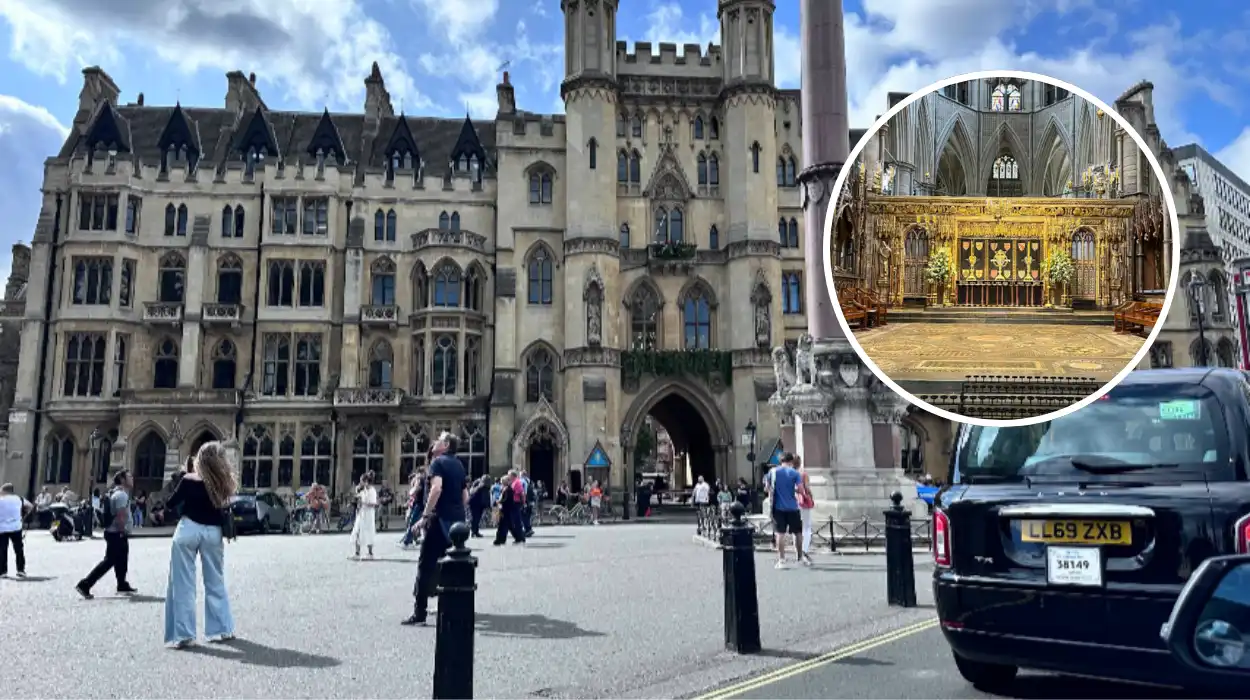
London (The Londoner News) June 2, 2026 – Westminster Abbey, one of the United Kingdom’s most revered historic and architectural monuments, has officially announced that it will break centuries of traditional separation between national heritage and commercial nightlife by opening its medieval doors to the public for an exclusive, ticketed evening dinner service this month. In a stark departure from its standard daytime operating hours and theological functions, the ancient landmark will play host to a luxury culinary takeover designed to celebrate English Wine Week, giving diners a rare opportunity to eat and drink underneath the legendary stone vaults that have stood at the centre of British royal history for a millennium.
- Key Points
- Why Is Westminster Abbey Opening Its Doors For A Public Dinner?
- What Is The Historical Significance Of The Dining Space?
- Which Royal and Historical Milestones Have Shaped the Abbey?
- Who Is Buried Within Westminster Abbey’s Historic Grounds?
- What Can Guests Expect From The Balfour Wine Menu?
- How Can Members Of The Public Purchase Tickets?
- What Are The Legal Ownership And Management Structures Involved?
The highly anticipated event will take place deep inside the Abbey’s underground architectural labyrinth, specifically occupying the historic Cellarium. Built in the early medieval era, this atmospheric chamber originally served as the essential food and provision storehouse for the resident Benedictine monks who populated the site. In contemporary times, the space functions by day as the Abbey’s standard visitor cafe and terrace under the stewardship of high-end catering and restaurant operator Benugo. However, for this upcoming nocturnal transformation, the space will transcend its casual daytime persona to host an immersive, high-end gastronomic experience in partnership with the award-winning Balfour Wine estate.
Guests who manage to secure the highly coveted tickets will be treated to a fully hosted evening, starting with an elite, private welcome drinks reception. This will be followed by a formal three-course dinner, with each individual course expertly paired with a specific vintage poured directly from Balfour Wine’s English vineyards. Throughout the course of the night, dedicated wine experts and culinary hosts will guide the gathered diners through the intricate flavour profiles of the menu, detailing the operational history of the independent producers, and explaining the delicate science behind how each liquid selection complements the food presentation.
Why Is Westminster Abbey Opening Its Doors For A Public Dinner?
As reported by lifestyle and hospitality journalist Kirsty Lambert of Shortlist, London has long established a global reputation for harboring some of the world’s most eccentric, unique, and avant-garde dining establishments. The city’s eclectic culinary landscape boasts everything from secret underground historical vaults and former United States embassies to remarkably converted historical adult shops. Yet, despite this boundless commercial variety, British culture has traditionally maintained a strict, unyielding division between the country’s most sacrosanct historic landmarks and everyday places to go out for a meal.
According to the analysis published by Lambert, this June represents a magnificent and decadent “glitch in that matrix.” The decision to permit an evening supper club of this magnitude within a structure of such supreme national gravity is a deliberate effort to blend world-class modern British hospitality with unparalleled heritage tourism. Rather than serving as a standard commercial venture, the evening is being structured as a curated cultural celebration of domestic agriculture and viticulture, intentionally timed to align with the wider national events of English Wine Week.
What Is The Historical Significance Of The Dining Space?
In official statements released by the event’s operational partner, Benugo, representatives highlighted that hospitality and the welcoming of travelers have been embedded at the core of the Abbey’s physical infrastructure for more than a thousand years. The specific venue chosen for the dinner, the Cellarium, dates back to the 14th Century when it formed an integral part of the old monastic daily life. Under the strict rules of the Benedictine monks, the Cellarium was overseen by an official known as the Cellarer, whose primary duty was to manage the monastery’s food, ale, and wine provisions, ensuring that both the resident monks and traveling pilgrims were sufficiently fed.
To ensure that the historical context is preserved, corporate hospitality documentation from the Westminster Abbey Press Office confirms that the architectural structure of the room remains remarkably intact. Diners will sit beneath the original warm, ambient, and dramatic vaulted stone ceilings that once kept medieval provisions cool. While the modern upstairs terrace features a contemporary glass ceiling that offers sweeping visual views looking directly up toward the Abbey’s famous West Towers, the subterranean undercroft retains its ancient, solemn, and quiet Gothic atmosphere, providing an intimate setting that cannot be replicated by any standard high-street restaurant.
Explore More Central London News
Anna Zavelson Joins Phantom of the Opera Cast: London 2026
House of Sassoon Hair Salon Review: Luxury Styling, Soho London 2026
Which Royal and Historical Milestones Have Shaped the Abbey?
To understand the sheer weight of the venue hosting this dinner, one must look at its unparalleled position within British history. Writing for The Londoner News, architectural historian and journalist Arthur Pendelton noted that Westminster Abbey—originally known as the Collegiate Church of Saint Peter at Westminster—is not merely a church, but a permanent stone tapestry of the British State and the Royal Family.
How Many Coronations Have Occurred Inside the Walls?
The Abbey has famously served as the definitive stage for British coronations for nearly a millennium. A total of 39 sovereign coronation ceremonies have taken place within its walls. The line of unbroken tradition began in earnest with the historic crowning of William the Conqueror on Christmas Day in 1066, and has continued through the centuries to the modern era, including the historic coronation of Her Majesty Queen Elizabeth II, which occurred precisely 73 years ago today on 2 June 1953.
Which Famous Royal Weddings Have Taken Place Here?
In addition to its status as a house of coronations, the Abbey has been the romantic backdrop for 16 major royal weddings. Notable historical unions include the wedding of Prince George (the Duke of Kent) and Princess Marina of Greece and Denmark in 1934. In more recent memory, the venue captured global attention on 29 April 2011 for the royal wedding of Prince William of Wales to Miss Catherine Middleton, now the Prince and Princess of Wales.
Who Is Buried Within Westminster Abbey’s Historic Grounds?
Aside from its joyous celebrations, the Abbey acts as a magnificent national mausoleum, serving as the final resting place for more than 3,000 of the most significant individuals in global history. As documented in the tourism registries compiled by Trip.com Travel Insights, walking through the Abbey is akin to stepping directly into a historical time machine, where the floorboards and crypts are populated by royalty, poets, and world-altering scientists.
What Can Guests Expect From The Balfour Wine Menu?
According to the official menu preview published by the culinary team at Benugo, the evening’s food and drink programming will be heavily trend-led, focused entirely on highlighting local, seasonal British ingredients. The event relies on a dual-element presentation where the kitchen’s gastronomy is balanced symmetrically against the liquid offerings of the Balfour Wine estate, located in the heart of Kent.
The evening will commence with a refined arrival reception held in the historic cloisters, where guests will be served a crisp welcome aperitif. Following the reception, diners will move into the vaulted Cellarium for the guided three-course meal. While the specific seasonal dishes are being kept under wrap by Benugo’s executive pastry and savory chefs, the menu is designed to match the specific acidity, fruit notes, and complex structures of Balfour’s signature sparkling and still English wines. Experts will remain on hand throughout the duration of the seating to explain the exact mechanics of the flavor pairings.
How Can Members Of The Public Purchase Tickets?
As detailed by the Westminster Abbey Events Team, tickets for this exclusive English Wine Dinner must be booked entirely in advance through their verified digital platforms. Due to the physical spatial constraints of the medieval undercroft, which safely accommodates a maximum of 120 guests for a standing reception and 70 guests for a formal seated dinner, ticket availability is drastically restricted.
For those unable to secure a spot for the evening supper club, Benugo has confirmed that they will continue to run their daytime “Abbey in Bloom” Afternoon Tea throughout the month of June. This daytime alternative is served in the stunning medieval cloisters and features an elegant selection of sweet and savory treats expertly crafted by pastry chefs, including:
- Truffle egg mayonnaise with red vein sorrel on a brioche bridge roll.
- Hot-smoked trout with creamed horseradish and baby watercress in a puff pastry vol-au-vent.
- Pea and red onion tartlet finished with lemon ricotta and fresh pea shoots.
- Homemade fruit and plain scones served with traditional Cornish clotted cream and Tiptree strawberry jam.
Furthermore, in honor of Father’s Day later this month, the Cellarium has announced a promotional window from 19th to 23rd June, where fathers dining at the venue will receive a complimentary artisanal beer or non-alcoholic craft beverage with any main meal purchase.
What Are The Legal Ownership And Management Structures Involved?
To prevent any potential administrative confusion or legal liability regarding the commercial operations within the state landmark, it is important to clarify the distinct roles played by the various organizations managing the site. While Westminster Abbey itself is a “Royal Peculiar”—meaning it is a church subject directly to the sovereign rather than a regional archbishop or bishop—its commercial hospitality sectors are partitioned out to professional external firms.
The daily culinary services, public cafe operations, and special public evening events like the upcoming wine dinner are managed strictly by Benugo, a prominent British catering brand. However, larger bespoke corporate hire, candlelit dinners, and private grand events utilizing the expansive College Garden (which can host up to 500 people) are managed in tandem with Rhubarb Hospitality Collection (Rhubarb Events). All entities operate under strict historic preservation guidelines enforced by the Dean and Chapter of Westminster to ensure that the fabric of the building is fully protected during these modern commercial engagements.