
Key Points
- Permanent Triumphant Celebrations: Arsenal Football Club supporters are celebrating their first Premier League title victory in 22 years by getting permanent club-themed tattoos etched onto their bodies.
- Flamin’ Eight Commercial Surge: The prominent Flamin’ Eight tattoo studio, located on Castle Road in Kentish Town, has reported an immediate post-victory influx of bookings, completing two custom Arsenal designs and scheduling three more appointments within days.
- Naresh Bhana’s Career Insight: Resident tattoo artist Naresh Bhana, who has been working in the industry since 1988, stated that while he has crafted hundreds of Gunners tattoos across his career, he anticipates a historic surge in the coming weeks following the championship victory.
- Geographical Anomaly in Tottenham: Bhana revealed that during a multi-year tenure working at a tattoo parlor in Tottenham—the home territory of Arsenal’s fiercest rivals, Tottenham Hotspur—he strangely completed more Arsenal-themed tattoos than Spurs ones due to fan safety anxieties near the stadium.
- Devoted Fan Testimonials: Lifelong season-ticket holders, including 42-year-old Holloway-raised Matthew Richmond and fellow supporter Ian Jno-Baptiste, were documented receiving custom ink, detailing the profound relief and joy of ending a more than two-decade championship drought.
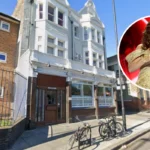
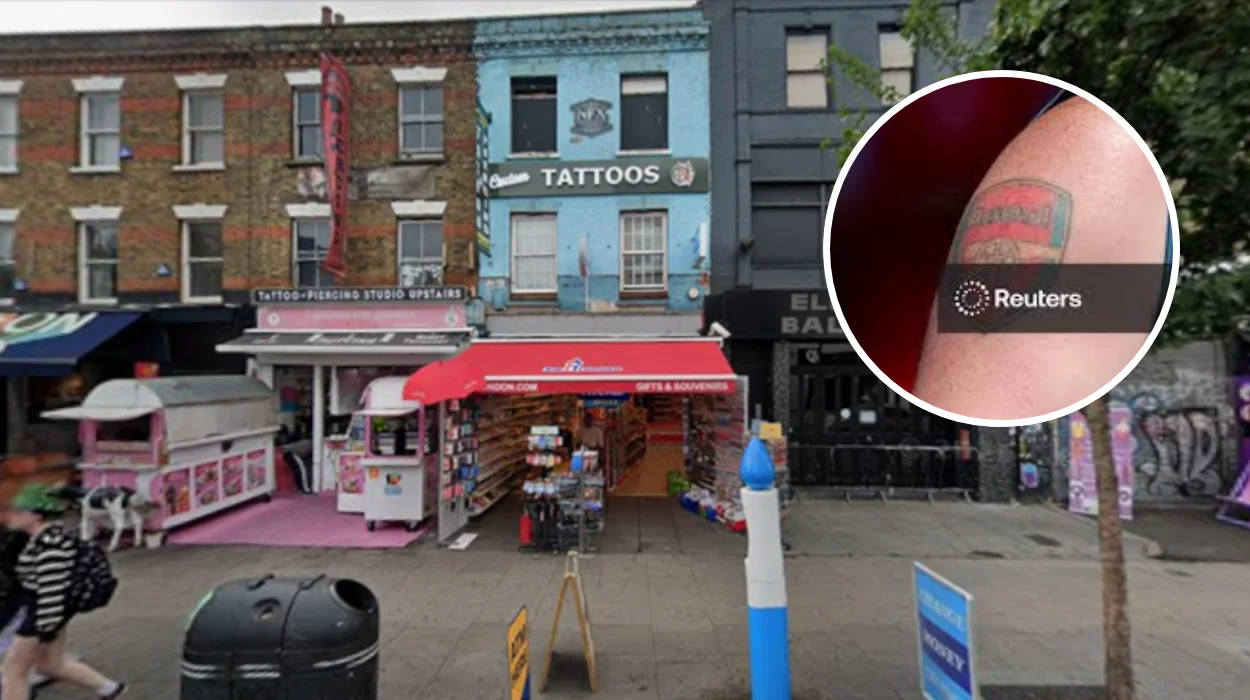
Kentish Town (The Londoner News) June 5, 2026 – Arsenal Football Club supporters have begun flocking to local tattoo parlours across North London to permanently commemorate the club’s historic Premier League title triumph, marking the end of a gruelling 22-year championship drought. The cultural phenomenon has taken firm root at the renowned Flamin’ Eight tattoo studio situated on Castle Road in Kentish Town, where resident artists have seen an immediate surge in bookings from fans eager to immortalise the memory of the long-awaited sporting victory. Industry experts and local business owners report that the victory has triggered an emotional outpouring across the borough, turning sports fandom into a permanent form of body artistry.
- Key Points
- Why Are Arsenal Fans Getting Tattoos After 22 Years?
- Who Is the Tattoo Artist Behind the Historic Gunners Tattoos?
- Did an Arsenal Tattoo Artist Work in Tottenham Territory?
- What Do the Fans Say About Their New Arsenal Tattoos?
- How Does Flamin’ Eight Handle the Post-Victory Demand?
- Is Body Art the Ultimate Expression of Football Loyalty?
As reported by journalists at the Camden New Journal, the celebratory ink rush has already seen two complex Arsenal-themed tattoos completed this week, with an additional three appointments securely booked into the studio’s ledger for the coming days. The localized commercial boom highlights the deep socio-cultural connection between footballing success and working-class identity within North London, illustrating how sports achievements translate directly into micro-economic boosts for service-based urban businesses.
Why Are Arsenal Fans Getting Tattoos After 22 Years?
To fully understand the sudden influx of football-related body art, one must examine the long and arduous journey endured by the Arsenal fanbase since their last league title in the 2003-2004 season. For more than two decades, generations of supporters watched their team fall short in title races, leading to a profound sense of emotional release when the current squad finally clinched the trophy.
As reported by the editorial team at the Camden New Journal, the artistic trend is a direct manifestation of a collective anxiety that such a sporting peak may not occur again for a very long time. For many fans, the act of getting inked serves as a physical archive of a moment that felt entirely unattainable for twenty-two consecutive seasons.
In an on-the-record interview conducted inside the Castle Road parlour, veteran tattoo artist Naresh Bhana explained the foundational motivation driving these football enthusiasts. As reported by the Camden New Journal staff, Naresh Bhana stated that:
“It’s quite an easy thing to show your allegiance to your team. But obviously now they have won, people want to celebrate this moment in this way because they never know when it will happen again.”
This acute awareness of the volatile nature of professional sports has transformed the tattoo process from a simple cosmetic choice into an act of historical preservation for individual working-class fans.
Who Is the Tattoo Artist Behind the Historic Gunners Tattoos?
The cultural phenomenon is being guided by experienced hands at Flamin’ Eight, a studio with deep historical roots within the North London community. The parlor, which initially opened its doors in 1998 along Holloway Road before permanently relocating to its current premises in Kentish Town in 2002, is currently anchored by Naresh Bhana, a seasoned craftsman who has been actively working as a professional tattoo artist since 1988.
Over a career spanning nearly four decades, Bhana has observed multiple cultural and sporting shifts within London. However, the current demand for club crests and cannon imagery stands out as a unique post-pandemic sports milestone.
As reported in the columns of the Camden New Journal, Bhana has completed hundreds of Gunners-themed tattoos over his career, but he firmly believes that the current figures represent only the tip of an impending commercial iceberg, predicting a massive wave of subsequent bookings in the upcoming summer weeks.
Explore More North London News
Alexandra Palace Station Marks 10-Year Volunteer Transformation: Haringey 2026
Pallas Capital Restructures £525k Bridging Loan in North London 2026
Did an Arsenal Tattoo Artist Work in Tottenham Territory?
One of the most striking operational insights revealed by the veteran ink artist involved a bizarre geographical paradox regarding football fan behavior and tribal boundaries within the city. London’s footballing landscape is notoriously divided, particularly between the red of Arsenal and the white of Tottenham Hotspur, making territorial safety a genuine consideration for match-going fans.
As reported by the Camden New Journal, Bhana spent several years working inside a commercial tattoo studio located deep within Tottenham, the heartland of Arsenal’s historic rivals. Despite the local demographics, Bhana disclosed that he routinely performed significantly more Arsenal-themed tattoos than Tottenham Hotspur ones during his time at the venue.
When analyzing the psychological reasons behind this statistical anomaly, Bhana suggested that fan safety and fear of physical altercation played a paramount role in customer decision-making. As reported by the Camden New Journal, Naresh Bhana stated that:
“I think people felt some sense of danger getting a tattoo of the rival team so close to the ground.”
Consequently, Arsenal fans living or working in rival territory chose to get their club loyalty permanently marked in a high-stakes environment rather than travelling, or conversely, used the local shop under a veil of discretion to avoid drawing unwanted attention on matchdays.
What Do the Fans Say About Their New Arsenal Tattoos?
The human element of this sporting narrative was brought into sharp focus when reporters visited the Kentish Town establishment on a Thursday afternoon, encountering multiple dedicated supporters actively undergoing or completing their procedures. Among them was Ian Jno-Baptiste, a resident who explicitly declared that he will never forget the year Arsenal finally regained their crown at the summit of English football.
Sitting directly in the hot seat while enduring the painful process of having a traditional Arsenal cannon permanently emblazoned on his skin was 42-year-old Matthew Richmond. Richmond, who grew up in the immediate vicinity of Holloway—a stone’s throw from the club’s old Highbury home and the modern Emirates Stadium—articulated the complex emotional reality shared by thousands of season-ticket holders.
As reported by the local press corp, Matthew Richmond detailed his lifelong commitment to the club, tracking a journey that began during his childhood in the early 1990s. As reported by the Camden New Journal, Matthew Richmond stated that:
“I’ve been supporting Arsenal since 1993, I was nine then and for the first 11 years we were very successful. We were winning trophies all the time and it felt like we were out on the streets celebrating at this time of year, every year. And then it just stopped. It’s been 22 years – I kept my season ticket, kept going to games thinking we might never win anything again and then after this long build-up, we did it.”
Richmond’s commentary illustrates the psychological toll of a long-term title drought, highlighting how a generation of fans transitioned from expecting annual victory parades to fearing that they might never witness another domestic triumph in their lifetimes.
How Does Flamin’ Eight Handle the Post-Victory Demand?
The operational capacity of local creative businesses like Flamin’ Eight is being thoroughly tested by the sudden influx of emotional consumer spending. Tattoo parlours operate primarily on an appointment basis, but the immediate cultural momentum of a Premier League trophy presentation requires studios to remain highly adaptable to walk-ins and urgent custom design requests.
As reported by industry trackers alongside the local media reports, the Kentish Town parlour has successfully integrated these high-concept sports designs without disrupting their standard client schedule. The balance between maintaining high-quality hygiene standards and capitalizing on a brief window of peak community euphoria remains essential for the studio’s business model.
With three solid appointments already finalized on the books and walk-in inquiries continuing to rise daily, the shop is preparing for an extended period of Arsenal-centric artistry. The designs requested range from minimalist interpretations of the iconic club cannon to large-scale, hyper-realistic representations of the Premier League trophy itself, complete with the specific date inscriptions of the 2026 victory.
Is Body Art the Ultimate Expression of Football Loyalty?
The intersection of football fandom and body modification represents a unique facet of British working-class culture. While merchandise like shirts, scarves, and flags can be easily removed or replaced, a tattoo represents an unyielding, permanent declaration of identity that persists regardless of the club’s future on-pitch fortunes.
As reported across various North London media outlets, including detailed commentary from the Camden New Journal, the trend shows no signs of slowing down as the summer months approach. For fans like Matthew Richmond and Ian Jno-Baptiste, the physical sting of the tattoo needle is a small price to pay for a lifetime reminder of the year the Gunners finally brought the Premier League trophy back home to North London.