Key Points
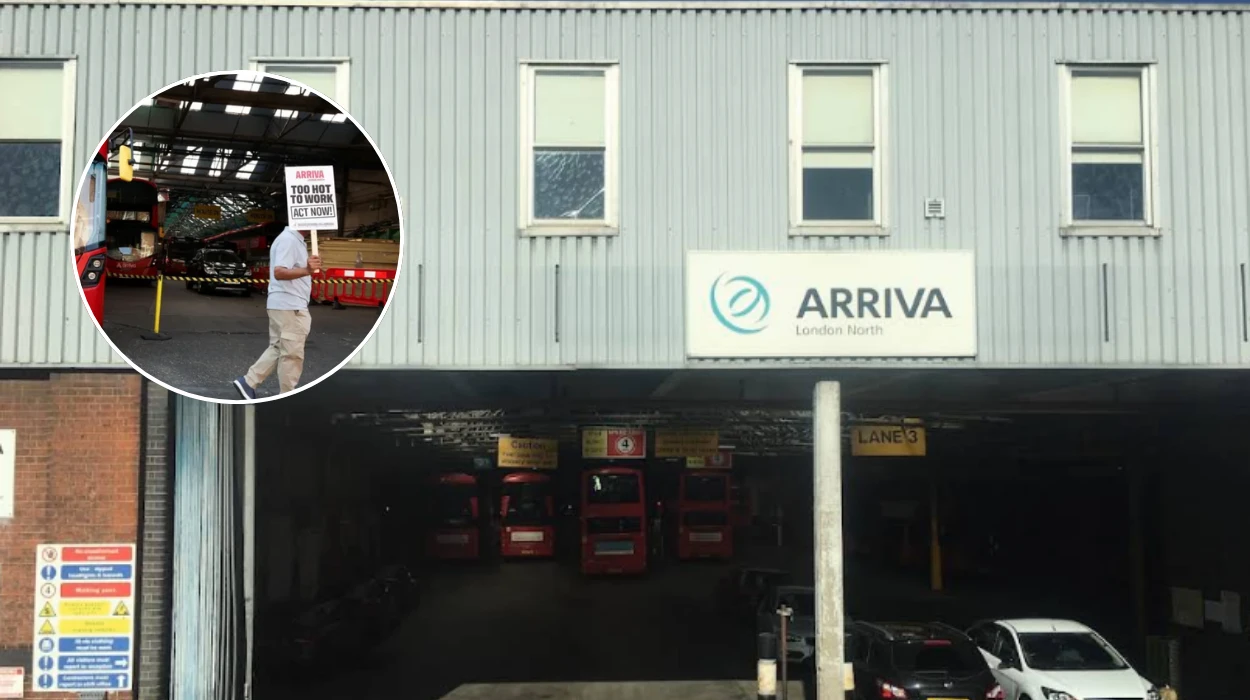
- Around 1,500 Unite the Union members at Arriva North London began industrial action over working conditions during extreme hot weather.
- Drivers said temperatures inside bus cabs regularly exceeded 40°C during prolonged summer heatwaves, with cases of heat exhaustion, heat stroke and dehydration reported.
- Unite is calling on Arriva to replace existing cab air-cooling systems with full, high-performance air conditioning.
- Strikes were scheduled on 11 occasions from mid-August to mid-October, with disruptions expected across north London, parts of central London and Essex.
- Arriva said staff and customer wellbeing remained its top priority and highlighted its ongoing coordination with Transport for London (TfL).
- After the initial walkouts, later strikes were temporarily suspended and ballot reviews were carried out as new offers were put forward in negotiations.
London (The Londoner News) August 24, 2026 – Approximately 1,500 bus drivers across north London and Essex pushed forward with a series of industrial walkouts after rejecting multiple management proposals aimed at resolving a fierce dispute over hazardous working conditions inside overheated vehicle cabs. The organized disruption, orchestrated by Unite the Union across multiple planned dates extending toward mid-October, unfolded as the United Kingdom battled successive severe heatwaves. Drivers operating across various garages voiced profound safety concerns, noting that cramped cabins frequently surpassed 40°C, triggering physical ailments such as heatstroke, severe dehydration, and narrow escapes from traffic accidents.
Why are London bus drivers striking over hot weather?
The core catalyst behind the industrial unrest centres on fleet ventilation and cooling technology. According to detailed reports by Megan Howe of The Standard, the union stated that the vast majority of Arriva North London buses are equipped only with basic air-cooling systems rather than full-scale air conditioning. As scorching summer temperatures elevated ambient levels across the capital, these cooling systems proved inadequate, leaving frontline staff exposed to punishing thermal conditions.
As reported by BBC News, drivers complained that their cabs frequently exceeded 40°C, creating an environment that compromises concentration and physical wellbeing. While transport operators maintain that drivers are permitted to take rest breaks when necessary, union representatives emphasized that heavy schedule pressures and a sense of duty toward passengers often compel staff to continue working through dangerous exhaustion.
Explore more North London News:
Win £3M Victorian London Townhouse with Omaze 2026
Taro Opens New Japanese Restaurant in Holloway, 2026
What are the specific demands made by Unite the Union?
Unite the Union has insisted that Arriva commit to a comprehensive fleet upgrade. Specifically, the union demands that the company replace all legacy air-cooling setups with fully functional air conditioning units to safeguard driver health.
Weighing in on the corporate responsibility aspect, Unite general secretary Sharon Graham stated that time and time again, drivers had complained to Arriva North London about working in dangerous conditions, but the company had failed to act, which she described as completely unacceptable. As quoted by The Standard, Sharon Graham further stated that
“a profitable company such as Arriva could easily invest in improving conditions for its drivers and protecting the general public but is instead prioritising greed. We will back our members all the way in this dispute”.
How has Arriva responded to the driver safety allegations?
In response to the mounting industrial pressure and widespread service interruptions, bus operator management defended their operational record while expressing a willingness to continue dialogue.
As reported by Channel 4 News, Wasim Mohammed, managing director of Arriva London, stated that extreme heat was “creating challenges across many sectors, including London’s bus network” and emphasized that the wellbeing of staff and customers remained the company’s “top priority”. Wasim Mohammed added that additional support measures had been rolled out for drivers and urged Unite to “come back to the negotiating table”.
Concurrently, company representatives noted that they were working hand-in-hand with Transport for London (TfL) to monitor network integrity and ensure that appropriate support frameworks were maintained wherever feasible.
What is the impact of the strikes on commuters and TfL services?
The coordinated walkouts—affecting multiple garages, dozens of local routes, night services, and specific regional links across north and central London as well as parts of Essex—have created notable logistical hurdles for daily commuters.
Addressing the public impact, a TfL spokesperson stated that
“strike action is expected to impact local bus routes in north and some central London areas, however, the majority of London’s bus network will still operate as planned on these days”.
Transport authorities routinely advised passengers to check live journey planners and allocate extra time for their daily commutes while localized disruptions remained active.
What are the latest updates on the negotiation process?
As the dispute evolved through subsequent days of action, diplomatic efforts sought to bridge the gap between labor demands and corporate constraints. According to updates by ITV News London, initial walkouts prompted intensive behind-the-scenes talks, leading to the temporary postponement of subsequent strike phases to allow union membership to evaluate newly tabled proposals.
Unite regional officer Steven Stockwell stated:
“Following talks, Arriva has made an offer to Unite members. To allow our members to have their say on whether to accept this, we have postponed strike action so they can be balloted”.
Union leadership confirmed that if the revised package fails to satisfy membership expectations regarding thermal safety and cab infrastructure, further industrial action will resume promptly.