Key Points
- Hidden Paradise Discovered: Astey’s Row Rock Garden in Islington has emerged as North London’s ultimate “hidden jungle”, offering a dense, untamed green retreat tucked directly behind a bustling commercial district.
- Unique Geographic Illusion: Situated mere moments from the heavily congested Essex Road, the garden features dramatic overhanging trees, heavy foliage, and colossal stone boulders that create the physical sensation of a remote tropical maze.
- A Forgotten Waterway’s Legacy: The site boasts an extensive historical lineage tracing back to 1613 and the creation of the 42-mile New River aqueduct, which was engineered to supply fresh drinking water from Hertfordshire directly into the heart of London.
- Victorian Transformation: Following the abandonment and covering of the New River’s southern terminus in the 1890s, municipal planners eventually transformed the derelict infrastructure into an ornamental rockery during the mid-20th century.
- The Ultimate Urban Escape: Local horticultural experts and urban explorers are highlighting the zone as a premier destination for weekend strolls and nature photography, successfully subverting London’s traditional open-park layouts.
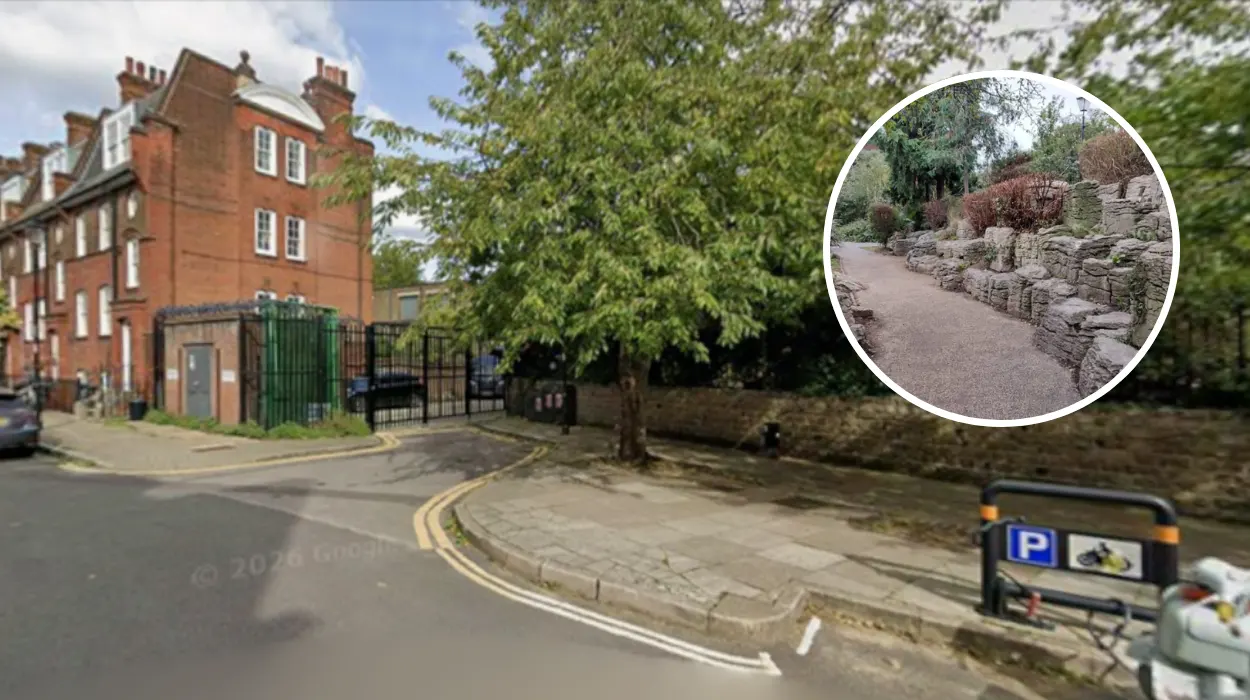
London (The Londoner News) May 30, 2026 – A secluded public sanctuary tucked away in the dense urban landscape of Islington has been identified as North London’s premier hidden oasis, providing visitors with an environmental escape that closely mimics a tropical jungle. Known formally as Astey’s Row Rock Garden, the narrow strip of public land is situated immediately behind the bustling and heavily trafficked Essex Road. Despite its proximity to commercial chaos, the space relies on an advanced microclimate of overarching weeping willows, dense native and exotic foliage, and monumental stone boulders to physically isolate walkers from the surrounding metropolis.
- Where Exactly Is This Hidden Jungle Located in North London?
- Why Does Astey’s Row Rock Garden Look Like a Miniature Jungle?
- What Is the Historic Story Behind London’s New River Aqueduct?
- How Did a Seventeenth-Century Waterway Become a Twentieth-Century Rockery?
- What Are the Best Tips for Visiting and Photographing This Hidden Spot?
As first reported by local travel and urban lifestyle correspondent Lea Dzifa Seeberg of MyLondon, this public green space breaks entirely away from the traditional, manicured architectural aesthetics typified by central London’s royal parks. Rather than wide-open lawns, the rock garden is engineered around tight, winding pathways hemmed in by massive, moss-covered rocks. The visual and acoustic isolation achieved by the dense plant canopy makes it an increasingly popular destination for weekend ramblers, local historians, and environmental photographers seeking a dramatic natural environment without leaving Zone 2.
Beyond its contemporary visual appeal, environmental historians note that the garden’s unusual, elongated layout is a direct structural artifact of London’s early industrial water infrastructure. The linear park sits explicitly on the abandoned, filled-in path of the historic New River, a seventeenth-century aqueduct system that fundamentally transformed the public health landscape of the capital. Municipal efforts across the late nineteenth and twentieth centuries gradually converted this obsolete industrial channel into the striking rockery that remains accessible to the public today.
Where Exactly Is This Hidden Jungle Located in North London?
For those attempting to locate the green space, Astey’s Row Rock Garden sits discreetly within the London Borough of Islington. The geographical footprint of the garden forms a linear green ribbon that runs parallel to Canonbury Road and Essex Road, establishing a buffer zone of tranquil nature inside a highly urbanised residential and retail district.
Writing for the independent municipal archive project Islington Archaeology and History Society, regional researcher Anthony David notes that the site’s hidden nature is its primary defense against overcrowding. Because the garden is sunken lower than the street level in several segments and shielded by high brick boundary walls and traditional Victorian terraces, thousands of commuters pass within meters of its eastern entrance every day completely unaware of its existence. The main entry points blend seamlessly into local residential footpaths, requiring a deliberate detour off the main thoroughfares of Essex Road.
Explore More North London News
Silk Naïn Releases ‘Water’ Single from North London Chaos, 2026
11 Haringey measles confirmations in 2026
Why Does Astey’s Row Rock Garden Look Like a Miniature Jungle?
The unique visual identity of Astey’s Row Rock Garden stems directly from a mid-century landscape philosophy that abandoned the rigid geometry of traditional British country gardens in favour of a rugged, wild aesthetic. The terrain is dominated by substantial granite boulders that flank the pedestrian walkways, forcing the footpaths to curve, dip, and weave in an organic maze-like pattern.
As observed by horticultural writer Peter O’Connor in his extensive visual documentation of Islington’s alternative green spaces, the dense layering of the plant canopy is what solidifies the “jungle” illusion. Towering weeping willows and mature deciduous trees create a thick overhead roof that filters the sunlight into moving patterns of shadow and light. Beneath this upper canopy, an incredibly dense understory of ferns, ivy, ornamental shrubs, and thick ground cover crowds the edges of the stone paths. This specific structural layout ensures that visitors cannot see more than a few yards ahead at any given time, amplifying the psychological sensation of wandering through an untamed, remote wilderness.
What Is the Historic Story Behind London’s New River Aqueduct?
To fully comprehend why this jungle-like garden exists in such a narrow, linear shape, one must look back more than four centuries into London’s desperate struggle for clean sanitation. In the early 1600s, London’s rapid population growth had thoroughly polluted the River Thames and local natural springs, prompting a critical shortage of fresh drinking water.
As detailed in the engineering annals compiled by water infrastructure historian Sir Hugh Myddelton—the primary driving force behind the project—the New River was opened in 1613 as an astonishing 42-mile-long artificial canal. The massive channel relied entirely on gravity to transport clean, fresh spring water all the way from Amwell and Chadwell in Hertfordshire directly into the New River Head reservoir located in Finsbury. The aqueduct was widely considered one of the greatest engineering feats of the Jacobean era, cutting directly through the rural fields of Islington via an elaborate network of timber troughs, earthen banks, and brick-lined channels.
How Did a Seventeenth-Century Waterway Become a Twentieth-Century Rockery?
The transition from a functional water highway to an exotic public garden took place over several generations of rapid Victorian urban expansion. As London grew outward, the open water of the New River through Islington increasingly posed safety risks and faced potential contamination from the surrounding residential developments.
According to historical records published by the London Borough of Islington’s Parks and Open Spaces Department, the specific southern stretch of the aqueduct where the rock garden currently sits was officially closed down, covered over, and abandoned during the 1890s. The water flow was diverted into underground cast-iron pipes to modernise the city’s utility network, leaving behind an elongated, empty scar of land. Rather than selling the vacant linear plot off to private housing developers, Victorian vestries and subsequent mid-twentieth-century municipal councils made the progressive decision to preserve the route for public recreation, culminating in the construction of the rock garden using surplus industrial stone and imported boulders.
What Are the Best Tips for Visiting and Photographing This Hidden Spot?
Because of its unique, filtered lighting conditions and dramatic geological features, Astey’s Row Rock Garden has quietly transformed into a highly sought-after location for local street photographers and internet content creators. The juxtaposition of rugged grey stone against vibrant green leaves offers a stark visual contrast rarely found in urban environments.
For those planning a weekend excursion, travel lifestyle writer Lea Dzifa Seeberg of MyLondon recommends entering the garden during the mid-morning hours when the sunlight cuts directly through the willow canopy, creating bright beams through the rising dampness. Visitors are advised to wear footwear with solid traction, as the stone steps and rock-lined paths can become notably slick under wet weather conditions due to the heavy canopy preventing fast evaporation. The park is free to enter year-round and offers a series of wooden benches tucked into small rock alcoves, making it an ideal destination for reading, quiet meditation, or a peaceful weekend walk away from the heavy noise of North London’s roads.