Key Points
- Investment Opportunity: The residents in South London will soon have the opportunity to invest in The Trafalgar as the activists formally begin their campaign to save the future of the pub.
- Purchase Approach: This approach involves using the Community Benefit Society (CBS) framework to purchase the freehold of the pub.
- Historic Site: The pub is a historic 150-year-old site that has previously managed to fend off any danger of being knocked down or redeveloped by Adenbuild Construction.
- Campaign Goal: ‘The Save the Traf’ campaign members and other regulars of The Trafalgar hope to purchase the venue before Christmas day.
London (The Londoner News) September 5, 2026 — A historic South London pub that has long served as a vital social anchor for residents, beer enthusiasts, and football fans alike could officially become community-owned by Christmas Day.
How are locals planning to save The Trafalgar?
As reported by Harrison Galliven of the Evening Standard, locals will be given the opportunity to purchase shares in The Trafalgar—affectionately known as “The Traf”—starting next week as part of an ambitious community-led acquisition bid. Campaigners behind the initiative are aiming to permanently safeguard the 150-year-old establishment from future development threats by purchasing the freehold.
According to details shared by the local campaign group, the initiative relies on a Community Benefit Society (CBS) model. Commenting on how the structure operates in practice, campaign member Rebecca Coleman stated that
“we would acquire the freehold of the pub and the community would be able to buy shares in the CBS,”
adding that
“we would then lease the pub to an operator, and that arrangement would continue in perpetuity, hopefully for generations.”
Coleman further explained the motivation behind choosing this path in light of modern economic pressures, noting:
“With the many different pressures pubs are facing at the moment, we see the CBS model as a way of protecting the pub’s future while also enabling investment that aligns with the needs of the community for years to come.”
Explore more South london News:
Blackheath Fireworks Expansion Plan, South London, 2027
South London Film Festival 2026: Brixton
Why is The Trafalgar so important to South Wimbledon?
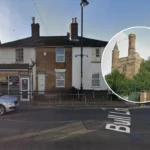
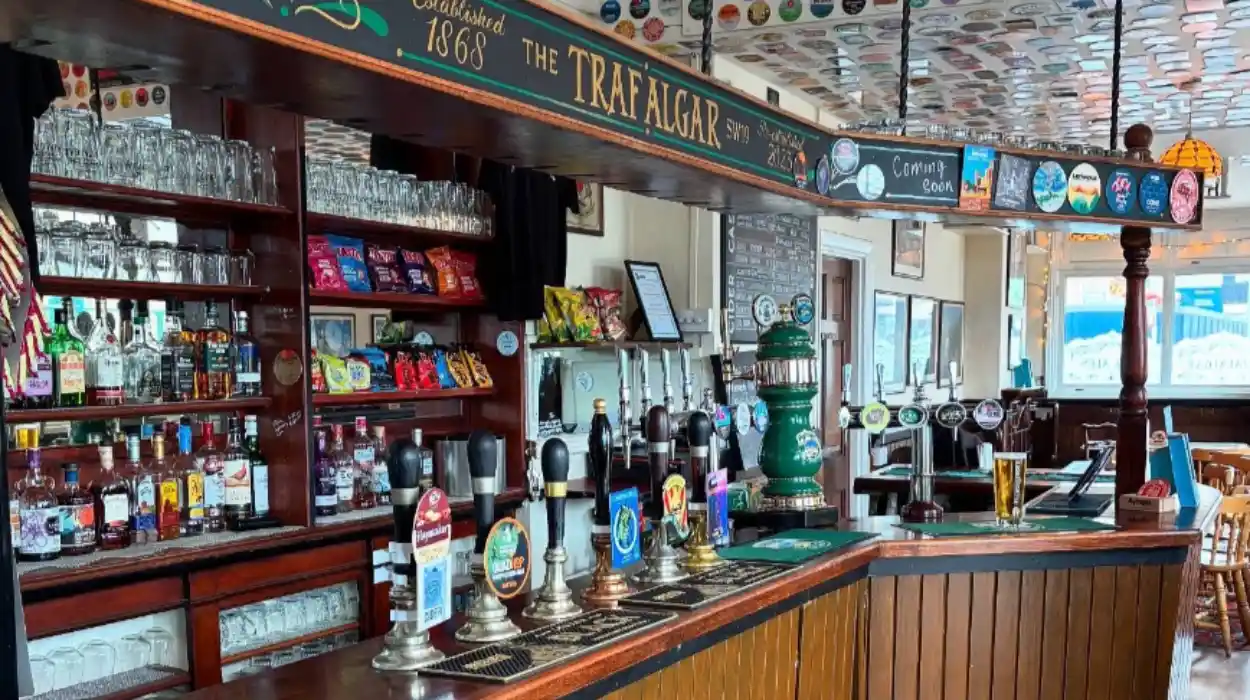
The diminutive red-brick corner pub has built a deeply loyal following over its long history dating back to 1868. It functions not merely as a drinking establishment, but as an essential cultural hub complete with an affiliated Morris dancing group, a cricket club, and strong ties to AFC Wimbledon supporters.
Reflecting on the unique atmosphere of the venue, Peter Fellows, a regular and prominent member of the ‘Save the Traf’ campaign, told the Local Democracy Reporting Service (LDRS):
“Even in here on a Tuesday afternoon, it is full of people… Hopefully within a year or two, the community will own this pub.”
Locals frequently describe the space as the “community’s living room,” highlighting its vital role as a social safety net and gathering space in South Wimbledon.
Oli Carter-Esdale, who first started drinking at the venue more than 12 years ago and has managed it as a successful freehouse, emphasized the irreplaceable nature of such historic spaces. In previous interviews with Newsquest London covered by multimedia reporter Amy Clarke, Carter-Esdale remarked that developers wanted to knock down the 19th-century pub to replace it with flats and a smaller bar, but insisted that the Trafalgar’s “intangible magic” cannot simply be rebuilt on the ground floor of a new flat block.
Expanding on the broader cultural loss associated with unchecked urban development, Carter-Esdale told the LDRS:
“If you lose all of that and everything becomes identikit Duplo block housing, what do you have really? It becomes soulless and no one has a sense of place. It becomes much harder to build communities in places that don’t have things like this.”
He added that the venue acts as a vital anchor, noting:
“This pub draws people in, it galvanises people. I know so many people on the estate and in the surrounding areas who maybe needed a lynchpin and something to cling on to as everything seems to fall apart and crumble.”
What threats has the historic pub faced previously?
The journey toward community ownership comes on the heels of a bruising battle against demolition. Last year, the pub faced an existential threat when its owner, Adenbuild Construction, put forward proposals to tear down the building and redevelop the site.
The plans sparked widespread local outrage, prompting Merton Council to reject the application following a petition launched by local councillors, including Cllr Mike Brunt, which gathered more than 500 signatures. Celebrating the initial planning refusal, Cllr Mike Brunt stated:
“This is a victory not just for those of us who enjoy a pint at The Trafalgar, but for everyone in our community who believes in protecting our local heritage, and standing up for what makes Merton special.”
Although the developer subsequently took the matter to appeal, the Planning Inspectorate ultimately upheld Merton Council’s decision to reject the demolition scheme. This national-level ruling effectively closed off the immediate threat of destruction, yet regulars recognized that planning protection alone was not enough to guarantee long-term stability given shifting lease timelines.
What are the next steps for the community share launch?
With relations with the current freehold owners improving to a point where community acquisition has become a realistic prospect, momentum behind the campaign has accelerated rapidly. Public meetings have drawn upwards of 100 engaged local residents, culminating in the formal rollout of share purchasing options next week.
If successful, the campaign hopes to wrap up the transaction and secure the freehold permanently by Christmas Day, ensuring that one of South London’s oldest freehouses remains safely in the hands of the people who cherish it most.