Key Points
- Creative Partnership: BA Musical Theatre students from the London College of Music (LCM) at the University of West London (UWL) have created and performed an original educational musical titled What Did I Zoo?.
- Target Audience and Themes: The production is touring local Ealing primary schools, specifically targeting Key Stage 2 pupils, to explore complex societal themes including fairness, empathy, rights, responsibilities, respect, and standing up against systemic injustice.
- The Narrative Structure: The plot follows Mandy, a young mandrill who dreams of returning to the jungle, who discovers that a fellow animal, Paulina the Polar Bear, is facing unfair treatment. Mandy subsequently embarks on a mission to rectify the situation, using music, movement, and comedy to engage children.
- Academic and Research Foundations: Uniquely, the theatrical project is directly informed by serious academic research led by Dr Maya Flax, an Associate Professor in Criminology at UWL. Her research examines how Jewish prisoners navigate their religious identities and cope with potential antisemitism within the UK carceral system.
- Dual Educational Benefit: Beyond the primary school audience, the tour serves as a vital practical laboratory for the university’s musical theatre students, providing them with first-hand experience in creating, managing, and executing original, socially conscious theatre for young audiences.
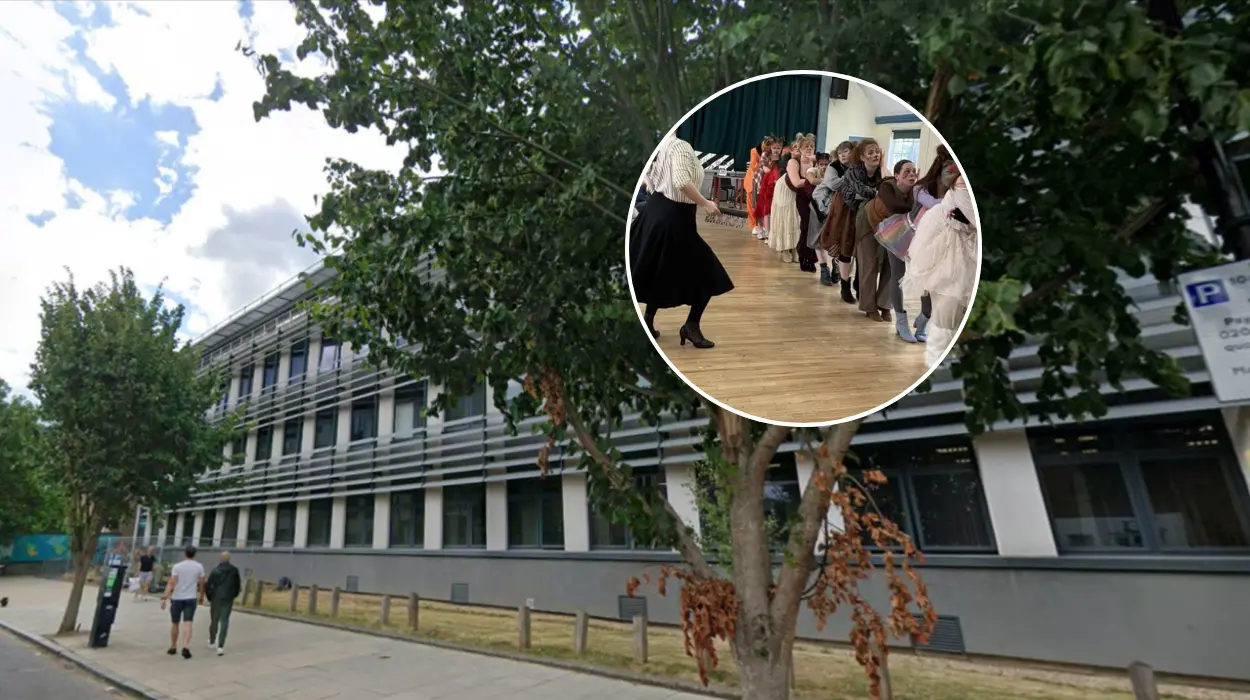
Ealing (The Londoner News) June 11, 2026 – Undergraduate musical theatre students from the University of West London (UWL) have launched an innovative community tour across Ealing, delivering a bespoke, politically conscious musical directly to local primary school classrooms. Developed by the BA Musical Theatre cohort at the university’s London College of Music (LCM), the production, titled What Did I Zoo?, was built in an unconventional cross-departmental partnership with the university’s School of Human and Social Sciences. The production uses a blend of comedic narrative, physical movement, and original song to introduce young pupils to nuanced foundational concepts of human rights, personal and collective responsibilities, and systemic equity. Rather than operating merely as standard children’s entertainment, the play is anchored by empirical sociological research into UK prison systems, translating complex themes of institutional bias and rehabilitation into a format digestible for Key Stage 2 children.
- Key Points
- Why Did UWL Students Create the What Did I Zoo? Musical?
- What Are the Core Themes and Plot of the Production?
- How Does Criminology Research Inform a Children’s Musical?
- What Did Dr Maya Flax State About the Project’s Goals?
- How Does the Tour Benefit BA Musical Theatre Students?
- What Impact Is the Show Having on Key Stage 2 Pupils?
Why Did UWL Students Create the What Did I Zoo? Musical?
The genesis of the production stems from a desire to merge practical arts education with active community outreach and serious academic enquiry. According to institutional documentation released by the University of West London’s press bureau, the performance was specifically structured to address a gap in primary school curricula regarding how children conceptualise civic justice and marginalisation. By utilising the creative resources of the London College of Music, the project aims to foster early emotional intelligence in local pupils while simultaneously testing the efficacy of performance art as a tool for public sociology.
Furthermore, the initiative was designed to challenge the traditional boundaries of musical theatre training. By pushing undergraduate actors out of commercial theatre spaces and forcing them to adapt their material for diverse, highly reactive primary school audiences, the university sought to develop a more versatile, socially aware class of performers capable of creating meaningful theatre under restrictive, real-world conditions.
Explore more West London News:
Hillingdon Council Pays £500k ULEZ Fees: West London 2026
West London Takeaway Closed Over Severe Rodent Infestation Hounslow 2026
What Are the Core Themes and Plot of the Production?
At the centre of the musical is an accessible allegory designed to mirror the structural challenges found within human institutions. As detailed in the production notes compiled by the LCM creative team, the narrative follows Mandy, an ambitious young mandrill residing in captivity who harbours deep aspirations of escaping her enclosure to return to her ancestral jungle. However, her personal objectives are recontextualised when she witnesses Paulina the Polar Bear experiencing acute institutional unfairness within the zoo’s administrative framework.
Abandoning her singular focus on escape, Mandy initiates a grassroots campaign to rectify the structural bias facing Paulina. The show combines high-energy physical theatre, comedic dialogue, and melodic motifs to guide the Key Stage 2 pupils through a sequence of ethical dilemmas. The narrative arc deliberately emphasizes the values of courage, unconditional kindness, and the civic necessity of speaking up against perceived institutional wrongs, transforming the zoo setting into a micro-laboratory for broader discussions on human rights.
How Does Criminology Research Inform a Children’s Musical?
The most distinct element of What Did I Zoo? is its direct intellectual lineage to contemporary British criminology. The script and thematic boundaries of the play draw heavily on a series of qualitative research studies conducted by Dr Maya Flax, an Associate Professor in Criminology at the University of West London. Dr Flax’s primary academic work investigates the complex socio-religious landscapes of British correctional facilities, specifically evaluating how Jewish prisoners navigate their religious identities, access kosher provisions, and experience or mitigate antisemitism while serving sentences within the UK carceral estate.
While a primary school musical about zoo animals appears structurally removed from the realities of prison cellblocks, the underlying social mechanics are identical. Both environments deal directly with the imposition of rules, the restriction of movement, the vulnerability of minority groups within a dominant hierarchy, and the psychological impact of institutional management. The creative team systematically deconstructed Dr Flax’s findings on institutional bias and systemic isolation, rebuilding those concepts into the character dynamics of the captive animals to teach children how environments can inadvertently perpetuate unfairness.
What Did Dr Maya Flax State About the Project’s Goals?
Highlighting the pedagogical philosophy behind this cross-disciplinary experiment, Dr Maya Flax, Associate Professor in Criminology at the University of West London, stated that,
“What Did I Zoo? explores rules, boundaries and consequences, but it is equally a story about rehabilitation, personal growth and recognising that people are more than the worst mistake they have ever made.”
Through this analysis, Dr Flax underlines that the production seeks to dismantle punitive mindsets from an early age, encouraging children to view justice not merely as a system of isolation and punishment, but as an evolving framework that must accommodate redemption and human dignity. By framing the polar bear’s struggles through the lens of restorative justice, the musical explicitly prompts young minds to question the permanence of institutional labels and to cultivate a more sophisticated, empathetic understanding of accountability.
How Does the Tour Benefit BA Musical Theatre Students?
For the undergraduate students at the London College of Music, the Ealing school tour represents an intense, immersive exercise in professional vocational development. The university’s curriculum coordinators have noted that the project forces BA Musical Theatre students to move past the traditional confines of pre-scripted West End material, requiring them instead to engage in the rigorous process of devisign original work from scratch.
The students were tasked with managing every facet of the deployment, from initial script workshops and musical composition to the physical logistics of touring varying primary school environments with minimal technical infrastructure. Performing for Key Stage 2 children demands an exceptionally high level of focus, vocal control, and improvisational agility, as young audiences are notoriously transparent in their engagement. This deployment offers these future industry professionals invaluable insights into the burgeoning sector of Theatre for Young Audiences (TYA), expanding their career capabilities into educational outreach, community arts administration, and applied drama.
What Impact Is the Show Having on Key Stage 2 Pupils?
Initial feedback from the participating Ealing educational institutions indicates that the musical’s unique blend of performing arts and social science is achieving its intended curricular goals. Teachers across the borough have observed that the performance directly aligns with the UK’s Social, Moral, Spiritual, and Cultural (SMSC) development standards, as well as statutory Personal, Social, Health, and Economic (PSHE) education guidelines.
By engaging with the characters of Mandy and Paulina, pupils are given a shared vocabulary to discuss difficult concepts such as prejudice, systemic exclusion, and peer intervention. School administrators have reported that the comedic and musical elements lower the defensive barriers often encountered when discussing sensitive topics like injustice, allowing children to identify parallel situations within their own schoolyards and wider social circles, ultimately reinforcing the importance of mutual respect and collective civic responsibility.