Key Points
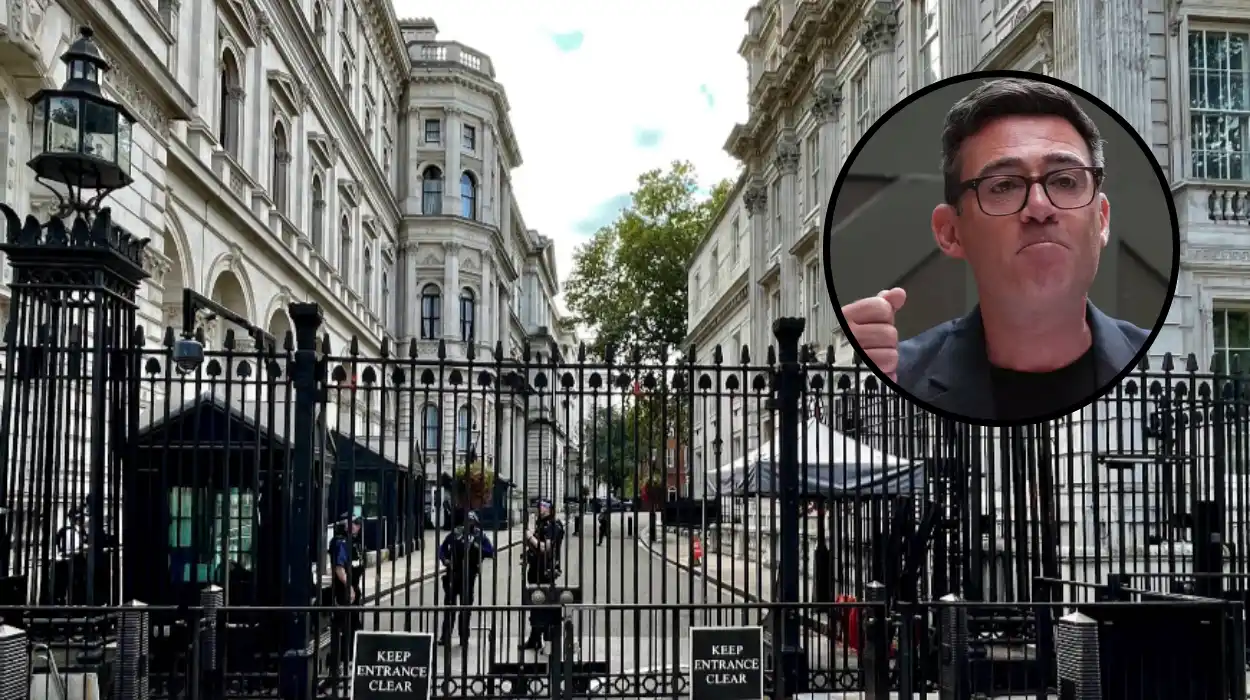
- New Leadership and Mandate: Andy Burnham assumed office as the United Kingdom’s prime minister, succeeding Keir Starmer, positioning his premiership as a “circuit-breaker” from past political administration methods.
- Establishment of ‘No. 10 North’: Prime Minister Andy Burnham launched a secondary official government base in central Manchester, housed temporarily within Heron House, as a strategic counterweight to 10 Downing Street in London.
- Decentralisation Strategy: The new northern hub aims to break decades of London-centric economic planning and shift decision-making power directly to local authorities and regional leaders.
- Revival of the National Economic Council: Burnham utilised the inaugural opening to chair a resurrected National Economic Council—a cabinet-level body originally crafted by Gordon Brown during the 2008 financial crisis—bringing together senior ministers and regional mayors.
- Political Pushback: Opposition Conservative Leader Kemi Badenoch heavily criticized the move, claiming Burnham was “behaving like he’s still the mayor of Manchester” rather than addressing pressing national issues.
London (The Londoner News) August 1, 2026 — British Prime Minister Andy Burnham has officially initiated a dramatic structural decentralisation of the United Kingdom’s executive power by establishing a formal government base in Manchester, known colloquially as ‘No. 10 North’. Moving swiftly to cement his political footprint after succeeding former leader Keir Starmer, Burnham opened the regional operations hub at Heron House—a central Manchester office building that also accommodates the northern hub of Britain’s intelligence, cyber, and security agency. By executing this physical shift out of the capital, the new prime minister aims to dismantle what he characterizes as decades of deep-rooted economic centralisation tightly bottlenecked within Whitehall and London.
Why is Andy Burnham creating ‘No. 10 North’?
As reported by Sam Tabahriti of Reuters, the overarching objective behind ‘No. 10 North’ is to function as a vital regional command centre. As stated by Prime Minister Andy Burnham when detailing the initiative, the site is designed to act as “the situation room for making Britain better – the place we use to get power out of Westminster, into the hands of people at a local level, so that they can turn things around”. Furthermore, emphasizing a permanent shift in administrative culture, Burnham asserted that
“The days of Whitehall resisting devolution are over, for good”.
Political analysts examining the restructuring note that the concept addresses long-standing vulnerabilities within the core apparatus of the British state. Writing on the matter, Hannah Keenan of the Institute for Government highlighted that an overwhelmed Downing Street machine has historically struggled to balance day-to-day crisis management with long-term strategic vision.
Keenan observed that moving parts of the center to Manchester could provide the administration with the operational breathing room required to deliver on core regional goals, provided the government remains transparent about how responsibilities are divided between London and the North.
How will the National Economic Council operate under the new administration?
Marking the practical commencement of his regional strategy, Prime Minister Andy Burnham used the newly established Manchester base to chair the very first meeting of a revived National Economic Council. Originally forged in London during the turbulence of the 2008 financial crisis under former prime minister Gordon Brown, this specialized cabinet-level body has been brought back to life to tightly coordinate the government’s wider economic growth targets.
According to government announcements covered by international news agencies, the council brings together senior national cabinet ministers alongside elected regional mayors.
This direct integration ensures that local leaders—who understand regional economic realities firsthand—have a direct line into high-level fiscal and infrastructural planning, breaking away from historical models where regional policy was drafted entirely by officials isolated in the capital.
Explore More London Politics News
Andy Burnham’s Plans for Europe in London, 2026
Labour Leaps Reform in New Poll Under Burnham, London, 2026
What are the logistical realities of running a split government?
While the symbolic value of a prime ministerial office outside London is immense, structural and logistical hurdles remain. The long-term vision involves a permanent, purpose-built footprint, though interim arrangements see the team operating from spaces like Heron House.
Government communications have clarified that Prime Minister Andy Burnham intends to work physically from the Manchester site on a regular weekly basis, with various other government ministers rotating through the office to conduct departmental business.
However, administrative experts point out the inherent difficulties of splitting a premier’s support apparatus. Parliament, national media, core civil service departments, and foreign diplomatic missions remain anchored in London.
Consequently, Burnham must maintain a robust dual operation, avoiding unnecessary duplication while ensuring that ‘No. 10 North’ does not devolve into an administrative backwater due to the prime minister’s physical absence. To ensure success, political observers argue that the administration must maintain crystal-clear lines of demarcation regarding which department handles specific national versus regional dossiers.
How has the political opposition reacted to the move?
The dramatic pivot has drawn sharp rebukes from Westminster opponents who question whether a regional focus is appropriate for a sitting prime minister. Opposition Conservative Leader Kemi Badenoch launched a direct attack on the strategy, arguing that the former Greater Manchester mayor was failing to grasp the wider scope of his new office. As stated by Conservative leader Kemi Badenoch, Burnham was
“behaving like he’s still the mayor of Manchester”
and needed to drastically redirect his attention toward broader, systemic national challenges rather than localized administrative experiments.
In spite of these conservative criticisms, Burnham’s supporters maintain that his background as a high-profile regional mayor uniquely equips him to bridge the gap between neglected northern communities and the levers of central government.
Having led Greater Manchester through a period of substantial economic expansion, Burnham has framed his entire ascension to the premiership as a clean break from conventional British political centralisation.
As ‘No. 10 North’ establishes its routine operations, the coming months will test whether a split-site executive can genuinely alter the balance of power in British governance or if it will face bureaucratic resistance from entrenched interests within Whitehall.