
Key Points
- Trilateral Endorsement of Peace Initiative: The leaders of the E3 alliance—comprising United Kingdom Prime Minister Sir Keir Starmer, French President Emmanuel Macron, and German Chancellor Friedrich Merz—formally backed Ukrainian President Volodymyr Zelenskiy’s proposal for direct, face-to-face ceasefire negotiations between Ukraine and Russia.
- Five-Core Conditions for Diplomatic Settlement: A joint declaration issued by the leaders outlines five non-negotiable pillars for any sustainable peace agreement: an immediate ceasefire, using the current line of contact as the baseline, a legally binding framework of robust security guarantees, the continued immobilisation of Russian assets, and the mandatory preservation of broader European security interests.
- Urgent Air Defence Scaling Mandated: Prompted by devastating Russian aerial assaults using hypersonic Oreshnik ballistic missiles and long-range drones, the four nations agreed on an immediate push to scale up interceptor production and co-develop advanced anti-ballistic and deep-strike military capabilities.
- Rejection from the Kremlin: The high-stakes summit in London unfolded immediately after Russian President Vladimir Putin publicly rebuffed President Zelenskiy’s written overture for direct dialogue, with Moscow dismissing the peace proposal as insincere and asserting there is currently “no point” in holding a bilateral meeting.
- Institutional Consent Clauses Enforced: The joint communiqué strictly noted that any future elements of diplomatic negotiations relating directly to the European Union or the North Atlantic Treaty Organisation (NATO) would remain conditional upon the individual, democratic consent of all respective member states and allies.
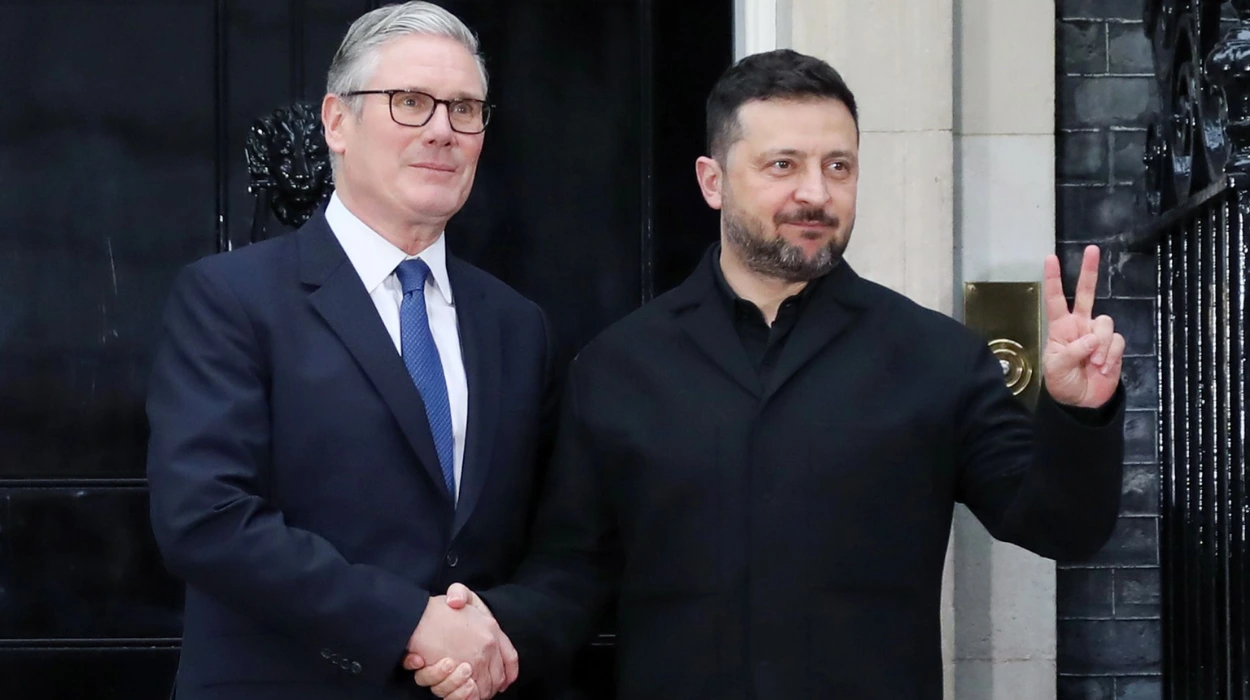
London (The Londoner News) June 8, 2026 – The political leaders of the United Kingdom, France, and Germany, operating collectively under the informal security framework known as the E3 alliance, have issued a sweeping, united declaration of diplomatic and military support for Ukraine following an intensive trilateral emergency summit with Ukrainian President Volodymyr Zelenskiy at 10 Downing Street.
- What Decisions Were Reached at the Downing Street Summit?
- Why Did the E3 Back Direct Ukraine-Russia Peace Talks?
- How Did the Kremlin Respond to Zelenskiy’s Peace Overture?
- What Urgent Military Equipment Does Ukraine Require Immediately?
- How Will the E3 Group Coordinate Long-Term European Defence Support?
- What Role Do Global Geopolitics Play in This Meeting?
- Why Must Any Final Peace Deal Safeguard European Security Interests?
Confronting a highly volatile turning point in the conflict—now entering its fifth year—British Prime Minister Sir Keir Starmer, French President Emmanuel Macron, and the newly positioned German Chancellor Friedrich Merz held multi-hour, closed-door discussions with President Zelenskiy to deliberate on the path toward involving the Russian Federation in structured peace negotiations, whilst simultaneously coordinating a critical, long-term industrial strategy to bolster Kyiv’s heavily depleted air defences.
The high-level diplomatic assembly occurred against a background of escalating geopolitical complexities, as Western capitals face the dual challenge of countering massive Russian hypersonic missile strikes on civilian infrastructures and managing a precarious security landscape exacerbated by ongoing military tensions across the broader Middle East.
What Decisions Were Reached at the Downing Street Summit?
The primary objective of the London summit focused on establishing a rigid, unified European stance regarding the parameters of a potential end to the hostilities. As detailed in the official communiqué published by the Prime Minister’s Office at 10 Downing Street, the E3 heads of state met directly with President Zelenskiy on Sunday to explicitly reiterate their “unwavering support for Ukraine in its defence against Russia’s illegal invasion” and to map out the foundational “next steps in negotiations to support a just and lasting peace.”
The joint declaration formulated by the four leaders explicitly demands that Russian President Vladimir Putin agree to an immediate, comprehensive ceasefire. Furthermore, the E3 framework specified that the current battlefield line of contact must serve as the literal starting point for any future structural negotiations, emphasizing heavily that international borders cannot be altered through the unlawful application of military force.
The leaders also affirmed that Ukraine retains an unalienable, sovereign right to determine its own independent security arrangements, international alliances, and geopolitical future without external vetoes from Moscow.
Additionally, the summit addressed the post-ceasefire financial and security landscape. The joint E3 statement made it clear that billions of dollars in frozen Russian state assets currently held in Western financial institutions will remain completely immobilised until the Russian Federation permanently ceases its war of aggression and provides full financial compensation to Ukraine for the immense physical and economic damage inflicted during the invasion.
The leaders collectively stressed the “inextricable link” that exists between the sovereignty, economic prosperity, and territorial integrity of Ukraine and the wider security apparatus of the entire Euro-Atlantic region.
Why Did the E3 Back Direct Ukraine-Russia Peace Talks?
The sudden diplomatic pivot toward exploring direct bilateral dialogue stems from a highly publicised, ground-breaking open letter sent by President Zelenskiy to the Kremlin on 4 June 2026. As reported by journalists Paul Sandle, Ronald Popeski, and Jekaterina Golubkova of Reuters, President Zelenskiy’s letter formally proposed direct, face-to-face talks between himself and President Putin to secure a sustainable ceasefire. In that text, the Ukrainian leader observed that ordinary Russian citizens had grown deeply fatigued by the domestic economic fallout of the conflict, pointing specifically to persistent Ukrainian missile and long-range drone attacks on Russian soil, high domestic inflation, and acute localized fuel shortages.
Furthermore, President Zelenskiy argued that with the United States currently preoccupied with regional conflicts in the Middle East, it would be “wrong to simply wait until the war in Europe returns to the centre of its attention.”
During the London talks, the E3 leaders enthusiastically validated this diplomatic maneuver. Writing for the Reuters press agency, reporters Paul Sandle, Ronald Popeski, and Jekaterina Golubkova confirmed that Sunday’s joint statement noted:
“Leaders commended President Zelenskiy’s call for an end to the war, negotiated by diplomatic means, as set out in his letter to the president.”
The E3 leaders strongly endorsed the concept of a direct dialogue between Kyiv and Moscow, under the strict condition that such talks feature the active, direct participation of both European partners and the United States to prevent Ukraine from being pressured into a disadvantageous or coercive settlement.
Reporting on the trilateral summit for the global news agency Agence France-Presse (AFP), correspondents noted that the leaders of the UK, France, and Germany unified behind the Ukrainian President’s call for a direct meeting, cementing a shared European consensus that a diplomatic resolution must be pursued alongside continued military deterrence.
Explore More London Politics News
How Sadiq Khan Won the Green Climate War: London 2026
Bayeux Tapestry Set for Historic British Museum Exhibition: London 2026
How Did the Kremlin Respond to Zelenskiy’s Peace Overture?
Despite the powerful show of European solidarity displayed on the steps of Downing Street, the immediate prospects for a diplomatic breakthrough remain severely stonewalled by the leadership in Moscow. As documented in a comprehensive political report published by the Associated Press (AP), Russian President Vladimir Putin swiftly and publicly rejected President Zelenskiy’s written offer to meet, rendering the initial diplomatic overture effectively dead on arrival.
According to the Associated Press report, President Putin explicitly stated that the surprise offer from Kyiv did not come across as “sincere” and clarified that he currently saw “no point” in holding an immediate bilateral meeting with his Ukrainian counterpart.
The Russian President argued that instead of temporary political maneuvers, a comprehensive, long-term security agreement addressing Moscow’s foundational geopolitical demands would be required before any formal cessation of military activity could be actualised on the ground. This abrupt dismissal from the Kremlin set a sober, urgent tone for the subsequent E3 deliberations in London, shifting the focus of the four leaders from immediate diplomacy back to the realities of a protracted industrial and military conflict.
What Urgent Military Equipment Does Ukraine Require Immediately?
With diplomatic tracks temporarily stalled by Moscow, the conversation inside Downing Street rapidly transitioned toward correcting critical vulnerabilities in Ukraine’s defensive perimeter. As reported by the Associated Press, the leaders of the UK, Ukraine, France, and Germany dedicated a significant portion of their meeting to discussing the “urgent need” to drastically ramp up the domestic production of advanced weaponry to combat Russia’s powerful new hypersonic Oreshnik ballistic missiles.
The acute shortage of high-altitude air defence systems has left major Ukrainian cities and critical energy infrastructure grids exceptionally vulnerable to deep-theatre ballistic strikes. This vulnerability has been compounded by the partial depletion of United States military stockpiles, which have been heavily diverted to support secondary operations elsewhere globally.
In a direct statement broadcasted via the social media platform X (formerly Twitter) following his arrival at Downing Street, President Zelenskiy confirmed that he had explicitly informed Prime Minister Starmer that Ukraine required an immediate, accelerated delivery of specialized missiles for its existing air defence systems. This request followed a series of devastating, large-scale Russian aerial bombardments directed at the capital city of Kyiv and other major urban centres.
The Associated Press noted that the urgency of the London talks was underscored by real-time battlefield reports, including a recent Russian drone strike that killed three civilians waiting at a bus stop in southeastern Ukraine, and a separate, highly dangerous drone strike that physically damaged a specialized storage facility for spent nuclear fuel in the Kyiv region, situated a mere 15 kilometres from the historical Chernobyl nuclear power plant.
How Will the E3 Group Coordinate Long-Term European Defence Support?
To address these immediate battlefield crises and build a sustainable military framework, the four leaders mapped out an extensive international diplomatic schedule to lock down concrete defense pledges. According to the text of the Joint E3 Leaders’ Statement issued by the British government, the politicians detailed exactly how they intend to utilize three major upcoming international summits to systematically coordinate further material support for Ukraine based strictly on its prioritized military needs.
The Three-Summit Coordination Plan
- The G7 Summit at Evian: Designed to solidify economic measures and implement further co-ordinated pressure on Russia’s domestic war economy and industrial supply chains.
- The Coalition of the Willing Meeting: A specialized meeting led by the UK and France to refine and legally structure the long-term security guarantees promised to Kyiv.
- The NATO Summit at Ankara: Targeted to secure a substantially increased, multi-year pledge of direct military and defense infrastructure support for Ukraine from all North Atlantic Alliance members.
According to the official Gov.uk ministerial release, the leaders underlined an “urgent need to scale up the production of interceptors and co-develop anti-ballistic missile and deep strike capabilities,” while simultaneously ensuring the future long-term sustainability of the Ukrainian Armed Forces.
The communiqué further revealed that the E3 nations are actively looking to integrate Ukraine’s battlefield expertise into Western military planning, discussing “how the Alliance can learn from Ukraine’s battlefield expertise and how to increase long-term industrial cooperation with Ukraine to strengthen Europe’s own defence.”
What Role Do Global Geopolitics Play in This Meeting?
The timing of the London summit is profoundly connected to broader, shifting tectonic plates in global geopolitics, most notably the intense focus of the United States on parallel international conflicts. As highlighted by regional analysts at the Associated Press, the threat of a wider global conflict has heavily complicated Western mediation efforts. Just hours before the Downing Street meeting concluded, international tensions spiked when Iran launched a massive barrage of military missiles at Israel, threatening to permanently reignite a volatile conflict that had been sitting in a fragile state of abeyance since a temporary ceasefire took effect in early April.
This diversion of American diplomatic and military bandwidth has forced European capitals to step forward and assume a far more prominent, independent leadership role in managing the security crisis on their own continent. The E3 framework—which traditionally operates as a core diplomatic engine within Europe—is increasingly being viewed as the primary vehicle for maintaining the “Coalition of the Willing” initiative.
By centering the peace process within European institutions, the E3 leaders are seeking to construct a continental defense architecture that remains durable, regardless of shifting political priorities or military overextensions in Washington.
Why Must Any Final Peace Deal Safeguard European Security Interests?
A central theme embedded throughout the joint E3 declaration is the absolute preservation of institutional control over any future peace settlements. As reported by the independent news outlet Yeni Şafak, the joint statement explicitly warns that any prospective peace agreement finalized between Kyiv and Moscow “must safeguard” broader European security interests as a fundamental prerequisite.
The leaders inserted a strict legal and institutional safeguard into their communiqué, noting that any elements of a peace negotiation that touch upon or relate to the European Union or NATO will strictly “require the consent of the EU and its Member States and NATO Allies respectively.” This clause effectively prevents any unilateral or localized deals from bypassing the collective democratic frameworks of Western Europe’s most vital political and military institutions.
This insistence on structural strength aligns closely with broader defensive rearmament trends currently sweeping through major European powers. For instance, reflecting the heightened threat environment discussed at Downing Street, German Defence Minister Boris Pistorius issued a parallel statement during German Armed Forces Day in the southern town of Neubiberg. As reported by Yeni Şafak, Defence Minister Pistorius stated to journalists that the German government is actively forced to escalate its military expenditure due to the degrading security environment, asserting: “We’re speeding up the procurement process because that’s what really matters.”
Minister Pistorius re-affirmed that Berlin’s long-term 2039 military strategy is designed to position the Bundeswehr as Europe’s strongest conventional army, expanding active-duty personnel, civilian employees, and reservists to a minimum of 460,000 combat-ready troops to ensure NATO retains a robust, undeniable conventional deterrent capability against future external aggression.