Key Points
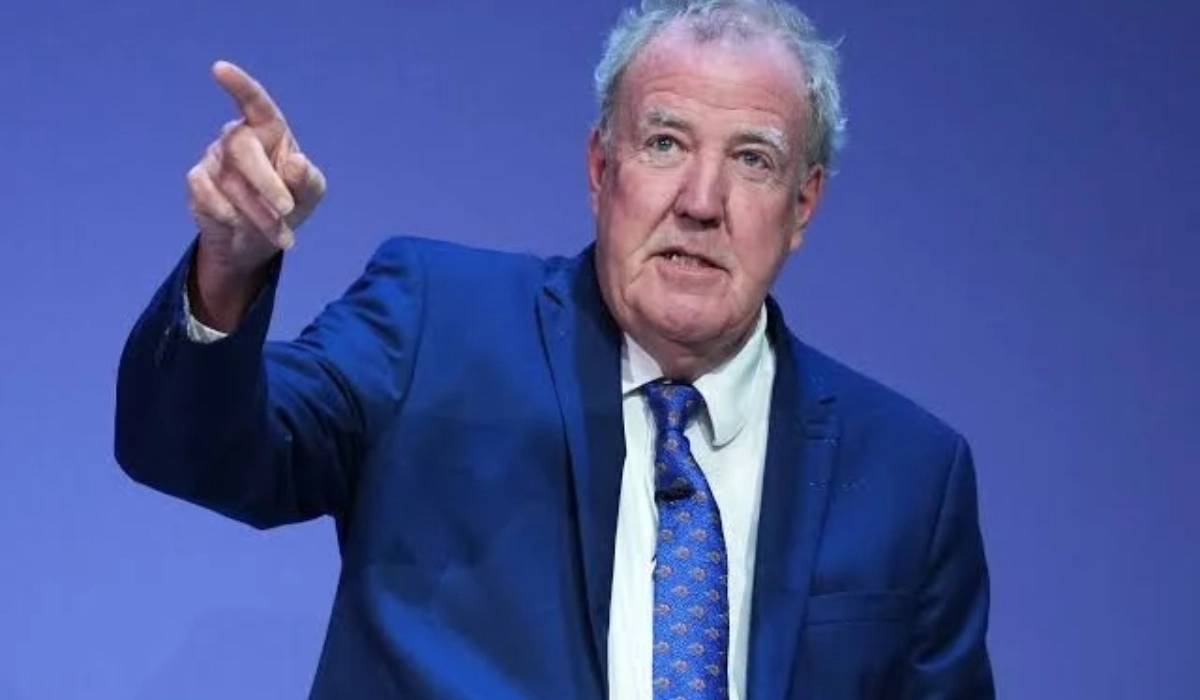
- Scathing Column Attack:Broadcaster and former Top Gear presenter Jeremy Clarkson has published a sharply worded column in The Sun, questioning whether Prime Minister Andy Burnham possesses the strategic authority required to lead the nation.
- Local Councillor Comparison:Clarkson argued that while Burnham seems “nice,” he is “not terribly prime ministerial” and would be better suited to local government duties like “organising bus timetables and sorting out neighbourhood leylandii issues.”
- Misplaced Priorities Alleged: The broadcaster criticized the Prime Minister for focusing on minor everyday irritations—such as rogue private parking charges and passengers playing loud music on public transport—rather than critical national issues.
- Major National Threats Highlighted: Clarkson listed pressing challenges demanding Downing Street’s attention, including high diesel prices, the small boats migration crisis, national debt burdens, alleged Russian cyber attacks, and potential cross-Channel spillover from far-Left riots in France.
- Pension Triple Lock Shift:The political debate comes alongside Burnham’s controversial plan to reform the state pension triple lock, replacing the earnings-growth guarantee with an uprating formula based purely on inflation or 2.5 per cent to help fund a national care system.
LONDON (The Londoner News) October 24, 2026 — Broadcaster Jeremy Clarkson has delivered a scathing assessment of Prime Minister Andy Burnham’s leadership, warning that the government risks being overwhelmed by the demands of national governance.Writing in The Sun, Clarkson questioned whether Burnham possesses the strategic vision required at the top of government, suggesting his focus on local consumer issues resembles municipal administration rather than prime ministerial leadership.The critique highlights a broader political dilemma for Downing Street as it balances everyday public frustrations against significant economic, security, and pension policy challenges.
- Key Points
- What Did Jeremy Clarkson Say About Prime Minister Andy Burnham’s Leadership Style?
- Which National and International Crises Did Clarkson Claim Are Being Neglected?
- How Do Burnham’s Proposed State Pension Triple Lock Reforms Fit Into the Political Debate?
- Background of Andy Burnham’s Premiership and Public Policy Strategy
- How This Development Can Affect Key Audiences
As reported by political correspondents covering national commentary, television presenter and columnist Jeremy Clarkson has launched a direct critique of Prime Minister Andy Burnham’s political priorities, claiming the leader appears “out of his depth” when confronted with macro-level national and international crises.In a column published in The Sun, Clarkson argued that recent government policy announcements—ranging from consumer interventions on private parking fines to public transport decorum—demonstrate a small-scale focus ill-suited to the responsibilities of No 10 Downing Street.
As reported across domestic news outlets, Clarkson’s critique contrasts the Prime Minister’s focus on micro-level policy with the severe structural, economic, and geopolitical pressures facing modern Britain.The broadcaster asserted that while tackling minor civil nuisances may resonate with voters on an everyday level, it risks leaving fundamental national concerns—including rising energy costs, mounting sovereign debt, border security, and state-sponsored cyber threats—without adequate executive direction.
What Did Jeremy Clarkson Say About Prime Minister Andy Burnham’s Leadership Style?
As reported by The Sun, Jeremy Clarkson offered a uncompromising personal assessment of Andy Burnham’s political authority and public profile.Focusing on the Prime Minister’s transition into national governance, Clarkson questioned whether the leader’s approach reflects the scale and gravity required of the office.
In his column, Jeremy Clarkson wrote: “While he seems to be nice, he’s not terribly prime ministerial.”
Expanding on his critique of Burnham’s focus, Clarkson added: “He’d be fine on a local council, organising bus timetables and sorting out neighbourhood leylandii issues, but I worry that he might be slightly out of his depth when faced with anything bigger and more important than that.”
Clarkson singled out the Prime Minister’s recent interventions targeting private car parking charges and passenger anti-social behavior—such as playing music aloud on mobile devices aboard public transit—as examples of municipal-level distractions dominating the national agenda.
Which National and International Crises Did Clarkson Claim Are Being Neglected?
As reported in The Sun, Clarkson listed a comprehensive set of complex economic, international, and security issues that he argues should occupy the core of the government’s daily agenda:
- Energy Costs: The sustained high cost of diesel and fuel impacting haulage and everyday motoring costs.
- Border Security: The ongoing small boats crisis across the English Channel.
- Fiscal Management: The growing burden of national debt and overall public finance sustainability.
- Cyber Security: Hostile cyber attacks against British infrastructure attributed to Moscow.
- Public Order: The risk of political unrest and “far-Left riots” spilling over into Britain from mainland Europe.
Highlighting social unrest across France—where French authorities recently mobilised up to 70,000 security personnel, water cannons, and armored vehicles to manage urban protests—Clarkson argued that Downing Street should be analyzing broader regional security implications rather than treating international unrest as an isolated foreign affair.
How Do Burnham’s Proposed State Pension Triple Lock Reforms Fit Into the Political Debate?
As reported in domestic policy analyses, the political backdrop to Clarkson’s column includes major, contentious structural proposals advanced by the Burnham administration, most notably regarding the state pension triple lock.
Under proposed policy shifts, the government plans to alter the traditional triple lock formula—which previously guaranteed state pension increases matching average earnings growth, inflation, or 2.5 per cent (whichever was highest). Burnham’s proposed mechanism would remove the earnings-growth guarantee, linking annual uprating solely to inflation or 2.5 per cent.
Prime Minister Burnham has defended the proposed modification, arguing that the resulting Treasury savings are necessary to build and finance a long-term national care system. However, modifying the triple lock carries significant political friction, balancing the fiscal sustainability of public finances against potential backlash from older voting demographics.
Background of Andy Burnham’s Premiership and Public Policy Strategy
Andy Burnham assumed the office of Prime Minister following political shifts within the governing party in July 2026, transitioning from his previous high-profile regional executive role as Mayor of Greater Manchester. During his tenure in local government, Burnham established a public profile centered on local transport integration—most notably launching the franchised “Bee Network” bus system—and regional consumer protections.
Upon entering No 10 Downing Street, the Burnham administration attempted to translate this consumer-focused approach to the national stage, rolling out immediate policies aimed at curbing everyday living frustrations, such as private parking enforcement practices, regional transport decorum, and technical education reforms.
However, the transition from regional governance to national leadership has drawn scrutiny from political opponents, commentators, and media columnists. Critics argue that while consumer protection initiatives generate immediate headline visibility, they must be accompanied by robust, clearly articulated strategies to navigate national deficit management, defense readiness, and international relations.
How This Development Can Affect Key Audiences
The escalating media debate surrounding Prime Minister Andy Burnham’s executive priorities and leadership style carries specific consequences for distinct groups across the political and public landscape:
1. Downing Street Strategists and Cabinet Ministers
In response to high-profile commentary questioning the administration’s strategic depth, government communication teams will likely shift public messaging toward macro-economic stability, national security, and energy policy. Cabinet ministers will be under increased pressure to demonstrate that retail-level consumer policies are supplemental to, rather than substitutes for, comprehensive solutions to major national challenges.
2. British Pensioners and Older Voters
As the government attempts to navigate public perception, its proposed modifications to the pension triple lock will face intense parliamentary and public scrutiny. With commentators highlighting fiscal trade-offs, pensioner advocacy groups and senior voter blocs are likely to organize opposition, forcing the administration to justify its national care funding strategy against reductions in projected retirement income growth.
3. Opposition Parties and Political Campaigners
Critiques framing the Prime Minister as “small-minded” or focused primarily on municipal management provide opposition parties with an established narrative framework. Rival political strategists will likely exploit this contrast in upcoming parliamentary debates, continually positioning structural issues—such as border enforcement, taxation, and defence—against the government’s domestic consumer announcements to question its overall governing competence.