Key Points
- Real-Life Courtroom Drama: Bestselling British crime novelist and screenwriter Lynda La Plante is facing a legal battle after being accused of breaking a 20mph speed limit three times within a five-month window.
- Alleged Infractions: The 83-year-old author was reportedly clocked driving her Toyota at speeds of 24mph, 26mph, and 27mph near her home in Kingston-upon-Thames, South-West London.
- Risk of Driving Ban: Court documents reveal that a Metropolitan Police worker warned La Plante that if convicted of all charges, she faces accumulating at least 12 penalty points, making her eligible for an automatic six-month disqualification from driving.
- Critique of Road Signage: In formal submissions to the court, La Plante has fiercely denounced the area’s road infrastructure, describing the transition signs from 30mph to 20mph as “very confusing” and lacking explicit road markings.
- Proximity of Cameras: The award-winning author argues that speed cameras are positioned too close to the speed transition indicators—allegedly only 10 to 15 paces away—giving motorists no more than 10 seconds to safely decelerate.
- SJP Legal System Attacked: La Plante has also hit out at the court system’s fast-track Single Justice Procedure (SJP), highlighting that a government web link provided on official forms to help accused drivers find legal counsel was broken and listed as “no longer available.”
- Upcoming Court Date: The creator of the legendary television dramas Prime Suspect and Widows is scheduled to make a formal appearance at Lavender Hill Magistrates’ Court to resolve the sequential prosecutions.
London (The Londoner News) July 10, 2026 – Bestselling British crime writer and screenwriting royalty Lynda La Plante has found herself cast as the central protagonist in her own real-life courtroom drama after being hit with three sequential criminal prosecutions for allegedly speeding through a 20mph zone near her home in Kingston-upon-Thames. The 83-year-old novelist, celebrated globally for creating the iron-willed fictional detective DCI Jane Tennison in the acclaimed television series Prime Suspect, is now locked in a high-stakes legal standoff with Scotland Yard. Caught in a stringent law-enforcement web that mirrors the unforgiving legal systems she spent decades documenting, La Plante is facing a mandatory six-month driving disqualification if convicted of the combined driving infractions, which accumulated over a five-month window.
The multi-award-winning author has launched a scathing defense targeted directly at both the Metropolitan Police and London’s court administrators, declaring the local road environment to be an unfair trap for unsuspecting motorists. According to official court documents unearthed from the fast-track Single Justice Procedure system, La Plante has fiercely denounced the transitionary speed signage in South-West London as “very confusing.” She alleges that regional speed cameras are deliberately or poorly positioned too close to the shifting speed limit boundaries, leaving drivers with insufficient distance to safely decelerate without creating immediate road hazards. Furthermore, the creator of the hit 1980s heist series Widows has taken the judicial system to task for systemic administrative failures, accusing the courts of actively impeding access to legal advice by distributing non-functioning public support services to individuals facing criminal prosecution.
Why Is Lynda La Plante Facing a Driving Ban?
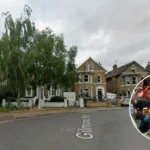
The legal predicament threatening the mobility of the veteran dramatist stems from a rapid accumulation of speeding tickets issued between late autumn and early spring. According to formal court registers, the series of events began at 9:24 am on November 2, when La Plante’s Toyota vehicle was clocked traveling at 24mph on the A308 Kingston Hill—a stretch of road that has seen widespread speed limit reductions as part of broader London-wide road safety initiatives.
The author’s legal issues compounded on March 5 at 9:35 am, when her vehicle was caught traveling at 26mph just a short distance along the exact same arterial road. The final infraction occurred only a few weeks later, at 10:03 am on April 11, when she was recorded driving at 27mph past the very same speed camera.
While individual speeds of under 30mph historically drew minor warnings or optional speed awareness courses, the rigid enforcement of newer 20mph limits transforms these minor overages into severe driving penalties. As detailed within the prosecution papers, an administrative worker for the Metropolitan Police explicitly set out the legal reality facing the writer: if convicted across these separate cases, La Plante faces an accumulation of at least 12 penalty points on her driving license. Under UK motoring legislation, reaching this threshold triggers a mandatory “totting-up” procedure, resulting in an automatic six-month disqualification from holding a valid driver’s license.
What Are the Author’s Main Arguments Against London’s 20mph Zones?
Faced with the prospect of losing her driving independence, the creator of Trial and Retribution has used her written court submissions to point out what she considers glaring deficiencies in how London’s low-speed zones are managed and marked. Rather than quietly accepting the automated penalties, La Plante completed her Single Justice Procedure forms with detailed annotations outlining the structural flaws of the Kingston Hill layout.
As reported by court correspondent Tristan Kirk of The Standard, La Plante explicitly implored magistrates to review the area’s physical infrastructure, writing: “I wish the court to survey the very confusing signs to indicate from 30mph to 20mph.”
A core component of her defense rests on the mechanics of braking distances and driver reaction times on descending terrain. In the court documents, La Plante argued that the positioning of the speed enforcement equipment leaves motorists functionally unable to comply with the law without slamming on their brakes. As recorded by Tristan Kirk of The Standard, La Plante stated that “the speed camera is a very short distance – no more than 10 seconds and with traffic and cyclists overtaking but almost hitting the bumper of my vehicle.”
Expanding on this specific structural hazard in papers connected to the third alleged offense, La Plante wrote: “I wish to dispute this offence on the basis that the signage warning motorists of a 20mph speed limit is only 10-15 paces from a 30mph zone, on a downward hill. It is impossible to reduce the speed appropriately in that time/distance.” She further emphasized the lack of visual reinforcement on the tarmac itself, noting that there is “no 20mph painted on road” to give drivers an unambiguous secondary warning.
Explore more West Crime News:
Ahmed Timir Charged With Ealing Broadway Attempted Murder: London 2026
Ruislip High Street Stabbing: Police Arrest Man After Attack, Ruislip 2026
How Has La Plante Criticised the Single Justice Procedure?
Beyond her complaints regarding the physical reality of London’s roads, the acclaimed author—who was awarded a CBE in 2008 for her extensive services to literature, drama, and charity—turned her attention to the administrative accessibility of the British justice system. Her critique exposes ongoing frustrations regarding the Single Justice Procedure, a fast-track system designed to handle minor criminal offenses via written correspondence without requiring a formal open court hearing.
When responding to her initial charges, La Plante deliberately ticked both the “guilty” and “not guilty” boxes on the official forms, using the conflicting selections as a procedural mechanism to force a live, human hearing where her mitigating circumstances could be evaluated.
While reviewing the paperwork, the author noticed a line on the Single Justice Procedure form that directs defendants to public resources, reading: “If you need legal advice, go to: gov.uk/find-a-legal-adviser”. Upon attempting to access the listed digital portal to secure proper representation, she found that the link failed to connect. Highlighting the institutional oversight directly on the document, La Plante heavily circled the text and penned a direct note for the court’s administrative staff, stating simply: “No longer available.” Her critique highlights a growing concern among legal reform advocates that fast-tracked digital justice systems frequently isolate elderly or unrepresented individuals by relying on broken infrastructure.
What Are the Next Legal Steps for the Prime Suspect Creator?
The division of administrative duties surrounding London’s roads means that La Plante’s legal battle is split across institutional lines. While the Metropolitan Police holds sole responsibility for operating the automated cameras and processing the criminal prosecutions, the physical installation, visibility, and maintenance of the speed limit signs and road markings fall entirely under the jurisdiction of local borough councils—in this instance, the Royal Borough of Kingston upon Thames.
Because the fast-track written system cannot easily resolve complex disputes involving infrastructure design and broken state web portals, La Plante’s cases are being steered toward a traditional courtroom environment. The award-winning author is scheduled to stand before a panel of magistrates at Lavender Hill Magistrates’ Court on August 3, where she will have the opportunity to formally argue her case.
The upcoming hearing represents a stark reversal of roles for a writer who spent decades shadowing real-world Metropolitan Police detectives, interviewing career criminals, and researching the inner workings of Britain’s courts to bring raw authenticity to books like The Scene of the Crime and Accused. Come August, the iconic creator of DCI Jane Tennison will not be sitting in the public gallery gathering color for her next bestselling thriller; she will be standing before the bench herself, trying to prevent the system she famously chronicled from taking away her right to drive.