
Key Points
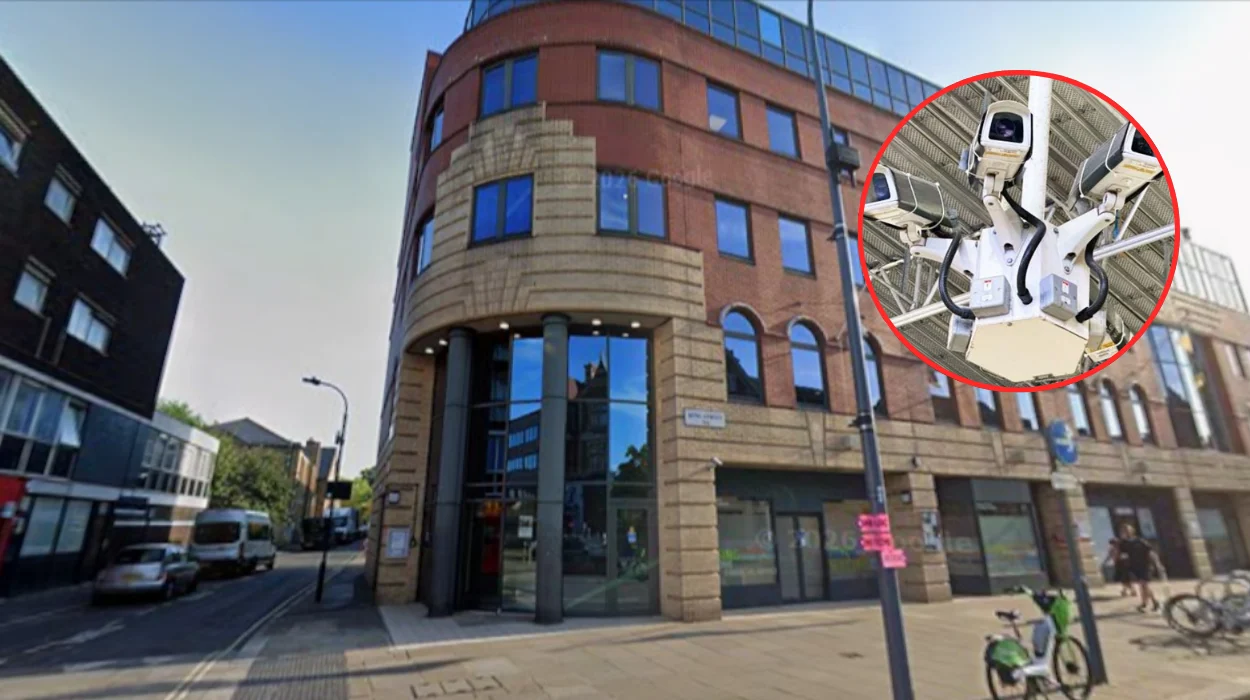
- A Labour-run Hammersmith and Fulham Council in west London plans to upgrade 500 CCTV cameras with AI technology to detect “suspicious behaviour” on streets.
- The AI system can identify “aggressive behaviours” and “suspicious shopping behaviours,” alongside detecting knives, guns, slips, falls, and tracking suspects and vehicles across the borough.
- Documents obtained by privacy group Big Brother Watch reveal these capabilities, sparking fears of misidentification, such as confusing hugs, back slaps, high fives for aggression, or shoppers inspecting items for theft.
- The deployment forms part of broader AI integration in public surveillance, raising privacy and accuracy concerns among critics.
Hammersmith and Fulham (The Londoner News) April 21, 2026 – Hammersmith and Fulham Council, a Labour-controlled authority in west London, is set to deploy AI-assisted CCTV cameras across its streets to detect “suspicious behaviour.” The upgrade involves 500 existing cameras enhanced with artificial intelligence capable of spotting aggressive actions and unusual shopping patterns, according to documents obtained by the civil liberties group Big Brother Watch. This move aims to bolster public safety but has ignited debates over potential false positives and privacy erosion.
- Key Points
- What Is the AI Surveillance Plan in Hammersmith and Fulham?
- How Does the AI Detect Suspicious Behaviour?
- What Other Capabilities Does the System Offer?
- Why Are Privacy Concerns Being Raised?
- What Has the Council Said About the Deployment?
- How Does This Fit Into Wider UK Trends?
- What Are the Potential Risks of False Positives?
- Who Obtained the Documents and Why?
- What Happens Next for Hammersmith and Fulham?
What Is the AI Surveillance Plan in Hammersmith and Fulham?
The council’s initiative targets 500 CCTV cameras borough-wide, integrating AI software to analyse footage in real time. As detailed in council procurement documents uncovered by Big Brother Watch, the system flags “aggressive behaviours” such as potential fights and “suspicious shopping behaviours” like unusual handling of goods.
Additional features include automatic detection of knives and guns, real-time tracking of suspects and vehicles across multiple cameras, and alerts for pedestrian slips or falls. Big Brother Watch, a prominent privacy advocacy organisation, obtained these documents through freedom of information requests, highlighting the council’s intent to modernise its surveillance infrastructure.
Silkie Carlo, director of Big Brother Watch, warned of the risks in a statement to The Telegraph: “This dystopian system will flag innocent members of the public for punishment by algorithm, without any evidence of wrongdoing.”. The council has not yet publicly responded to these specific concerns as of the latest reports.
How Does the AI Detect Suspicious Behaviour?
The AI employs advanced computer vision algorithms to monitor human postures, movements, and interactions. For instance, it distinguishes between normal and anomalous actions by analysing body language, object manipulation, and contextual cues. According to the documents cited by Big Brother Watch, “aggressive behaviours” might include raised fists or rapid approaches, while “suspicious shopping behaviours” could involve shaking packages or holding items to light—gestures that might merely indicate quality checks.
Critics fear everyday interactions could trigger alerts. Campaigners note that hugs, back slaps, or celebratory high fives might be misinterpreted as aggression, leading to unwarranted scrutiny. The system’s proponents argue it enhances operator efficiency by prioritising genuine threats and reducing manual monitoring burdens.
Big Brother Watch emphasised in their analysis: “Operators will be bombarded with alerts for normal human interactions, eroding trust in the technology.” No independent accuracy tests for this specific deployment have been disclosed.
What Other Capabilities Does the System Offer?
Beyond behaviour detection, the AI excels in threat identification and tracking. It automatically spots concealed weapons like knives or guns through shape recognition and density analysis, alerting control rooms instantly. Vehicle and pedestrian tracking spans the entire borough, linking sightings across cameras for seamless pursuit.
The system also safeguards vulnerable individuals by detecting falls or slips, potentially saving lives through prompt medical responses. As per the procurement specs obtained by Big Brother Watch, these features integrate into a unified dashboard for council security teams.
Hammersmith and Fulham Council documents describe the upgrade as a “comprehensive safety enhancement,” but privacy experts question the balance between security and civil liberties.
Why Are Privacy Concerns Being Raised?
Opponents argue the technology veers into a “Big Brother” dystopia, with risks of mass surveillance and bias. Silkie Carlo of Big Brother Watch stated to The Telegraph:
“Councils up and down the country are wasting hundreds of millions of pounds of public money on these intrusive and ineffective surveillance cameras.”
She highlighted past AI trials where error rates exceeded 50% for behaviour classification.
False positives could disproportionately affect ethnic minorities or lively public spaces, exacerbating biases inherent in training data. The lack of public consultation fuels accusations of opacity, with residents potentially unaware of constant AI scrutiny.
Legal challenges loom under the UK’s Data Protection Act and Human Rights Act, as automated decisions require human oversight. Big Brother Watch has called for a moratorium on such deployments until rigorous audits prove efficacy.
What Has the Council Said About the Deployment?
Hammersmith and Fulham Council confirmed the tender process but downplayed alarmist interpretations. A spokesperson told The Telegraph:
“We are exploring all available technologies to keep our residents safe, including advanced CCTV systems that can detect weapons and track vehicles involved in crime.”
They stressed human operators would review all alerts, preventing autonomous enforcement.
The council positioned the upgrade within broader crime reduction efforts, citing rising street offences in west London. Procurement documents, as reported, allocate funds for AI integration without specifying costs, though similar projects nationwide run into millions.
No timeline for rollout has been announced, pending contract awards.
How Does This Fit Into Wider UK Trends?
This initiative mirrors a surge in AI surveillance across UK councils. Manchester and Birmingham have piloted similar systems for weapon detection, while Transport for London uses AI for platform overcrowding. A 2023 Home Office report endorsed such tech for counter-terrorism, but the Surveillance Camera Commissioner urged ethical guidelines.
Big Brother Watch documented over 10 councils pursuing AI CCTV in 2023 alone, often via private tenders. Critics like Carlo warn: “Live facial recognition is 81 times more likely to flag a woman than a man, and four to five times more likely to flag BAME people.” [, cross-referencing national trends].
Nationally, public opinion splits: a YouGov poll showed 55% support for AI crime-fighting, but 40% fear privacy loss.
What Are the Potential Risks of False Positives?
Misclassification tops concerns, with hugs or greetings flagged as fights. Shoppers testing products—rattling boxes or inspecting seams—might trigger theft alerts, harassing innocents. Big Brother Watch simulated scenarios: “A father playfully high-fiving his child could summon police.”
Technical limitations include poor lighting, occlusions, or diverse body types degrading accuracy. Without diverse training data, biases amplify. Operators face alert fatigue, potentially missing real threats amid noise.
Independent audits, like those by the Ada Lovelace Institute, found early AI CCTV systems faltering in dynamic environments.
Who Obtained the Documents and Why?
Big Brother Watch, founded to combat state overreach, secured the files via FOI requests. Their investigation, led by researcher Jennifer Krueckeberg, exposed tender details overlooked in public discourse. As Carlo asserted: “These documents reveal the true scope—tracking and behavioural profiling without consent.”
The group’s work has influenced policy, including bans on live facial recognition in flawed trials. They advocate transparency, urging councils to publish accuracy metrics.
What Happens Next for Hammersmith and Fulham?
The tender closes soon, with implementation possibly by late 2026. Residents can object via council meetings or judicial review. Big Brother Watch plans legal action if deployed without safeguards.
Councillors face pressure to pause, balancing safety gains against rights erosion. As West London’s streets evolve under watchful AI eyes, the debate intensifies on technology’s role in urban policing.