
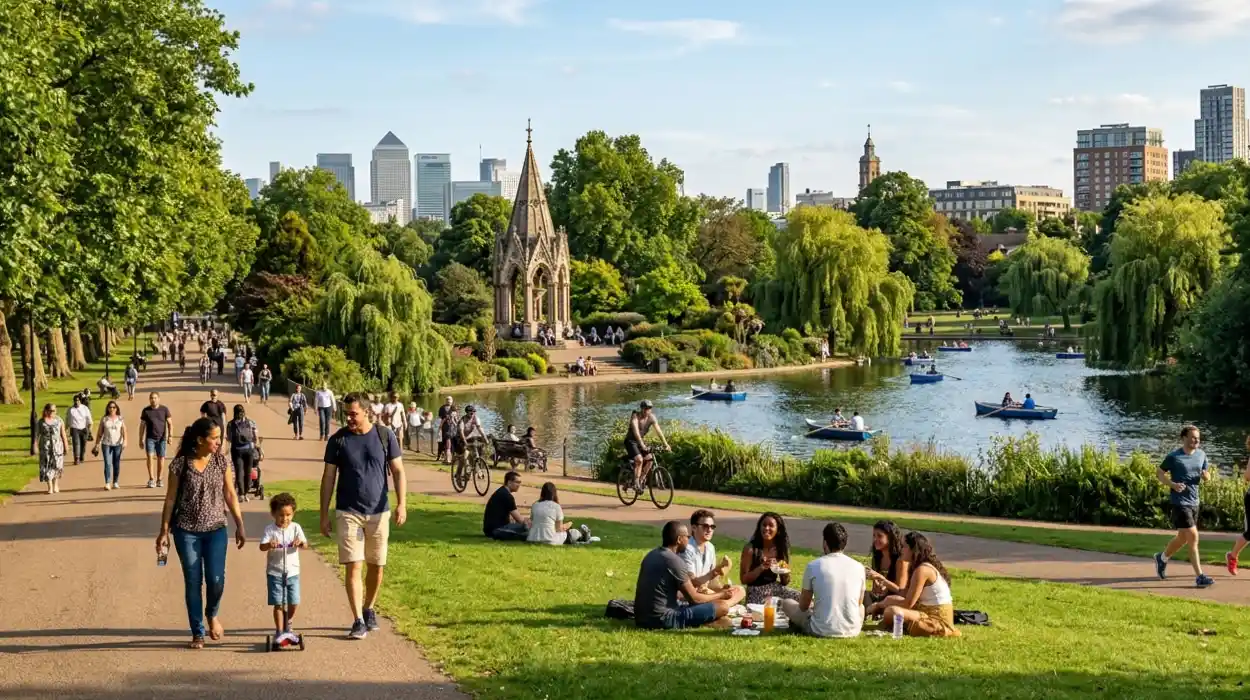
Victoria Park is East London’s oldest public park, opened in 1845, and remains one of London’s most visited green spaces. It combines historic design, lakes, gardens, sports areas, family facilities, markets, and major events in Tower Hamlets.
- What Is Victoria Park?
- Why Was Victoria Park Built?
- How Did Victoria Park Develop Historically?
- What Can You See in Victoria Park?
- What Facilities Does Victoria Park Offer?
- What Events Take Place There?
- Why Is Victoria Park Called the People’s Park?
- How Does Victoria Park Fit East London?
- What Makes Victoria Park Worth Visiting?
- What Should Visitors Know Before Going?
- Why Does Victoria Park Matter Today?
- What Is the Main Takeaway About Victoria Park?
Victoria Park sits across Tower Hamlets in East London and has long been described as the “People’s Park” because it was created for the recreation of working people in the East End. It was first established through the York House and Victoria Park Act 1841 and opened to the public in 1845 after landscape planning led by Sir James Pennethorne. The park remains important because it brings together history, open space, cultural events, and everyday leisure in one large urban setting.
What Is Victoria Park?
Victoria Park is a large public park in Tower Hamlets, East London, designed for recreation, walking, sports, family outings, and community events. It is one of the city’s best-known historic parks and one of the most distinctive examples of 19th-century public green space.
Victoria Park was created after public pressure for better open space in the East End, where dense housing and poor living conditions made access to greenery limited. Historical accounts link its creation to a mass petition and reform ideas associated with public health and urban improvement. The park covers a large area and has been maintained for generations as a place for exercise, relaxation, markets, concerts, festivals, and local gatherings.
The park’s significance goes beyond leisure. It represents a major shift in London planning during the Victorian era, when city authorities began to treat public parks as essential civic infrastructure. That history still shapes how the park is used today, with spaces for walking, boating, children’s play, gardening, and community programming.
Why Was Victoria Park Built?
Victoria Park was built to give East End residents access to open space, fresh air, and recreation during a period of rapid industrial growth. Its purpose was social, public-health, and civic, not decorative alone.
The park’s creation followed concern about crowded housing and limited green space in East London. The York House and Victoria Park Act 1841 enabled the development of the park, which opened in 1845. That timing matters because it places Victoria Park among the earliest major London parks created with ordinary urban residents in mind.
Its role as a public amenity continues in the present day. Local visitors use it for walking, picnics, cycling, running, and family time, while larger numbers arrive for scheduled events and seasonal attractions. This combination of historic purpose and modern utility makes the park relevant to both residents and visitors.
How Did Victoria Park Develop Historically?
Victoria Park developed from 19th-century planning, public campaigning, and Victorian landscape design. Its history includes original gardens, historic monuments, later restoration, and continued adaptation for public use.
The park was laid out between 1842 and 1846 under Sir James Pennethorne and opened in 1845. Early development focused on formal landscaping, paths, water features, and ornamental planting, which reflected the civic ideals of the Victorian period. The park later acquired notable features such as the Burdett-Coutts Fountain, erected in 1862, and other historic elements that are still recognised today.
Several features inside the park are now treated as heritage assets. Time Out identifies parts of the park as Grade II-listed, which places them under statutory protection because of architectural and historic interest. The preserved landscape and structures help explain why Victoria Park is widely seen not just as a recreation site but also as a living record of London’s urban history.
What Can You See in Victoria Park?
Victoria Park contains lakes, gardens, statues, fountains, walks, play areas, and event spaces. Its main attractions combine nature, heritage, and leisure in a single park setting.
One of the best-known sights is the West Lake, which includes a Chinese pagoda island and boating activity. Visitors also come to see the Dogs of Alcibiades statues, the Burdett-Coutts Fountain, and two stone alcoves from the original London Bridge. These historic details give the park a layered character and make it more than a simple green field.
The gardens are another major attraction. Visit London describes the Old English Garden, the Floral Sunken Garden, and the Outdoor Classroom, which includes raised beds for plants, vegetables, and herbs. These spaces show how the park serves both ornamental and educational purposes, while still remaining open for everyday visitors.
What Facilities Does Victoria Park Offer?
Victoria Park offers facilities for walking, cycling, boating, play, gardening, sport, relaxation, and events. It functions as a full urban park rather than a passive green space.
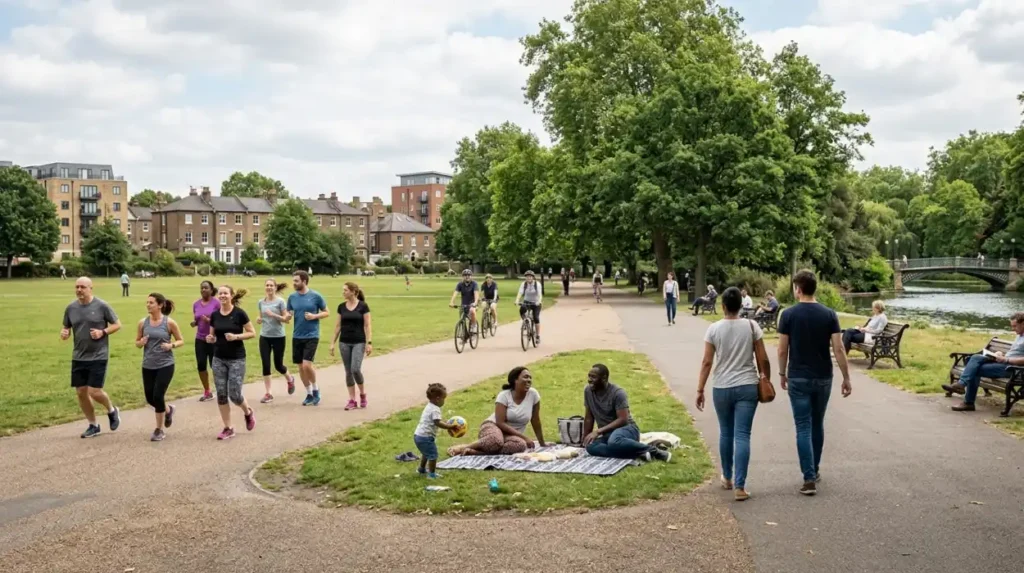
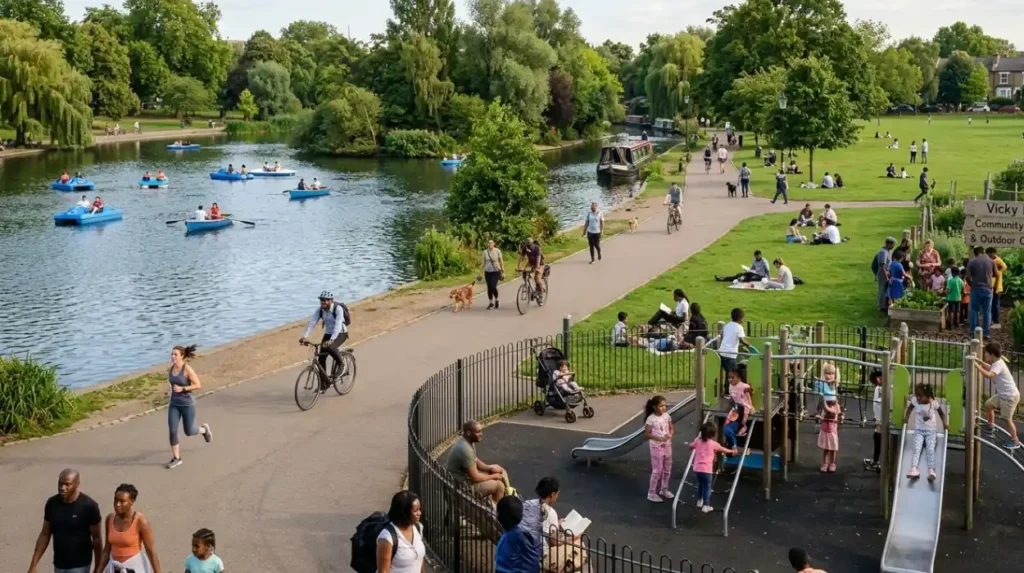
The park includes paths for walking and running, lake areas, open lawns, and family-friendly recreation zones. It is also connected to the Regent’s Canal, which makes it suitable for longer walks and bike rides through East London. These features support the park’s role as a daily-use public space for a broad age range.
The park also serves families and community groups. Visit London highlights the presence of playgrounds, gardens, and workshop-friendly areas such as the Outdoor Classroom. This makes the park useful not only for leisure but also for informal learning and outdoor community activity.
What Events Take Place There?
Victoria Park hosts markets, music festivals, fireworks, and seasonal community events throughout the year. These events make the park a major cultural venue for East London.
The Sunday market is one of the best-known regular events. Sources describe it as a weekly market running from 10am to 4pm, with food, drinks, crafts, live music, and children’s activities. That market gives the park a strong local identity and attracts both residents and visitors seeking a weekend destination.
The park is also associated with large music festivals and major public gatherings. In autumn, it is known for fireworks displays, including one of London’s last remaining large free Guy Fawkes Night shows. These events underline the park’s continuing value as a shared civic space.
Why Is Victoria Park Called the People’s Park?
Victoria Park is called the People’s Park because it was created for East End workers and remains a democratic public space used by a wide cross-section of Londoners. Its history and design reflect that purpose.
Visit London states that the park was originally designed for the East End’s working people and is now a centre for community activity, live music, sports, and other events. This social origin matters because it distinguishes Victoria Park from parks created mainly for elite display or private leisure. The title “People’s Park” captures both its founding intention and its continuing public role.
The label also fits the park’s daily use. Visitors use it for picnics, jogging, children’s play, and informal gatherings, while local organisations use it for markets and events. In practical terms, the park still serves the same broad public mission that shaped its creation in the 19th century.
How Does Victoria Park Fit East London?
Victoria Park is a major green landmark in East London and a key part of Tower Hamlets’ urban landscape. It improves access to outdoor space in one of London’s densest areas.
East London has long been shaped by housing density, industrial change, migration, and redevelopment. In that setting, Victoria Park provides a large shared public area that supports health, recreation, and community life. Its location near the Regent’s Canal also connects it to wider walking and cycling routes across the city.
The park’s influence reaches beyond its boundaries. It supports nearby cafes, markets, galleries, and local businesses, while also acting as a meeting point for people from across the city. That role makes it one of East London’s most valuable public amenities.
What Makes Victoria Park Worth Visiting?
Victoria Park is worth visiting because it combines history, scenery, events, and practical amenities in one place. Few London parks offer such a wide mix of heritage and everyday use.
The park works well for short visits and longer stays. A visitor can walk around the lakes, explore the historic monuments, relax in the gardens, attend the market, or join a seasonal event. That variety makes it suitable for families, solo visitors, runners, cyclists, and history enthusiasts.
The park also offers strong seasonal appeal. Spring and summer bring garden colour, markets, and outdoor activity, while autumn and early November bring special events and fireworks. Because its main features are permanent rather than temporary, the park remains attractive across the year.
What Should Visitors Know Before Going?
Visitors should know that Victoria Park is busy, event-driven, and popular at weekends. Planning the time of visit helps make the experience smoother and more enjoyable.
Sunday is the most active day because of the market and increased local footfall. Event days can also bring larger crowds, particularly during festivals and fireworks. For quieter walks, weekday mornings usually offer more space and a calmer atmosphere.
The park suits walking, cycling, picnicking, and general sightseeing, with the Regent’s Canal nearby adding more route options. Visitors interested in history should focus on the fountains, statues, alcoves, and gardens, while families often use the play areas and open lawns. The park rewards both quick visits and longer explorations.
Why Does Victoria Park Matter Today?
Victoria Park matters today because it shows how historic parks still support modern city life. It combines heritage protection, urban ecology, recreation, and local culture in one accessible space.
London depends on large parks for more than scenery. They support public health, help manage urban density, and provide shared spaces where communities meet. Victoria Park does all of these things while also preserving a strong link to Victorian urban reform. That makes it a useful model of how historic landscapes remain relevant in a modern city.
Its continuing use also shows the durability of good public design. A park created in 1845 still meets everyday needs in 2026, including exercise, relaxation, events, and community use. The park’s history gives it depth, but its present-day function gives it value.
What Is the Main Takeaway About Victoria Park?
Victoria Park is East London’s historic public park, built for ordinary residents and still central to community life. Its lakes, gardens, monuments, markets, and events make it both a heritage site and a living urban space.
The park’s story begins with 19th-century reform and continues through present-day use by families, walkers, event organisers, and local residents. It remains one of London’s clearest examples of a park that serves history and daily life at the same time.
For East London, Victoria Park is more than a destination. It is a public landscape that connects the city’s past, present, and future in one place.
Is Victoria Park worth visiting in London?
Yes, Victoria Park is one of East London’s best parks, combining lakes, gardens, markets, and events. It’s ideal for walks, picnics, and weekend visits.