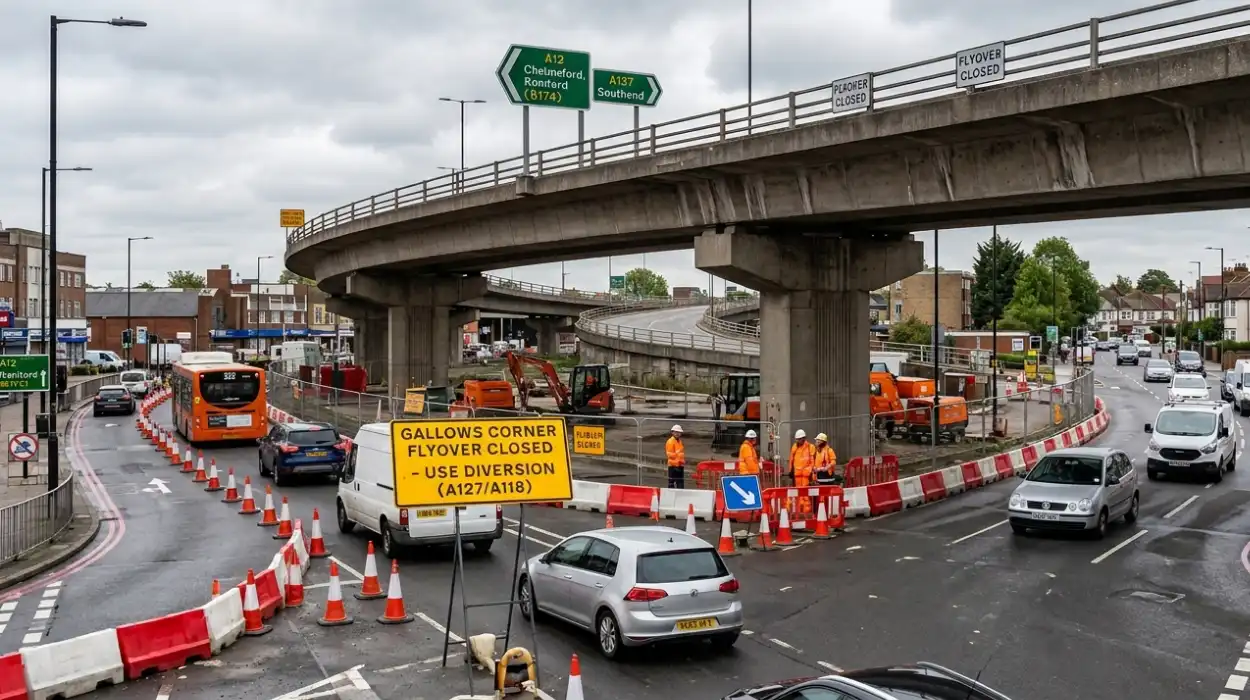
The Gallows Corner Flyover requires significant structural remediation to extend its operational lifespan, remedy critical engineering defects, and ensure motorist safety. Transport for London has scheduled extensive maintenance works throughout 2026, forcing prolonged road closures and complex traffic diversions across the London Borough of Havering.
- What Is The Gallows Corner Flyover Maintenance Project 2026?
- Why Is This Structural Refurbishment Necessary In 2026?
- What Is The Full Schedule For The 2026 Road Closures?
- Which Diversion Routes Are Provided For Drivers?
- How Does This Maintenance Work Impact Local Public Transport?
- What Are The Economic And Environmental Implications For Havering?
- What Future Upgrades Are Planned For Gallows Corner After 2026?
What Is The Gallows Corner Flyover Maintenance Project 2026?
The Gallows Corner Flyover Maintenance Project 2026 is a major infrastructure refurbishment scheme executed by Transport for London to repair structural degradation, replace critical components, and reinforce the temporary prefabrication system installed during the late twentieth century to preserve transit safety.
Infrastructure Categorisation and Technical Oversight
Transport for London (TfL), the statutory government body responsible for the London strategic road network (SRN), manages the project. The structure serves as a critical grade-separated junction connecting the A12 (Eastern Avenue) with the A127 (Southend Arterial Road) at Romford. This junction handles major commuter traffic flowing between Central London, Essex, and the M25 motorway.
Structural Composition and Engineering Materials
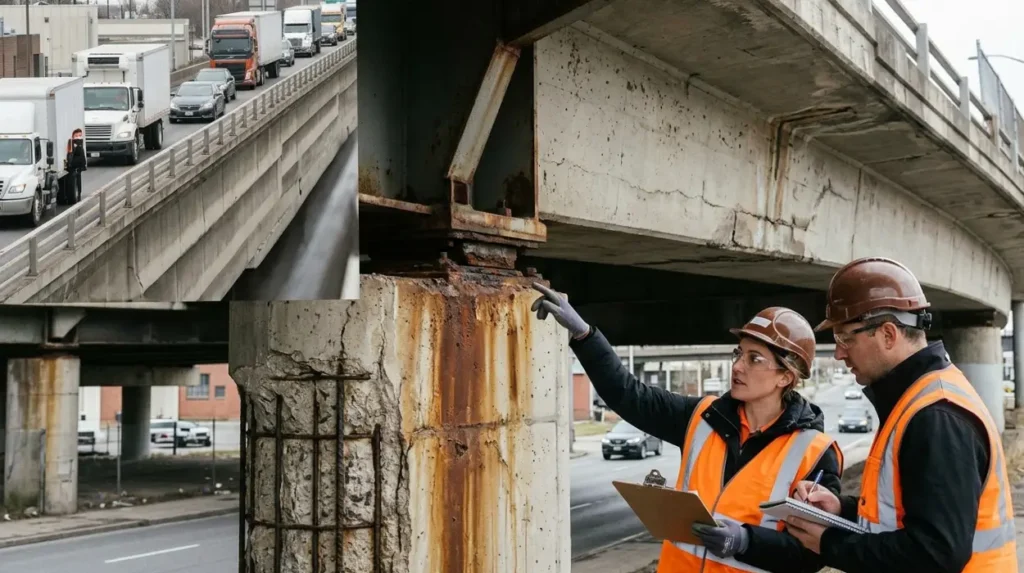
The flyover consists of a prefabricated steel-and-concrete modular deck system. Heavy freight and commuter transit exposure over several decades have degraded its primary components. The 2026 engineering intervention focuses on the remediation of three specific areas:
- Structural steel trusses showing atmospheric corrosion.
- Worn elastomeric bridge bearings that facilitate thermal expansion.
- Fractured concrete deck slabs affected by water ingress and chemical de-icing salts.
Project Boundaries and Limits
Contractors are confining the core physical site to the elevated deck structures and the immediate approach ramps on the A12 and A127 corridors. However, the environmental and operational impacts extend across a wider geographic footprint. The geographic zone of influence directly disrupts traffic patterns throughout Romford, Gidea Park, Harold Wood, and Hornchurch.
Why Is This Structural Refurbishment Necessary In 2026?
This structural refurbishment is necessary in 2026 because the original flyover was built as a temporary solution with a short design life, and decades of intense traffic loads have caused severe corrosion and material fatigue.
Chronological Context of the Temporary Structure
The London County Council erected the flyover in 1970 using a modular, prefabricated system known as the “Bridgway” design. Authorities originally designed this system to function for a maximum duration of 15 years while planners developed a permanent, subterranean or grade-separated concrete bypass. Due to successive budget reallocations and changing transport priorities across multiple decades, the temporary structure remained operational well past its intended service life.
Mechanical Loading and Fatigue Data
The flyover experiences a high average daily traffic (ADT) volume, carrying thousands of vehicles per day. The structural fatigue is accelerated by two specific factors:
- Regular passage of heavy goods vehicles (HGVs) exceeding standard axle weight expectations.
- Constant dynamic vibrations from stop-and-start traffic during peak morning and evening commuting hours.
Material Degradation Mechanisms
The primary catalyst for the 2026 intervention is the advanced oxidation of the underlying steel supports. Water mixed with road runoff and winter rock salt (sodium chloride) has leaked through failing deck expansion joints. This liquid caused delamination of the protective paint coatings, leading to rust formation and sectional loss in critical steel load paths. Without structural restoration, engineers would be forced to impose emergency weight limits or order an outright closure of the asset.
What Is The Full Schedule For The 2026 Road Closures?
The full schedule for the 2026 road closures comprises consecutive phased blocks split into full weekend shutdowns, nocturnal closures, and continuous single-lane restrictions running from January through November to isolate engineering zones while preserving basic ground-level roundabout operations.
Chronological Phasing Plan
Transport for London has divided the engineering timeline into three distinct operational phases to minimise regional economic gridlock.
- Phase 1 (January to April 2026): Structural inspections and preparatory steel cleaning. Work occurs under nocturnal closures between 21:00 and 05:00 hours, from Monday evening to Friday morning.
- Phase 2 (May to August 2026): Full weekend closures starting Fridays at 22:00 hours and ending Mondays at 05:00 hours. This phase addresses concrete deck hydro-demolition and partial bearing replacements.
- Phase 3 (September to November 2026): Continuous single-lane restrictions and final waterproofing resurfacing.
Ground-Level Roundabout Intersections
While workers close the elevated flyover deck during these phases, the massive five-arm ground-level roundabout beneath the structure remains open but restricted. Signals are recalibrated to accommodate the sudden influx of diverted vehicles that would normally bypass the roundabout via the flyover.
Which Diversion Routes Are Provided For Drivers?
The diversion routes provided for drivers utilise the A118 (Main Road), the A12, and the A127 ground corridors via strategic re-routing points, guiding long-distance traffic through alternative junctions to bypass the Gallows Corner bottlenecks completely.
Westbound A12 to London Diversions
Drivers travelling westbound on the A12 from Essex toward London cannot access the flyover ramp. The designated diversion route directs traffic off the A12 main carriageway at the standard off-slip road, sending vehicles directly onto the ground-level Gallows Corner roundabout. Traffic must navigate the roundabout and take the second exit to rejoin the A12 Westbound (Eastern Avenue East).
Eastbound London to A127 Southend Diversions
Motorists moving eastbound from London toward Southend on the A12 are blocked from using the flyover link to the A127. The mandatory diversion sends vehicles down to the ground roundabout, requiring them to take the third exit onto the A127 Eastbound (Southend Arterial Road).
Regional Strategic Long-Distance Diversions
To prevent total congestion of the local Havering road network, Transport for London has established three strategic long-distance alternative routes. Signs instruct drivers to use alternative links depending on their final destinations:
- M25 Junction 28 Alternative: Drivers originating from the North or East are advised to use M25 Junction 28 (A1023/A12) rather than attempting to cut through Gallows Corner via local arteries.
- M25 Junction 29 Alternative: Traffic heading directly toward Southend or Basildon is routed via Junction 29 (A127) to avoid the western end of the corridor entirely.
- A118 Local Diversion: Local commuter traffic running between Romford town centre and Harold Wood is redirected along the A118 (Main Road) and Colchester Road corridors.
Explore More Things To Do
Wembley Temple Community Events Guide: The Londoner News North London
New School And Community Hub Timelines: Purfleet Waterfront
How Does This Maintenance Work Impact Local Public Transport?
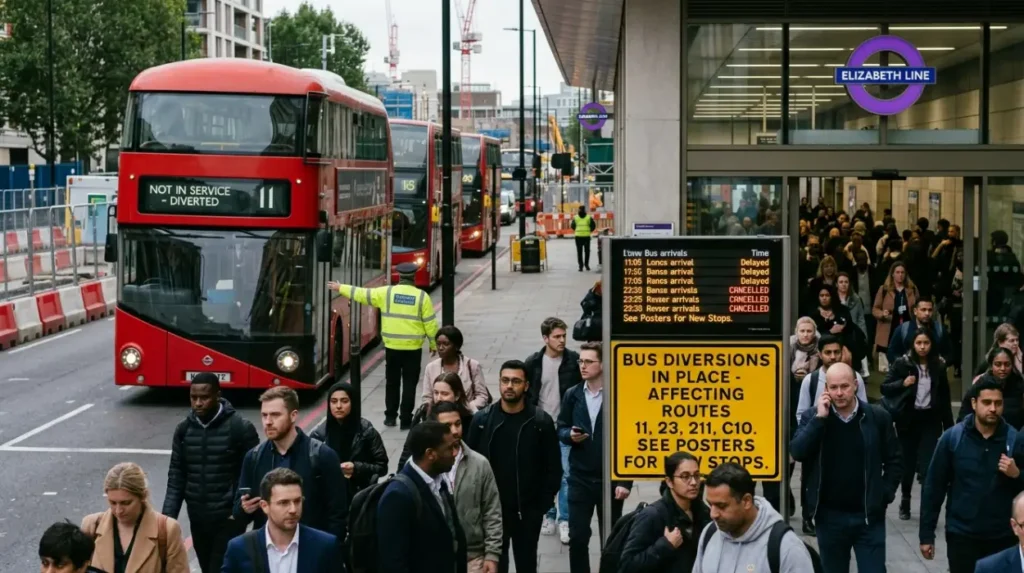
This maintenance work impacts local public transport by forcing extensive delays on regional bus networks, requiring temporary route diversions for specific lines, and increasing passenger volumes on alternative rail networks like the Elizabeth Line.
Bus Route Disruptions and Schedule Revisions
Several London Bus routes directly traverse or cross the Gallows Corner junction daily. The increased congestion on the ground-level roundabout during flyover closures alters the scheduling and reliability of three specific services:
- Route 256: Operating between Noak Hill and Hornchurch, this service encounters significant delays on the retrospective approach roads.
- Route 294: Running from Havering-atte-Bower to Noak Hill, its schedules are adjusted to handle the peak-hour tailbacks on the A12.
- Route 496: Linking Harold Wood station with Romford, this service experiences route modifications during full weekend closures.
Bus Stop Relocations and Suspension Policies
To maintain bus movement, Transport for London temporarily suspends select curbside bus stops along the immediate approaches of the A127 and A12. This prevents stationary buses from blocking the single lanes available to general traffic. Clear signage directs passengers to temporary stops situated further back from the junction zone.
Rail Network Alternatives
With road travel times increasing, commuter demand shifts toward rail infrastructure. The Elizabeth Line services operating out of Harold Wood, Gidea Park, and Romford stations provide the primary alternative route for passengers traveling into Central London. Transport for London increases staff presence at these stations during Phase 2 weekend closures to manage higher passenger numbers.
What Are The Economic And Environmental Implications For Havering?
The economic and environmental implications for Havering include increased fuel costs and delivery delays for local businesses, alongside elevated vehicle emissions and noise pollution within nearby residential streets due to idling traffic.
Local Business Supply Chain Impacts
The retail parks, automotive dealerships, and industrial estates situated along the A12 and A127 corridors rely on predictable transport links. The 2026 maintenance work disrupts these logistics operations in two main ways:
- Increased delivery times for freight companies moving goods from Essex ports into Greater London.
- Reduced customer footfall for businesses located around the Gallows Corner retail hub due to driver frustration with local traffic.
Residential Air Quality and Emissions Concerns
When the flyover closes, thousands of vehicles drop down to the ground-level roundabout. This changes the vehicle operating environment from a continuous cruise to a stop-and-start pattern. The increased deceleration, idling, and acceleration raise localized concentrations of two pollutants:
- Nitrogen Dioxide ($NO_2$) from diesel engine exhausts.
- Particulate Matter ($PM_{10}$ and $PM_{2.5}$) generated by increased brake wear and tire friction on the roundabout approaches.
Noise Pollution Mitigation Measures
The sound of heavy machinery, hydro-demolition water jets, and steel grinding creates noise challenges for nearby homes in Gidea Park and Harold Wood. To mitigate these environmental factors, contractors must install acoustic barrier mats around the elevated scaffolding structures. Furthermore, the local authority limits highly disruptive drilling activities to specific hours during evening shifts.
What Future Upgrades Are Planned For Gallows Corner After 2026?
What future upgrades are planned for Gallows Corner after 2026 involve a long-term business case assessment by Transport for London for a complete structural replacement or a permanent underpass system to replace the aging flyover entirely.
The Limitations of Life-Extension Maintenance
The 2026 maintenance project is explicitly defined as a life-extension scheme. It does not alter the fundamental geometry or capacity of the junction. The repairs are engineered to guarantee structural integrity for a finite period, giving planners time to secure funding for a comprehensive reconfiguration.
Proposed Redevelopment Options
Transport for London, in coordination with the Department for Transport (DfT), continues to evaluate two capital-intensive redevelopment designs:
- The Permanent Concrete Flyover Scheme: Replacing the steel modular system with a modern, wider, cast-in-place concrete structure featuring integrated acoustic screening and modern safety barriers.
- The Grade-Separated Underpass Scheme: Constructing a subterranean trench system allowing direct A12-to-A127 movement to pass beneath a simplified ground-level roundabout, which would improve local air quality and pedestrian links.
Funding and Statutory Constraints
The execution of any post-2026 permanent solution depends entirely on central government funding allocations and the completion of a formal Development Consent Order (DCO) process. Because Gallows Corner is a key component of the strategic road network, any major structural change requires extensive public consultation, environmental impact assessments, and approval from the Secretary of State for Transport. Until these long-term funds are secured, the 2026 maintenance works remain critical to keeping this northeast London transport link open and functional.
Why is the Gallows Corner Flyover being repaired?
The flyover is undergoing essential maintenance to address structural deterioration, including steel corrosion, worn bridge bearings, and damaged concrete deck sections. The work is designed to extend the structure’s lifespan and maintain safety for road users.