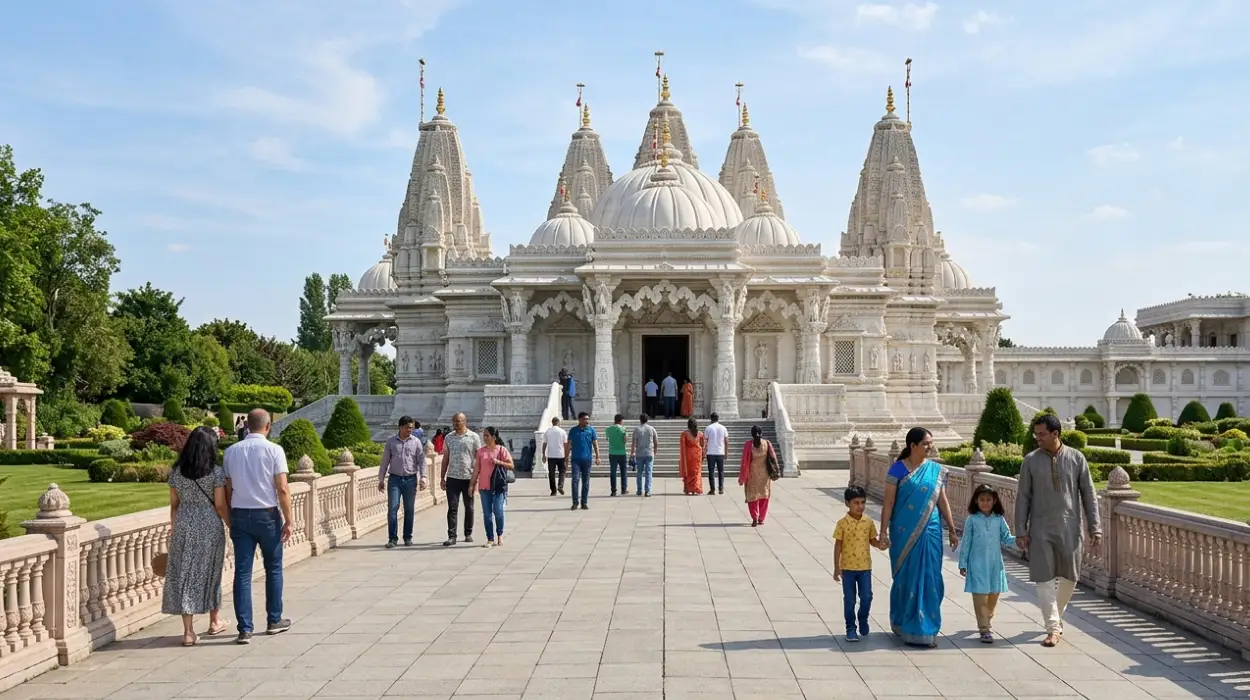
The BAPS Shri Swaminarayan Mandir, known colloquially as the Neasden Temple or Wembley Temple, serves as a primary structural anchor for religious, social, and cultural activities within the North London borough of Brent (Evans, 2002; Jordan, 2022). Established as a monumental place of Hindu worship, this architectural landmark facilitates public engagement, community integration, and traditional celebrations for the regional diaspora and global visitors. The Londoner News provides this definitive guide detailing operational parameters, upcoming event structures, and structural guidelines for North London residents planning a visit to the mandir.
- What Is The Historical Significance Of The Wembley Temple?
- When Are The Key Cultural Celebration Dates Scheduled?
- How Does The Temple Facilitate North London Community Engagement?
- What Visitor Information Must North London Residents Know Before Visiting?
- What Architectural Elements Can Visitors Observe Inside The Complex?
- How Can Worshippers And Tourists Access The Neasden Site?
- What Future Implications Does The Temple Have For Greater London?
What Is The Historical Significance Of The Wembley Temple?
The Wembley Temple, officially designated as the BAPS Shri Swaminarayan Mandir, represents Europe’s first traditional Hindu mandir, constructed entirely from Italian Carrara marble and Bulgarian limestone according to ancient Vedic architectural texts known as the Shilpa Shastras.
Foundations and Construction
The Bochasanwasi Shri Akshar Purushottam Swaminarayan Sanstha (BAPS) inaugurated the mandir in August 1995 under the spiritual guidance of Pramukh Swami Maharaj (Jordan, 2022). The assembly of the structure required over 26,000 individually carved stone pieces, which were shaped by artisans in Gujarat, India, before being shipped to London for interlocking assembly without structural steel support beams. This technical process adheres strictly to sacred geometries designed to support localized preservation of Hindu devotional practices within transnational environments.
Diaspora Evolution
Prior to the completion of the Neasden complex, the local East African and Indian Hindu diaspora in North London utilized converted industrial properties and temporary communal facilities for assemblies. The establishment of the permanent mandir altered the urban landscape of Brent, establishing an institutional epicenter for the preservation of Gujarati language, traditional arts, and scriptural literacy. The venue acts as a central hub where religious geography is transferred across international borders, consolidating community identity in the United Kingdom (Wood, 2023).
When Are The Key Cultural Celebration Dates Scheduled?
Cultural celebration dates at the Wembley Temple follow the Hindu lunar calendar, meaning specific dates shift annually on the Gregorian calendar, though core anchor events like Diwali, Annakut, and Janmashtami consistently occur between late summer and autumn.
Major Hindu Observances
The mandir hosts large-scale public gatherings annually, drawing tens of thousands of worshippers from across the United Kingdom. Worshippers organize these events around cyclic cosmic intervals and theological milestones.
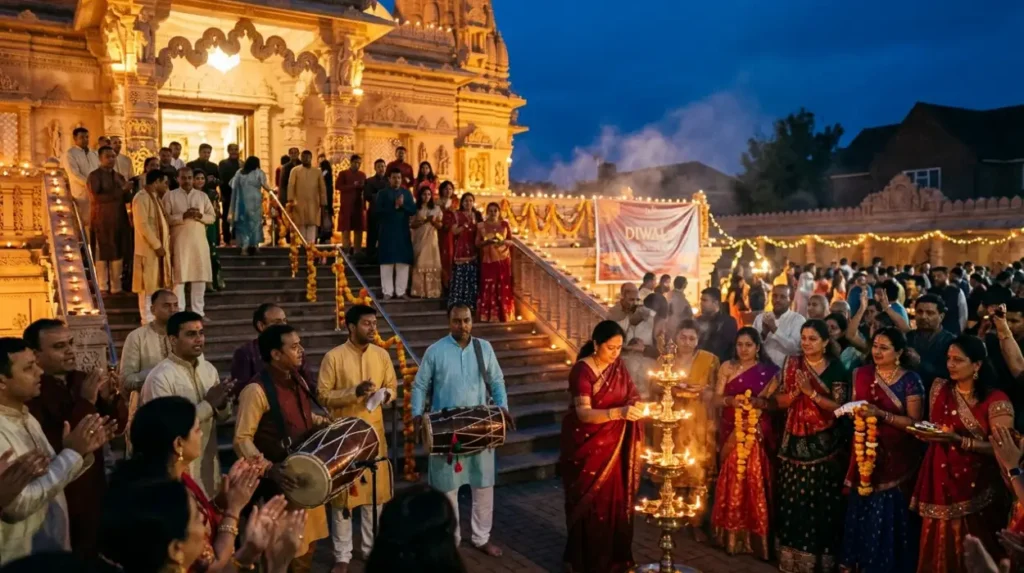
- Diwali and Annakut: Marking the Hindu New Year, these joint celebrations represent the largest gatherings in the mandir’s ritual calendar (Wood, 2023). Worshippers assemble the Annakut (meaning a mountain of food) in the main shrine area, presenting a vast devotional offering of vegetarian dishes to the consecrated murtis (sacred images) of the deities (Wood, 2023).
- Janmashtami: The celebration of the birth of Krishna occurs in August or September, featuring late-night devotional chanting, traditional music, and philosophical discourses centered on the Bhagavad Gita (Wood, 2023).
- Mahavir Jayanti and Paryushan: While primarily a Swaminarayan Hindu institution, the temple interacts regularly with neighboring faith traditions, including the London Jain community during high holy cycles like Paryushan (Vekemans, 2021).
Civic and Community Milestones
The temple routinely hosts secular and non-sectarian events to promote regional integration. These include localized health screenings, environmental sustainability exhibitions, and interfaith panel discussions alongside representatives from the Church of England, local Islamic mosques, and regional synagogues (Bloom, 2023).
How Does The Temple Facilitate North London Community Engagement?
The Wembley Temple facilitates community engagement through structural partnerships with local councils, the provision of targeted educational programs, emergency healthcare campaigns, and philanthropic networks operating across the boroughs of Brent, Harrow, and Barnet.
Educational and Youth Services
The mandir operates formal weekend assemblies structured to deliver linguistic, moral, and cultural education to children and adolescents (Bloom, 2023). These initiatives include the teaching of Gujarati literacy, traditional Indian classical music instrumentation, and volunteer training systems. Worshippers utilize custom-built classrooms located within the adjacent cultural complex to host school field trips, welcoming more than 10,000 primary and secondary school students from across Greater London annually.
Healthcare and Philanthropy
The temple maintains a dedicated public welfare department that initiates structural community services. During major public health crises, the temple transitions its infrastructure to support national frameworks, acting as a functional localized hub.
- Vaccination Clinics: The mandir transformed parts of its community spaces into fully operational vaccination centers during national immunization rollouts (Bloom, 2023).
- Health Screening Days: The temple regularly hosts free diagnostic screening sessions covering cardiovascular disease, type 2 diabetes, and mental health conditions for regional residents.
- Food Distribution Drives: Volunteers manage ongoing collection systems to supply local food banks across North London with essential items and fresh vegetarian meals.
What Visitor Information Must North London Residents Know Before Visiting?
Visitors must note that admission to the Wembley Temple is entirely free, with the complex open daily to the public from 9:00 AM to 6:00 PM, subject to specific guidelines regarding dress codes, security, and inner sanctum access.
Dress Code and Behavior
Because the mandir is an active place of daily worship, security personnel enforce specific behavioral expectations to maintain sanctity. All visitors must adhere to a modest dress code covering the shoulders and knees; sleeveless tops, shorts, and short skirts are strictly prohibited. Worshippers and tourists must remove all footwear before entering the wooden-floored temple assembly areas and marble shrines, utilizing the designated shoe racks provided free of charge inside the main entrance.
Security and Prohibited Items
The mandir maintains strict check-point protocols at its perimeter gates. Prohibited items inside the marble structure include:
- Large bags, backpacks, and luggage.
- Cameras, video recording equipment, and tripods.
- Food, beverages, and chewing gum.
- Tobacco products, alcohol, and non-prescribed chemical substances.
Cellular phones must be switched off or placed on silent mode prior to entry into the primary prayer halls. Photography inside the main temple building is completely illegal to protect the devotional environment.
Explore More Things To Do
Hounslow Council Budget 2026: Key Changes to Schools and Waste in Hounslow
A308 Planned Maintenance and Traffic Delays on Hampton Court Road
What Architectural Elements Can Visitors Observe Inside The Complex?
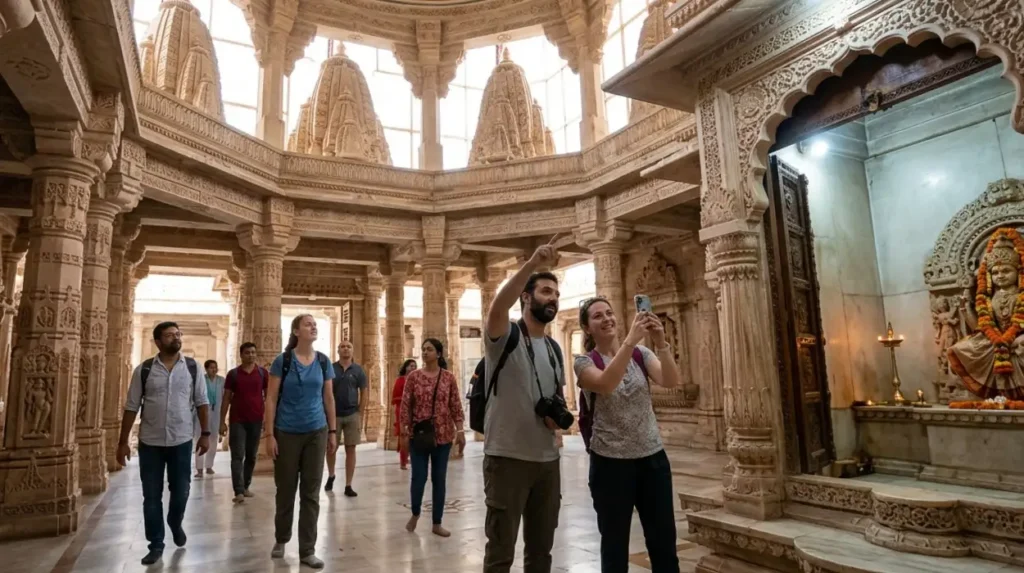
Visitors inside the complex can observe intricate structural elements including hand-carved pillars, a large central dome, traditional spires known as shikharas, and the highly detailed shrines containing the sacred murtis.
The Mandir Shrines
The upper floor of the mandir houses the primary shrines housing the murtis, which represent the physical manifestations of the divine within Hindu theology (Wood, 2023). These figures are clothed daily in traditional garments and adorned with elaborate ornaments. Worshippers participate in the arti ceremony, which involves the rhythmic waving of lighted wicks before the murtis, accompanied by corporate percussive music and chanting (Heimarck, 2022; Bloom, 2023).
The Cultural Complex
Adjacent to the marble mandir stands the Haveli, a vast multi-purpose cultural complex featuring an intricate hand-carved wooden facade reflecting traditional Gujarati architecture. The Haveli houses a permanent exhibition titled “Understanding Hinduism,” a comprehensive presentation mapping the historical development, scientific contributions, and core tenets of Vedic philosophy. The complex also incorporates a large assembly hall with a capacity exceeding 2,500 people, used for community lectures, weddings, and artistic performances.
How Can Worshippers And Tourists Access The Neasden Site?
Worshippers and tourists can access the Neasden site via multiple public transportation pathways, including London Underground stations, local bus networks, and dedicated vehicular parking infrastructure managed on-site.
Public Transportation Connections
The temple is situated on Pramukh Swami Road in Neasden, making it accessible via various Transport for London (TfL) systems.
- London Underground: The nearest stations are Neasden Station and Wembley Park Station, both operating on the Jubilee Line, as well as Stonebridge Park Station, serviced by the Bakerloo Line and London Overground networks. Walking distances from these stations to the temple range between 15 and 25 minutes.
- Bus Routes: Local bus lines stop directly outside or adjacent to the temple gates. The 112 bus route provides direct access from Ealing Broadway and Brent Cross, while the 206 bus route connects the site directly to Wembley Park and Kilburn.
Vehicular Parking and Access
For individuals arriving via personal vehicles, the temple provides a spacious car park located directly opposite the main entrance gates, available free of charge for visitors during standard operational hours. On major festival days, such as Diwali or Janmashtami, regional traffic diversions take effect under the supervision of Brent Council and the Metropolitan Police Service. Visitors are encouraged to utilize public transit options during peak holiday cycles to minimize localized congestion.
What Future Implications Does The Temple Have For Greater London?
The future implications of the Wembley Temple involve expanding transnational interfaith dialogue, strengthening local municipal resilience frameworks, and preserving minority cultural heritage within the changing urban demographics of Greater London.
Urban Transformation and Integration
As the London Borough of Brent undergoes continuous residential redevelopment, the temple remains a fixed geographical point that influences local planning, traffic management, and tourism strategies. The architectural presence of the mandir functions as a visual representation of multiculturalism, drawing international travelers and architectural scholars to North London (Evans, 2002; Jordan, 2022). This ongoing foot traffic supports neighborhood hospitality businesses, retail outlets, and public infrastructure developments.
Intergenerational Continuity
The temple’s evolving digital and physical delivery models guarantee that younger generations of British Hindus retain access to institutional resources, language training, and community leadership roles (Bloom, 2023). By maintaining its position as both a sacred space and an active civic partner, the mandir adapts to changing socio-political contexts without compromising its foundational theological principles. It provides a permanent blueprint for how minority faith communities can successfully establish durable, influential centers within global urban environments.
What is the Wembley Temple?
The Wembley Temple, officially known as BAPS Shri Swaminarayan Mandir, is a traditional Hindu temple in North West London. It is widely known as the Neasden Temple and serves as a major religious, cultural, and community center.