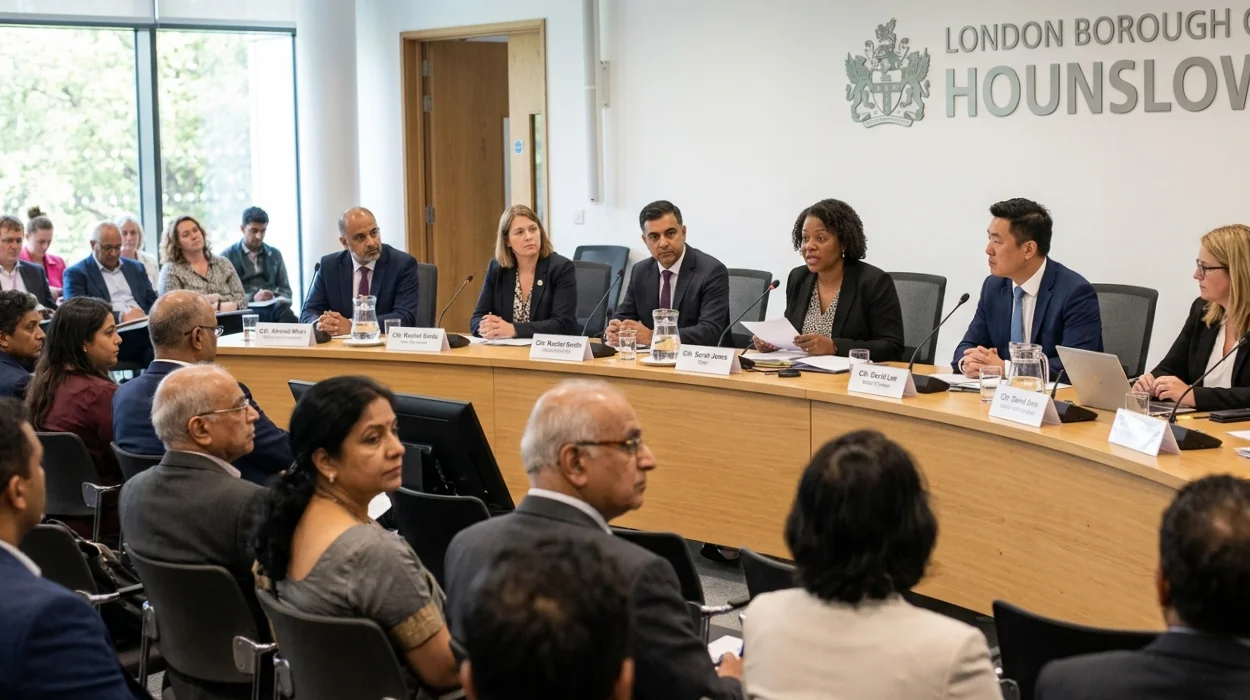
The London Borough of Hounslow, a local government authority in West London governed by the Local Government Act 1972, must legally balance its revenues and municipal expenditures for each fiscal year. In response to structural macroeconomic inflation, increased service demand, and shifting central government grants, the local authority designed the Hounslow Council Budget 2026 to restructure statutory allocations across primary public provisions. This statutory fiscal strategy alters funding mechanisms for educational institutions, adult and children social care departments, and neighborhood environmental services, directly impacting the borough’s estimated 290,000 residents.
- What Is the Total Financial Allocation for the Hounslow Council Budget 2026?
- How Does the 2026 Budget Impact Funding for Local Schools?
- What Structural Changes Are Happening in Adult and Children Social Care?
- How Will Neighborhood Waste Services and Recycling Be Affected?
- What Long-Term Implications Does This Budget Have for Hounslow Residents?
What Is the Total Financial Allocation for the Hounslow Council Budget 2026?
The total net expenditure budget for Hounslow Council in the 2026/2027 financial period is set against a structural funding deficit requiring deep efficiency savings, statutory council tax increases, and a targeted reallocation of core capital programs to preserve vital frontline operations.
The local authority’s fiscal strategy addresses a multi-million-pound deficit driven by structural cost pressures in statutory service delivery. To establish long-term financial stability, Hounslow Council implemented a maximum allowable council tax increase of 4.99%, split into a 2.99% core municipal levy increase and a 2% adult social care precept. This strategy maximizes local revenue generation under the current Ministry of Housing, Communities and Local Government limits to buffer the general fund from insolvency risk.
Historically, English local authorities have derived their net operating revenue from a combination of retained business rates, localized council tax, and specific central government allocations, including the Revenue Support Grant and the Social Care Grant. Between 2010 and 2026, real-terms central government funding reductions forced a shift toward localized fiscal self-reliance across London boroughs. For Hounslow Council, the capital investment framework prioritizes statutory structural interventions over discretionary community improvements. This framework targets investment toward key transformation corridors, such as the planned Golden Mile growth corridor along the Great West Road, to unlock 14,000 new homes and generate long-term business rate revenues (Roper, 2026).
How Does the 2026 Budget Impact Funding for Local Schools?
The 2026 budget directly alters school funding allocations by adjusting the Dedicated Schools Grant framework, implementing targeted provisions for Special Educational Needs and Disabilities, and introducing capital restructuring plans to manage shifting demographic demands across primary and secondary educational institutions.
The Dedicated Schools Grant is the ring-fenced grant from the Department for Education that funds local education. It is divided into specific components, including the Schools Block, the High Needs Block, the Central School Services Block, and the Early Years Block. Mainstream school operations are funded through the Schools Block via the National Funding Formula, which sets per-pupil funding baselines. However, the escalating costs within the High Needs Block—the mechanism used to fund specialist educational provisions and alternative education placements—exert severe pressure on the wider corporate budget of the council.
Under the Children and Families Act 2014, local authorities are legally obligated to provide statutory adjustments for students with an Education, Health and Care Plan. The volume of students requiring these statutory instruments has risen significantly, driving a structural deficit in the High Needs Block. To mitigate this financial risk, Hounslow Council operates under central government deficit-management frameworks, including the Safety Valve intervention program, which requires local authorities to reform their special educational needs operations in exchange for capital bailouts. The 2026 fiscal strategy addresses this by funding early intervention initiatives to minimize expensive out-of-borough independent specialist school placements.
Demographic changes within West London present secondary funding challenges. Shifting migration patterns and localized housing affordability dynamics have caused declining primary school reception numbers in specific neighborhoods, contrasting with high secondary school demand. Because school funding is allocated strictly on a per-pupil basis, falling rolls lead directly to individual budget deficits for specific schools. The council’s 2026 strategy responds by executing targeted school organization choices, including federation models, school mergers, and classroom capacity reductions, ensuring the long-term survival of local educational infrastructure.

What Structural Changes Are Happening in Adult and Children Social Care?
Adult and children social care services face extensive structural reorganization in the 2026 budget, shifting toward preventative community-led support models, digital triage systems, and collaborative regional frameworks to combat rising third-party residential placement costs and severe statutory demand pressures.
The delivery of adult social care is governed by the Care Act 2014, which mandates that the council assess and meet the eligible needs of disabled individuals, elderly populations, and vulnerable adults. Children’s social care operates under the Children Act 1989 and the Children Act 2004, enforcing a strict legal duty to safeguard children looked after by the state. Together, these statutory responsibilities absorb over 60% of Hounslow Council’s total net general fund budget, making them the primary drivers of municipal fiscal strain.
To manage adult social care expenditures without breaching statutory obligations, the 2026 budget implements a prevention-first operating model. This involves deploying technology-enabled care packages, such as remote physiological monitors, digital fall-detection systems, and automated medication dispensers, to reduce dependency on long-term domiciliary care visits. Additionally, the council utilizes asset-based community development, an approach that links vulnerable individuals with informal voluntary sector assets to delay admission into high-cost residential care facilities.
Children’s social care faces severe systemic challenges due to escalating private-sector residential care prices and an acute shortage of local foster placements (Dellar, 2026). The Institute for Government highlights that private providers increasingly dominate the residential care market, allowing them to escalate costs for children with complex needs (Dellar, 2026). In response to these market failures, Hounslow Council’s 2026 budget funds localized placement strategies, such as:
- Enhanced financial allowances for local foster carers to improve recruitment retention.
- Direct investment in council-owned residential children’s homes to avoid the private spot-purchasing market.
- Cross-borough commissioning partnerships with neighboring West London authorities to gain collective bargaining power over independent providers.
- Expanded early help family support teams to intervene before child protection thresholds require formal state care.
Explore more Things To Do
South London Listens Project: New Community Wellbeing Grants in South London
What Time Does the Eurovision Song Contest Grand Final Start in London
How Will Neighborhood Waste Services and Recycling Be Affected?
Neighborhood waste services will undergo strict operational adjustments under the 2026 budget, which standardizes domestic collection frequencies, penalizes contamination in recycling streams, and expands infrastructure for mandatory food waste separation to meet national environmental targets and avoid landfill taxes.
Waste collection, environmental maintenance, and street cleansing are executed under the Environmental Protection Act 1990, which requires local authorities to collect household waste and maintain public highways. Hounslow Council manages these operations through its wholly-owned subsidiary, Hounslow Highways, and its municipal waste management partners. The 2026 budget adjusts neighborhood services to reduce operational carbon footprints and minimize escalating waste disposal levies managed by the West London Waste Authority.
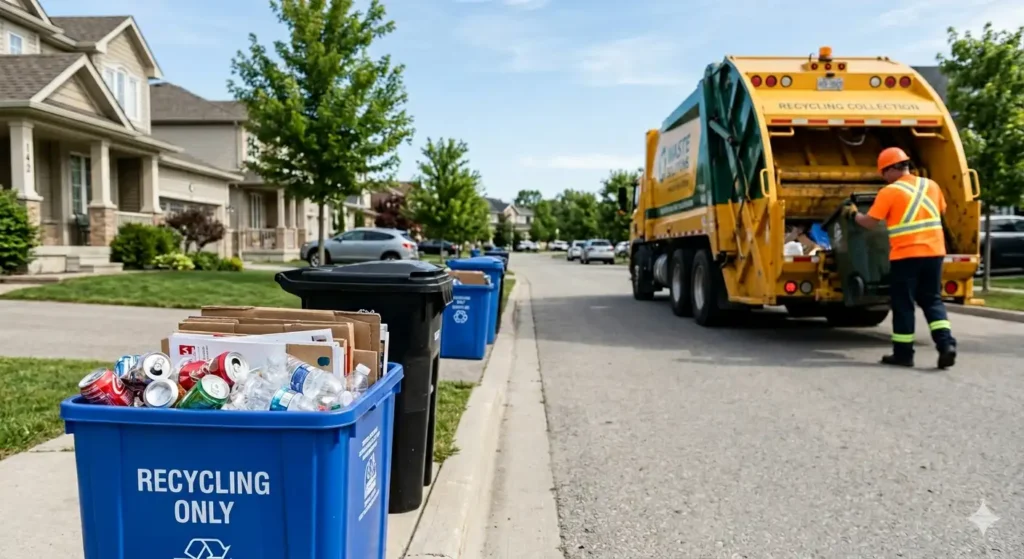
A core focus of the 2026 environmental budget is the absolute reduction of residual municipal waste, the black-bin waste streams destined for energy-from-waste incineration or landfill sites. The council enforces strict bi-weekly schedules for residual refuse while maintaining weekly schedules for source-segregated recycling. To lower processing costs, the budget funds enhanced enforcement programs to address recycling contamination, allowing crews to refuse collection for bins containing incorrect materials, such as plastic polymers mixed with organic waste or corrugated cardboard soiled by oils.
Furthermore, the 2026 budget aligns local infrastructure with national statutory mandates requiring separated weekly food waste collections for all residential properties. The council has restructured its collection fleet, procuring specialized low-emission vehicles equipped with dual-compartment configurations. Separated food waste is diverted to regional anaerobic digestion plants, where organic matter undergoes biological breakdown to produce agricultural fertilizer and biomethane gas for grid injection (Yao, 2026). This diversion directly reduces the council’s financial exposure to standard UK landfill tax rates.
What Long-Term Implications Does This Budget Have for Hounslow Residents?
The long-term implications for Hounslow residents involve an increased localized tax burden combined with highly targeted, digitized public services, where universal provisions are reduced to safeguard critical, legally mandated social care and educational infrastructure.
The structural choices executed within the Hounslow Council Budget 2026 represent a permanent shift in the relationship between local government and the public. As structural central government funding decreases relative to inflation, residents must absorb maximum statutory council tax increases annually. This fiscal trend shifts the primary burden of funding local safety nets directly onto the local council tax payer, altering household disposable income patterns across the borough’s diverse communities.
Public interactions with the local authority will become increasingly digital and means-tested. Discretionary public services, including neighborhood youth centers, universal public realm improvements, community grant schemes, and local library operating hours, face continuous consolidation to ensure statutory funding remains intact for adult care packages and children’s safeguarding. Environmental management relies more heavily on automated enforcement infrastructure, using high-definition CCTV networks to issue fixed penalty notices for fly-tipping, commercial waste abandonment, and illegal littering.
Furthermore, the budget links neighborhood planning with revenue generation. To balance its long-term books, Hounslow Council must aggressively facilitate high-density urban developments, mixed-use residential zones, and infrastructure growth corridors to expand its council tax base and commercial business rate collections (Roper, 2026). Consequently, residents will experience ongoing localized physical transformation, characterized by brownfield regeneration and altered public transit demands, as the borough balances financial survival with urban expansion.
What is the Hounslow Council Budget 2026?
The Hounslow Council Budget 2026 is the local authority’s financial plan for the 2026/27 fiscal year. It sets spending priorities, identifies savings measures, and allocates funding across key services such as education, social care, waste collection, housing, and infrastructure.