The Eurovision Song Contest is the largest live music television event in the world, requiring precise international broadcast synchronization. Organizers coordinate transmission schedules across multiple continents, time zones, and public service broadcasting networks to ensure unified viewing experiences. Millions of global viewers, particularly within major media hubs like London, monitor these scheduling frameworks annually to watch the semi-finals and the grand finale live.
- What Time Does the Eurovision Song Contest Start?
- What Is the Full Weekly Schedule for Eurovision?
- How Long Does the Eurovision Grand Final Last?
- Why Does Eurovision Always Start at 9 PM CEST?
- Where Can Viewers Watch the Live Stream?
- How Does the Time Zone Difference Affect Voting Windows?
- What Happens Behind the Scenes Before the Show Starts?
- Future Directions: Will the Eurovision Start Time Ever Change?
What Time Does the Eurovision Song Contest Start?
The Eurovision Song Contest live broadcasts permanently commence at 21:00 Central European Summer Time (CEST). For television viewers residing within the United Kingdom, the live transmissions begin exactly at 20:00 British Summer Time (BST) across public broadcasting networks.
Standard European Broadcasting Timezones
The European Broadcasting Union establishes the official start time of the Eurovision Song Contest to maximize primetime audience viewership across the European continent. The core benchmark for the production schedule utilizes Central European Summer Time, which aligns with the geographical location of the majority of participating nations. This standardization means that international broadcasters operating from key capitals must adjust their local scheduling relative to this central European framework.
Broadcasters located in Western European territories, such as Ireland and Portugal, format their coverage to begin at 20:00 local time, matching the timing used by production studios based in London. Conversely, nations situated further east, including Greece, Finland, and Estonia, broadcast the live event starting at 22:00 Eastern European Summer Time (EEST). The fixed nature of the 21:00 CEST schedule ensures that the production operates as a singular, concurrent global broadcast event.
Global Broadcast Timing Matrix
The synchronization requirements extend significantly beyond the borders of continental Europe due to international participation and global syndication agreements. The Australian broadcast network SBS manages the feed to line up with morning hours in local time zones, resulting in an early morning live broadcast the following day. For viewers in Sydney and Melbourne, the transmission goes live at 05:00 Australian Eastern Standard Time (AEST).
United States broadcast partners and streaming platforms align their digital infrastructure to deliver the feed during afternoon hours across domestic regions. The East Coast of the United States receives the live feed at 15:00 Eastern Daylight Time (EDT), while West Coast audiences access the transmission at 12:00 Pacific Daylight Time (PDT). This global distribution pipeline forces specific technical demands on the host broadcaster and satellite networks to maintain absolute zero-latency delivery to international master control rooms.
What Is the Full Weekly Schedule for Eurovision?
The official Eurovision schedule spans a six-day public framework consisting of three primary live televised events alongside multiple non-televised jury simulation shows. The televised components consist of the first semi-final, the second semi-final, and the grand final.
The Semi-Final Progression Structure
The competitive framework of the Eurovision Song Contest requires an elimination process to reduce the field of participants down to a manageable size for the main Saturday broadcast. The first televised elimination round, designated as Semi-Final 1, takes place on the Tuesday evening of the designated Eurovision week. Fifteen distinct national entries perform during this broadcast to secure one of ten available advancement positions determined by public voting mechanisms.
The second elimination round, designated as Semi-Final 2, occurs on the subsequent Thursday evening under identical structural guidelines. Another group of fifteen national entries delivers live performances to claim the final ten remaining spots for the grand final. These semi-final events establish the complete baseline of twenty-five competing countries that populate the final Saturday night running order, which is heavily analyzed by music critics in London and across Europe.
Non-Televised Dress Rehearsals and Jury Shows
The public only witnesses a fraction of the actual operational schedule because numerous non-televised dress rehearsals occur prior to each live broadcast window. Every televised evening show is preceded by an Evening Preview Show, commonly called the Jury Show, which occurs exactly twenty-four hours prior to the live transmission. During these Friday and mid-week evening slots, international professional juries evaluate the vocal capabilities and staging performances of each country to determine 50% of the final point tallies.
Furthermore, an Afternoon Preview Show takes place on the afternoon of each live broadcast to serve as a final technical run-through for producers. For example, the Saturday grand final schedule includes a complete afternoon rehearsal starting at 13:30 CEST. This rigorous timeline allows camera operators, lighting directors, and sound engineers to calibrate equipment before the main live broadcast begins.
Explore More Things To Do
New M&S Food Hall Tooting Bec Opening 2026
Horniman Museum Guide: Forest Hill’s Family Gem
How Long Does the Eurovision Grand Final Last?
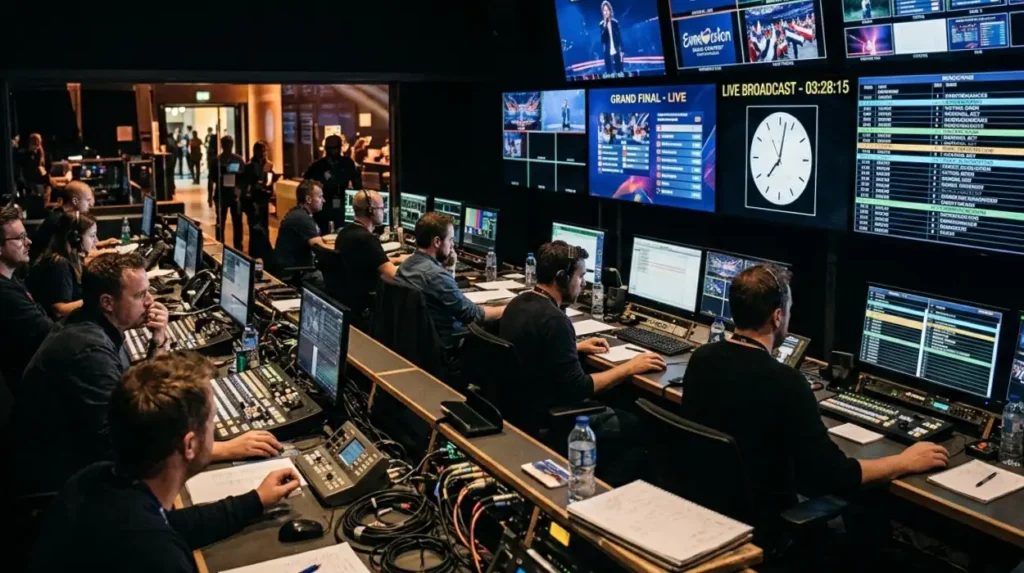
The Eurovision Song Contest grand final maintains an average broadcast duration of four hours from the initial opening sequence to the final trophy presentation. The production structure requires a minimum window of 240 minutes to accommodate all performances and voting segments.
Production Architecture and Structural Components
The expansive duration of the grand final results directly from the complex structural components mandated by the European Broadcasting Union regulations. The broadcast initiates with a flag parade ceremony that introduces all twenty-five competing musical acts, consuming the first fifteen minutes of the programming block. Following the introductions, the core performance segment begins, allocating approximately three minutes and forty seconds to each individual country for staging and clean-up transitions.
Once all twenty-five musical entries finish their live performances, the production transitions into a protracted voting window that lasts for roughly forty minutes. This specific block features complex interval acts, celebrity guest performances, and historical retrospectives designed to entertain audiences while voting data undergoes verification. The final phase of the broadcast involves the live point distribution sequence, which demands over an hour of airtime to collect satellite tallies from every participating nation.
Historical Extensions of the Broadcast Window
The total duration of the Eurovision grand final has systematically expanded over decades of institutional growth and mechanical adjustments. During the initial decades of the competition, a smaller roster of competing nations permitted a concise broadcast window that rarely exceeded ninety minutes in length. The introduction of the formal professional jury spokesperson system and the subsequent addition of the public televote breakdown doubled the length of the results sequence, generating massive engagement among fans at viewing parties in London.
Technical difficulties, prolonged audience applause, and unexpected script deviations during the voting presentation frequently push the broadcast past its scheduled conclusion. Modern public service broadcasters routinely adjust their late-night programming slots to account for potential fifteen-to-thirty-minute overruns beyond the four-hour mark. This structural elasticity is a standard operational assumption for international television networks carrying the feed.
Why Does Eurovision Always Start at 9 PM CEST?
The 21:00 CEST start time is a deliberate commercial and scheduling compromise designed by the European Broadcasting Union to balance international primetime television laws. This time slot ensures major financial contributors avoid conflicts with domestic evening news programs.
Protecting National News Primetime Blocks
The primary operational reason for the 21:00 CEST scheduling decision relates directly to the internal programming mandates of European public service broadcasters. In major television markets like Germany, France, and Italy, the 20:00 to 21:00 hour represents an untouchable slot dedicated to flagship national news programs. The German Tagesschau, the French Journal de 20 heures, and the Italian TG1 command immense institutional priority and cannot be displaced by entertainment programming.
By positioning the Eurovision start time at 21:00 CEST, the European Broadcasting Union allows these key financial contributors to retain their high-revenue news blocks intact. The contest functions as a natural programming transition immediately following the conclusion of these nightly news broadcasts. This relationship maximizes the lead-in audience numbers for the main entertainment feed, which broadcasts concurrently at 20:00 in London.
Accommodating Southern European Living Patterns
Cultural variations regarding evening schedules and dinner habits across different regions of Europe heavily influence the viability of the television broadcast window. In Northern and Western Europe, families typically consume evening meals between 17:30 and 19:30, making an 20:00 or 21:00 start highly accessible. However, Mediterranean nations maintain significantly later daily operational cycles.
In countries like Spain and Italy, standard primetime television programming rarely commences before 21:30 or 22:00 due to later dining schedules. A start time earlier than 21:00 CEST would systematically alienate southern European populations, depressing crucial viewing shares in major Mediterranean markets. The chosen hour establishes an optimized compromise that serves northern audiences without excluding southern demographics.
Where Can Viewers Watch the Live Stream?
Viewers can access the official Eurovision live stream globally via the official Eurovision Song Contest YouTube channel without any geographic restriction barriers in unblocked territories. Domestic viewers inside participating countries can watch through national public service television networks and digital streaming applications.
Official Public Service Broadcaster Networks
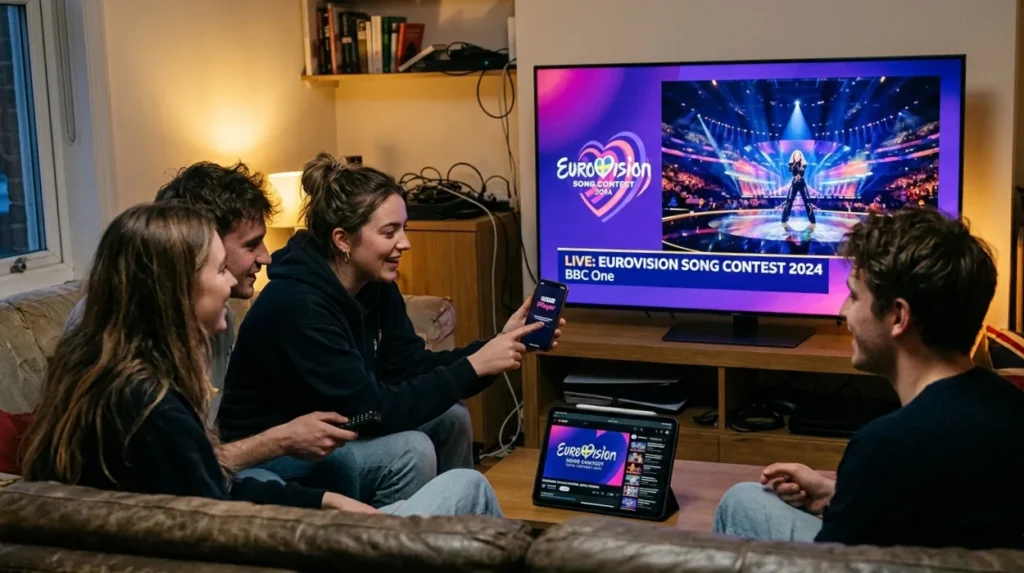
The baseline method for experiencing the Eurovision Song Contest involves utilizing the public broadcasting infrastructure of each participating country. The British Broadcasting Corporation handles the domestic transmission within the United Kingdom, delivering high-definition video through the BBC One television channel and the digital BBC iPlayer platform from its headquarters. In France, the public network France Télévisions distributes the event via its France 2 channel to domestic audiences.
Each individual national broadcaster provides localized commentary tracks featuring regional media personalities to explain the voting systems and artist backgrounds to viewers. These domestic feeds prioritize regional context and legal commercial breaks tailored specifically to the advertising rules of each host country. This localized approach represents the traditional consumer pathway for the annual event.
Digital Streaming and Geo-Blocking Variations
For international enthusiasts located in non-participating territories, the European Broadcasting Union coordinates an open-access live stream on the official Eurovision YouTube channel. This digital stream presents the international clean feed, which contains the pure stadium audio, raw venue visuals, and zero commentary interference. This alternative option allows purists in cities from London to Tokyo to experience the exact stadium audio environment without local media interruption.
However, specific commercial distribution contracts create regional geo-blocking restrictions on the open YouTube stream within certain international territories. In the United States, exclusive media rights belong to the NBCUniversal conglomerate, which restricts the YouTube feed to redirect audiences to its proprietary Peacock streaming application. Viewers checking alternative digital options must evaluate their domestic rights holders to determine if virtual private network software is required to view the clean feed.
How Does the Time Zone Difference Affect Voting Windows?
Time zone differences force international audiences to vote at highly irregular local hours, ranging from late-night windows to early morning slots. The voting windows open concurrently worldwide, requiring absolute synchronization across all global telecommunication networks.
Managing Early Morning Voting in Australia
The inclusion of Australia as an official competing entity introduces extreme time zone disparities into the management of live interactive public voting. Because the voting window opens simultaneously for all viewers, Australian audiences must cast their digital ballots during the early morning hours of Sunday. The live performance segment concludes around 07:00 AEST, requiring fans to participate while standard domestic routines are disrupted.
This dynamic places a heavy logistical demand on the Australian broadcaster SBS to promote the voting mechanics to an audience that is waking up rather than winding down an evening. The telecommunications infrastructure must remain operational to handle rapid spikes in mobile applications and SMS traffic at dawn. This temporal separation shapes the unique nature of the southern hemisphere fan base.
Restructuring the Rest of the World Ballot
The modern iteration of the Eurovision Song Contest utilizes a unified global voting tier labeled the Rest of the World ballot to accommodate fans in non-participating nations. This digital voting framework allows individuals from countries like Brazil, Canada, and Japan to submit online votes via a secure credit card verification portal. The voting window for this category opens online prior to the live show and remains accessible throughout the performance cycle.
Because the window operates on central European timing benchmarks, a viewer in Tokyo must submit their selections around 05:00 local time on Sunday morning. Meanwhile, a voter located in Buenos Aires accesses the portal at 16:00 on Saturday afternoon. This continuous, multi-time-zone collection process requires robust cloud server architecture to aggregate international micro-transactions without system crashes or data latency issues.
What Happens Behind the Scenes Before the Show Starts?
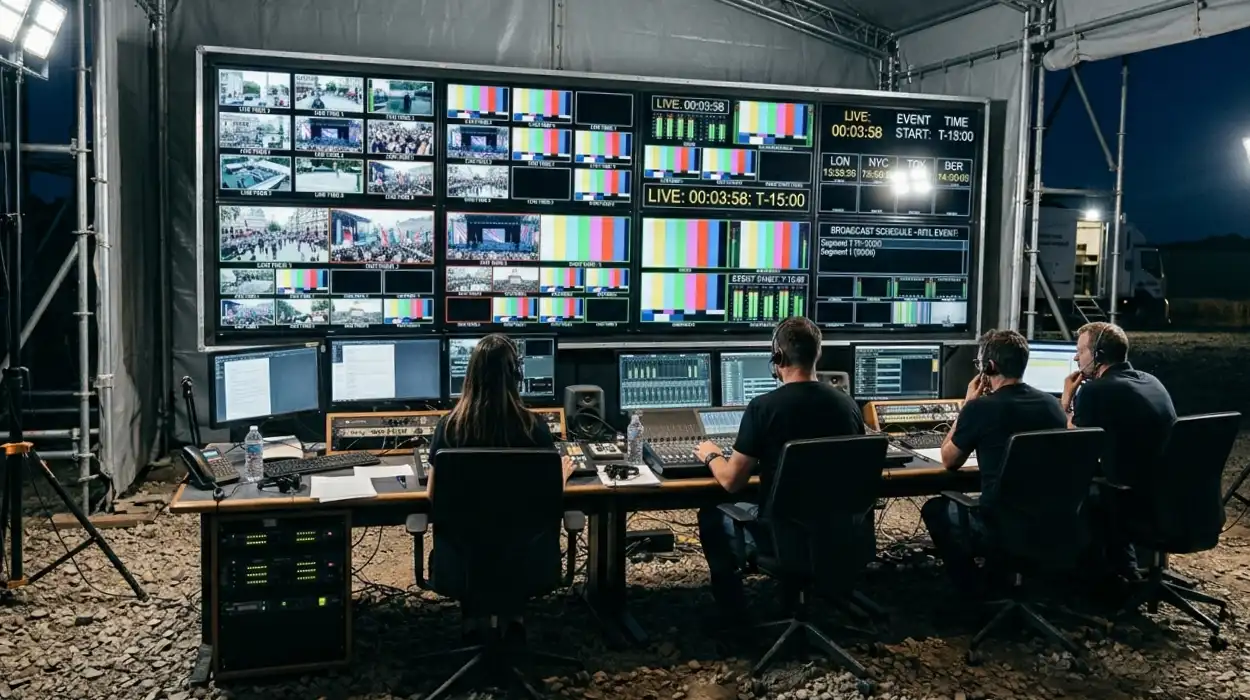
The twelve hours leading up to the 21:00 CEST start time require a precise operational countdown involving thousands of production personnel. This phase includes security sweeps, satellite link tests, costume adjustments, and final technical script alignments.
The Twelve-Hour Production Countdown Schedule
The host venue undergoes an intensive transformation starting at 09:00 CEST on the morning of the grand final broadcast. Technical crews perform exhaustive diagnostic checks on the primary pyrotechnic rigs, the automated kinetic stage elements, and the backup power generators. Sound engineers perform definitive acoustic sweeps of the arena using specialized microphone arrays to verify that audience noise cancellation algorithms are functioning correctly.
By 13:00 CEST, the host broadcasters establish active communication bridges with the European Broadcasting Union operational control center located in Geneva, Switzerland. This critical link allows technicians to verify the redundant satellite loops and fiber-optic data pathways that protect the live feed from signal failure. Every participating country’s national commentary booth, including the booths occupied by broadcasting teams from London, undergoes a manual audio loop check to guarantee their localized voices stream smoothly back to their home networks.
Artist Preparation and Green Room Logistics
The backstage complex becomes an isolated operational zone six hours prior to the official broadcast start time. Delegations from all twenty-five final countries arrive at the arena dressing rooms under strict scheduling protocols managed by floor directors. Wardrobe departments conduct final fabric and reflective surface inspections under full television studio lighting to prevent unwanted glare or camera moiré effects.
At exactly 18:00 CEST, local law enforcement agencies and specialized security teams execute a final physical sweep of the entire stadium arena. Once this security protocol concludes, the green room area becomes completely locked down to unauthorized personnel. The artists take their assigned seating positions within the green room enclosure by 20:30 CEST, waiting for the final countdown clock to hit zero as the global broadcast commences.
Future Directions: Will the Eurovision Start Time Ever Change?
The ongoing expansion of the Eurovision Song Contest into a truly global media asset raises continuous debates regarding the long-term sustainability of the 21:00 CEST start time. Media analysts at The Londoner News note that as viewing audiences expand significantly across Asian and American markets, pressure builds to create a more globally accessible broadcast window. An earlier start time would alleviate the late-night strain on Eastern European nations and allow families with younger children to watch the entire voting sequence live.
However, the structural obstacles presented by Western European news blocks and Southern European cultural habits continue to protect the traditional 21:00 CEST framework. Because the Big Five funding nations hold immense leverage over the financial architecture of the European Broadcasting Union, any scheduling adjustment that threatens their local news revenue remains unlikely to pass. Barring a radical restructuring of public service broadcasting models, the international community can rely on the historic late-night European schedule remaining intact for future iterations of the contest, maintaining its familiar slot on Saturday night schedules in London and throughout the world.
What time does the Eurovision Song Contest start in the United Kingdom?
The Eurovision Song Contest starts at 8:00 PM (20:00) British Summer Time (BST) in the United Kingdom. The live broadcast begins at 9:00 PM Central European Summer Time (CEST) and is shown in the UK on BBC One and BBC iPlayer.