
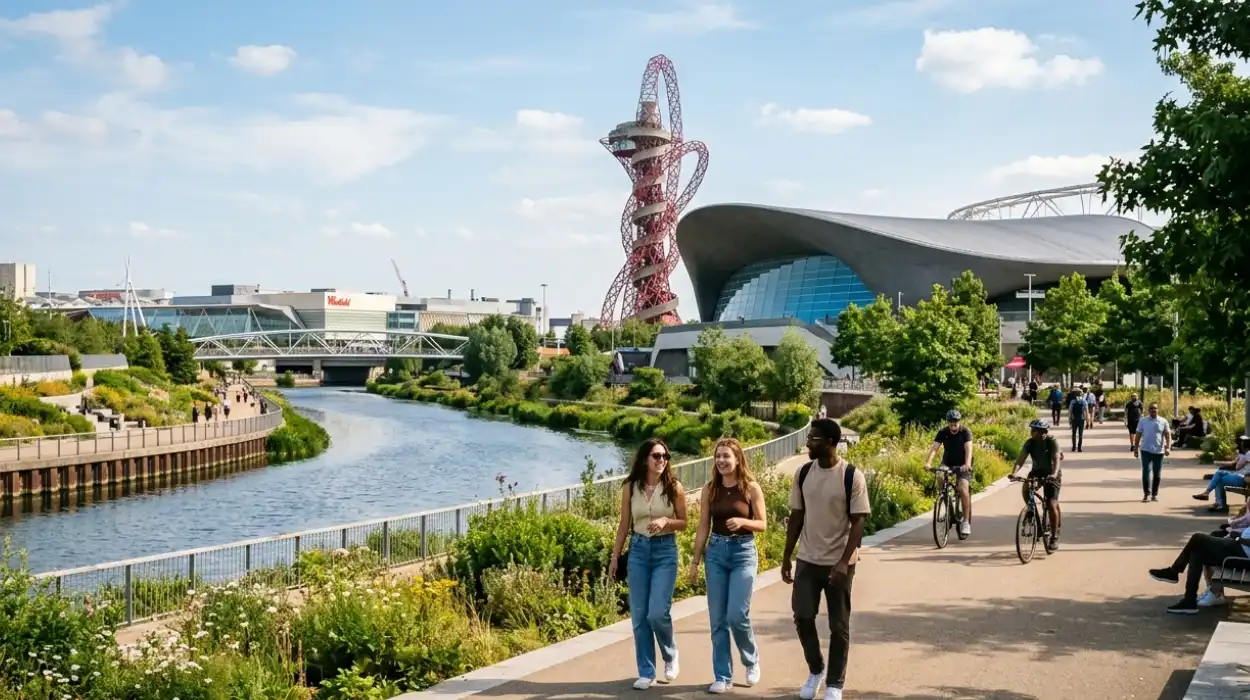
Stratford in east London is best known for Westfield Stratford City, one of Europe’s largest shopping centres, and as the gateway to Queen Elizabeth Olympic Park. Yet there is a rich layer of culture, green space, sport, and creativity that exists formally beyond the mall. This article explains, in full, what to do in and around the Olympic Park in Stratford once you have finished shopping, so London residents can treat the area as a destination in its own right.
- What is stratford’s olympic park and why does it matter?
- What are the main attractions inside Queen Elizabeth Olympic Park?
- Where should you walk and relax in the Olympic Park?
- What can you do with sport and fitness in and around the park?
- What cultural and creative experiences exist beyond Westfield?
- How do you eat and drink in Stratford without only going to Westfield?
- What hidden outdoor and nature experiences are there?
- What transport and practical details should londoners know?
- What future developments and long‑term uses are planned?
What is stratford’s olympic park and why does it matter?
Stratford’s Olympic Park is the rebranded Queen Elizabeth Olympic Park, built in 2012 to host the London Olympic and Paralympic Games. It lies in the London borough of Newham, adjacent to Westfield Stratford City, and forms a major regeneration zone that mixes sport, housing, green space, and culture.
Stratford was once a relatively low‑income, industrial area focused on railway marshalling yards and light industry. The 2012 Games were used as a regeneration lever: the park was developed on a 200‑hectare brownfield site along the River Lea, displacing contaminated land and former industrial buildings. Today the park is a permanent sporting and leisure asset and a model for how post‑Olympic infrastructure can be repurposed for everyday use.
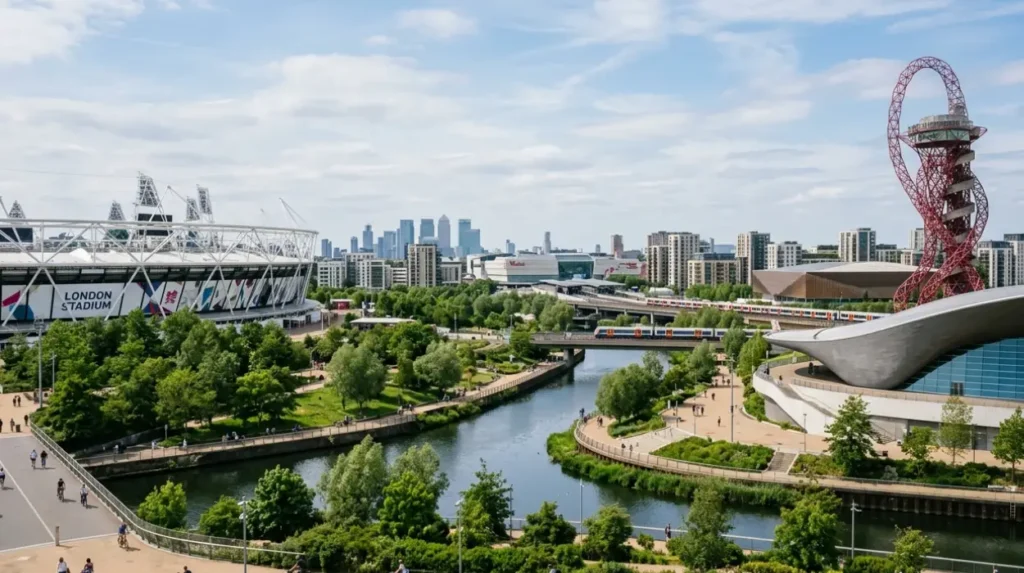
Key components include the London Stadium (home of West Ham United football club), the London Aquatics Centre, the Copper Box Arena, and the ArcelorMittal Orbit sculpture. Around them sit new residential neighbourhoods, offices, schools, and a network of canals and river paths. For Londoners, this means a high‑density, mixed‑use district with easy Overground, Underground, and DLR access, not just a seasonal event site.
What are the main attractions inside Queen Elizabeth Olympic Park?
Inside Queen Elizabeth Olympic Park you can visit the London Stadium, the London Aquatics Centre, the Copper Box Arena, the ArcelorMittal Orbit, and multiple landscaped parks and event spaces. These venues host elite sport, concerts, community events, and exhibitions, turning the site into a permanent draw for east London.
The London Stadium, originally called the Olympic Stadium, opened in 2011 and hosted the opening and closing ceremonies of the 2012 Games. It now operates as a multi‑purpose venue, mainly used by West Ham United (Premier League football) but also staging athletics meetings, rugby matches, and large‑scale concerts. The stadium’s retractable lower bowl and seating capacity of roughly 60,000 make it one of the largest regular sports venues in London outside Wembley.
The London Aquatics Centre, designed by Zaha Hadid, features twin soaring wings and a wave‑shaped roof. After the Games, its seating was reduced to about 2,500 permanent places, with the main pool used for public swimming, elite training, and national competitions. The centre also runs community‑swimming programmes and school‑swim lessons, making it a key public‑health facility for east London.
The Copper Box Arena is a 7,000‑seat indoor venue that hosted handball and modern pentathlon in 2012. It now hosts basketball, netball, gymnastics, and large‑scale conferences, plus community sport sessions. The smaller Lee Valley VeloPark, just outside the formal park western edge, hosts track cycling and mountain‑bike events and offers public track sessions and hire‑bike rides.
Where should you walk and relax in the Olympic Park?
Queen Elizabeth Olympic Park contains several named green spaces, including the North, South, and Middle Park areas, plus the River Lea and Hertford Union Canal corridors, which together form a continuous network of walking and cycling paths. These zones offer lawns, wildflower meadows, waterside benches, and formal gardens suitable for strolling, jogging, picnics, and wildlife‑watching.
North Park, around the Aquatics Centre and along the River Lea, is dominated by open lawns, planting beds, and views of the ArcelorMittal Orbit. It is commonly used for casual football, kite‑flying, and family gatherings, especially in good weather. South Park, nearer to the London Stadium, focuses on formal landscaping and event‑layout flexibility, so it often hosts festivals, fairs, and temporary outdoor installations.
The Middle Park section links the two, using raised walkways and bridges to connect different zones. This central spine is designed for pedestrians and cyclists, with clear signage, public‑transport interchanges, and direct access to the International Quarter and new residential blocks. The park’s ecological design includes re‑landscaped waterways, raingardens, and native planting to improve biodiversity and flood resilience, which is important for a low‑lying riverside area.
For longer‑distance walks, the Greenway runs along the edge of the park, linking Stratford to Hackney and beyond. This elevated path, originally a railway embankment, is popular with runners, dog‑walkers, and commuters, and offers views across the city skyline including Canary Wharf.
What can you do with sport and fitness in and around the park?
Stratford’s Olympic Park offers structured sport through the London Stadium, London Aquatics Centre, Copper Box Arena, and Lee Valley VeloPark, plus informal fitness on park paths, pitches, and Greenway routes. These facilities support both elite competitors and everyday Londoners who want affordable running, swimming, cycling, and team‑sport options.
At the London Aquatics Centre, the 50‑metre main pool is open to the public through timed sessions, with additional shallow‑water and learner‑pool provision. The venue also runs swim‑schools, water‑safety courses, and targeted programmes for groups such as older adults and disabled swimmers. For spectators, the centre hosts domestic and international swimming and diving competitions, often linked to the wider Lee Valley portfolio.
The Copper Box Arena operates as a public‑sports‑hub partner, offering badminton, netball, basketball, and gymnastics drops‑ins alongside regular club and school use. The nearby Lee Valley VeloPark charges modest fees for track cycle sessions and mountain‑bike hire, with coaching available for beginners and children. This combination of facilities has helped increase participation in cycling and court sports among east‑London residents, according to local‑authority and legacy reports.
Away from the venues, the park’s paved paths and Greenway provide continuous running and cycling routes with minimal road crossings. Informal football and frisbee games are common on the open lawns, though users must follow park‑rules about unsanctioned use of equipment. The area is also used for charity runs, fun runs, and walking‑for‑health initiatives, often coordinated with local charities and NHS‑linked schemes.
What cultural and creative experiences exist beyond Westfield?
Beyond Westfield Stratford City, the wider Olympic Park area includes the Theatre Royal Stratford East, the Story Garden, temporary art installations, and seasonal outdoor‑culture programmes. These venues and projects embed theatre, dance, literature, and visual art into the everyday landscape, giving Londoners low‑cost or free access to creative activities.
Theatre Royal Stratford East is a producing theatre located on Stratford High Street, just south of the main shopping district. It stages new plays, musicals, and community‑engaged productions that often focus on east‑London stories and diverse casts. The venue runs outreach projects, youth‑theatre schemes, and school‑partnerships, making it a key cultural‑education node for the borough.
The nearby Story Garden is a public‑art and play space themed around children’s books, featuring whimsical sculptures and interactive elements. It is designed to encourage reading, imaginative play, and family‑friendly gatherings, and is often used for storytelling sessions and small festivals. Across the park, the public‑art programme places commissioned sculptures, murals, and temporary exhibitions along walking routes, linking artistic practice to regeneration narratives.
Seasonal events include outdoor theatre, film screenings, and live‑music series that use the North Park and South Park lawns as temporary stages. These events are usually promoted through local‑authority culture portals and event‑listing platforms, and many are free or by‑donation. For Londoners, this means an alternative to traditional West End venues while still engaging with professional artists and performers.
How do you eat and drink in Stratford without only going to Westfield?
Stratford offers independent restaurants, cafés, and bars around the Olympic Park and along Stratford High Street, as well as street‑food markets and pop‑ups inside the park. These venues provide cheaper, more localised options next to the chain‑heavy Westfield food court, with cuisines ranging from Caribbean and Turkish to Asian fusion and modern European.
The Queen Elizabeth Olympic Park Street Food Market operates at weekends near the main park entrances. It brings together stalls selling tacos, Vietnamese pho, jerk chicken, burgers, plant‑based dishes, and artisan breads, often with live music or DJ sets. The market is designed to draw visitors on foot from the nearby residential areas and transport hubs, so it functions as a social and economic hub as well as a dining spot.
Along Stratford High Street, independent eateries cluster around the older town centre, including curry houses, kebab shops, cafés, and small pubs. Examples include traditional pubs such as the King Edward VII, which dates back to the late 19th century and offers a mix of historic interiors and contemporary food and drink menus. These places are popular with local residents and commuters, so they tend to be less tourist‑focused and more everyday‑affordable.
On the northern edge of the park, the Roof East complex illustrates how the area mixes food, leisure, and event culture. It is a rooftop venue featuring outdoor bars, street‑food vendors, and film‑screenings against the skyline, usually open in warmer months. For Londoners, this represents a hybrid of dining, drinking, and entertainment that complements but does not rely on Westfield’s internal restaurants.
What hidden outdoor and nature experiences are there?
Stratford’s Olympic Park and its margins contain several nature‑oriented spaces, including the River Lea and Hertford Union Canal, wetlands, and landscaped wildlife corridors that support birds, insects, and small mammals. These areas are used for informal birdwatching, school‑field trips, and community‑conservation volunteering, giving Londoners accessible green experiences without leaving the city.
The park’s design incorporates re‑landscaped islands, reed beds, and meandering water edges to create ecological niches. These features help manage floodwater from the River Lea and support fish and invertebrate populations, which in turn attract herons, kingfishers, and other water‑associated birds. Local‑authority monitoring and partner‑organisation reports show that biodiversity has increased since the pre‑Olympic industrial phase, although the habitat remains relatively new and fragmented.
Informal walking routes along the canals and riverbanks allow visitors to see ducks, swans, moorhens, and sometimes otters in the early morning or evening. The park’s planting strategy uses native wildflowers and grasses to support pollinators such as bees and butterflies, which is a goal set out in the site’s long‑term environmental‑management plans. Volunteer‑led initiatives sometimes organise clean‑ups, planting days, and species‑survey events, which appear via local‑authority and community‑group channels.
For families, the Story Garden and play areas include nature‑inspired elements such as bug hotels, insect‑friendly planting, and sensory‑play features. These spaces are designed to introduce children to basic ecology and gardening concepts, often in partnership with schools and youth‑groups.
What transport and practical details should londoners know?
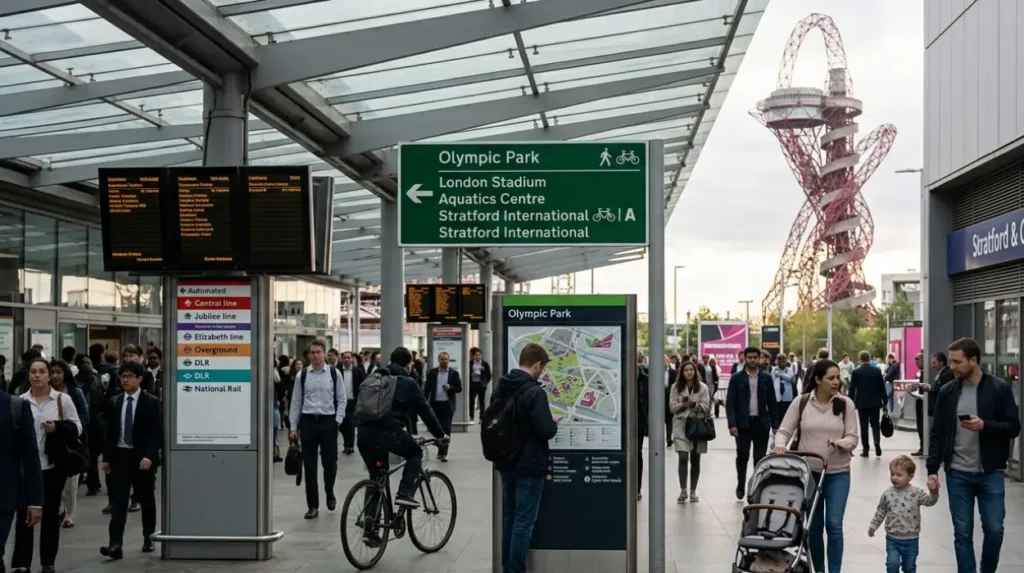
Stratford is served by Stratford and Stratford International stations, with connections to the Central line, Jubilee line, Elizabeth line, Overground, DLR, and national‑rail services, making it accessible from most parts of London. The Olympic Park area also has multiple cycle hubs, park‑and‑ride options, and step‑free access at major venues, which helps families and people with limited mobility reach the sites.
By Tube, Stratford station is on the Central line, roughly nine minutes from central zones in normal‑day service. The separate Stratford International station handles Southeastern and High‑Speed services, plus the DLR and Overground, providing routes towards east‑London suburbs and the airport zones. The Elizabeth line adds direct east‑west connections across London, reducing interchange needs for cross‑city trips.
Within the park, the main pedestrian routes from the stations are clearly signed towards the London Stadium, Aquatics Centre, ArcelorMittal Orbit, and the North and South Park entrances. Park maps and digital‑wayfinding apps published by the local‑authority and park‑management bodies list toilets, baby‑changing facilities, safe‑crossing points, and cycle‑hire kiosks. For visitors, this means that a full day can be planned around walking and cycling, with only occasional short bus or tram links if needed.
Stratford’s regeneration also includes housing‑estate links and school‑access routes, so the park is used as a daily commuting corridor for many local residents. This integration of transport, sport, and housing turns the Olympic Park from a one‑off event site into a permanent, multi‑use district that Londoners can revisit regularly.
What future developments and long‑term uses are planned?
Queen Elizabeth Olympic Park is part of a long‑term masterplan that includes further housing, workspace, and cultural infrastructure, intended to keep the area an active destination beyond the 2012‑event memories. Future phases will expand the park’s capacity for events, year‑round sport, and community‑use, while maintaining ecological targets and transport‑network capacity.
The Olympic legacy documents published by the London Legacy Development Corporation and the Greater London Authority outline continuing investment in public‑transport links, park upgrades, and venue adaptations. Planned or ongoing components include additional residential blocks around the park, new school and health facilities, and expanded event‑space infrastructure. These upgrades aim to sustain Stratford as a mixed‑use urban centre rather than a single‑purpose sports complex.
Environmentally, the masterplan commits to maintaining and improving biodiversity, stormwater management, and heat‑island‑mitigation measures, especially as the surrounding area grows denser. For residents and visitors, this means green space and active‑travel options are intended to be protected even as the neighbourhood develops economically.
For Londoners broadly, the takeaway is that Stratford’s Olympic Park will remain a relevant, evolving destination for sport, culture, and nature over the coming decade, not just a relic of a single summer of Games. By combining the big‑stadium experiences with everyday parks, canals, and local‑life venues, the area can legitimately feature in regular weekend‑outing plans for people across the city.
What is Queen Elizabeth Olympic Park?
It is a 200-hectare park in Stratford, East London, built for the 2012 London Olympic and Paralympic Games and later turned into a public sports, housing, and green space area.