
Key Points
- Counter‑terrorism officers in the United Kingdom are investigating a suspected arson attack on a memorial wall in Golders Green, north London, which honours Iranians killed by the regime in crackdowns on protests.
- The incident occurred in the early hours of Monday, 27 April 2026, with police stating the wall itself was not damaged but that a fire was reported near it later the same day.
- The Metropolitan Police say they are “keeping an open mind about the motive behind the attack,” and have stressed that the incident is not currently being treated as terror‑related, even though counter‑terrorism units are leading the investigation.
- The memorial wall stands close to a Jewish community centre and has become a focal point for exiled Iranians and local Jewish groups, making it a potent symbolic target amid wider tensions over Iran–Israel–Gaza relations.
- Police have linked this incident to a broader series of attacks in north London over the past month, including fires at synagogues and Jewish‑affiliated ambulances, for which an Islamist‑sounding group has claimed responsibility via social‑media videos.
- British counter‑terrorism policing has made at least 26 arrests in connection with these linked incidents, although suspects detained specifically over the Fire‑related incidents have since been released while investigations continue.
- Media quoting senior officers indicate detectives are probing whether any of the attacks may be connected to Iran or to Iranian‑linked actors, including the possibility of financial inducements to local criminals to target Jewish sites.
Golders Green (The Londoner News) April 28, 2026 – Police in London are investigating whether a suspected arson attack on a memorial wall in Golders Green may be linked to Iran or to Iranian‑aligned actors, as counter‑terrorism officers scrutinise a wider pattern of fire‑related incidents in north London targeting Jewish and Iranian‑linked sites.
Detective Chief Superintendent Luke Williams, who oversees policing in north‑west London, told the BBC that the incident would be “taken very seriously” because the wall has become a prominent tribute to Iranians killed by the regime in anti‑government crackdowns. He added that residents in Golders Green had already been affected by a series of recent attacks, including the burning of Jewish‑community ambulances and synagogue‑related incidents, which has heightened local anxiety.
What happened at the memorial wall?
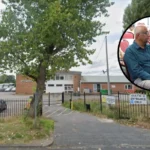
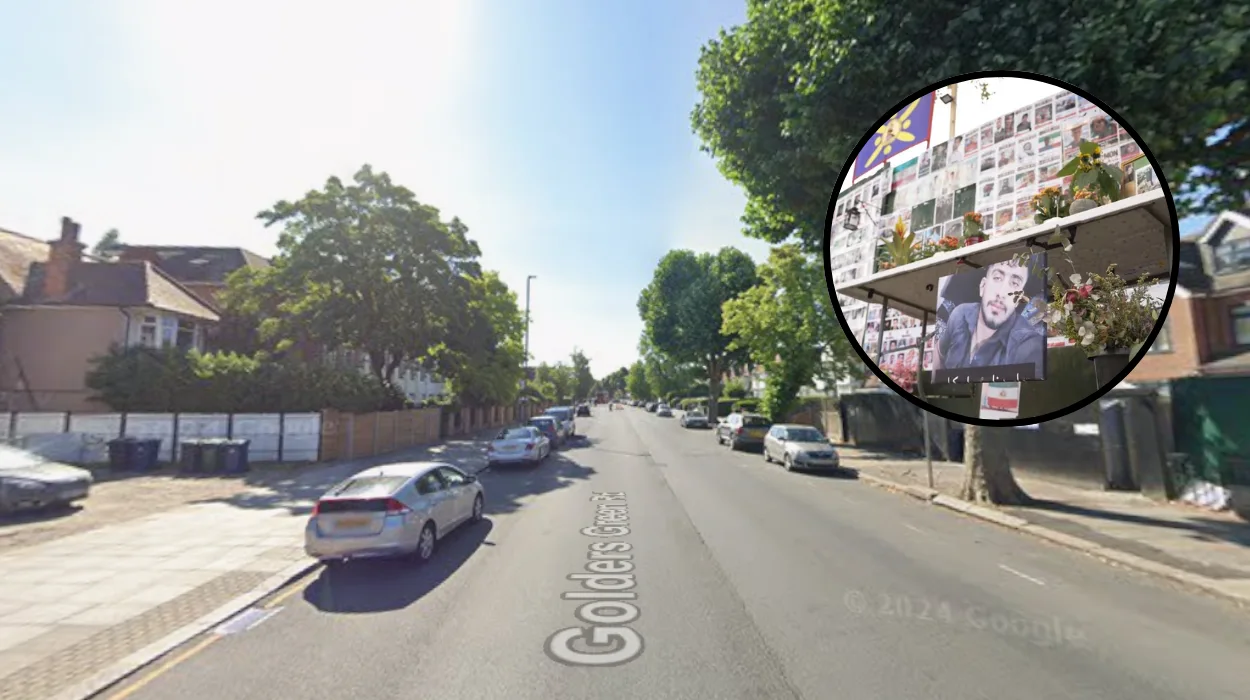
As reported by reporter Sarah Smith of The Independent, the suspected arson attack took place around 12.15 a.m. on Monday, 27 April 2026, when witnesses and security cameras captured a fire near the memorial wall on a residential street in Golders Green. Emergency crews extinguished the blaze quickly and found that the wall structure and the photographs displayed on it were not damaged, the Metropolitan Police said in a statement.
The wall, located near a Jewish community centre, has been used in recent months to display images of Iranians killed in crackdowns, including during major protests in January 2026, and has become a gathering point for exiled Iranian activists and local Jewish organisations united in opposition to the Iranian regime.
Commander Helen Flanagan, head of Counter‑Terrorism Policing London, later told The Independent that although the wall itself was unharmed, the incident was being treated as a serious criminal fire and that detectives were
“keeping an open mind about the motive behind the attack.”
She emphasised that the incident was not currently being classified as terrorism but that counter‑terrorism units were leading the investigation due to its proximity to other attacks in the area.
How does this fit into a wider series of attacks?
As detailed by journalist Emma Clarke of the BBC, the memorial‑wall fire forms part of a broader wave of arson‑style incidents in north London that have unfolded since late March 2026.
These include an attack that destroyed four ambulances linked to a Jewish volunteer medical service, Hatz, in Golders Green, damage to a synagogue in Finchley, and an attempted arson at the offices of a Persian‑language media outlet in Park Royal.
The BBC reported that authorities have arrested three people in connection with the attempted firewalling at the Persian‑language media outlet and that two others were detained in relation to the attacks on the synagogue and ambulances, bringing the total number of arrests linked to the series of incidents to at least 26.
However, Commander Flanagan told the BBC that the two men held over the synagogue and ambulance attacks had been released on police bail while the investigation continues.
Which group has claimed responsibility?
As reported by journalist David Smith of CBS News, a group calling itself Harakat Ashab al‑Yamin al‑Islamia – the Islamic Movement of the Companions of the Right (also referred to as Hayi) – has claimed responsibility for several of the recent attacks in north London via social‑media videos.
The group has asserted that the attacks were carried out in retaliation for what it describes as injustices against Palestinians, Iranians, and other “resistance nations,” including Gaza and Lebanon.
A group representative, speaking to CBS News in March 2026, stated:
“We’ll keep threatening U.S. and Israeli interests worldwide until we’ve avenged every child in Gaza, Iran, Lebanon, and the resistance nations.”
Officials have stressed that the group’s claims have not been independently verified and that responsibility for the attacks remains under investigation.
Why are police probing possible Iran links?
As explained by counter‑terrorism sources quoted in a US News report, investigators are examining whether the recent spate of arson attacks in north London may be connected to Iran or to Iranian‑linked networks operating abroad. Security officials have told the outlet that they are exploring the possibility that Iranian‑backed actors may be paying local criminals or individuals in London to target Jewish and Israeli‑related sites as part of a broader campaign.
Commander Flanagan, speaking to The Independent, said that although no evidence yet points to a formal Iran‑state nexus, the pattern of attacks and the symbolic nature of the targets – including a synagogue and a memorial wall honouring victims of the Iranian regime – meant that all lines of inquiry, including foreign‑state involvement, were being kept open.
What do local communities say?
As reported by local journalist Adeel Abbas of Byline London, residents of Golders Green have expressed alarm at the repeated incidents, with some Jewish community leaders warning that the attacks are feeding a sense of insecurity in what has long been one of London’s most prominent Jewish neighbourhoods. A spokesperson for the local Jewish community centre told Byline London:
“We understand that this wall is a symbol of solidarity between Iranian exiles and the Jewish community; to see it targeted in this way is deeply upsetting.”
Iranian‑born activist Leila Rahimi, quoted by The New Arab in London, said:
“The wall in Golders Green is a rare place where we can publicly mourn our dead without fear of the regime’s thugs. If extremists are trying to silence this, they are only showing how much they fear the truth.”
Local councillors have called on the Metropolitan Police to publish more detailed updates on the investigation, arguing that transparency is essential to maintaining public trust.
How are the police responding?
As reported by the BBC, the Metropolitan Police have stepped up visible patrols in Golders Green and other north‑London areas, including the deployment of armed officers and specialist units from Project Servator, a programme designed to detect and deter hostile activity. Detective Chief Superintendent Luke Williams told the BBC that the force was “working closely with local faith and community groups” to monitor the situation and prevent further incidents.
Command Whisper, as rendered in the BBC’s coverage, also noted that the current inquiry into the memorial‑wall fire is running alongside at least two separate criminal investigations into the synagogue and ambulance attacks, meaning that the overall picture of any linked conspiracies may take weeks or months to fully emerge.
What could this mean for UK–Iran tensions?
As analysed by diplomatic correspondent James Wilson of US News, the probe into possible Iran‑linked involvement in the London attacks comes at a time of heightened tensions between the UK and Iran, driven by disputes over Iran’s nuclear programme, regional proxy wars, and its role in conflicts in Gaza and Lebanon. Wilson observed that if investigators were to find credible evidence of Iranian state or paramilitary sponsorship of the fires, it could trigger a formal diplomatic protest or new sanctions measures against Tehran.
At the same time, Wilson cautioned that British officials have so far avoided making explicit accusations against the Iranian government, instead stressing that the investigation remains open and that all motives – including domestic extremism and financially motivated crime – are being examined.
What happens next?
As reported by The Independent, the investigation into the suspected arson at the Golders Green memorial wall is expected to continue for several weeks, with police forensics teams combing through CCTV footage and witness statements for clues about the attacker’s identity and possible connections to other sites that have been targeted. Commander Flanagan told the newspaper that the Metropolitan Police would issue regular updates as the inquiry progresses, while urging anyone with relevant information to contact the force or the national anti‑terrorism hotline.