The Londoner News presents this comprehensive guide to the Horniman Museum, a standout attraction in South London. Families discover free entry, interactive exhibits, and expansive gardens here.
- What is the Horniman Museum?
- Where is the Horniman Museum located?
- How do you get to the Horniman Museum?
- What are the opening times for the Horniman Museum?
- Is the Horniman Museum free to enter?
- What family activities are available at the Horniman Museum?
- Indoor Family Activities
- Outdoor Family Activities
- What exhibits can families see at the Horniman Museum?
- Anthropology Exhibits
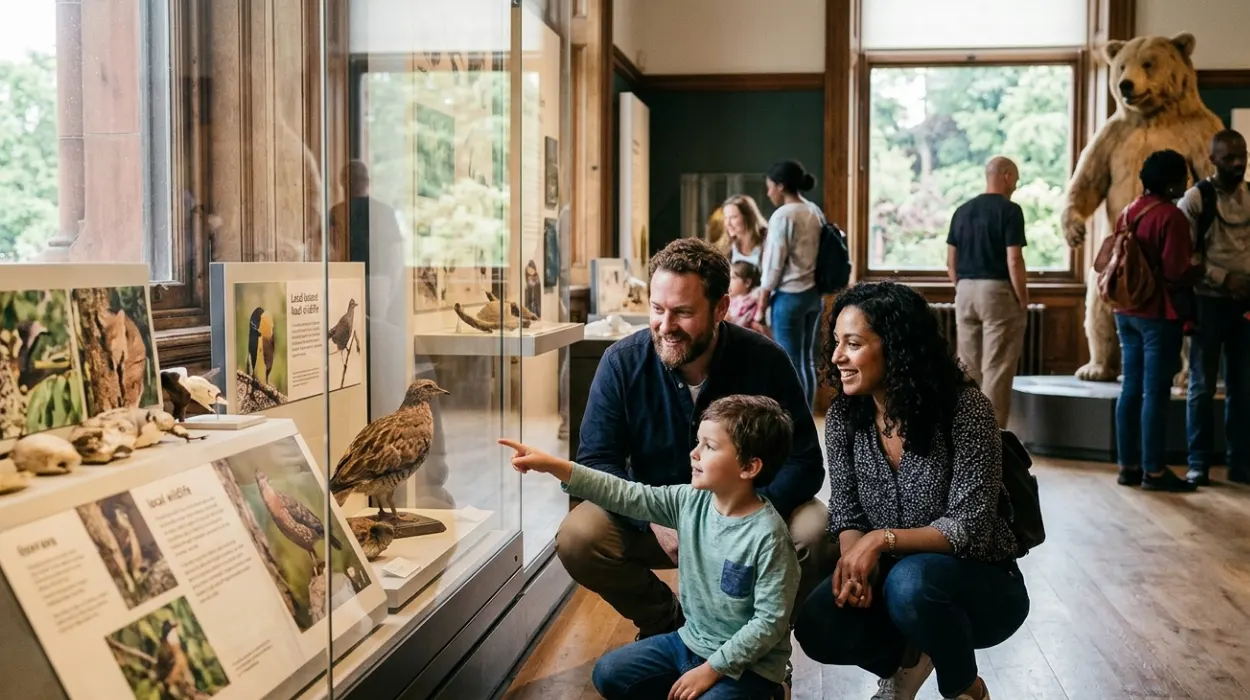
- Natural History Exhibits
- Music Exhibits
- Is the Horniman Museum good for young children?
- What facilities does the Horniman Museum offer families?
- Are there events at the Horniman Museum for kids?
- What are the Horniman Gardens like?
- Garden Features
- Does the Horniman Museum have animals to see?
- Is the Horniman Museum accessible for all?
- What makes the Horniman Museum a hidden gem?
- Why visit the Horniman Museum with teenagers?
What is the Horniman Museum?
The Horniman Museum is a public museum in Forest Hill, South London, featuring anthropology, natural history, and musical instrument collections alongside gardens and an aquarium. Established in 1901, it draws over 661,000 visitors annually with free permanent exhibits focused on global cultures and nature for all ages.
The Horniman Museum sits at 100 London Road, Forest Hill, SE23 3PQ, in the London Borough of Lewisham. Founder Frederick John Horniman, a tea trader, opened it to showcase his private collection of ethnographic and natural history items. The museum spans 16 acres including gardens first laid out in 1895.
Key components include the main building with galleries, the Nature Base for hands-on learning, and outdoor spaces. Permanent exhibits cover world cultures through artifacts like masks and textiles, natural history with taxidermy animals including a famous walrus, and a music gallery with 1,600 instruments from 400 global traditions. The aquarium houses 65 tanks with over 100 species from British waters to tropical reefs.
Processes involve ongoing acquisitions; the museum added Ethiopian Orthodox treasures in 2023. Real-world examples include the 82-foot walrus specimen from 1880, preserved without its skin, and interactive music rooms where visitors play gamelans from Indonesia. Statistics show 70% of visitors are families, with 2024 footfall at 661,000 per official records.
Implications extend to education; annual programs reach 50,000 schoolchildren. Future relevance grows with sustainability initiatives like solar panels installed in 2022.
Where is the Horniman Museum located?
The Horniman Museum locates at 100 London Road, Forest Hill, London SE23 3PQ, in South East London’s Forest Hill area, 6 miles south of central London. Accessible via Overground to Forest Hill station (6-minute walk) or buses 197, 363, P4; free parking limited onsite.
Macro context positions Forest Hill as a residential suburb linked by rail to London Bridge (15 minutes). Subtopics cover transport options: Overground from London Bridge or Victoria, National Rail from major stations, or buses from Peckham and Brixton. Details include step-free access at the station and museum entrances.
Examples: From central London, take the Overground from Shoreditch High Street (25 minutes). Cyclists use nearby Santander Cycle Docking Stations. Implications for families involve easy public transport without Tube changes, ideal for buggies.
How do you get to the Horniman Museum?
Reach the Horniman Museum by Overground train to Forest Hill station (6-minute walk north), buses 197 from Peckham, 363 from Elephant & Castle, or P4 from Lewisham, all dropping nearby. Driving offers limited free onsite parking; TfL journey planner confirms 30-45 minutes from central London.
Public transport dominates; trains run every 15 minutes. Bus stops sit 200 meters from entrances. For drivers, satnav SE23 3PQ guides to the site; blue badge holders use priority spaces. Walking from Honor Oak Park station takes 12 minutes.
Real-world examples: Families from North London take Thameslink to London Bridge then Overground. Cyclists follow quiet residential roads via Sustrans route 21. Future electric bus integrations enhance eco-access.
What are the opening times for the Horniman Museum?
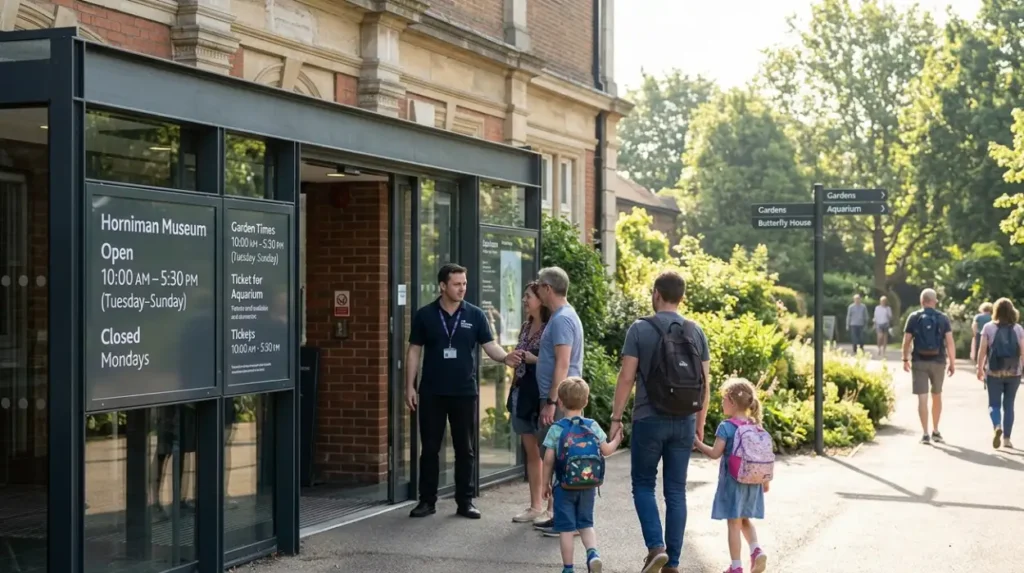
The Horniman Museum opens 10am-5:30pm Tuesday-Sunday, closed Mondays except bank holidays; gardens accessible dawn-dusk daily. Last museum entry 5pm; aquarium and butterfly house close at 4pm or 5pm seasonally. Verify on horniman.ac.uk for holiday changes.
Daily operations run year-round with summer extensions to 6pm in July-August. Subtopics include paid attractions: Aquarium 10am-5pm, Butterfly House noon-4pm (seasonal). Details note free entry to main museum and gardens.
Examples: On Saturdays, full access from 10am; Sundays host farmers’ markets 10am-4pm. Implications for planning involve peak weekends; early arrival secures parking.
Is the Horniman Museum free to enter?
Permanent exhibits, gardens, and most events at the Horniman Museum offer free entry year-round. Paid attractions include the Aquarium (£9.50 adults, £6.50 children), Butterfly House (£6 adults, £4.50 children), and occasional special exhibits like Dinosaur rEvolution (£ varying).
Free access covers 90% of content, drawing budget-conscious families. Subtopics detail pricing: Combined tickets save 20%; under-3s enter free. Processes involve scanning QR codes at entry.
Real-world examples: Music Gallery and Nature Base stay free; 2024 saw 80% visitors pay nothing. Implications boost inclusivity, with revenue from donations funding upkeep.
What family activities are available at the Horniman Museum?
Family activities at the Horniman Museum include hands-on music rooms, animal encounters, craft workshops, storytelling, nature trails, and musical gardens. Free events like weekend drop-ins and farmers’ markets engage ages 2-12; annual programs serve 20,000 participants.
Macro context emphasizes interactivity. Subtopics: Indoor—play instruments in Music Gallery; outdoor—explore Animal Walk with goats and rabbits. Details: Workshops run Saturdays 11am-3pm; trails feature 1km paths.
Examples: Robot Zoo exhibit lets kids control robotic animals; Butterfly House releases 1,000 butterflies seasonally. Statistics: 60% families report high engagement per 2024 surveys. Implications foster creativity and nature connection.
Indoor Family Activities
Music Gallery offers 1,600 instruments; hands-on room provides drums and xylophones. Nature Base hosts touch trays with shells and bones. Aquarium displays jellyfish and seahorses.
Outdoor Family Activities
Gardens span 16 acres with wildflower meadows. Musical Garden has chimes and drums. Animal Walk introduces alpacas and chickens.
What exhibits can families see at the Horniman Museum?
Families see World Cultures Gallery with masks from Papua New Guinea, Natural History with 82-foot walrus and taxidermy bees, Music Gallery with interactive gamelans, Aquarium with 100+ species, and Gardens with dinosaur fossils. All permanent exhibits free except specials.
Exhibits span three floors. Subtopics: Anthropology shows African carvings; natural history details evolution via skeletons. Processes include rotation every six months.
Examples: Walrus from Canada 1880; Ethiopian Bible leaves from 2023. Data: 500,000 anthropology items total. Implications educate on biodiversity loss.
Anthropology Exhibits
World Cultures displays 3,000 objects: Benin Bronzes, Samurai armor, Inuit carvings.
Natural History Exhibits
Taxidermy gallery houses 5,000 specimens: Giant sequoia cone, honeybee hive.
Music Exhibits
1,600 instruments: Tibetan trumpets, Brazilian cuicas; play 50 types.
Is the Horniman Museum good for young children?
The Horniman Museum suits young children ages 2-10 with touch objects, animal walks, musical play areas, short trails, and baby-changing facilities. Under-5s access free Nature Base sessions; 70% toddler visitors rate it highly.
Design caters to short attention spans. Subtopics: Low-level displays, pushchair-friendly paths. Details: Changing rooms near cafe; sensory hours monthly.
Examples: Robot Zoo animatronics fascinate toddlers; gardens allow running space. Implications support early learning via multisensory play.
What facilities does the Horniman Museum offer families?
Facilities include free baby-changing in mens/womens/disabled toilets, nursing areas, pushchair storage, picnic spots, Queenie cafe (kids’ meals £6.50), Bandstand kiosk for ice cream, and picnic blankets for gardens. All-day parking for 100 cars.
Macro amenities ensure comfort. Subtopics: Cafe serves organic food; shop stocks toys under £10. Details: WiFi free; quiet room available.
Examples: Highchairs in cafe; outdoor play zones. Statistics: 50,000 cafe visitors yearly. Implications enable full-day stays.
Are there events at the Horniman Museum for kids?
Kids’ events feature weekly craft workshops, storytelling from global folklore, animal meet-and-greets, holiday trails, and Lates for families (18+ with kids). Farmers’ market Sundays with 40 stalls; free entry to most.
Events calendar lists 200 annually. Subtopics: Half-term festivals draw 5,000; summer camps for ages 5-11. Processes: Book via website.
Examples: Diwali crafts October, Lunar New Year performances. Implications build cultural awareness.
What are the Horniman Gardens like?
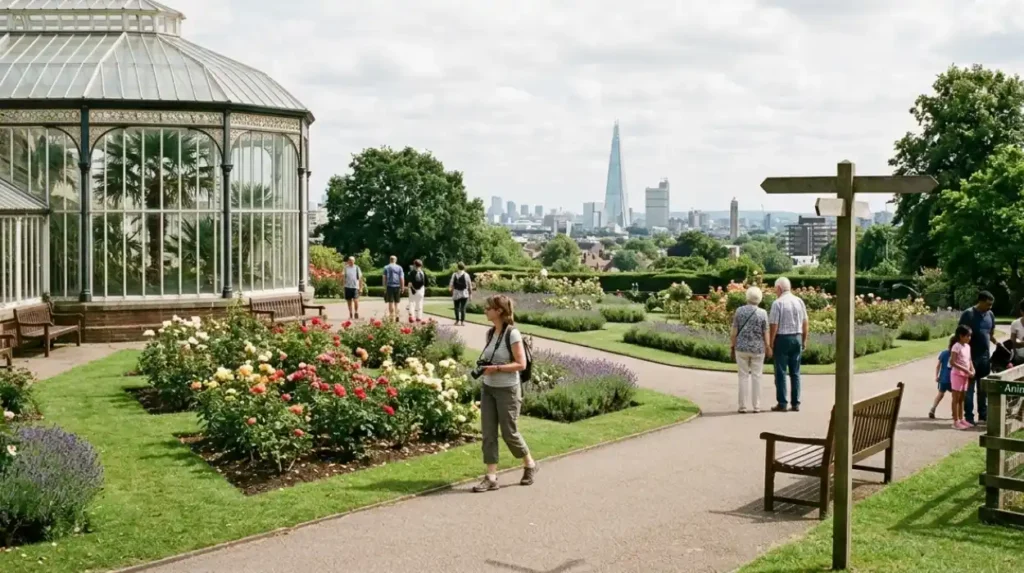
Horniman Gardens cover 16 acres with formal flower beds, wild meadows, musical instruments, conservatory palms, city views from Prehistoric Masters viewpoint, and Animal Walk. Open daily dawn-dusk; free year-round exploration.
Victorian design by designer James Wood. Subtopics: 1.5km nature trail identifies 50 plants. Details: Compost education center.
Examples: One Tree Hill viewpoint overlooks 20 miles; musical chimes tuned to pentatonic scale. Implications promote wellbeing, with 100,000 garden-only visitors.
Garden Features
Conservatory grows 100 exotic plants: Bananas, coffee. Musical Garden: Harps, drums for free play.
Does the Horniman Museum have animals to see?
The Horniman Museum features live animals in Animal Walk (goats, rabbits, alpacas), Aquarium (seahorses, piranhas, sharks), and Butterfly House (1,000 butterflies seasonally). Free Animal Walk daily; paid others.
Collections educate on habitats. Subtopics: 15 Animal Walk species; 100 aquarium fish. Processes: Daily feeds at 2pm.
Examples: Tamworth pigs root in mud; tropical frogs in vivariums. Implications highlight conservation; 20 endangered species displayed.
Is the Horniman Museum accessible for all?
Full accessibility includes step-free entrances, lifts to all floors, audio guides, large-print maps, British Sign Language tours quarterly, and sensory backpacks for autism. 95% wheelchair-friendly; assistance dogs welcome.
Infrastructure meets Equality Act 2010 standards. Subtopics: Visual impairments aided by tactile models. Details: Quiet hours first Sunday monthly.
Examples: Dementia-friendly sessions; braille labels on 200 exhibits. Implications ensure 25% disabled visitors comfortable.
What makes the Horniman Museum a hidden gem?
The Horniman Museum qualifies as a hidden gem through free entry, compact layout avoiding crowds (under 2,000 daily vs. British Museum’s 18,000), quirky walrus star, 16-acre gardens, and South London location away from tourist hubs.
Lower profile stems from 1901 founding versus central giants. Subtopics: 661,000 visitors vs. 5 million at V&A. Data: Time Out voted London’s best family attraction 2024.
Examples: No queues for exhibits; picnic serenity. Implications offer authentic discovery.
Why visit the Horniman Museum with teenagers?
Teenagers enjoy interactive music galleries with global beats, aquarium sharks and rays, dinosaur fossils in gardens, photography viewpoints, and Lates events with DJs. Free entry encourages independent exploration.
Content matches adolescent interests. Subtopics: World music playlists; fossil hunts. Details: Free WiFi for social sharing.
Examples: Robot Zoo tech demos; urban views for reels. Implications spark STEM curiosity.
What is the Horniman Museum?
The Horniman Museum is a free public museum in South London featuring anthropology, natural history, musical instruments, gardens, and an aquarium. Opened in 1901, it attracts over 661,000 visitors annually, especially families.