

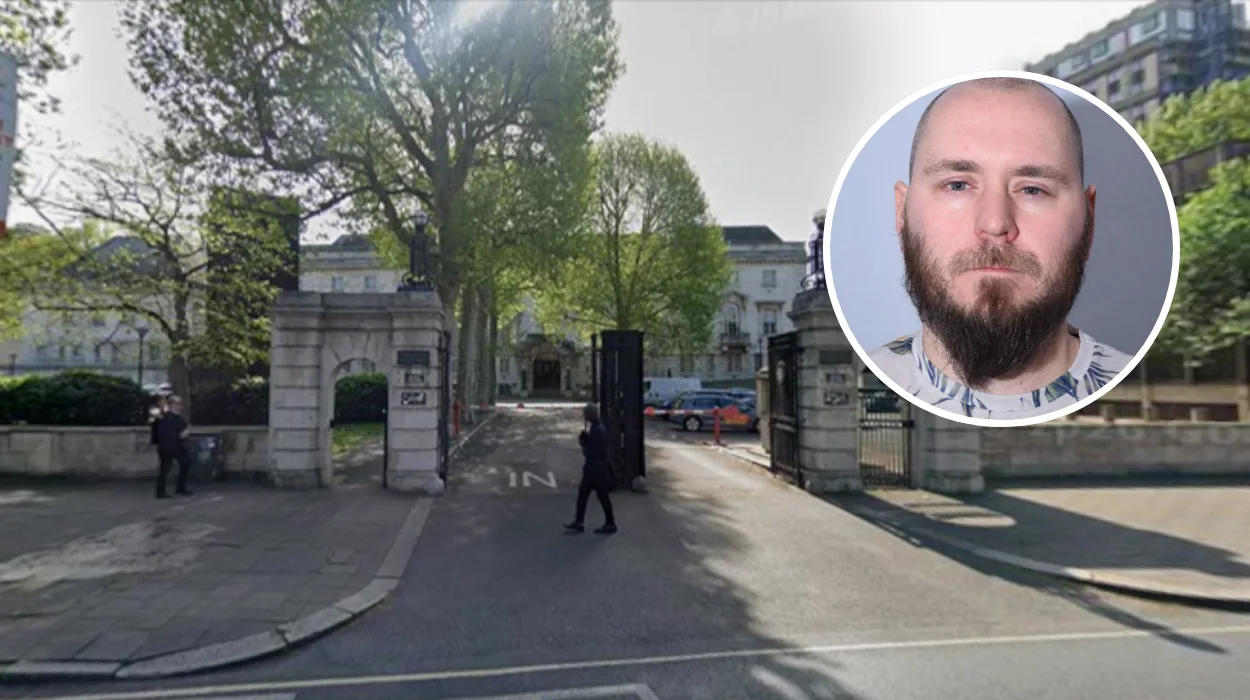
Key Points
- The Sentence: Thirty-six-year-old Tavius Jean-Charles has been sentenced to five years in prison by a London court following a series of severe antisemitic hate crimes.
- The Crime Period: The targeted harassment and death threats took place over a six-month period between October 2025 and March 2026.
- The Target Location: The perpetrator repeatedly targeted six specific victims near synagogues in a north London neighbourhood known for its prominent Jewish population.
- The Arrest Trigger: Detectives were alerted to Jean-Charles after witnesses reported him shouting, “I will kill you Jews” on 16 March 2026, which led to his initial arrest one week later.
- The Custody Escalation: Only one hour after being released from police custody following his initial arrest, Jean-Charles was overheard declaring into his phone, “It would be good if we blew up one of their schools.”
- Legal and Media Attribution: The prosecution and sub-sequential sentencing have been tracked through multiple international news sources, drawing formal reporting from global news wires and local investigative journals.
London (The Londoner News) May 22, 2026 – A 36-year-old London resident, Tavius Jean-Charles, has been handed a five-year custodial sentence by a London court following a relentless six-month campaign of antisemitic abuse, harassment, and explicit death threats directed at members of the local Jewish community. Operating primarily in a north London neighbourhood dense with Jewish households and places of worship, Jean-Charles targeted six specific individuals between October 2025 and March 2026. The judicial outcome, which highlights a strict stance against racially and religiously motivated hate crimes within the United Kingdom, followed an investigation triggered by members of the public who witnessed the suspect’s escalating public declarations of violence.
- Key Points
- What Are the Specific Details of the Antisemitic Attacks by Tavius Jean-Charles?
- How Did the Metropolitan Police Apprehend the Suspect?
- What Happened Immediately After Tavius Jean-Charles Was Released From Police Custody?
- What Sentence Did the London Court Impose on Tavius Jean-Charles?
- How Has the North London Jewish Community Responded to the Sentence?
- What Does This Conviction Mean for Hate Crime Enforcement Laws in the UK?
The criminal trajectory of Jean-Charles reached a critical flashpoint on 16 March 2026, when he was observed shouting, “I will kill you Jews” outside a local synagogue. The incident prompted an immediate response from detectives, resulting in his arrest exactly one week later. However, the gravity of the case intensified dramatically when, a mere sixty minutes after his release from police custody under investigation, Jean-Charles was intercepted making further terroristic threats, including a statement overheard by witnesses where he declared into his mobile phone that “it would be good if we blew up one of their schools.”
What Are the Specific Details of the Antisemitic Attacks by Tavius Jean-Charles?
As reported by the investigative staff of Reuters, the campaign of intimidation orchestrated by Jean-Charles was neither random nor isolated. For a duration spanning half a year, the individual systematically patrolled areas surrounding synagogues in north London, deliberately seeking out visible members of the Jewish community to terrorise. Legal documents and police accounts show that six specific victims were repeatedly singled out for targeted harassment.
The nature of the abuse combined targeted verbal assaults with physical intimidation, ensuring that the victims felt unsafe performing regular religious duties or walking through their own neighbourhoods. Legal correspondents reporting on the court proceedings noted that the prosecution presented detailed timelines demonstrating how Jean-Charles embedded himself in these communal spaces specifically to maximize the psychological distress of those attending religious services.
How Did the Metropolitan Police Apprehend the Suspect?
According to details published by news reporters at News.Az, citing official Metropolitan Police briefs, the definitive breakthrough in the investigation occurred following a highly public display of aggression on 16 March 2026. On this date, Jean-Charles openly shouted death threats, specifically targeting bystanders with the phrase, “I will kill you Jews.”
Following formal complaints filed by distressed witnesses and community security groups, detectives launched a targeted operation to identify and track the suspect. As reported by local crime correspondents, police spent seven days gathering intelligence, review of closed-circuit television (CCTV) footage, and witness statements before executing a targeted arrest a week later. The initial arrest was intended to neutralise the immediate threat posed to the north London neighbourhood, though the legal boundaries of detention meant the suspect was initially released under strict conditions while prosecutors formalised charges.
Explore More North London Crime News
Man Charged in Whitechapel Synagogue Arson Terror Probe, London 2026
Woolwich Man, Teens Charged in Gravesend Rape Case 2026
What Happened Immediately After Tavius Jean-Charles Was Released From Police Custody?
The case against Jean-Charles transformed from a localized hate crime investigation into a matter of urgent public safety due to his actions immediately following his release. As outlined by the editorial team at Reuters, the suspect demonstrated a complete lack of deterrence or remorse. Within an hour of stepping outside the police station doors, Jean-Charles utilized his mobile phone to broadcast further violent aspirations.
Passing pedestrians and plainclothes monitoring operations overheard the individual speaking loudly into his device, uttering the phrase: “It would be good if we blew up one of their schools.” This swift escalation from targeting individual adults outside synagogues to suggesting the mass bombing of a Jewish educational institution filled with children prompted immediate re-arrest protocols by the Metropolitan Police.
Why Was the Threat to Educational Institutions Taken So Seriously by Authorities?
In subsequent analytical reports compiled by regional security analysts, the mention of school bombings elevated the suspect’s threat profile from a public order offender to a high-risk extremist threat. Legal experts noting the case developments emphasized that British courts treat threats against children and educational infrastructure with the highest degree of severity, particularly when intersecting with established racial or religious hostility. The phrase overheard on the phone was utilized by the prosecution as definitive proof that the suspect’s radicalized animus posed an active, unmanaged danger to public safety that standard bail conditions could not mitigate.
What Sentence Did the London Court Impose on Tavius Jean-Charles?
At the conclusion of the judicial proceedings, the presiding judge at the London court determined that a substantial period of incarceration was the only appropriate response to the severity of the crimes committed. The court handed down a definitive five-year prison sentence to the 36-year-old.
The sentencing mandate reflects not only the individual acts of harassment against the six victims but also accounts for the aggravated nature of hate crimes under UK law, which require harsher penalties when bias based on religion or race is proven to be the motivating factor. The judge noted during the final address that the five-year term was reflective of the need to protect the public, provide a clear deterrent against antisemitic behavior, and punish the profound psychological harm inflicted upon the north London community over the six-month period.
How Has the North London Jewish Community Responded to the Sentence?
While individual communal figures have expressed relief at the removal of Jean-Charles from the streets, wider community security reports indicate an environment of heightened vigilance. Community trust networks and safety groups working alongside the Metropolitan Police noted that the six-month campaign of terror had caused significant anxiety among families attending local synagogues.
The conviction is seen by community leaders as a necessary validation of their security concerns, demonstrating that public reporting of hate speech can directly lead to significant judicial consequences. Security operatives have reiterated the importance of the swift public reporting that occurred on 16 March 2026, which ultimately provided detectives with the actionable evidence required to secure the initial arrest and subsequent conviction.
What Does This Conviction Mean for Hate Crime Enforcement Laws in the UK?
Legal analysts reviewing the case file indicate that the five-year sentence given to Tavius Jean-Charles serves as a benchmark for how modern internet-era and physical hate crimes are prosecuted in London. By combining distinct charges of harassment, public order offenses, and explicit death threats under the umbrella of racially and religiously aggravated crimes, prosecutors were able to secure a lengthy sentence without needing to rely solely on terrorism legislation. This approach allows the judicial system to swiftly penalise radicalized individuals who threaten community cohesion, ensuring that expressions of intent to cause mass harm—such as the threat to blow up a school—are punished with substantial penal confinement.