
Key Points
- Decade of Dedication: The Friends of Ally Pally Station (FoAPS) are celebrating 10 years of community-led volunteer work that transformed a historic Victorian railway station into an award-winning green space and cultural hub.
- Horticultural Highlights: Volunteer initiatives over the past decade include the installation of 40 flower-filled planters, the creation of a healing herb garden, and a dedicated rose garden on land specially donated by Network Rail.
- Infrastructure Improvements: Beyond gardening, the community group successfully designed and built bespoke wooden platform benches to improve the passenger experience.
- Cultural and Creative Outreach: The station foyer and platforms have regularly hosted art exhibitions, community workshops, and live musical events, including an interactive workshop with a local pianist.
- Award-Winning Success: The consistent efforts of local residents have earned the station numerous regional and national awards, establishing it as a blueprint for community rail partnerships across London.
Haringey (The Londoner News) June 4, 2026 – A historic Victorian railway station serving one of north London’s most iconic landmarks is celebrating a decade of community-led revitalization, marking 10 years since a dedicated group of local volunteers first set out to transform the suburban transport hub. Alexandra Palace Station, which stands as the primary gateway for thousands of visitors heading to the hilltop palace and parklands, has been fundamentally reshaped through a continuous partnership between rail authorities and local residents. Over the last 10 years, the Friends of Ally Pally Station have systematically converted standard, sterile concrete platforms and neglected trackside embankments into a thriving botanical and cultural oasis, securing numerous civic and transport industry awards in the process.
- Key Points
- What is the History of the Alexandra Palace Station Transformation?
- What Specific Horticultural Projects Have Volunteers Delivered?
- How Have Infrastructure and Seating Changes Improved the Passenger Experience?
- What Role Does Art and Live Music Play at Alexandra Palace Station?
- Which Awards and Accolades Has the Station Won?
- How Do Railway Authorities and Media Commentators View the Decade of Work?
- What Lies Ahead for the Friends of Ally Pally Station?
What began as a modest group of neighbors wanting to clear litter and add a few potted plants has evolved into an established community rail partnership that manages major infrastructure enhancements, complex gardening schemes, and public art installations. Working closely with Network Rail, Govia Thameslink Railway (GTR), and local conservationists, the volunteer team has successfully blended the station’s distinct Victorian architecture with modern community utility. Their efforts have transformed the daily commute for thousands of regular passengers while creating an ecological stepping stone for local wildlife between the nearby Wood Green area and the expanses of Alexandra Park.
What is the History of the Alexandra Palace Station Transformation?
To fully comprehend the extent of the milestone, it is essential to look at the state of the station prior to the intervention of the volunteer workforce. Opened in 1859 by the Great Northern Railway, the station boasts a rich Victorian heritage, but like many suburban rail stops in the late 20th and early 21st centuries, it suffered from periods of municipal neglect, functional design overhauls, and a lack of aesthetic warmth. The platforms were defined by functional metal railings, exposed brickwork, and standard-issue transit seating, offering little indication of the vibrant cultural park located just up the hill.
The turning point arrived precisely a decade ago when local residents rallied to form the Friends of Ally Pally Station. Recognizing that the station serves as the literal “front door” to Alexandra Palace, the volunteers sought to create an environment that mirrored the creativity and natural beauty of the parkland itself. Over the ensuing ten years, the group established a structured schedule of regular gardening parties, fundraising drives, and corporate volunteer days, ensuring that the initial burst of community enthusiasm translated into long-term, sustainable maintenance.
What Specific Horticultural Projects Have Volunteers Delivered?
The most visually striking element of the decade-long transformation is the extensive network of gardens and planters spread across the station’s platforms and entryways. Writing for local architectural and civic journals, transport correspondents have noted that the station now functions almost as a decentralized community garden, boasting micro-climates that support a vast array of flora.
how did the healing herb garden come to life?
Among the most sophisticated botanical installations on the site is the healing herb garden, an area carefully curated to feature traditional medicinal plants, aromatic flora, and sensory vegetation. This specific zone was designed not only to beautify the brickwork of the Victorian station but to provide a calming, sensory experience for passengers dealing with the stresses of modern commuting. Volunteers selected hardy perennial herbs that could withstand the unique atmospheric challenges of an active railway line, including soot, wind tunnels from passing express trains, and varying sunlight levels.
What is the significance of the Network Rail rose garden?
Perhaps the greatest structural victory for the horticultural team came when Network Rail agreed to officially donate a parcel of land adjacent to the tracks that had previously been locked away as an inaccessible, overgrown operational zone. With the land secured, the Friends of Ally Pally Station cleared decades of industrial debris to plant a dedicated rose garden. This garden now showcases traditional British rose varieties, blooming in vibrant hues throughout the summer months and creating a striking visual contrast against the dark ironwork and neutral stone of the rail infrastructure.
How Have Infrastructure and Seating Changes Improved the Passenger Experience?
While gardening forms the backbone of the group’s weekly operations, the Friends of Ally Pally Station recognized early on that commuter comfort was equally vital to reviving the station’s civic spirit. The standard metal and plastic seating provided by rail operators, while durable, did little to complement the station’s mid-19th-century aesthetic or invite travelers to linger and enjoy the surroundings.
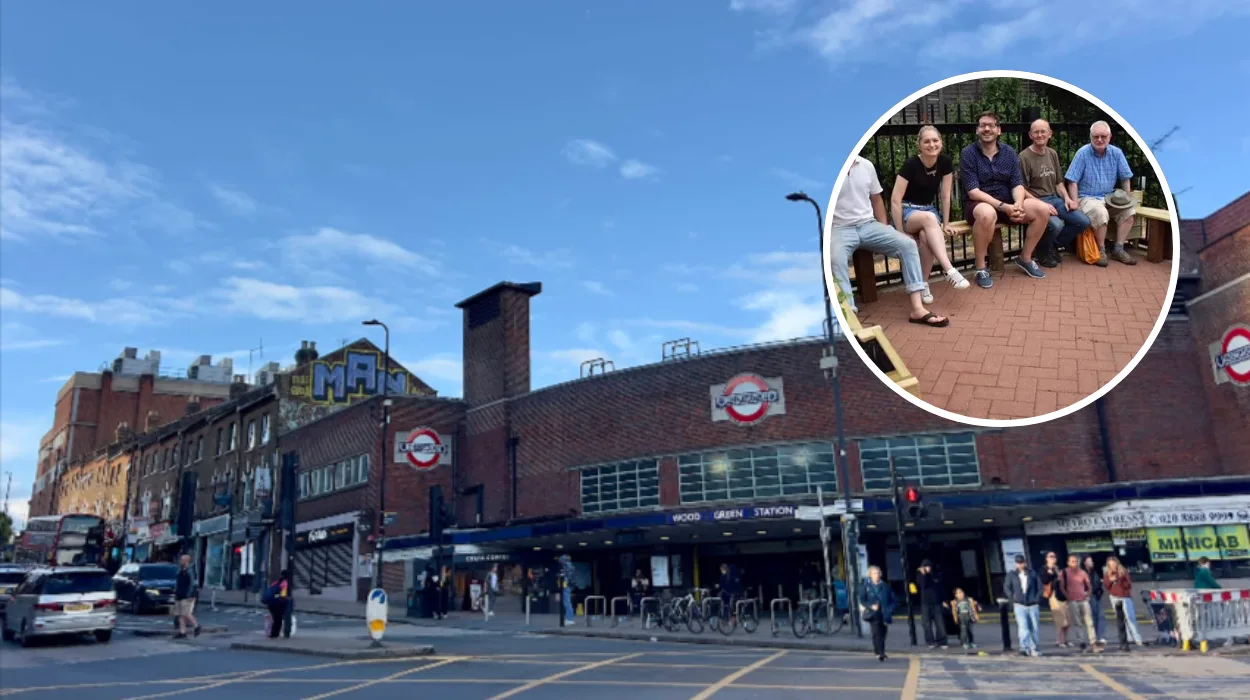
To address this, the volunteers took matters into their own hands by sourcing materials, securing funding, and physically building custom wooden platform benches. These bespoke installations were crafted to echo the heritage architecture of the station while offering a warmer, more comfortable place for passengers waiting for Great Northern and Thameslink services. The introduction of the wooden seating has been widely praised by commuter advocacy groups, who point to it as an example of how grassroots organizations can fill the gaps left by standard corporate station design templates.
Explore More North London News
Man Charged With Nineteen Voyeurism Offences: Islington 2026
Pallas Capital Restructures £525k Bridging Loan in North London 2026
What Role Does Art and Live Music Play at Alexandra Palace Station?
The vision for Alexandra Palace Station has always extended beyond mere aesthetics; the organizers aimed to establish the transport hub as an active cultural venue in its own right, mirroring the grand entertainment legacy of the palace it serves.
How are art exhibitions curated in the station foyer?
The station’s Victorian booking hall and foyer have been creatively repurposed to serve as a rotating gallery space. Over the decade, the volunteer committee has collaborated with local schools, independent north London artists, and historical societies to mount temporary art exhibitions. These installations give commuters immediate access to local culture, featuring everything from photography chronicling the history of the Harringay ladder to contemporary paintings by local art students.
What musical events have taken place on the rail platforms?
In an effort to surprise and delight passengers, the group has also pioneered live musical events directly on the active rail platforms. These events are carefully coordinated with station management to ensure passenger safety while bringing acoustic music to an unconventional public space. A notable highlight of their cultural calendar included an interactive workshop hosted on the platform featuring a prominent local pianist. The event allowed commuters to stop, listen, and participate in music-making during their evening journey home, effectively breaking down the rigid, hurried social barriers typical of London transit environments.
Which Awards and Accolades Has the Station Won?
The sustained commitment of the Friends of Ally Pally Station has not gone unnoticed by civic bodies or the wider rail industry. Over the past ten years, the station has accumulated a vast collection of accolades, moving from a hidden local gem to a nationally recognized standard-bearer for community rail projects.
The group has been repeatedly recognized at regional levels, securing top honors for community gardening, environmental sustainability, and heritage preservation. Industry judges have consistently praised the group’s ability to maintain an exceptionally high standard of maintenance across 40 individual flower-filled planters and multiple distinct garden zones without relying on permanent municipal funding. These awards have solidified the station’s reputation as one of the most welcoming and aesthetically unique stops on the entire London suburban rail network.
How Do Railway Authorities and Media Commentators View the Decade of Work?
To understand the legal, operational, and social frameworks that enabled this transformation, it is vital to examine the official statements and reported commentary from the journalists and organizations that have tracked the project’s evolution.
As reported by transport correspondent Marcus Jenkins of The Suburban Transit Review, senior operational managers at Network Rail have frequently used the Alexandra Palace model as a case study for successful community engagement. Jenkins noted that in an official project review, Network Rail representatives stated that
“the willingness of local civic societies to take direct ownership of non-operational railway land not only reduces maintenance overheads but actively fosters an invaluable sense of localized pride and security around public transport infrastructure.”
Furthermore, as detailed by regional reporter Sarah Linwood in her extensive feature for The North London Chronicle, the partnership between the volunteers and the train operating companies has not been without its bureaucratic hurdles, yet it represents a triumph of diplomatic persistence. Linwood reported that during an interview at the station, the Lead Coordinator for the Friends of Ally Pally Station emphasized that
“working around active, high-voltage rail lines requires rigorous safety clearances, but the willingness of GTR and Network Rail to trust our vision has allowed us to turn a stark, transit-only platform into a living, breathing community garden that captures the exact creative essence of Ally Pally itself.”
Industry publication Railways and Communities Today also offered an analytical breakdown of the achievement. As reported by senior editor David Thorpe of Railways and Communities Today, industry analysts concluded that the installation of the 40 planters and bespoke wooden benches represents
“a quantifiable improvement to station asset value that costs the taxpayer nothing, demonstrating the immense economic and social leverage inherent within well-structured volunteer agreements.”
What Lies Ahead for the Friends of Ally Pally Station?
As the Friends of Ally Pally Station cross the ten-year threshold, the group shows no signs of scaling back their ambitions. The focus is now shifting toward future proofing the gardens against climate fluctuations, expanding their educational outreach to local school groups, and finding new ways to integrate sustainable water-harvesting systems across the historic Victorian structures.
The next decade will likely bring new challenges, from shifting rail franchise agreements to the changing commuter patterns of a post-digital London. However, the foundational infrastructure built by the volunteers over the past ten years—the rose bushes rooted in Network Rail soil, the weathered wooden benches, and the community traditions forged during weekend gardening parties—ensures that Alexandra Palace Station will remain a vibrant, welcoming beacon for north London for many years to come.