Key Points
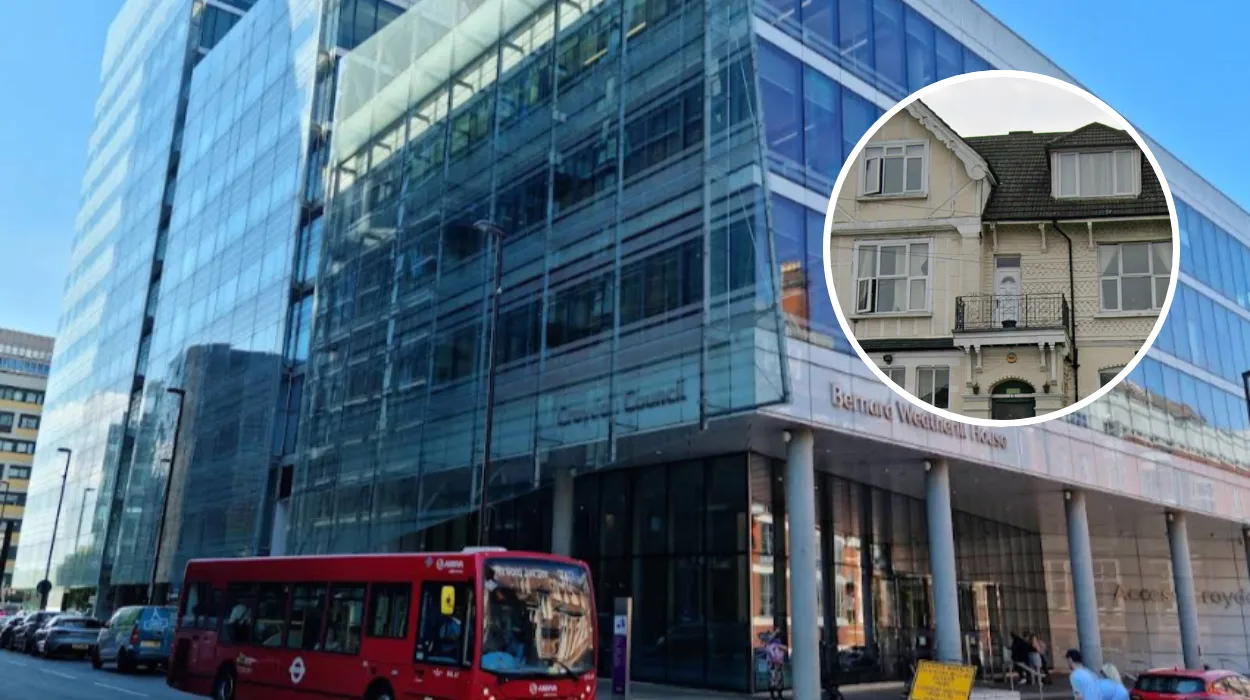
- Proposed Redevelopment: Plans have been formally submitted to redevelop 12–14 Tennison Road in South Norwood, a pair of locally listed Victorian properties that includes the former home of Sir Arthur Conan Doyle.
- Flats and Demolition: The scheme involves constructing twenty-four self-contained flats, requiring the partial demolition and substantial alteration of the existing historic structures.
- Affordable Housing Absence: Under the current planning submission, none of the twenty-four proposed residential units will be designated as affordable housing.
- Replacement of HMO Housing: The new development will completely replace an existing House in Multiple Occupation (HMO) on the site, which currently provides shared accommodation for up to twenty-six residents.
- Heritage Opposition: Local heritage groups and residents fiercely oppose the development, arguing that it overdevelops the site and severely damages the historic value of a property where iconic Sherlock Holmes stories were written.
- Local Listing Status: While both Victorian villas are locally listed by Croydon Council for their architectural and historical significance, they lack statutory national listing, leaving them vulnerable to modification.
Croydon (The Londoner News) June 4, 2026 – The historic South Norwood home where Sir Arthur Conan Doyle created his world-famous detective, Sherlock Holmes, faces partial demolition and intensive redevelopment under a controversial new planning application submitted to Croydon Council. The proposal aims to convert 12–14 Tennison Road—a pair of linked, locally listed Victorian villas—into a dense complex of twenty-four self-contained apartments. However, despite intense local demand for low-cost accommodation in the borough, the planning documents reveal that none of the proposed flats will be classified as affordable housing. The scheme also requires the complete eviction of up to twenty-six occupants currently living in the properties, which function as a House in Multiple Occupation (HMO).
- Key Points
- Why Is the Former Home of Sir Arthur Conan Doyle Historically Significant?
- What Do the Proposed Planning Blueprints Reveal About the Redevelopment?
- Why Does the Scheme Contain Zero Affordable Housing Units?
- How Will the Loss of the Existing HMO Impact Local Residents?
- What Arguments Are Heritage Campaigners and Opponents Making Against the Plans?
- How Have Developers and Supporters Defended the Financial and Structural Plans?
- What Legal Protections Do Locally Listed Buildings Have in Croydon?
The blueprint has ignited a fierce battle between property developers and heritage preservationists over the destiny of Croydon’s literary landscape. Local campaigners and conservation groups argue that the intensive expansion constitutes severe overdevelopment, threatening to irreversibly diminish the aesthetic character and historical integrity of the Victorian streetscape. As the council begins evaluating the environmental and heritage impacts, the lack of affordable provisions has added an economic element to the dispute, turning a suburban planning battle into a wider debate over historical preservation versus private housing intensification.
Why Is the Former Home of Sir Arthur Conan Doyle Historically Significant?
The properties at the centre of the planning application possess substantial historical weight, particularly number 12 Tennison Road. Sir Arthur Conan Doyle bought the suburban house in 1891, relocating his wife Louisa and their young daughter Mary to South Norwood after deciding to abandon his struggling medical practice in London to focus entirely on his literary ambitions.
The author spent three highly productive years at the Tennison Road address, departing in late 1894. It was within these Victorian walls that his son Kingsley was born, and where Conan Doyle penned at least twenty of his earliest, most celebrated short stories featuring Sherlock Holmes and Dr John Watson for The Strand Magazine. Notably, his time in South Norwood saw the publication of The Sign of the Four and The Adventures of Sherlock Holmes, cementing the detective’s position in global popular culture. The local Croydon area directly inspired the geography of several cases, including “The Yellow Face” (set in Norbury) and “The Cardboard Box”, which begins with a gruesome package delivered directly to a house in the town of Croydon.
Recognising this profound literary history, the property was fitted with an official blue plaque reading: “SIR ARTHUR CONAN DOYLE 1859–1930 Creator of Sherlock Holmes lived here 1891–1894.” It is this deep structural connection to British literary history that has placed the buildings on Croydon’s local heritage list, though they lack the stronger statutory protections of national Grade II status.
What Do the Proposed Planning Blueprints Reveal About the Redevelopment?
The planning application seeks comprehensive permission to alter numbers 12 and 14 Tennison Road to maximise residential density across the site. According to the architecture and layout plans submitted to the local planning authority, the project is split into two primary phases: extensive internal and external alterations to the twin Victorian structures facing the street, and a substantial construction project at the rear.
While the primary frontage of Sir Arthur Conan Doyle’s former house at number 12 would be largely preserved to maintain the street appearance, number 14 would undergo partial demolition to facilitate access. The plans involve knocking down the side and rear extensions of the buildings to clear space for a large, modern residential block to be built directly over the current back gardens.
The final layout will deliver twenty-four self-contained apartments. To fit this many units onto the suburban plot, the developers have utilised an intensive design pattern, mixing compact single-bedroom units with a smaller number of two-bedroom flats. The new rear block will feature a contemporary architectural style, contrasting with the detailed brickwork and slate roofing of the original Victorian vills.
Explore More South London News
Croydon 2026 Election Results: Labour Holds, Perry Wins, Greens Surge; London 2026
Brixton Drive-By Shooting Injures Four, Including Pensioner, Brixton 2026
Why Does the Scheme Contain Zero Affordable Housing Units?
The aspect of the proposal drawing the sharpest criticism from local community advocates is the total absence of affordable or social housing provisions. Under current regional planning guidelines, housing developments of this scale are typically expected to provide a percentage of affordable units or offer a financial contribution to the local authority to fund low-cost housing elsewhere.
The developers have justified the zero-affordable framework by submitting a Financial Viability Assessment (FVA) alongside their main application. This economic assessment argues that the high capital costs associated with altering historic, locally listed structures, combined with the expense of partial demolition and constructing a separate rear block, lower the project’s profit margins.
The developer’s financial consultants assert that forcing the inclusion of below-market-value units or affordable tenures would render the entire scheme financially unviable, preventing bank financing and halting development. Consequently, all twenty-four flats are slated to be sold or rented at full market rates, targetting professional commuters attracted by nearby transport links at Norwood Junction.
How Will the Loss of the Existing HMO Impact Local Residents?
Beyond historical preservation, the redevelopment presents an immediate social problem regarding the displacement of the site’s current occupants. Numbers 12 and 14 Tennison Road do not currently function as single-family homes; instead, they have operated for years as a large House in Multiple Occupation (HMO).
The existing configuration provides shared, lower-cost accommodation for up to twenty-six tenants, many of whom are low-income individuals or key workers relying on flexible tenancies. The proposed scheme will completely replace this shared housing layout. If Croydon Council approves the blueprints, the HMO will be decommissioned, requiring all twenty-six residents to vacate the premises to make way for the construction crews.
Housing activists point out that replacing a twenty-six-bed HMO with twenty-four premium market-rate flats creates a net loss in local housing capacity for lower-income brackets. Opponents argue this pattern exacerbates suburban gentrification, pushing vulnerable renters out of well-connected areas like South Norwood without providing any affordable alternatives on-site.
What Arguments Are Heritage Campaigners and Opponents Making Against the Plans?
A broad coalition of local residents, historical societies, and conservationists has quickly mobilised to lodge formal objections against the scheme. The central argument presented by opponents is that the proposal constitutes a severe overdevelopment of a sensitive heritage asset.
Campaigners argue that building a dense residential block in the rear gardens fundamentally changes the setting of the historic villas. They state that the scale, height, and modern design of the rear extension will dominate the original buildings, ruin the open character of the Victorian plots, and diminish the historic value of Conan Doyle’s former home.
Furthermore, preservationists fear that the structural vibrations and physical strains caused by partial demolition and heavy construction work right next to number 12 could cause structural damage to the old brickwork. Opponents point out that the site attracts literary tourists from around the world due to its Sherlock Holmes connection, and transforming it into an apartment complex would ruin its educational and cultural value for South Norwood.
How Have Developers and Supporters Defended the Financial and Structural Plans?
In response to the mounting public pushback, the development team and its architectural partners have defended the project as a sustainable, necessary intervention. They argue that the scheme offers a practical way to preserve the street-facing heritage of the site while addressing London’s broader housing shortage.
The planning statements clarify that the primary, character-defining front facades of the Victorian villas—including the blue plaque dedicated to Sir Arthur Conan Doyle—will be fully restored and integrated into the design. Supporters argue that the current use of the buildings as a high-density HMO has led to internal wear and tear, and that a managed, professional conversion is the most effective way to secure the structural future of the locally listed properties.
From an urban planning perspective, the developers argue that the site is an ideal candidate for intensification. Located within walking distance of Norwood Junction station, the development aligns with transport strategies that encourage high-density residential projects near major transit hubs to reduce car dependency. They maintain that creating twenty-four modern, energy-efficient flats out of an inefficient layout represents an optimal use of suburban brownfield land.
What Legal Protections Do Locally Listed Buildings Have in Croydon?
The looming decision over Tennison Road highlights the fragile legal protections given to heritage assets that lack national recognition. While number 12 and 14 are locally listed by Croydon Council, this designation operates differently from national Grade II or Grade I listings managed by Historic England.
A local listing identifies a building as having architectural or historical interest for the immediate borough, ensuring its heritage status is considered as a factor during planning decisions. However, it does not carry statutory legal protections against demolition or internal alteration. Developers do not need specialized Listed Building Consent to alter a locally listed property; they only require standard planning permission.
This regulatory gap leaves local councils balancing heritage considerations against national housing targets. While Croydon’s planning committee can reject proposals that cause undue harm to local heritage assets, they must weigh that harm against the benefits of adding twenty-four new homes to the borough’s housing stock, making the outcome of the Tennison Road application highly uncertain.