

Key Points
- Rail passengers across south London experienced widespread misery and chaos on Sunday due to a critical signalling fault that forced the closure of lines at Wimbledon station.
- Although engineering teams managed to reopen the affected lines by Sunday morning, residual issues meant that trains running through Wimbledon station continued to face heavy cancellations and severe delays of up to 90 minutes.
- The widespread transport disruption persisted until the situation was finally resolved and services cleared shortly before 2pm on Sunday.
- A massive corridor of services between London Waterloo and multiple key destinations—including Shepperton, Hampton Court, Chessington South, Leatherhead, Guildford, Portsmouth Harbour, Basingstoke, Salisbury, Bournemouth, Poole, Weymouth, Yeovil Junction, and Exeter St Davids—was heavily impacted.
- Services running between Wimbledon and Guildford were also directly affected by the failure, as highlighted in statements from National Rail.
- National Rail urged all affected commuters and holidaymakers to check their journey itineraries before travelling, warning that trains could continue to face rolling delays, alterations at short notice, or full cancellations while normal service schedules were painstakingly restored.
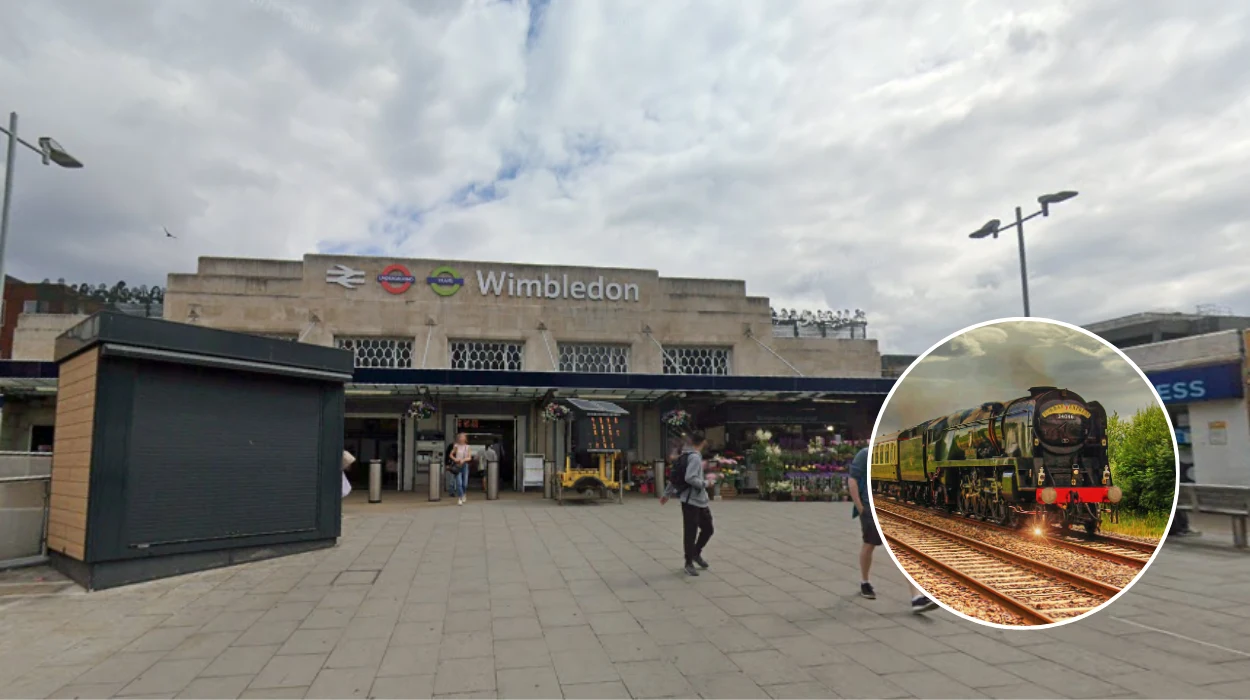
London (The Londoner News) August 3, 2026 — Rail passengers in south London faced miserable journeys on Sunday after a disruptive signalling fault caused severe chaos across major commuter corridors, as reported by the Evening Standard. While engineers managed to reopen the blocked tracks following a fault with the critical signalling system at Wimbledon on Sunday morning, the infrastructure failure left a lasting imprint on the day’s timetable. Trains running directly through the busy station continued to deal with substantial cancellations and cascading delays of up to 90 minutes, with normal operating conditions only fully resuming shortly before 2pm.
Explore More South London News
£4m Cash Found in Supermarket Bags in Catford, London 2026
Automated Drones Tackle London Waterloo Delays 2026
What Caused the Signalling Fault at Wimbledon Station?
The major transport disruption stemmed from a sudden and unexpected failure within the signalling system located at Wimbledon, a vital junction connecting multiple commuter lines into the capital. While engineers scrambled to address the fault on Sunday morning and successfully reopened the lines, the temporary halt to operations created a massive backlog. As detailed in updates monitored throughout the morning, the blockage quickly bottlenecked traffic across the wider south London rail network, leaving thousands of passengers stranded or scrambling for alternative routes.
Which Routes and Destinations Were Affected by the Delays?
The technical failure at Wimbledon did not just impact local services; it triggered a domino effect across a vast geographic expanse connected to London Waterloo. According to operational data published by National Rail, the disruption heavily affected services operating between London Waterloo and a long list of key regional destinations, including Shepperton, Hampton Court, Chessington South, Leatherhead, Guildford, Portsmouth Harbour, Basingstoke, Salisbury, Bournemouth, Poole, Weymouth, Yeovil Junction, and Exeter St Davids. Furthermore, National Rail confirmed that services running directly between Wimbledon and Guildford were also severely compromised by the infrastructure breakdown.
How Long Did the Delays and Cancellations Last?
Though repair teams worked swiftly to bring the signalling equipment back online during Sunday morning, the recovery process was gradual. Commuters faced frustrating hold-ups as rolling stock and crew placements were thrown entirely out of sync. Trains running through the station continued to encounter cancellations and delays stretching up to 90 minutes. Industry trackers and travel updates confirmed that the residual chaos did not fully clear until shortly before 2pm, when services slowly began returning to their scheduled timetables.
What Advice Was Given to Passengers Travelling Through South London?
In the wake of the chaos, official bodies issued strict guidance to minimize further inconvenience for the travelling public. As advised by National Rail, passengers were strongly encouraged to check their route status before setting out for the station. Transport authorities warned travellers that even after lines were declared open, trains could continue to be delayed, altered at very short notice, or cancelled outright while operators worked diligently to restore the service back to normal. Commuters affected by the lengthy delays were also reminded to check their eligibility for compensation via delay-repay schemes offered by the train operators.