
Key Points
- Mayor of London, Sir Sadiq Khan, has publicly criticised The Soho Society for their campaign against late-night venue licences, labelling their objections as “a bit silly”.
- The Soho Society recently voted at its Annual General Meeting (AGM) to adopt a mandate challenging all new applications and renewals for bars, restaurants, and clubs in the district.
- Residents argue that the rapid intensification of central London’s nightlife has outpaced essential infrastructure, particularly citing concerns over noise, crime, litter, and policing.
- Venue operators warn that the residents’ stringent objections risk “destroying Soho’s reputation on the international stage” and stifling economic growth.
- The dispute highlights a growing cultural clash between preserving residential peace and maintaining London’s status as a 24-hour global city.
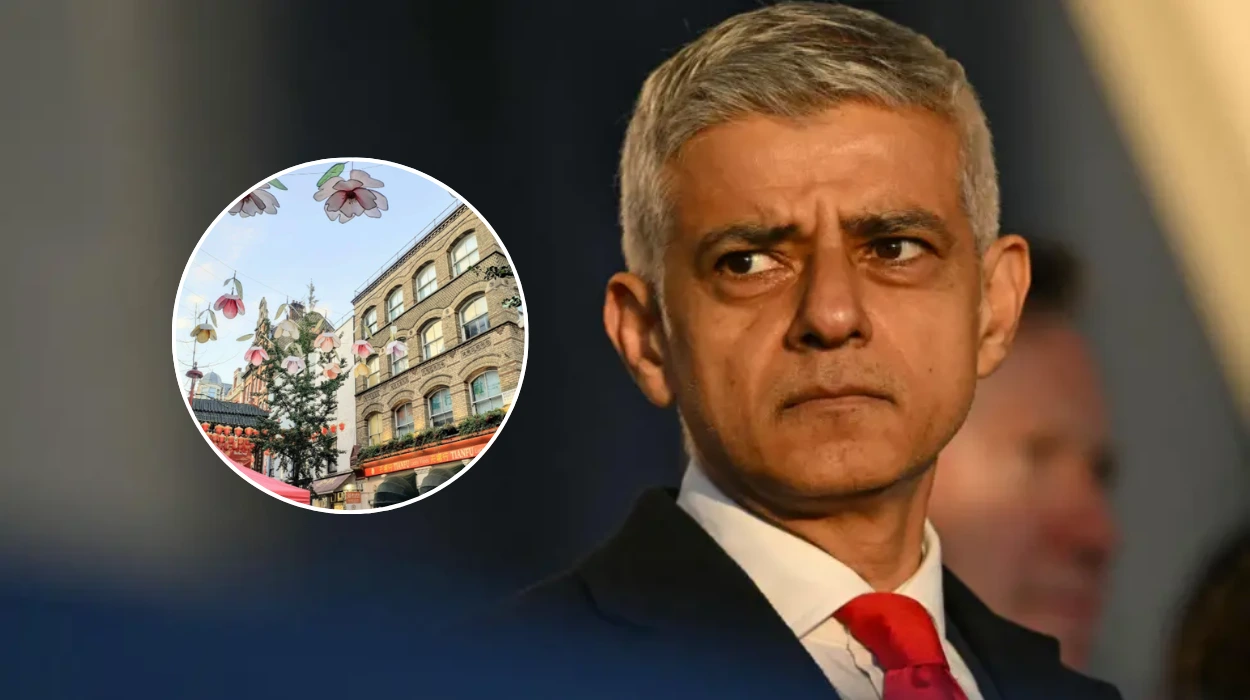
London (The Londoner News) June 11, 2026 – Sir Sadiq Khan has emphatically branded complaints from Soho residents regarding plans to keep bars and pubs in the area open at night as “a bit silly”. The London Mayor’s pointed comments come amid an escalating and bitter feud with The Soho Society. The prominent residents’ group recently voted in its Annual General Meeting (AGM) for a sweeping new licensing mandate that will see it automatically challenge all new applications for bars and restaurants in the central London area, including the renewals of existing licences. The Society argues that as nightlife in the district has intensified, the local infrastructure required to accommodate it has critically failed to keep pace with that growth, most notably concerning policing, dispersal plans, and public safety.
- Key Points
- Why Did Sir Sadiq Khan Call Soho Residents ‘Silly’?
- What Are The Soho Society’s Arguments Against Nightlife Expansion?
- How Are Venue Owners Responding to the Objections?
- Will Soho’s Reputation on the International Stage Be Destroyed?
- What Is the Role of Westminster City Council in this Feud?
- How Does the Night Tube Impact Soho’s Late-Night Dynamics?
- Could a Compromise Be Reached Between Residents and Nightlife Operators?
Why Did Sir Sadiq Khan Call Soho Residents ‘Silly’?
The controversy erupted onto the public stage on June 10, 2026, when the Mayor of London took to social media to voice his frustrations regarding the residents’ aggressive stance on local hospitality venues. Addressing the mounting pushback against the night-time economy, Sir Sadiq Khan drew sharp comparisons to other iconic London neighbourhoods to highlight what he perceived as the absurdity of the residents’ complaints.
According to a public post by the Mayor of London, Sir Sadiq Khan stated: “Complaining about nightlife when you checks notes choose to live in Soho is like living in South Kensington and complaining about the museums. Or moving to Hackney and grumbling about creatives. Living in Richmond and hating green space. It’s all getting a bit silly, isn’t it?”
The Mayor’s analogy strikes at the heart of Soho’s historical identity. For over a century, the district has been synonymous with entertainment, bohemian culture, and late-night revelry. Sir Sadiq Khan’s remarks underscore his broader strategic vision to protect London’s status as a 24-hour city, a campaign he has championed since the introduction of the Night Tube. His intervention suggests a growing frustration at City Hall with hyper-local campaigns that threaten macroeconomic assets and the city’s vibrant cultural output.
What Are The Soho Society’s Arguments Against Nightlife Expansion?
Despite the Mayor’s dismissive remarks, the residents living within the bustling epicentre of the West End maintain that their concerns are grounded in the grim realities of daily life in a saturated entertainment zone. The Soho Society, established in 1972 with the primary aim of preserving the character of the district, estimates that it represents approximately 10 per cent of the area’s residential population.
The core of the Society’s argument rests on the concept of cumulative impact. The residents argue that the sheer volume of late-night venues has created an environment that is increasingly hostile to those who call the area home. They point to a significant lag in public services, noting that waste management, public conveniences, and law enforcement have not scaled proportionately with the influx of late-night revellers.
As reported by Helena Horton of The Guardian, The Soho Society claims the area has seen an “intensification of nightlife and unacceptable noise, as well as crime and litter caused by a proliferation of late-night revellers.” Furthermore, the group insists that their mandate is not about eradicating fun, but rather about managing “light pollution and encouraging virtual queueing to keep the pavements clear.”
The Society, which is part-funded by Westminster City Council and holds a formal consultative role regarding planning and licensing applications, has leveraged this position to object ferociously to new developments. Their new AGM mandate to challenge all new applications and renewals represents a significant escalation, effectively signalling a zero-tolerance policy towards the expansion of the night-time economy in the district.
Is the Local Infrastructure Failing to Keep Pace?
A central pillar of the residents’ grievances is the alleged failure of local authorities to provide adequate policing and effective dispersal plans. When thousands of patrons spill out onto the narrow streets of Soho at closing time, residents claim the resulting noise and anti-social behaviour are unmanageable. They argue that Westminster City Council’s licensing policies—which theoretically aim to manage nighttime activity through “core hours” cutoffs—must be strictly enforced to restore a livable balance for taxpayers who reside in the area.
How Are Venue Owners Responding to the Objections?
The hospitality sector, still navigating the economic challenges of a post-pandemic landscape and the ongoing cost-of-doing-business crisis, has reacted with dismay and anger to The Soho Society’s uncompromising stance. Venue operators argue that such draconian opposition is suffocating entrepreneurship and damaging London’s global standing as a premier destination for tourism and nightlife.
As reported by Helena Horton of The Guardian, venue owners have warned that a society of residents funded by the council could “destroy Soho’s reputation on the international stage” as London’s entertainment district.
One such operator, identified as Power—who manages a historic Soho venue where the Rolling Stones once played—expressed profound frustration at the systemic hurdles placed before businesses. Power’s venue previously enjoyed a vibrant late-night culture, but under current administrative pressures, operations have been severely restricted.
As reported by Helena Horton of The Guardian, Power stated:
“The downstairs club used to be open until 4am, but the council will only grant me a 1am licence. I will be applying again in the autumn to let me open until 2 or 3. I’ve applied twice, and it is frustrating when you are hit with a barrage of objections.”
Power further articulated the wider economic and cultural damage caused by these restrictions, stating:
“On an international stage it’s a bit sad we have to shut at 1am… It would be a shame if that international reputation was trashed by a few residents.”
He pointedly noted that competing global cities, such as Paris and New York, have successfully maintained a robust late-night culture without entirely alienating their central populations.
Are Small Businesses Bearing the Brunt of the Conflict?
The financial implications for independent operators are severe. The inability to secure extended operating hours directly translates to lost revenue, which in turn impacts employment opportunities.
As reported by Helena Horton of The Guardian, Power added:
“It is strangling small businesses, meaning there are less hours and jobs for young people to work. I really worry for young people. To have a minority be in a position of stifling growth that is funded by the council is not ideal.”
Critiques of The Soho Society also touch upon the demographic makeup of its membership, with some business owners suggesting a generational disconnect. Power remarked that the membership heavily skews older, bluntly stating,
“They need to find their young spirit.”
Will Soho’s Reputation on the International Stage Be Destroyed?
The broader implications of this highly localised dispute extend far beyond the geographical boundaries of the W1 postcode. Soho has historically functioned as the beating heart of London’s cultural and creative industries. The systematic stifling of its night-time economy raises existential questions about the future identity of the capital.
Operators argue that if tourists and Londoners alike are met with shuttered doors and silent streets by 1 am, the city’s allure will inevitably wane. The narrative that Soho is becoming “sanitised” or excessively gentrified has been a recurring theme over the past decade. Critics of the residents’ approach argue that individuals who purchase or rent property in an internationally renowned entertainment district must possess a reasonable expectation of ambient noise and bustling streets. To demand suburban tranquillity in the centre of a global metropolis is, as Sir Sadiq Khan articulated, fundamentally paradoxical.
Furthermore, the methods employed by The Soho Society have occasionally drawn intense scrutiny. As reported by Helena Horton of The Guardian, the society’s methods came under question last year when it objected to a licence for a new gin bar and distillery, claiming it could be a fire hazard. The residents’ group found an expert who alleged the distillery could cause explosions; however, “this was refuted by the London fire brigade at the hearing.” Such incidents have led critics to accuse the group of clutching at straws to block any form of commercial progress.
What Is the Role of Westminster City Council in this Feud?
Westminster City Council finds itself in an incredibly delicate position, caught between the economic imperatives pushed by the Mayor of London and the vocal demands of its local electorate. The council part-funds The Soho Society and relies on it for consultative feedback, granting the residents a powerful institutional voice.
However, the council’s policy landscape is becoming a fierce battleground. While residents demand the strict enforcement of early closing hours, businesses and City Hall advocate for flexibility to ensure the survival of the hospitality sector. This tension is not an isolated incident; it mirrors broader conflicts between local and regional governance in London.
For example, Sir Sadiq Khan’s recent ambitions to pedestrianise Oxford Street—involving the proposed creation of a Mayoral Development Corporation (MDC) to override local authority planning decisions—demonstrates a clear willingness from City Hall to bypass hyper-local resident objections when the broader economic interests of the West End are deemed to be at stake. If the Mayor is willing to strip Westminster Council of its planning powers over Oxford Street to achieve his vision, it stands to reason that similar interventions could be considered to protect the night-time economy in Soho.
As reported by On London regarding the Oxford Street dispute, the leader of Westminster Council, Adam Hug, detailed a “large amount of work his administration had done… to try to resolve those” local issues, illustrating the council’s ongoing struggle to balance competing interests. The overarching fear among residents is that mayoral powers will consistently favour commercial interests over their right to a peaceful living environment.
How Does the Night Tube Impact Soho’s Late-Night Dynamics?
The introduction and expansion of the Night Tube network have played a critical role in the evolution of London’s night-time economy, directly impacting areas like Soho. Championed heavily by Sir Sadiq Khan, the 24-hour weekend underground service was explicitly designed to help Londoners working late shifts and to make it easier for people to access the capital’s cultural hotspots safely.
When thousands of visitors can easily commute in and out of the West End into the early hours of the morning, the demand for late-night venues naturally increases. For businesses, this transport infrastructure is a vital lifeline, allowing them to attract a wider demographic of patrons who are no longer constrained by the time of the last train home.
However, from the perspective of The Soho Society, the Night Tube acts as a catalyst for the very issues they are fighting against. The continuous flow of people entering and exiting the district at 2 am or 3 am means that the ambient noise levels rarely drop, and the footfall on residential streets remains high throughout the entire weekend. The residents argue that while City Hall provides the transport infrastructure to bring people into the area, it continuously fails to provide the corresponding on-the-ground policing and sanitation services required to manage them once they arrive.
This disconnect between regional transport strategies and local environmental management sits at the core of the current licensing feud. Sir Sadiq Khan’s analogy implies that the foundational purpose of the district is public amenity and entertainment. By this logic, the Night Tube is merely facilitating the area’s primary function. Yet, for the families and long-term residents housed in the apartments above the neon-lit streets, the reality is a relentless battle for a basic standard of living.
Could a Compromise Be Reached Between Residents and Nightlife Operators?
The path forward remains fraught with legal, social, and political complexities. For Soho to thrive harmoniously, a delicate equilibrium must be established. This would likely require substantial, ring-fenced investment in the very infrastructure that residents claim is chronically lacking.
Enhanced police presence during peak night-time hours, improved and frequent waste collection schedules, and strictly enforced dispersal plans could potentially mitigate the negative externalities of the late-night economy. Conversely, residents may need to accept that Soho will never offer the quietude of a leafy suburb. The district’s vibrancy is its primary currency, and attempting to legislate it into silence risks dismantling the very engine of its historic appeal.
The debate ultimately hinges on what London wants Soho to be in the 21st century. Is it a manicured residential enclave, or does it remain the gloriously chaotic epicentre of British nightlife? As the battle lines harden between The Soho Society and venue operators, with the Mayor of London now firmly placing his thumb on the scale, the outcome of these licensing wars will undoubtedly shape the cultural and economic landscape of the capital for decades to come.