Key Points
- High Court Injunction Granted: Anti-social motorists have been legally banned from organising unauthorise car meets and performing hazardous driving stunts across major swathes of central London.
- Targeted Hazardous Stunts: The legal clampdown specifically forbids activities such as dangerous racing, “burnouts” (spinning wheels to cause smoke), and “doughnuts” (rotating a vehicle in tight circles).
- Hotspot Enforcement Zones: The strict judicial order encompasses high-profile central London locations including Hyde Park, Bond Street, St James’s, and the wider West End.
- Severe Penalties Imposed: Individuals found breaching the conditions of the injunction risk receiving substantial financial fines or having their vehicles permanently seized by the local authorities.
- Night-time Restrictions: The ruling heavily restricts specific anti-social actions, banning motorists from excessively revving engines or operating vehicles dangerously between the hours of 18:00 and 07:00.
- Historical Enforcement Metrics: The expanded Public Space Protection Order (PSPO) in the West End has previously yielded 370 fixed penalty notices in flashpoints like Exhibition Road, Pall Mall, and Soho.
- Metropolitan Police Involvement: Since the commencement of 2026, targeted police operations across known hotspots have resulted in the issuance of 36 Traffic Offence Reports.
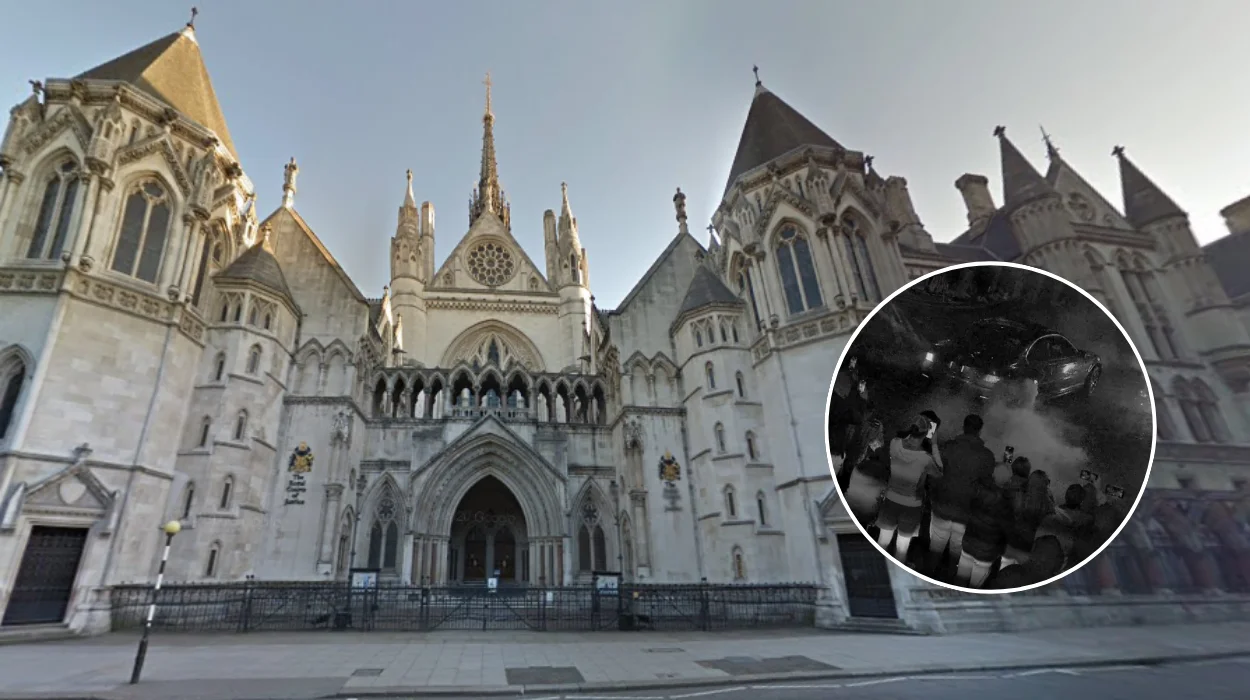
London (The Londoner News) June 20, 2026 – A decisive High Court injunction has officially banned anti-social drivers from organising unofficial car meetings and performing highly dangerous driving stunts across prominent areas of central London. The emergency legal action, which was aggressively pursued and brought forward by Westminster City Council, comes in direct response to a surge in frequent, late-night gatherings. During these disruptive events, motorists routinely perform hazardous vehicle tricks such as “burnouts” and “doughnuts” while large, unstructured crowds closely gather to spectate and capture the dangerous activities on their mobile phones.
- What activities are explicitly banned under the new High Court injunction?
- Why did Westminster City Council take this matter to the High Court?
- Which specific areas of central London are covered by the ruling?
- What are the penalties for breaching the High Court injunction?
- How have existing council measures paved the way for this injunction?
- What role is the Metropolitan Police playing in the ongoing crackdown?
The far-reaching judicial order effectively creates a zero-tolerance environment for dangerous driving networks within the heart of the capital. According to official legal documentation released by Westminster City Council, the injunction explicitly bans drivers from racing, executing high-risk stunts, and coordinating unauthorised automotive assemblies in well-documented flashpoints, including Hyde Park, Bond Street, St James’s, and the broader West End sector. Local council representatives have robustly warned that any individual found breaching the court’s strict mandate could face severe judicial consequences, including escalating financial penalties or having their vehicles summarily seized by law enforcement teams.
What activities are explicitly banned under the new High Court injunction?
As outlined in the core legal filings reviewed by journalists, the High Court injunction introduces clear, legally enforceable parameters aimed at dismantling the operational capabilities of anti-social driving networks. Specifically, the judicial ruling places an outright ban on individuals excessively revving their high-powered engines or engaging in any forms of erratic, aggressive, or dangerous driving patterns between the hours of 18:00 and 07:00. These specific twilight hours have been highlighted by municipal authorities as the peak operational window for illicit car meets.
The mechanical nature of the prohibited stunts forms the primary basis of the legal restriction. Motorists are barred from executing “burnouts”—a maneuver where a vehicle remains stationary or moves slowly while its tyres spin rapidly, heating the rubber to generate dense clouds of acrid smoke—and “doughnuts”, which involve spinning a car in tight, continuous circles to leave heavy tyre marks on public infrastructure. The court recognized that these stunts not only jeopardize the safety of onlookers standing just inches from moving vehicles but also cause substantial acoustic pollution and physical damage to historic metropolitan thoroughfares.
Why did Westminster City Council take this matter to the High Court?
The escalation to the High Court underscores the growing frustration of municipal leaders and local residents who have faced chronic disruption. Westminster City Council pursued the injunction after traditional, localized measures proved insufficient to deter large-scale, coordinated gatherings that regularly overwhelmed central London districts. The council presented extensive digital evidence to the judiciary, illustrating how these gatherings are systematically planned via social media platforms, drawing hundreds of spectators who line pavements, block traffic flow, and create severe public safety hazards.
Local authorities emphasized that the sheer volume of spectators filming the stunts on smartphones serves as an active catalyst for increasingly reckless driving behavior. Motorists, eager to gain digital traction and social media notoriety, frequently push their vehicles to dangerous limits in highly confined urban spaces. By obtaining a High Court injunction, Westminster City Council has effectively upgraded its enforcement toolkit, elevating the legal consequences from minor administrative fines to formal contempt of court, which carries significantly weightier judicial penalties.
Explore more Central London News:
Met Unlawfully Arrested Black Teen For Attempted Murder: London 2026
Kate Middleton Medical Record Breach Sparks ICO Action in London 2026
Which specific areas of central London are covered by the ruling?
The geographical scope of the injunction targets the most heavily impacted zones within the city’s tourism and residential core. The High Court order identifies several premium zones as primary enforcement sectors, effectively covering the primary corridors utilized by car clubs and stunt drivers. The explicitly named hotpots include:
- Hyde Park: A vast green space and surrounding carriage drives that have historically attracted evening cruisers.
- Bond Street: The luxury retail capital of London, where narrow channels amplify engine acoustics and heighten pedestrian risks.
- St James’s: A historic district characterized by royal palaces and government buildings, heavily affected by late-night noise.
- The West End: The overarching theatre and entertainment district, which experiences dense footfall well into the early morning hours.
By blanketing these interconnected sectors under a single, unified High Court order, the judiciary has prevented drivers from simply migrating a few streets over to evade localized council intervention, creating a comprehensive containment zone across the heart of Westminster.
What are the penalties for breaching the High Court injunction?
The enforcement mechanisms authorized under the new court mandate are designed to hit anti-social motorists with direct financial and material consequences. As stated explicitly by Westminster City Council officials, anyone captured violating the terms of the High Court injunction will be subject to immediate legal prosecution. The primary penalty includes large, uncapped court fines reflecting the severity of defying a direct judicial mandate.
Furthermore, the council has gained the legal authority to authorize the immediate seizure and impoundment of offending vehicles. This asset-seizure clause acts as a critical deterrent against affluent or repeat offenders who might otherwise view standard fixed penalty notices as a minor cost of doing business. Under the updated enforcement framework, vehicles used in the commission of these anti-social acts can be towed, impounded, and held indefinitely subject to ongoing court review, effectively immobilizing the operational assets of the anti-social car clubs.
How have existing council measures paved the way for this injunction?
The transition to a High Court injunction is the culmination of a multi-year regulatory ramp-up by local authorities. Over the past year, Westminster City Council had already systematically expanded its Public Space Protection Order (PSPO) framework across the West End. This localized regulatory net served as an initial testing ground for tougher enforcement, allowing council officers to gather empirical data on the exact scale, timing, and geographic concentration of the offending car clubs.
The expanded PSPO framework proved highly active from a regulatory standpoint, resulting in the issuance of 370 fixed penalty notices across central London hotspots. Enforcement teams focused their resources heavily on critical arterial routes, focusing on locations such as Exhibition Road, Pall Mall, and various secondary streets cutting through the Soho district. The persistent volume of these penalties, however, ultimately demonstrated to the council that administrative fines alone were failing to permanently suppress the structural networks organizing the events, necessitating a higher tier of judicial intervention.
What role is the Metropolitan Police playing in the ongoing crackdown?
The successful implementation of the High Court’s mandate relies heavily on a coordinated partnership between municipal council wardens and frontline law enforcement. The Metropolitan Police Service has dramatically intensified its tactical operations in known driving flashpoints to match the council’s legal offensive. Moving beyond passive observation, police units have deployed specialized traffic officers to actively intercept unauthorized Convoys before they can establish a foothold in tourist corridors.
Statistical data provided by Westminster City Council confirms that since the start of 2026, the Metropolitan Police has issued 36 formal Traffic Offence Reports (TORs) as part of these targeted operations. These reports represent a severe escalation from basic council fines, directly affecting a motorist’s driving record, driving point accumulation, and insurance premiums. Working in tandem with the newly minted injunction, police forces on the ground can now utilize the High Court’s backing to immediately arrest non-compliant individuals and expedite the removal of hazardous vehicles from public roads.