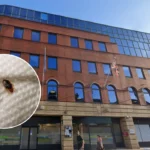


Key Points:
- Official Caution Issued: A former healthcare worker at The London Clinic has received a formal sanction from the Information Commissioner’s Office (ICO) for misusing the private medical files of the Princess of Wales.
- Financial Motivation: The watchdog confirmed that the individual intentionally accessed the highly sensitive medical documentation and offered to leak or sell the data for monetary profit.
- Watchdog Investigation: The ICO initiated its criminal investigation following an initial data breach report filed by the Marylebone-based hospital in March 2024.
- No Hospital Liability: Regulators found that the private hospital did not meet the threshold for statutory penalties or enforcement, declaring the breach an isolated employee incident.
- Legal Framework: The regulatory action was processed under section 170(5) of the Data Protection Act 2018, following criteria outlined in the Code for Crown Prosecutors.
- Historical Patient Context: The target of the data breach, Catherine, Princess of Wales, stayed at the private facility for a fortnight in January 2024 following scheduled abdominal surgery, preceding her public cancer diagnosis.
London (The Londoner News) June 17, 2026 – A former medical professional at a prestigious independent hospital in central London has been issued a formal criminal caution by the United Kingdom’s data privacy watchdog after attempting to sell the confidential medical records of the Princess of Wales, Catherine, for financial gain. The enforcement action concludes a multi-year investigation that gripped the British media landscape and raised significant concerns over data integrity within high-profile medical facilities.
- Key Points:
- What happened to the Princess of Wales’s medical records?
- How did the Information Commissioner’s Office respond to the breach?
- Why did the healthcare worker receive a caution instead of a prison sentence?
- Was The London Clinic held responsible for the data leak?
- What was the clinical context of Catherine’s hospital stay?
What happened to the Princess of Wales’s medical records?
The scandal originally unfolded in March 2024 when executives at The London Clinic, situated in the medical district of Marylebone, discovered that internal personnel files regarding the Princess of Wales had been accessed without clinical justification. The hospital promptly reported the data anomaly to the Information Commissioner’s Office, which is charged with upholding information rights and data privacy across the United Kingdom.
According to investigative findings released by the data watchdog, the unnamed healthcare worker deliberately abused their administrative or medical access permissions to view highly sensitive personal data. Following this unauthorized access, the employee actively attempted to broker a financial transaction with an external third party, offering to hand over details regarding the Royal patient’s clinical status in exchange for money.
The incident occurred while the Princess of Wales was recovering at the exclusive facility following a significant surgical procedure. Media reports from early 2024 revealed that at least one member of staff had been caught red-handed attempting to bypass internal IT security walls to view the royal patient chart, prompting immediate internal suspensions and a referral to external law enforcement and regulatory bodies.
How did the Information Commissioner’s Office respond to the breach?
As reported by journalists covering the regulatory beat at The Guardian, the ICO executed a thorough forensic investigation into the technical systems and staff actions at the facility. The objective was to ascertain whether the breach was a systemic organizational failure or an isolated criminal act by an individual employee.
In an official public statement detailing the culmination of the inquiry, the Information Commissioner’s Office stated that:
“Following a full assessment under the code for crown prosecutors and the ICO’s prosecution policy, the ICO issued a now former healthcare professional from London with a formal caution in relation to an offence under section 170(5) of the Data Protection Act 2018.”
The data protection body further elaborated on the gravity of the underlying behavior, clarifying that the administrative caution was not issued lightly. The regulatory agency added that:
“The conduct involved the deliberate misuse of highly sensitive personal information and an offer to disclose it for financial gain, representing a clear breach of trust.”
Why did the healthcare worker receive a caution instead of a prison sentence?
Under the statutory framework of the British legal system, an official caution serves as a formal sanction recorded by police or regulatory bodies when a suspect openly admits to an offense and consents to the caution. It avoids an immediate public trial in a magistrates’ or crown court but remains on the individual’s criminal record, drastically affecting future employment prospects in the medical sector.
The ICO defended its choice of penalty, explaining that a caution was “the appropriate and proportionate enforcement response” given the specifics of the evidence, the cooperation of the individual, and the legal thresholds dictated by the Crown Prosecution Service guidelines.
Ian Hulme, the executive director for regulatory supervision at the ICO, emphasized the severe view the watchdog takes on medical data exploitation. As recorded in the regulatory registry, Ian Hulme stated:
“People should be able to trust that the personal information they’re giving to healthcare settings is safe and protected from exploitation. When this trust is broken, it’s right that the law allows us to take action.”
The director issued a stern warning to other healthcare professionals across the National Health Service (NHS) and independent private sectors, asserting that the watchdog “will not hesitate to pursue criminal prosecution where it is necessary and proportionate to do so.”
Explore more Central London News:
Steven Spielberg Surprises Fans at Soho Pub Quiz, London 2026
Westminster Abbey Opens Historic Medieval Undercroft For Dining: London 2026
Was The London Clinic held responsible for the data leak?
A major component of the ICO’s multi-year probe involved auditing the internal digital infrastructure, access logs, and privacy training protocols implemented by The London Clinic. Under UK GDPR laws, corporate data controllers can face astronomical fines reaching millions of pounds if they fail to safeguard patient records from internal rogue agents.
However, the regulatory investigation cleared the institution of any organizational culpability. The ICO verified that the hospital possessed robust data security protocols and that the breach was an isolated manifestation of individual employee malice rather than institutional negligence.
The regulatory body explained:
“We also considered whether there were any wider organisational issues arising from the healthcare provision in this matter. Based on the evidence available, we did not identify any failings that would meet the threshold for regulatory enforcement.”
Reacting to the regulatory exoneration, an official spokesperson for The London Clinic issued a formal statement reflecting the organization’s relief at concluding the legal chapter:
“We all take considerable pride in delivering the very highest standards of care and discretion for every patient at the London Clinic. We are pleased our work with the ICO has brought this sad and isolated incident to a conclusion. There were no regulatory breaches by the hospital.”
What was the clinical context of Catherine’s hospital stay?
The attempted data theft took place during a deeply vulnerable period for the British Royal Family. In January 2024, the Princess of Wales was admitted to The London Clinic for a planned major abdominal surgery. She remained an inpatient at the secure facility for nearly fourteen days under intense international media scrutiny.
At the time of her hospitalization, Kensington Palace maintained a policy of privacy regarding her specific medical prognosis, confirming only that the condition was non-cancerous. However, subsequent postoperative pathology tests revealed that cancer had indeed been present. In February 2024, Princess Catherine disclosed to the global public that she was undergoing a course of preventative chemotherapy, a revelation that amplified public interest and subsequent media demand for insights into her medical files.
The London Clinic has long served as a trusted medical hub for high-ranking dignitaries and members of the royal household. Alongside treating the Princess of Wales, the hospital simultaneously provided specialized medical care to King Charles III, who underwent treatment for an enlarged prostate at the facility during the exact same period in early 2024, prior to his own subsequent cancer diagnosis. The confluence of two senior royals receiving care at the same hospital created an unprecedented security challenge for the facility’s administrative and digital oversight teams.