Key Points
- Natural Flood Alleviation: An urban colony of reintroduced Eurasian beavers at Paradise Fields in Ealing has successfully prevented seasonal flooding at Greenford Underground station for three consecutive years.
- The Sponge Effect: By engineering a network of natural dams along Costons Brook, the animals have slowed downstream water velocity and transformed the former golf course into a natural sponge that retains extreme rainfall.
- Population Growth: The initial group of five beavers released in October 2023 has successfully grown to at least eight, celebrating the arrival of two new kits born to the matriarch beaver, Willow.
- Socio-Ecological Success: Alongside widespread community support and thousands of visitors, the project has recorded a massive 90% reduction in local anti-social behaviour and a significant rebound in regional biodiversity, including the return of diverse fish, bird, and insect populations.
- Cost-Effective Alternative: The nature-based solution has managed water levels effectively, offering a highly sustainable alternative to the multimillion-pound infrastructure projects and artificial reservoirs previously considered by local councils.
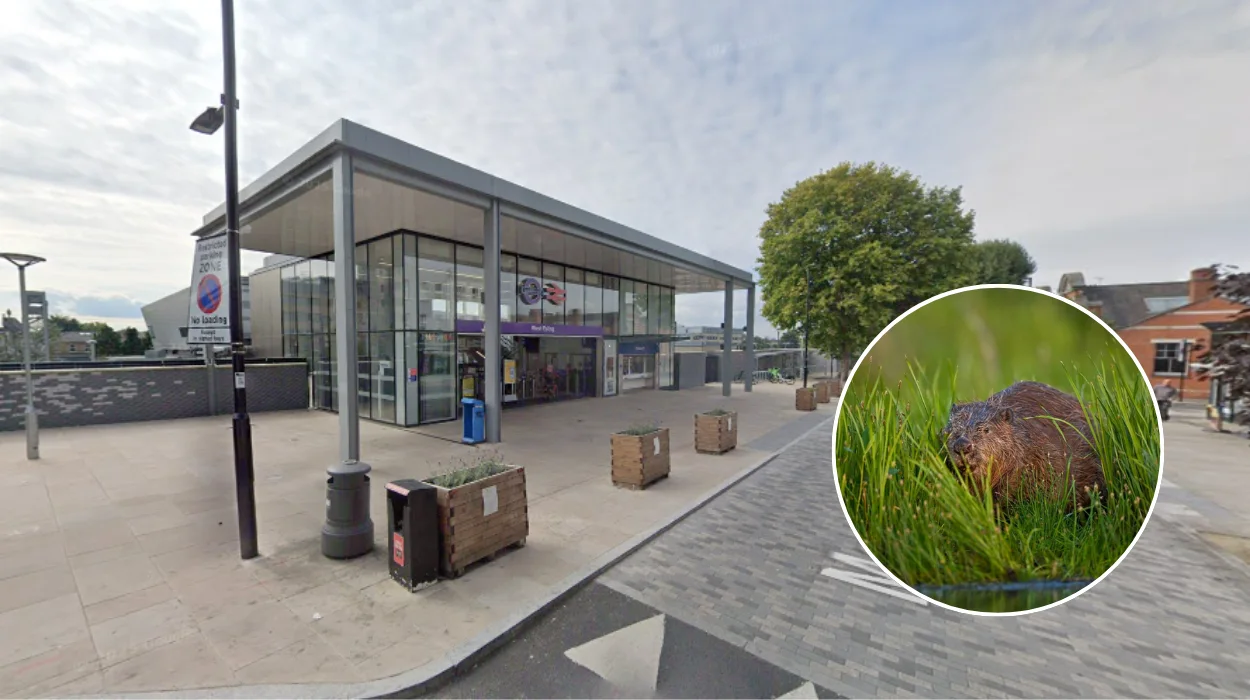
Ealing (The Londoner News) July 1, 2026 – A pioneering colony of urban beavers reintroduced to an enclosed wetland in West London has successfully protected a vital transport hub from systemic seasonal flooding for three consecutive years, according to local conservation bodies celebrating the birth of new offspring. The Ealing Beaver Project has confirmed that Greenford Underground station—a site historically crippled by severe rainwater overflow—has remained entirely flood-free since the ecosystem engineers were first released upstream at the 10-hectare Paradise Fields nature reserve in October 2023. By instinctively constructing an intricate network of leaky wooden dams and shallow pools, the rodents have significantly curbed downstream water velocity during heavy downpours, demonstrating how nature-based interventions can mitigate critical infrastructure risks driven by modern climate change without requiring multimillion-pound concrete engineering works.
- Key Points
- How Have the Ealing Beavers Stopped Local Flooding?
- What Do Project Leaders and Experts Say About the Hydrological Impact?
- How Has the Local Infrastructure and Community Responded?
- How Fast Is the West London Beaver Colony Growing?
- What Are the Broad Ecological Benefits of This Rewilding Scheme?
- What Do Government Officials and High-Profile Figures Think?
- What Does the Future Hold for Urban Beaver Reintroduction?
How Have the Ealing Beavers Stopped Local Flooding?
The transformation of the local hydrological landscape has occurred down to the animals’ innate drive to manipulate their immediate environment. Prior to the project’s inception, local authorities faced immense financial and engineering challenges trying to control surface water runoff that regularly overwhelmed urban drainage channels. As noted in a special report by journalist Gavin Haines of Positive News, the persistent flooding surrounding Greenford Tube station had left the local borough council staring down the daunting prospect of extraordinarily expensive civil engineering work, including the proposed excavation of a massive artificial reservoir to buffer storm runoff.
Instead, the introduction of five beavers provided a completely free alternative. By using fallen branches, logs, mud, and stone, the small colony immediately set to work re-engineering Costons Brook, a tributary running directly through Paradise Fields. Their continuous architectural activities established a multi-tiered network of five primary dams that act as a natural, highly efficient sponge. When heavy downpours hit West London, the water is no longer permitted to surge unchecked straight down the straightened, concreted urban channels toward residential areas and transport systems. Instead, the dams trap and slowly release the water volume, spreading it laterally across the basin floor and allowing it to safely saturate the water table.
What Do Project Leaders and Experts Say About the Hydrological Impact?
Project coordinators have expressed profound satisfaction with the measurable, empirical success of the rewilding initiative over the past three years. As reported by the BBC News team, Sean McCormack, a veterinarian and leading conservationist with the Ealing Beaver Project, detailed how fundamentally the water flow mechanics have shifted. Sean McCormack stated that the river water once took mere minutes to rush rapidly through the urban system directly into Greenford, but it now gently seeps down through a series of highly complex dams and expanded wetlands.
Expanding further on these environmental observations in an interview broadcast by journalist Lauren Frayer of NPR, Sean McCormack explained: “They effectively turned this site into a giant sponge that can take heavy rainfall and slowly release water back into the landscape, creating a lot more resilience for flooding.” He noted that the animals are not only slowing the flow during heavy rainfall events but are also sinking that vast volume deep into the subterranean layers because the immediate surrounding ground remains consistently wetter. This continuous natural retention keeps the peak flow rates well below the failure threshold of down-stream municipal storm drains.
How Has the Local Infrastructure and Community Responded?
The direct relief experienced by commuters and residents has transformed public perception surrounding the coexistence of wild animals within major global metropolitan areas. As reported by journalist Matt Smith of The Independent, Urban Beaver Officer Şeniz Mustafa emphasized the immense relief felt across the local district, which had suffered chronic flooding problems stretching back as far as the 1970s. Şeniz Mustafa told The Independent: “The community of Greenford was greatly affected by [flooding], and 2024 was the first year the local area didn’t flood. It’s not just people trying to get to the Tube, but it’s people in their houses, going to work, going to school, trying to drive their car, so it’s had such a direct impact.”
The visible success of the initiative has drawn thousands of eco-tourists, educators, and curious urbanites to Paradise Fields, which features a fully accessible trail network integrated into the famed Capital Ring walking route. Beyond flood prevention, project monitoring logs have revealed an unexpected social benefit: anti-social behaviour inside the urban park has plummeted by a staggering 90% since the beavers arrived. The presence of community-led conservation groups, guided educational tours, and an influx of respectful wildlife enthusiasts has effectively revitalized a once-neglected municipal space into a safe, celebrated communal asset.
How Fast Is the West London Beaver Colony Growing?
The long-term sustainability of the flood mitigation scheme is heavily tied to the biological health and reproductive success of the animals themselves. Local media have confirmed that the habitat is actively supporting a flourishing, expanding family unit. According to an editorial report published by Ealing Times, at least two brand-new Eurasian beaver kits (Castor fiber) have been officially sighted emerging from the family’s main lodge this season, confirming that the current environment is highly optimal for breeding.
The new arrivals represent the latest generation born to the colony’s resilient matriarch, Willow. The family originally arrived as a group of five translocated individuals brought down from Scotland at the explicit request of a commercial farmer who required their relocation from agricultural drainage ditches. Today, the local population stands at a minimum of eight confirmed individuals, with field teams suspecting further kits remain tucked safely inside the lodge structure. The breeding success has even allowed the project to support national rewilding connectivity; one older female kit from Willow’s previous litter was successfully relocated to the Dyfi Osprey Project in Wales to bolster regional recovery efforts across the United Kingdom.
What Are the Broad Ecological Benefits of This Rewilding Scheme?
While flood control remains the most economically quantifiable asset, the broader ecological ramifications have astonished regional biologists. For decades, historical efforts by local councils to control regional waterways involved straightening natural channels and lining them with concrete banks—a process that systematically destroyed native aquatic habitats. The beavers’ habit of felling select trees has selectively opened up the dense overhead canopy, allowing vital sunlight to penetrate the waters of Costons Brook for the first time in generations.
As detailed by The Independent, these slower, cleaner, and sun-dappled water flows have radically improved local water quality, prompting an immediate chain reaction across the local food web. Native fish species have rapidly returned to the deep pools created behind the wooden blockades, creating complex food systems capable of sustaining diverse populations of insects, amphibians, wetland birds, bats, and small mammals. Representatives from Citizen Zoo have noted that at least four entirely new animal species were identified on-site within an 11-month window alone, illustrating the rapid restorative capacity of a true keystone species.
Explore more West London News:
Hines Buys Heathrow Logistics Park From Blackstone: London 2026
Three Injured in Major Ealing Broadway Crash: London 2026
What Do Government Officials and High-Profile Figures Think?
The undeniable success of the urban rewilding trial has earned substantial praise from senior political figures and world-renowned naturalists alike, effectively silencing initial critics who claimed that beavers could not safely coexist within a densely populated metropolitan borough. As reported by The Independent, Dominic Moffitt, Ealing Council’s cabinet member for climate action, heavily praised the project as a defining template for future municipal climate strategies. Dominic Moffitt stated: “This project shows how working with nature can improve our resilience and help us respond to the growing challenges of climate change. By supporting the reintroduction of beavers at Paradise Fields, we have enabled a natural solution that is slowing the flow of water, reducing flood risk for local communities, and improving biodiversity at the same time.”
The project was also championed and funded by the Mayor of London, Sadiq Khan, via the Rewild London Fund. A spokesperson for the Mayor of London released an official statement to the press, declaring: “It’s fantastic to see the Ealing beavers thriving in their new home. It’s incredible that in only a few short years they have helped stop flooding at a local station, transformed Paradise Fields into a flourishing wetland and helped to improve the biodiversity of the area.”
Furthermore, the urban colony gained legendary validation when it was prominently featured by Sir David Attenborough in his landmark BBC documentary Wild London. Reflecting on the sheer scale of the achievement, Sir David Attenborough remarked on screen:
“If someone had told me when I first moved here that one day I would have been watching wild beavers in London, I would have thought they were mad.”
What Does the Future Hold for Urban Beaver Reintroduction?
The Ealing Beaver Project—which is collaboratively managed by the Ealing Wildlife Group, Citizen Zoo, the Friends of Horsenden charity, and Ealing Council, with technical assistance from the Beaver Trust—is now viewed as a definitive national framework. In an article published by Ealing Today, Elliot Newton, the Director of Rewilding at Citizen Zoo, described the ongoing success and recent kit births as a powerful testament to what focused urban nature recovery programs can achieve. Elliot Newton stated that the initiative “is giving the world a glimpse of a wilder future and showing what is possible” when municipal planning shifts away from heavy industrial engineering and moves toward collaborative, nature-based climate solutions.
With academic validation arriving via peer-reviewed research papers documenting London’s urban wilding future, similar metropolitan areas are planning to replicate Ealing’s blueprint. An identical urban beaver initiative established in Enfield in 2023 is yielding promising data, and the borough of Croydon has officially announced plans to introduce its own flood-mitigating beaver colony by 2028. As extreme weather events intensify across the British Isles due to accelerating global climate shifts, the industrious beavers of Paradise Fields have definitively proved that the most sophisticated tool for protecting modern urban infrastructure might just be a set of four centuries-old front teeth.