Key Points
- Successive Extreme Events: London and the wider UK are currently experiencing a second severe heatwave in July 2026, hot on the heels of an unprecedented, record-breaking heatwave in June.
- Temperature Records Smashed: The Met Office confirmed that June 2026 saw the highest June temperatures ever recorded in the UK, with temperatures peaking at 37.7°C in Norfolk and 36.7°C in Southwest England.
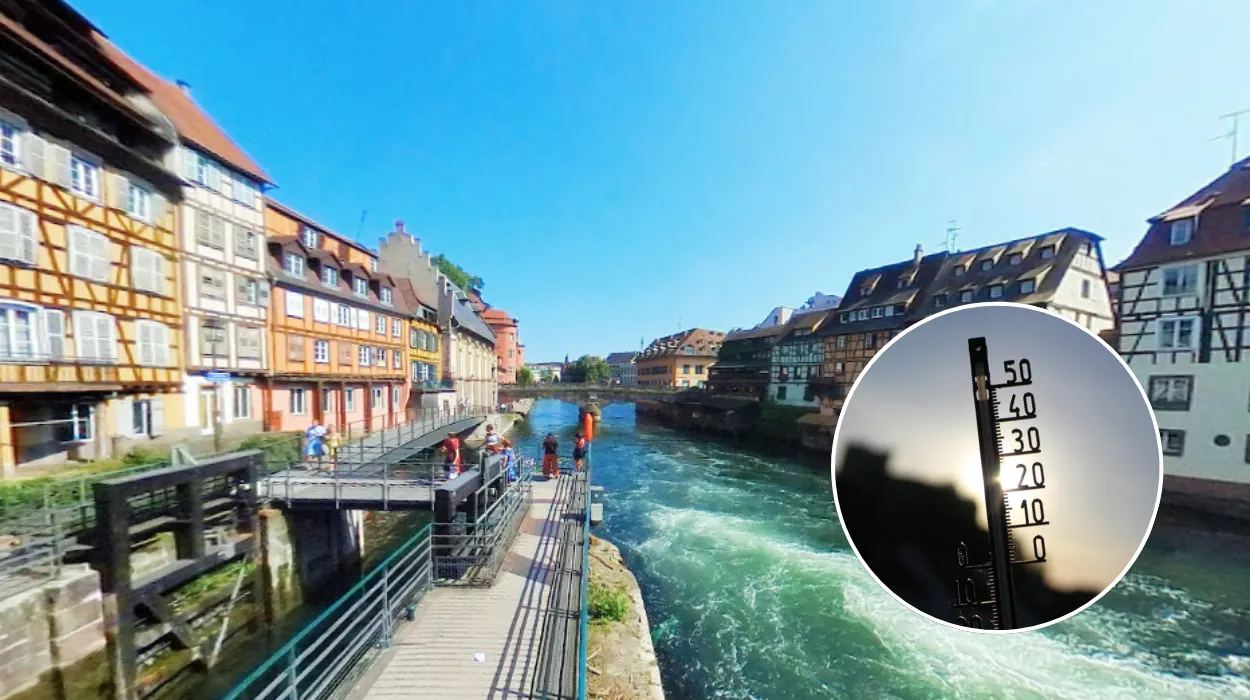
- Current July Surge: Temperatures in London hit 34°C on Monday, 6 July, and hovered between 32°C and 33°C through Wednesday, 8 July, with meteorologists predicting persistent peak heat until at least Saturday, 11 July.
- Official Warnings Issued: The UK Health Security Agency (UKHSA) triggered an amber heat-health alert covering London from 9:00 am on Wednesday, 8 July, until 9:00 pm on Sunday, 12 July.
- Severe Human Toll: Preliminary figures released by European health authorities link the late June heatwave to at least 3,700 excess deaths across France, Belgium, and the Netherlands.
- Infrastructure Strain: The extreme weather conditions have caused widespread transport disruptions, forced the cancellation of military ceremonial operations, and triggered critical incidents at British hospitals.
- Climate Change Signal: A comprehensive analysis by the World Weather Attribution (WWA) network concluded that the intensity of these heatwaves has been heavily multiplied by historic fossil fuel emissions.
London (The Londoner News) July 8, 2026 – A secondary, intense summer heatwave has firmly gripped London and Southern England this week, forcing public health officials to issue severe weather warnings just days after Western Europe reeled from a historic, deadly spell of extreme heat in late June. The current meteorological surge has driven temperatures up to 34°C in the capital, placing renewed and compounding pressure on the United Kingdom’s infrastructure, regional healthcare services, and vulnerable populations. With the Met Office forecasting that the daily maximum temperatures will consistently exceed 30°C across the south of the country until at least the end of the week, municipal authorities have activated emergency responses, implemented high-level air pollution alerts, and urged residents to radically alter their daily routines to navigate an increasingly volatile climate baseline.
- Key Points
- How Hot Is the July 2026 London Heatwave?
- What Health Warnings Are Currently in Place for London?
- How Did the June 2026 Heatwave Shatter Historic Records?
- What Was the Human and Infrastructure Toll of the June Heatwave?
- How Many Casualties Have Been Linked to the Extreme Heat?
- What Are Politicians and Experts Saying About the Climate Crisis?
- What Does the Scientific Data Say About the Cause of These Heatwaves?
How Hot Is the July 2026 London Heatwave?
The current heatwave dominating southern England represents an intense, prolonged period of high atmospheric pressure. Writing for Time Out UK, contributor Alice Hall reported on Wednesday, 8 July 2026, that the capital is actively basking in another sweltering spell, observing that “London has only just recovered from the last stint of sweaty, sleepless nights with a fan blasting at full volume in our face, and here we are doing it all over again.” Hall documented that while the current July temperatures are not expected to instantly eclipse the absolute peaks witnessed in late June, the consistency of the heat remains highly dangerous.
According to consolidated data from the Met Office, the maximum temperature in London hit 34°C on Monday, 6 July, accompanied by a stifling humidity level of approximately 71 per cent and moderate wind speeds peaking near 50 kilometres per hour. On Wednesday, 8 July, the mercury reached 32°C by early evening, feeling equally intense due to direct solar radiation. Forecasters expect Thursday, 9 July, to be the absolute apex of the current weekly cycle, with the “Big Smoke” projected to bake in temperatures reaching 33°C to 34°C between 4:00 pm and 7:00 pm. The prolonged thermal stress is forecast to taper down slightly to 32°C on Friday, 10 July, and 30°C on Saturday, 11 July, before a projected weather break on Sunday, 12 July, brings temperatures down to a more manageable 29°C.
What Health Warnings Are Currently in Place for London?
In response to the unwavering thermal pressure, formal safety measures have been rapidly scaled up. The UK Health Security Agency (UKHSA) officially issued an amber heat-health alert encompassing the entirety of London, which came into effect at 9:00 am on Wednesday, 8 July, and is scheduled to remain active until 9:00 pm on Sunday, 12 July. As detailed by Alice Hall of Time Out UK, this specific amber designation warns that the prevailing high temperatures are highly likely to inflict notable impacts on health and social care services. This includes an anticipated surge in the utilisation of regional healthcare facilities by vulnerable demographics, alongside a significantly elevated risk to life within those high-risk groups.
Simultaneously, atmospheric conditions have deteriorated alongside the rising temperatures. London Mayor Sadiq Khan officially triggered a “high” air pollution alert across the capital. The executive decision, enacted on the direct advice of environmental forecasters based at Imperial College London, marks the third time such an air quality warning has been required in the city this year. The convergence of stagnant air, intense ultraviolet light, and urban emissions has historically driven ground-level ozone to hazardous thresholds, compounding respiratory risks for millions of Londoners.
How Did the June 2026 Heatwave Shatter Historic Records?
The gravity of the current July weather pattern cannot be fully understood without examining the meteorological anomaly that preceded it just two weeks prior. In late June 2026, an extraordinary high-pressure system channelled hot air northward from Africa, breaking long-standing records across Western Europe. Reporting for The Guardian, live-blog editor Jakub Krupa tracked the historic sequence as it unfolded, confirming on 24 June 2026 that the United Kingdom had completely shattered its all-time national temperature record for the month of June.
The previous June record of 35.6°C, which had stood undisturbed for exactly half a century since the legendary summer of 1976, was systematically dismantled. The Met Office verified that West Sussex recorded an unprecedented 35.8°C, while the absolute peak of the June heatwave eventually topped out at a staggering 37.7°C in Norfolk, with southwest England simultaneously recording 36.7°C. These numbers are historically unprecedented for early summer in the British Isles, a region where domestic architecture, transport links, and public utilities were fundamentally designed for temperate maritime conditions rather than Mediterranean extremes.
What Was the Human and Infrastructure Toll of the June Heatwave?
The real-world consequences of the late June thermal surge were swift and devastating, impacting public safety, healthcare networks, and heavy infrastructure across Britain and continental Europe. As reported by journalists Dominique Vidalon and Sam Tabahriti for Reuters, published via Japan Today on 26 June 2026, the intense early summer heatwave “killed dozens, disrupted power supplies, and shut schools and cultural landmarks” across the continent.
Healthcare and Critical Incidents
In the UK, the sudden influx of heat-stressed patients pushed regional medical networks to their absolute limits. In southern England, East Surrey Hospital was forced to formally declare a “critical incident” due to a massive surge in emergency demand. Hospital administrators restricted standard clinical services to life-threatening emergencies only, as emergency medical calls across affected zones spiked by an estimated 20 per cent.
Transport and Civic Disruption
The heat heavily compromised heavy infrastructure. Network Rail was forced to introduce strict speed restrictions across lines entering London due to the acute risk of steel rails expanding and buckling under the sun. On international lines, Eurostar pre-emptively cancelled four major train services scheduled to run between London and Paris, explicitly citing “expected adverse weather” and the structural threat posed to overhead power lines and track integrity.
Within the capital, the extreme conditions altered traditional state functions. The British Army formally cancelled scheduled ceremonial operations in London and Windsor. Military officials stated that the cancellations were executed specifically to protect the “wellbeing” of its heavily uniformed soldiers and working horses, both of whom faced severe heat exhaustion.
Fatalities and Accidental Drownings
Tragically, the desire to escape the heat led to a catastrophic spike in accidental drownings across Europe. Dominique Vidalon and Sam Tabahriti of Reuters detailed that authorities in France recorded at least 48 drowning deaths from individuals attempting to cool off in unmonitored open waters. In Germany, the German Life Saving Association confirmed in an official statement to Reuters that more than 20 people had died in swimming-related accidents within a matter of days. Furthermore, three young children tragically lost their lives across Europe after being left in hot vehicles during the peak of the atmospheric surge.
How Many Casualties Have Been Linked to the Extreme Heat?
The wider public health toll of the June 2026 heatwave has proven to be staggeringly high. In a formal dispatch published by Reuters on 4 July 2026, health authorities confirmed that the brief, eight-day period of extreme heat between 20 June and 28 June had been directly linked to at least 3,700 excess deaths across France, Belgium, and the Netherlands alone.
As reported by Reuters via The Express Tribune, French Health Minister Stéphanie Rist announced that 2,025 excess deaths were formally registered in France during the heatwave, with a prominent concentration among individuals aged over 45. The French public health authority noted that fatalities occurring directly at home skyrocketed by 91 per cent between 22 June and 28 June compared to the baseline of the preceding week. Minister Rist and public health agencies explicitly cautioned that “mortality will… be higher than these initial figures suggest,” indicating that the final, delayed statistical toll will almost certainly rise.
In Belgium, the Ministry of Health reported an unprecedented 1,200 excess deaths between 18 June and 29 June. Within this dataset, 530 fatalities occurred among citizens aged 85 and older, while 180 involved individuals under the age of 65. The Belgian Health Ministry noted in an official statement: “Such excess mortality during a heatwave is unprecedented in our country.” Concurrently, authorities in the Netherlands confirmed approximately 480 excess deaths over the same timeframe, primarily concentrated among individuals over the age of 80.
Explore more Local London News:
APS Staff Raise Concerns Over State of the Art London Central Complex, Canberra 2026
Brent Council School Street Plan Sparks South Kenton Station Backlash 2026
What Are Politicians and Experts Saying About the Climate Crisis?
The recurring nature of these extreme weather events has sparked intense political debate and rigorous scientific analysis regarding urban adaptability and global climate policy. Commenting on the demographic shifting of heat vulnerability during the June crisis, Paris Mayor Emmanuel Grégoire stated during a live broadcast on the French network TF1:
“Rather, it’s people aged between 50 and 70 who are generally in good health, but who think this is just a normal period and continue going about their usual activities as if nothing has changed. Really, protect yourselves.”
In the United Kingdom, the systemic failure to prepare public infrastructure for a warming climate drew sharp criticism. Writing for The Guardian, journalists Richard Adams and Fiona Harvey published a detailed exposé highlighting how a historic lack of long-term structural planning had left British schools and care homes completely unprepared, leaving thousands of children to swelter in un-air-conditioned classrooms. In response to the growing crisis, climate campaign groups issued joint statements demanding that the next UK Prime Minister must “stay the course” on aggressive domestic climate policies to decisively reduce the nation’s dependence on fossil fuels.
What Does the Scientific Data Say About the Cause of These Heatwaves?
The underlying driving forces behind Europe’s escalating summer temperatures have been definitively mapped by the scientific community. A rapid attribution study released by the World Weather Attribution (WWA) network concluded that the June 2026 heatwave was the most severe ever recorded over the studied region.
The WWA scientists noted that under the atmospheric conditions of 1976, when previous European heat records were established, the extreme temperatures observed in 2026 “would have been virtually impossible to occur in June.” The study explicitly stated that daily maximum temperatures across Western Europe are currently warming at roughly triple the rate of global average warming, while nighttime temperatures are increasing at double the global rate.
The WWA research further clarified that while the June 2026 heatwave occurred under a traditional southerly air circulation pattern broadly similar to historical weather events, the system produced significantly hotter temperatures because the global climate baseline has fundamentally warmed by 1.4°C since the pre-industrial era. The authors concluded that the intense heat experienced this summer demonstrates that “extreme heat is already reaching the limits of our societies’ ability to cope,” rendering what was once an impossible meteorological event a recurring seasonal reality for the residents of London and continental Europe.