Key Points:
- The University of West London (UWL) has officially entered into a new collaboration with the London Premier Centre (LPC), a prominent private training provider based in the United Kingdom.
- The strategic alliance aims to establish and offer jointly developed educational programmes.
- The collaboration is specifically designed to create new progression pathways and practical training opportunities for students in higher education.
- Mohamed Farhat from the University of West London highlights that this partnership bridges the existing gap between traditional academic theory and the rigorous demands of the outside corporate world.
- Dr Adnan Haj Omar of the London Premier Centre emphasises that their joint programmes will deliver immediate and practical workplace impact, extending far beyond conventional academic boundaries.
- This partnership signals a continued shift in the British higher education sector towards pragmatic, industry-ready skill acquisition.
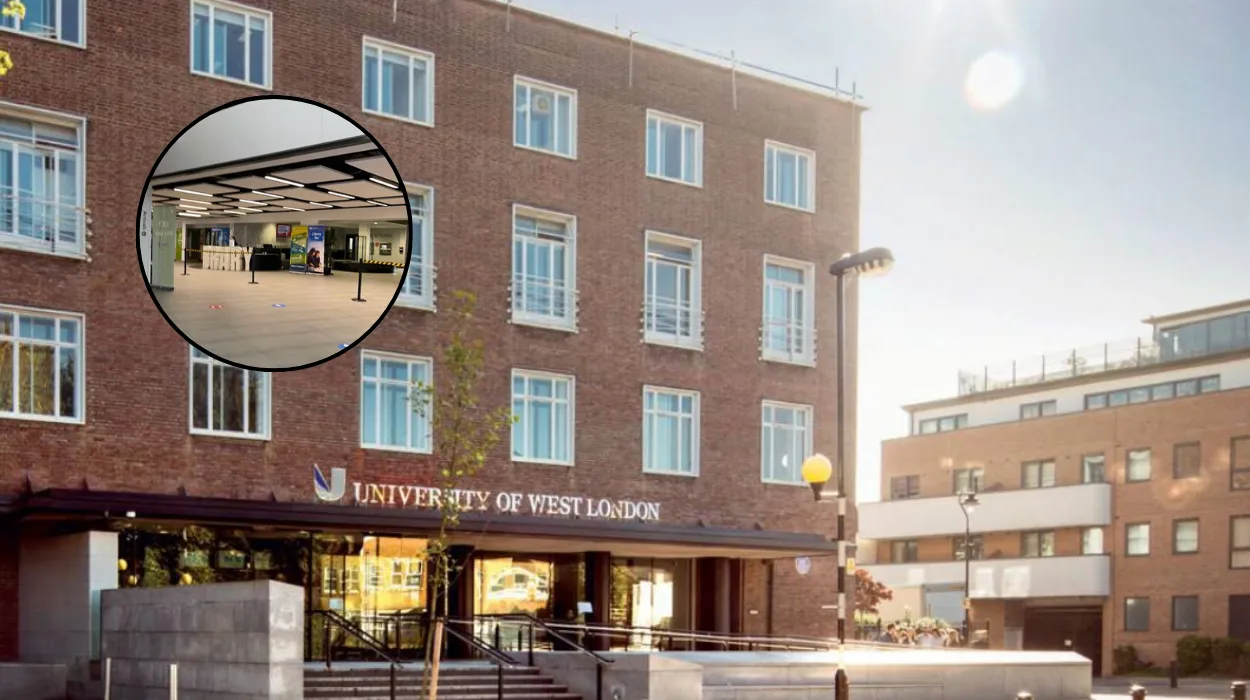
West London (The Londoner News) July 30, 2026 – In a significant move to bridge the gap between academic theory and real-world industry requirements, the University of West London (UWL) has announced a strategic partnership with the London Premier Centre (LPC), a private training provider. This collaboration will introduce a series of newly developed programmes designed in conjunction with the university to enhance graduate employability. According to LPC, this alliance is geared towards creating unprecedented progression opportunities for students, equipping them with the practical expertise needed to thrive in an increasingly competitive global job market. By integrating the academic rigour of UWL with the pragmatic training methodologies of LPC, the initiative addresses the growing demand from employers for graduates who can immediately contribute to the workplace without the need for extensive onboarding.
- Key Points:
- What are the Details of the New Partnership Between the University of West London and London Premier Centre?
- Who is Involved in this Groundbreaking Educational Initiative?
- What is the Historical Context of the University of West London in Practical Education?
- How Do Private Training Providers Like London Premier Centre Enhance Higher Education?
- Why is the Gap Between Academic Life and the Corporate World Increasing?
- How Will This Collaboration Impact Future Students and the Broader Ealing Community?
- What Are the Key Takeaways for the UK Higher Education Sector?
What are the Details of the New Partnership Between the University of West London and London Premier Centre?
Higher education in the United Kingdom is currently undergoing a substantial transformation, pivoting from traditional, purely theoretical teaching models to more dynamic, industry-aligned frameworks. It is within this modern context that Ealing’s University of West London has officially declared its collaboration with the London Premier Centre. As a highly regarded private training provider, the London Premier Centre specialises in corporate training, professional development, and practical skill acquisition. This partnership entails the co-creation and delivery of new educational programmes that seamlessly merge the university’s academic excellence with the centre’s hands-on training expertise.
For students enrolled at the University of West London, this development means gaining access to a curriculum that has been vetted and augmented by industry professionals. The core objective of this agreement is to create robust progression opportunities for students through programmes meticulously developed alongside the university. Consequently, learners will not only graduate with a prestigious academic degree but will also possess practical certifications and real-world competencies that modern employers actively seek. This initiative reflects a broader trend within the British education sector, where institutions are actively seeking external partnerships to enhance the overall value proposition of their degree offerings.
Who is Involved in this Groundbreaking Educational Initiative?
The success of any educational partnership relies heavily on the vision and dedication of the individuals leading the initiative. In this instance, key figures from both the University of West London and the London Premier Centre have stepped forward to articulate the strategic goals of the collaboration. Their shared vision underscores a mutual commitment to student success and workforce readiness, ensuring that both organisations’ strengths are fully leveraged.
Why is Practical Experience Crucial for Modern Students?
To understand the motivations driving the University of West London, one must look at the administrative perspective regarding student outcomes. Modern students face an incredibly competitive job market where academic qualifications alone are rarely sufficient to secure elite employment. Employers demand practical skills and a demonstrated ability to navigate professional corporate environments from the very first day.
Addressing this critical need, a key statement was provided by a leading figure at the university regarding the value of experiential learning. As reported by Ian Miller of EALING.NEWS, Mohamed Farhat, deputy transactions manager at the University of West London, stated that
“Practical, hands-on experience is invaluable for students. There’s a clear difference between academic life and the outside world, and this collaboration helps bridge that gap. It allows us to work in the best interests of our students, preparing them to face real industry and real-world scenarios with confidence.”
This perspective highlights the university’s proactive stance in mitigating the often-jarring transition from the lecture theatre to the corporate office.
How Does the London Premier Centre Approach Workplace Training?
On the other side of the partnership, the London Premier Centre brings a wealth of experience in fast-tracking professional development. Private training providers operate with a distinct agility, often updating their curricula at a much faster pace than traditional academic institutions. Their focus remains resolutely on measurable outcomes, workplace efficiency, and closing the corporate skills deficit.
This philosophy is deeply embedded in the design of the new joint programmes being offered to students. Providing insight into their operational ethos, another crucial perspective was shared by the private provider’s leadership. As additionally reported by Ian Miller of EALING.NEWS, Dr Adnan Haj Omar, chief operating officer at London Premier Centre, stated that
“Our programs go beyond academic theory to deliver practical, immediate workplace impact.”
This commitment to immediate efficacy is precisely what makes the involvement of the London Premier Centre so valuable to the University of West London and its diverse student body.
What is the Historical Context of the University of West London in Practical Education?
The University of West London, affectionately and widely known throughout the sector as “The Career University,” has long prided itself on its exceptional graduate employment rates. Located primarily in Ealing and Brentford, the institution has a storied history of aligning its educational output with the direct needs of the British economy. Over the past decade, the university has invested heavily in state-of-the-art facilities, including mock hospital wards, professional-grade aviation simulators, and cutting-edge broadcasting studios, all designed to heavily simulate professional working environments.
This latest partnership with the London Premier Centre is not an isolated event but rather a logical continuation of the university’s overarching strategic ethos. By actively seeking out private sector entities, the University of West London ensures that its academic staff remain connected to current industry trends and practices. Furthermore, the Ealing campus, deeply embedded in a vibrant West London community, serves as an ideal incubator for such forward-thinking initiatives. The university understands that in the twenty-first century, a purely theoretical approach to education is a disservice to fee-paying students who rightfully expect a tangible return on their long-term educational investments.
How Do Private Training Providers Like London Premier Centre Enhance Higher Education?
The role of private training providers in the UK higher education ecosystem has expanded significantly over the past twenty years. Organisations such as the London Premier Centre offer a distinct advantage: they are not bound by the often-sluggish bureaucratic processes that can hinder rapid curriculum updates in traditional universities. Private providers survive on their ability to deliver immediate results for their corporate clients; therefore, their training modules are continuously refined based on real-time industry feedback and technological advancements.
When a respected academic institution like the University of West London integrates a private provider into its framework, it creates a powerful and highly effective synergy. The university provides the foundational academic rigour, extensive research capabilities, and the stringent quality assurance frameworks required for formal higher education qualifications. Simultaneously, the private provider injects practical, scenario-based learning modules that focus on soft skills, modern technological applications, and corporate problem-solving. This hybrid model offers students a comprehensive educational experience, ensuring they are not only well-read in their chosen disciplines but are also highly trained practitioners capable of delivering results immediately.
Why is the Gap Between Academic Life and the Corporate World Increasing?
The observations made by Mohamed Farhat regarding the strict dichotomy between academia and the professional world touch upon a systemic issue within global higher education. In recent years, technological advancements, shifting economic paradigms, and the rapid mainstream rise of artificial intelligence have transformed the modern workplace at an unprecedented rate. Conversely, academic curricula, heavily constrained by governmental accreditation requirements and lengthy approval cycles, often struggle to keep pace with these overnight changes.
This resulting discrepancy is commonly referred to in human resources circles as the “skills gap.” Graduates frequently enter the workforce possessing a deep understanding of historical theories and abstract concepts but lacking the practical skills necessary to execute daily tasks in a fast-paced corporate setting. They may thoroughly understand the theory of corporate finance, but lack proficiency in the latest financial modelling software used by major firms. They may have studied organisational behaviour extensively, yet remain completely inexperienced in navigating actual workplace conflict or leading cross-functional teams. Collaborations like the one between the University of West London and the London Premier Centre represent a highly targeted intervention to close this gap. By bringing industry practitioners directly into the educational journey, universities can ensure that their curricula remain relevant, dynamic, and closely aligned with the often harsh realities of the contemporary corporate landscape.
Explore More West London News
Katie Fisher Leads Merged NHS Body in Ealing 2026
Award-Winning 1960s Retro West London Pub Wins Big in Kensington 2026
How Will This Collaboration Impact Future Students and the Broader Ealing Community?
The direct and most immediate beneficiaries of this new partnership are undoubtedly the future cohorts of students at the University of West London. With unrestricted access to programmes co-developed by the London Premier Centre, these students will enjoy a distinct competitive advantage upon graduation. They will possess a robust portfolio of practical experiences and a proven track record of applying their theoretical knowledge to real-world scenarios, making them highly attractive to prospective employers in London and beyond.
Furthermore, this initiative carries overwhelmingly positive implications for the broader Ealing community. As a significant local employer and an anchor institution in West London, the continued success and continuous innovation of the University of West London contribute directly to the region’s overall economic vitality. By reliably producing highly skilled, work-ready graduates, the university helps to attract and retain cutting-edge businesses in the local area, fostering a thriving economic ecosystem. The presence of dynamic educational partnerships also firmly enhances Ealing’s hard-earned reputation as a primary hub for forward-thinking education and professional development, potentially drawing further investment and international collaboration to the borough.
What Are the Key Takeaways for the UK Higher Education Sector?
The strategic alliance successfully forged between the University of West London and the London Premier Centre serves as a highly compelling case study for the wider UK higher education sector. As universities across the country face increasing public scrutiny regarding tuition fees and the quantifiable value of their degrees, the commercial pressure to deliver highly employable graduates has never been more intense.
This partnership expertly demonstrates that the most effective way to aggressively address these challenges is through pragmatic, cross-sector collaboration. Traditional universities no longer need to operate in academic silos. By fully embracing the specialised expertise of private training providers, academic institutions can swiftly update their teaching methodologies, vastly enrich their curricula, and ultimately provide a superior educational experience that pays immediate dividends to the student.
In conclusion, the initiative recently announced in Ealing is far more than just a localised business agreement; it is heavily indicative of the necessary evolution of higher education. As meticulously reported by Ian Miller of EALING.NEWS, the precise statements from both Mohamed Farhat and Dr Adnan Haj Omar reflect a profound and necessary understanding of modern educational necessities. Moving forward into the late 2020s, it is highly probable that other institutions across the United Kingdom will closely monitor the outcomes of this pilot partnership, potentially adopting similar collaborative models to ensure their own students are equally prepared to navigate the immense complexities of the modern professional world.