Key Points
- Risk of Persistent Drought: The risk of persistent drought conditions in London has increased the risk of forest fires in the important recreational areas like the famous Richmond Park.
- Complete Prohibition of Barbecues: The Royal Parks Charity enforces an absolute prohibition of barbecues or any kind of fire throughout the year to avoid any unintentional ignition.
- Environmental Hazards: The officials state that due to the presence of dry vegetation along with the rise in temperatures, there is a ‘chimney effect’ in veteran trees, which causes rapid spread of fires and destroys biodiversity.
- Human Behavior Impact: It has been stated that most of the grass fires are due to the human behavior that can be anything starting from carelessly thrown cigarettes to incorrect disposal of disposable barbecues.
- Context of the United Kingdom: The warning comes amid general concerns across the United Kingdom, where heat wave warnings and extreme heat of 2026 summers are putting amber health warnings.
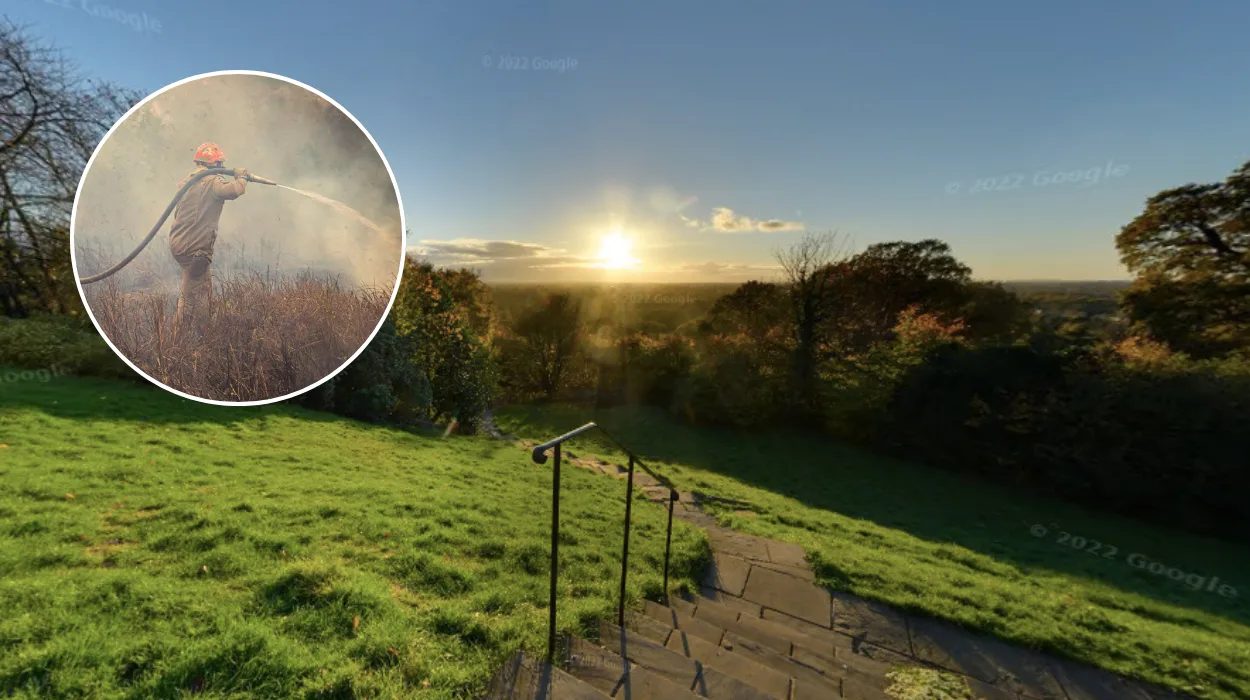
London (The Londoner News) August 11, 2026 – Authorities have issued an urgent public information notice regarding the extreme risk of wildfires in London’s major green spaces, specifically citing the ongoing drought conditions that have left landscapes parched and highly susceptible to ignition. With temperatures across the capital soaring and the United Kingdom experiencing its latest in a series of severe summer heatwaves, park management and fire services are urging the public to adhere strictly to safety protocols to prevent devastating grass fires.
- Key Points
- Why are wildfire risks currently elevated in London’s parks?
- What safety measures must visitors follow?
- How do wildfires impact the biodiversity of Richmond Park?
- What is the broader situation across the United Kingdom?
- Are there additional hazards besides wildfires?
- How can the public contribute to safety?
Why are wildfire risks currently elevated in London’s parks?
The combination of long-term drought and unseasonably high temperatures has created a tinderbox environment across London’s parkland. As reported by the London Fire Brigade (LFB), the city has transitioned from a wetter-than-usual winter, which promoted significant vegetation growth, directly into an extended period of extreme heat. This accumulation of dry biomass, coupled with the lack of precipitation, means that even a minor spark can lead to a significant fire.
According to the London Fire Brigade’s Assistant Commissioner, Paul McCourt, the risk is not merely theoretical but “very real.” Speaking on the necessity of vigilance, McCourt noted that the Natural Hazards Partnership has specifically flagged the heightened risk for London’s green spaces. The drying of grassland and forest floors has reached a critical threshold, where the lack of moisture content makes the landscape highly combustible.
What safety measures must visitors follow?
The Royal Parks charity, which oversees Richmond Park and other crown estates, has reinforced its “picnic, not a BBQ” policy. This is not a suggestion but a stringent regulation. BBQs and open fires are strictly prohibited in all Royal Parks. The organization has made it clear that even the smallest ember falling from a disposable barbecue onto parched grass can trigger a fire that destroys hectares of protected parkland in a matter of minutes.
In addition to the ban on fires, visitors are cautioned against the improper disposal of smoking materials. Cigarette butts must be fully extinguished and placed in designated bins. Furthermore, litter—specifically glass bottles—poses a significant secondary risk. As highlighted by the Royal Parks safety guidance, glass discarded in long grass acts as a magnifying lens, focusing sunlight and potentially igniting fires even in the absence of human-made flame.
How do wildfires impact the biodiversity of Richmond Park?
Richmond Park is not just a recreational area; it is a vital habitat for a wide variety of flora and fauna, much of which is fragile and ancient. Fire incidents in recent years have demonstrated the catastrophic impact of such events.
“Sadly, we have seen centuries of biodiversity annihilated because of an accidental fire,” stated Tom Jarvis, Director of Parks at The Royal Parks. The ecological toll includes the destruction of wildflower meadows, which are critical for pollinators, and the loss of veteran trees. Some of these ancient trees have become hollow over time, creating what arborists describe as a “chimney effect.” When a fire reaches these trees, the hollow interior draws the flames upward, essentially incinerating the tree from the inside out and killing the wildlife residing within.
Previous reports from the Friends of Richmond Park have detailed the loss of diverse species, including lizards, grass snakes, toads, frogs, newts, and stag beetles, due to grass fires. The loss of these habitats can take decades, if not centuries, to recover.
What is the broader situation across the United Kingdom?
The alarm in London is reflective of a national struggle against the environmental and social consequences of the 2026 summer heatwave. As observed in reports by The Guardian, the entire UK is experiencing a summer on course to be the hottest on record. Major incidents have been reported elsewhere, such as the New Forest, where emergency services have been battling to contain large-scale wildfires fuelled by wind changes and desiccated terrain.
The Met Office has issued multiple amber heat-health alerts for the vast majority of England, warning that temperatures could reach 38 degrees Celsius in some areas. These alerts carry serious implications for public health, with official data indicating that England is on track for record heat-related deaths this summer.
Fire services across the country are under immense strain. As noted by the London Fire Brigade, firefighters have been undergoing enhanced training in recent years specifically to tackle the increasing frequency of grass and wildfire incidents. However, the reliance on the public remains the first line of defence.
Explore more Local London News:
Man Arrested for Tube Station Assault in Central London 2026
Chelsea and Westminster Hospital A&E Awarded Outstanding Rating 2026
Are there additional hazards besides wildfires?
While wildfire prevention is a priority, officials are also highlighting the dangers of water-related incidents during the heatwave. The London Fire Brigade has warned that the urge to cool off in rivers, reservoirs, and lakes is a common but dangerous impulse during heatwaves.
Assistant Commissioner Paul McCourt of the LFB pointed out that even in extreme heat, water temperatures in London’s inland bodies often remain below 16 degrees Celsius. This temperature differential can lead to cold water shock, a physiological reaction that can cause sudden loss of breath and incapacitation, often leading to drowning. Furthermore, open water features hidden debris, strong undercurrents, and sudden drops in depth that are often invisible from the surface. Swimming is strictly forbidden in the majority of the Royal Parks’ water bodies, with the exception of the Serpentine Lido in Hyde Park, which remains the only designated area for public swimming.
How can the public contribute to safety?
The message from the authorities remains consistent: safety is a collective responsibility. Whether visiting Richmond Park or any other green space, visitors are expected to:
- Avoid all open flames: Do not use disposable barbecues or light fires under any circumstances.
- Manage waste responsibly: Take all litter home, particularly glass and plastic, to prevent ignition and environmental pollution.
- Monitor official advice: Keep updated with Met Office heat-health alerts and follow the guidance provided by the London Fire Brigade.
- Protect the vulnerable: Ensure children and pets are kept away from heat sources and are well-hydrated.
As the drought continues, the margin for error in London’s parks has all but vanished. The continued integrity of these historical landscapes and the safety of the millions who visit them depend on strict adherence to these public information notices. Every discarded cigarette, every illicit barbecue, and every moment of carelessness serves as a potential trigger for a disaster that the city is currently ill-equipped to handle without public cooperation.
The situation remains fluid, and as long as the current meteorological conditions persist, the authorities are expected to maintain their high-alert posture. The public is urged to remain vigilant and to treat the wildfire warnings with the gravity that the current climate crisis demands.